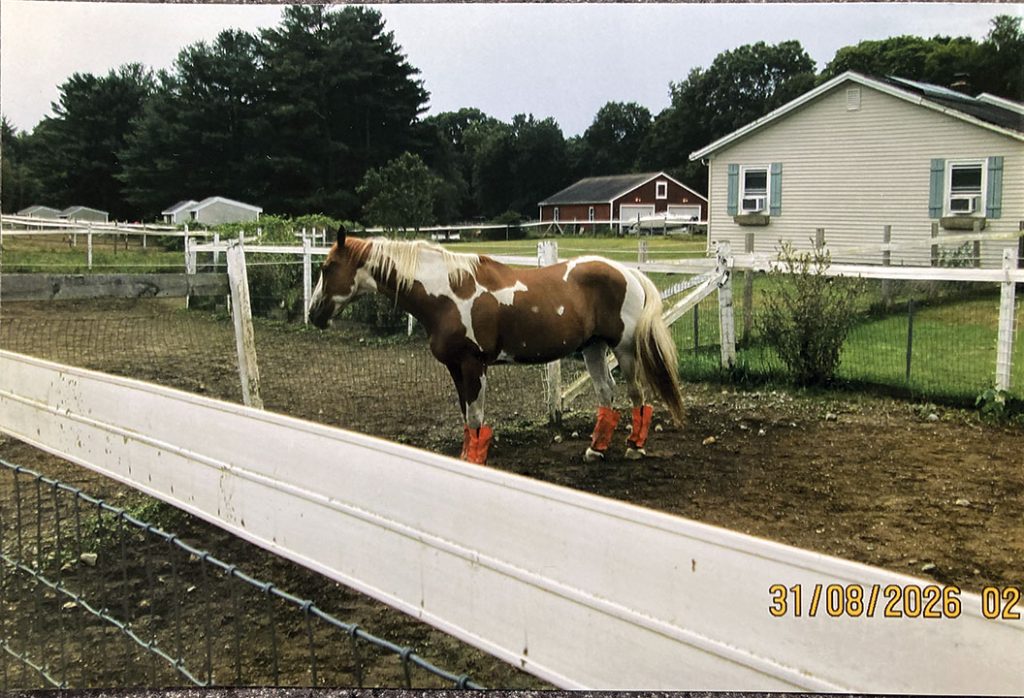
Recently I overheard someone say that an acquaintance had referred to Rochester as a “cow town.” I know this isn’t the first time such a comment was made. I find it interesting that “cow” was the term (maybe a slur was meant) used. Today, and for many years, Rochester has been home to a lot more chickens and horses than cows. Rochester was one of the towns whose economy was revitalized when the founder of White’s Dairy expanded his business into surrounding towns in the 1950s. Rochester was home to several successful dairies in those years.
I guess the idea is to disparage Rochester because it has remained more of a rural (for which I am glad) town than some of its neighbors. However, it is interesting to note that over its long history, Rochester has had a library somewhere in town since the early 1880s.
In the mid-19th century, it was home to two schools of higher learning. They were the Chaddock Academy in North Rochester and the Rochester Academy, whose building still stands in Rochester Center today. Both schools taught advanced math and “all English studies, Latin, Greek and French languages.” Many who graduated from Rochester Academy went on to become doctors, lawyers, teachers, ministers and judges.
Now, let’s get back to the cows. From the 1600s to the mid-1900s, many families in the South Coast had a cow, but for years Rochester was known for what grew on its farms and in its bogs. Farmers grew everything from gladioli and cranberries to area-renowned corn.
Back in the early days of our area, everyone was a farmer of sorts (few to no food stores); however, most but not all also practiced a trade. Throughout Rochester, there were mills: gristmills, fulling mills, sawmills, tanbark mills and silk mills. There were factories: hat, stocking, piano, wheelbarrow and oak bucket ones. There were shops where nails, axes and soap were made and sold.
There were blacksmiths, wheelwrights, carriage makers, as well as makers of cigars, cigar boxes, shoes, ready-to-wear clothing, sea chests, boats, furniture and more of the items that are now mass-produced far from where we live.
Today, fewer things are made in towns, but there are still farms and businesses in Rochester that carry on the tradition of locally grown or made materials. So, obviously, Rochester has never been just a “cow town.” Of course, when that term is used today, it’s really a reference to Rochester’s abundance of fields, forests and ponds that let residents have the land for recreation but also for sheep, chickens, beef cows and vegetables that are locally grown.
So, if that’s what being a “cow town” is, I’m happy with the designation (everyone can’t be a beach town), but I have to add that when I went looking for a cow to photograph, I couldn’t find one, so I had to settle for a horse.
By Connie Eshbach