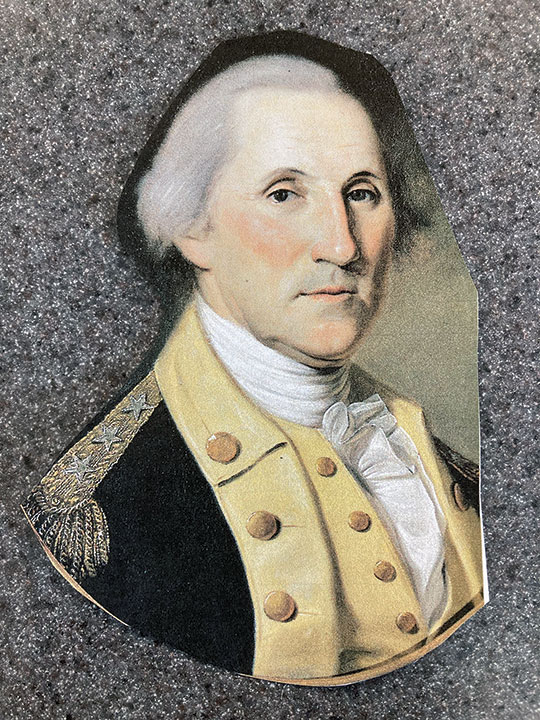
When Charles Willson Peale painted the portrait of George Washington, he left off the slight scarring from smallpox on his face. Washington was not alone in bearing those scars. While he contracted the disease on a trip to Barbados at age 19, smallpox was everywhere. Smallpox scars were common and a sign that those who had them were the lucky ones, because they had survived the disease.
Over the years, smallpox epidemics swept through Boston and other areas of New England. Of those who contracted the disease, 30% died. Quarantine was thought to be the only way to stop the spread of the disease when it appeared. However, when people were forced into large groups and close quarters, smallpox could spread swiftly. During the siege of Boston, civilians trapped inside the city and militiamen in camps outside the city were afflicted. From 1775 to 1782, 130,000 people were believed to have died from smallpox in North America.
The Rev. Cotton Mather, an influential Boston clergyman, had an enslaved man from West Africa named Onesimus. He told his master he had been inoculated against smallpox. Because the variola virus caused the disease, the method of inoculation was called “variolating.” A slit was made in a person’s arm and pus from an infected person was rubbed into the wound. In most cases, the person treated had a mild case with no scarring and became immune.
While the first inoculation in Boston was in 1721, the process was condemned by many ministers because it interfered with God’s will. The procedure was then banned in the colonies until 1776, amid severe epidemics.
In 1775, claiming he needed to make room for more incoming soldiers, British General Howe gathered boatloads of Boston’s poor on two occasions, shipped them across the Back Bay, and deposited them on the shore near Cambridge. The first group of 300 men, women and children — as well as the second group of 150 — were mostly sick, many with smallpox, and dying. At that time, Washington described smallpox as a “weapon of defense they are using against us.”
In 1777, Gen. Washington mandated inoculation for all troops. It was the first mass inoculation event in America, and no doubt helped to win the Revolution.
By Connie Eshbach