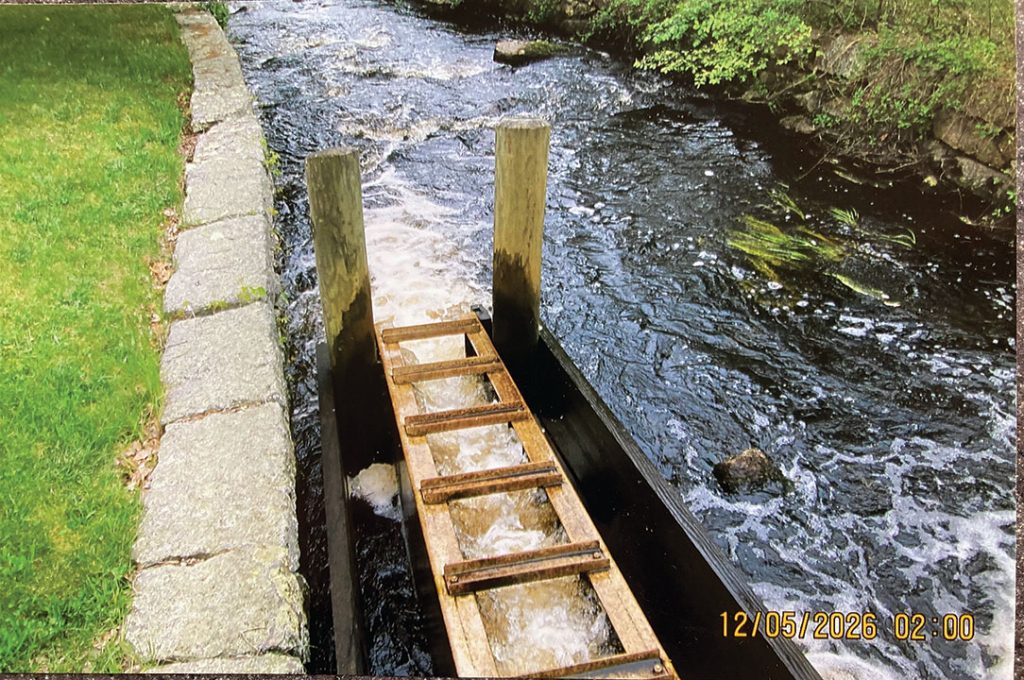
It became obvious to me as I read through our oldest town reports that herring were important to Rochester all the way through to at least the early 1900’s. A clue to this was the placement of the “Report of the Herring Inspector” within the reports. Indeed, in colonial times, one of the perks of settling in town was the yearly allotment of 1 barrel (400 fish) and 10 shad to residents.
There were also people who made a living smoking, drying and selling herring and the town received money from the sale of herring. Today, there is a moratorium on the harvesting of the fish because of the declining numbers recorded.
The Alewives Anonymous volunteers track our yearly herring runs. These two pictures show a portion of the process at Leonard’s Pond (one of the sites they monitor). Inside the box in the picture is the “brain” of the counter which sits between the 2 runs or ladders. There is a tube in the water with a wire that connects to the “brain”. Inside the tube are 3 rings of increasing size. When an alewife (herring) goes through the smallest ring first, it is counted as entering. If it goes through that ring last, it’s leaving.
The rest of the count process is low-tech with a volunteer checking off pertinent information on a clipboard. At the end of each yearly run, this information is tabulated and recorded and reported.
If you stand at the side of the herring ladders, the water appears very turbulent, but beneath the surface where the fish swim it is calm. There are a lot of thoughts as to what has led to the decrease of fish being counted. Previous over harvesting, hungry birds, fishing trawlers too close to shore or something as simple as low river levels making that first jump up the ladder harder. One thing we do know that makes monitoring the annual run important is that the alewives are our “canary in the coal mine” when it comes to the health of our local rivers.
By Connie Eshbach