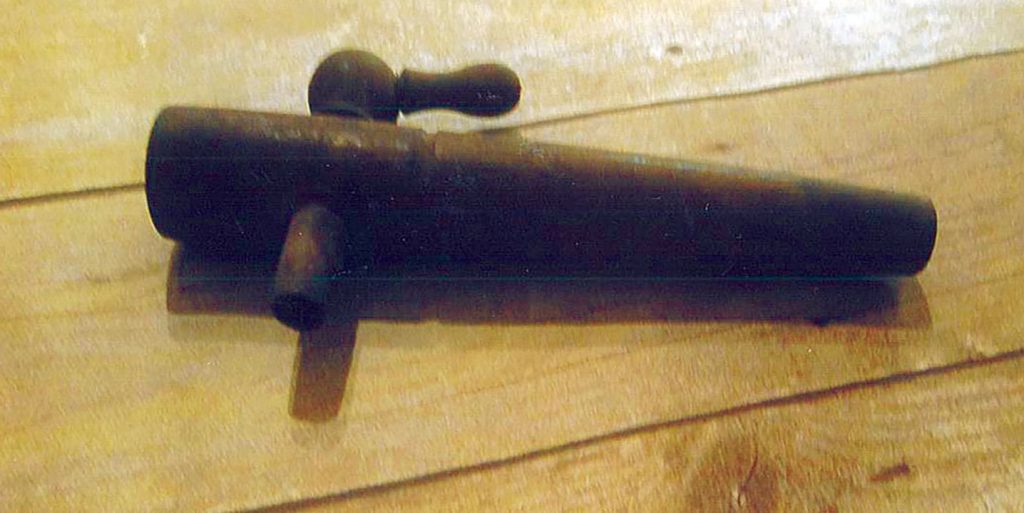
In our previous exhibit, we had many tools used in Rochester’s early days. All these tools were important as they were used for everything from harvesting cranberry bogs, moving rocks from fields and debarking trees felled for lumber. We know that Rochester had many skilled carpenters, furniture makers and sawmill workers.
The Cowens of North Rochester were carpenters who made all types of furniture as well as sea chests for whaling vessels. Hopestill Bisbee was known for his woodworking skills, producing chairs and other items used into the 21st century. Another item was made in Rochester. It was not decorative, nor was it made of heavy iron and wood, and it was the lowly “bung.”
The bung is the partner of the wooden barrel. The use of wooden barrels goes back at least 2,000 years. They were chosen to store and ship all kinds of merchandise, including liquids. They were appreciated for their strength, leak resistance and ease of handling. They fit well into the holds of ships. (Of course, this was long before there was cardboard and plastic).
The bung comes into play when liquids were being shipped. A bung is a stopper for a hole in a wooden barrel or keg. Stoppers have been used in barrels since the mid-15th century and were considered a practical tool in a “cooperage.” Coopers were the skilled craftsmen who made casks, barrels and any other container made from “timber staves traditionally bound with wooden or metal hoops.”
Once the barrel was purchased from the cooper and filled with beer, wine, water or even whale oil, it was ready to be shipped or loaded onto a vessel or other means of transportation. To retrieve the contents, a hole would be created in the head or staves of the barrel by an auger or bung starter. After removing a portion of the contents, a bung would be hammered in to seal the hole. The hole became known as a “bung hole.”
Bungs were manufactured in Rochester on at least one farm that had a bung shop. The picture of the farm with its location can be found in the Land Trust’s old Barn Calendar. It was in our last exhibit, but since then I’ve mislaid it. If anyone knows the location or name of the farm, email me at eshbach2@aol.com.
By Connie Eshbach