One of the reasons that Rochester has been able to retain so much of its rural feel is the generosity of long-time families who have worked to preserve land accumulated over the years to be used for farming and for the trees and water needed for mills.
Previously, mentioned were George and Katherine Church’s generous preservation of land by selling it for well under market value to protect it from development. George also attempted to preserve the history of Rochester’s sawmill industry with a museum he wanted to be available for viewing.
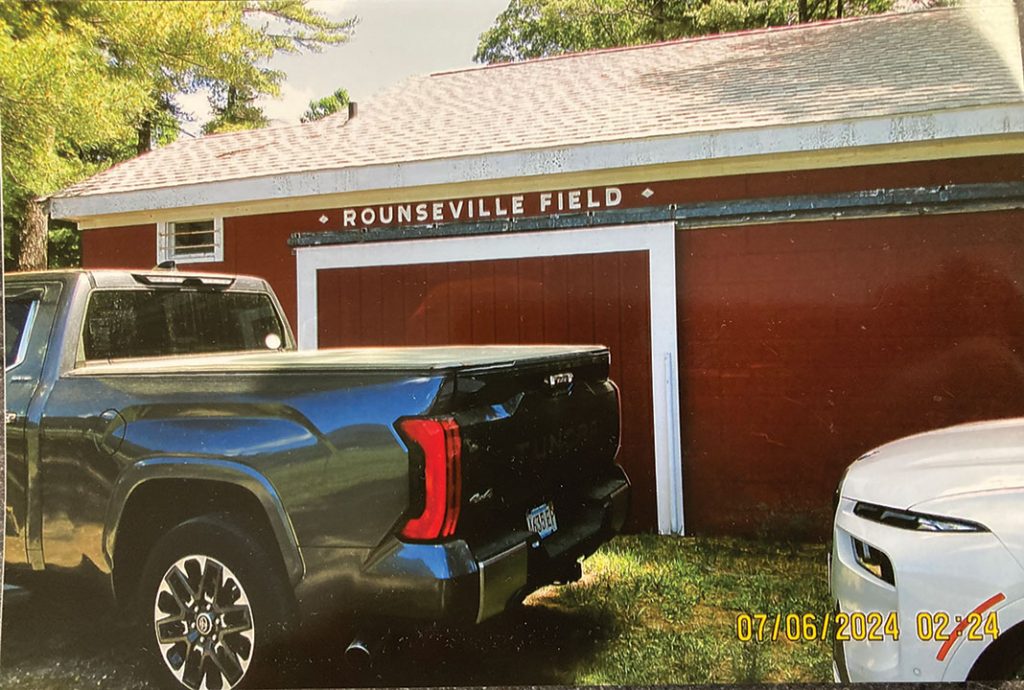
Another family, the Rounsevilles, who took up residence in Rochester in the 1860’s, has done much to preserve their land as open space. In 1992, Winifred Rounseville donated 38 acres of woodland to the Wildlands Trust of Southeastern Massachusetts. Two years later, she again bequeathed 48 acres behind the Rochester Center ballfield, which bears the name of Rounseville Field, to the Wildlands Trust. That same year, she permanently restricted from development their large cornfield across from the family homestead on Rounseville Rd.
In 1999, the Rounseville family sold over 150 acres in the Haskell Swamp to the State Division of Fisheries and Wildlife and in 2001, they sold 6.7 acres of riverfront to Rochester’s Conservation Commission to be used as a wildlife sanctuary and canoe launch. Again, all of these sales are at prices thousands if not millions below what developers would pay.
The family’s generosity that began with Winifred was continued by her children who have worked with the Coalition of Buzzards Bay and the Rochester Land Trust to protect most of their historic property. With this land conservation, we all benefit both from the enjoyment of woodlands and open spaces, as well as the aquifer protection of the Mattapoisett River Valley due to the preservation of more than 2.6 miles of river shoreline.
By Connie Eshbach