Nancy E. Norton

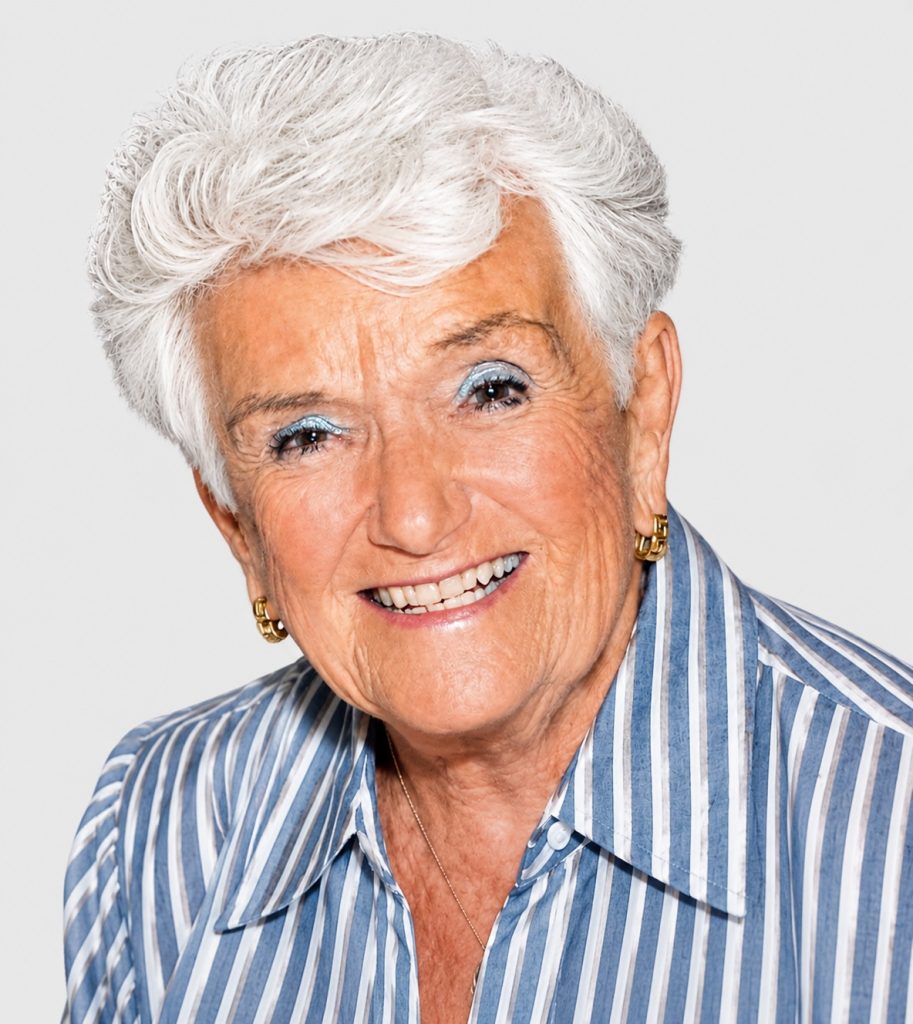
Nancy E. Norton, 84, of Naples, Florida, and Mattapoisett, Massachusetts, passed away peacefully on May 29, 2026, surrounded by family.

            Born in Boston, Nancy was the daughter of Mary V. (Nestor) Auclair and Oscar Auclair. She grew up in Jamaica Plain, where she gained warmth, resilience, and devotion to family-qualities that defined her life.

            In 1960, Nancy married Robert L. Norton. Together they shared over sixty years of marriage, building a life around family, friendship, travel, and community. They raised their family in Norfolk, Massachusetts, later retiring in Naples, Florida, and spending summers in Mattapoisett, Massachusetts. Robert predeceased Nancy on June 22, 2024.

            Nancy was a devoted mother to Robert L. Norton Jr. and his wife, Pamela, of Wellesley. She was also the mother of Mary K. Norton and her husband, Michael Feinberg, of Medfield, and of Thomas Norton and his wife, Cheri Alix, of Norfolk.

            She was a proud and loving grandmother to Sarah Neiterman and her husband, Daniel, of Boston, Massachusetts; Joshua Norton of Wellesley, Massachusetts; Kayla V. Feinberg and her husband, Garrett Ledbetter, of Norfolk, Massachusetts; Nicholas Feinberg and his fiancée, Sucha Chantaprasopsuk, of Chicago, Illinois; and Thomas Alix Norton of Upton, Massachusetts. Nancy was also blessed with the joy of becoming a great-grandmother to Oliver Ledbetter. His arrival brought her tremendous happiness.

            Nancy is survived by her sister, Joan Lake of Norwood, Massachusetts; her cherished nieces Karen Hays and Kathleen Marino both of Naples, Florida, and Janet Chagnon of Greenfield, Massachusetts; and many other beloved nieces and nephews related to the Lake, Burns and Norton families. She will be remembered for the birthday and anniversary cards she sent for decades. No milestone went unnoticed; no loved one was forgotten.

            Nancy possessed remarkable artistic talents. She was an accomplished oil painter, inspired by the South Coast of Massachusetts. She skillfully captured its landscapes with affection. She was also an expert seamstress, creating clothing, furnishings, and handmade items with care. Her passion for sewing led to many years at the Franklin Mill Store, where she shared her expertise. She was a gifted knitter. Her sweaters, scarves, and handmade gifts kept loved ones warm through New England winters.

            A longtime resident of Naples and Mattapoisett, Nancy embraced both communities, joining book clubs, gatherings, and events, and forming lifelong friendships. In the Point Connett community of Mattapoisett, Nancy was cherished for her kindness and thoughtfulness. She had a gift for bringing people together, organizing gatherings, contributing decorations and artwork, and always offering a helping hand. Nancy enriched lives, fostered cherished traditions, and created lasting memories.

            Nancy and Bob shared a love of travel and adventure. They explored historic cities, exotic destinations, and scenic coastlines. They enjoyed tranquil cruise ports. Their travels created treasured memories and stories. These reflected their shared curiosity and deep enjoyment of the world.

            After being diagnosed with acute myeloid leukemia, Nancy faced her illness with grace and courage. Her family is grateful for the compassionate care from her physicians, nurses, and caregiver, including teams at Florida Cancer Specialists & Research Institute, Dana-Farber Cancer Institute, and Southcoast Health.

            In accordance with Nancy’s wishes, no public services are planned. Her family will gather privately in Mattapoisett later this summer. In lieu of flowers, the family invites those who wish to honor Nancy’s memory to donate to Blood Cancer United at www.bloodcancerunited.org.

            The family invites loved ones to honor Nancy by spending time together, creating something beautiful, or connecting with others-simple acts that reflect her life. For online guestbook, please visit www.saundersdwyer.com
Washington and the Congress

            This week in Revolutionary War history, let’s check up on what was going on 250 years ago in New England and the northern Thirteen Colonies. Last week, the occupying Continental Army in Canada faced another defeat as it becomes clearer that holding Montreal is untenable, let along capturing Quebec. General George Washington set out a system of signals for New York City to warn of encroaching Royal Navy ships, as the general himself departed for Philadelphia to speak to the Continental Congress. More are calling for full independence, both on the ground and in the seats of government.

            On May 24, 1776, Washington arrives in Philadelphia. At the time, it is the largest city in the colonies by population. There, he meets with delegates from the Continental Congress an discusses the unfolding and widening war. The major discussion, however, is Canada. The delegates and Washington agree the men in Canada should fortify along the Saint Lawrence River and block the British advance. With warming temperatures, more British troops are arriving in Quebec and the delegates say the Continental Army must “contest every foot of the ground with the enemies to these colonies.”

            Washington writes to Major General John Thomas, commanding officer of the men in Quebec, acknowledging the failures to take the city as, “this unfortunate affair has given a sad shock to our schemes.” He also adds, “retreat is almost inevitable,” but asks for a “good stand” to protect the northern front of the war. He says, “The lower down you can maintain a stand the more advantageous it will be,” meaning to block movement down and along the river further to the south. He finishes, “This misfortune must be repaired.”

            The next day, the general again attends a meeting of the congress, speaking to the whole congregation at the State House, now known as Independence Hall. The congress appoints John Adams of Massachusetts (future President), Benjamin Harrison V of Virginia (father and great-grandfather to two future Presidents), Major General Horatio Gates of England, and Thomas Mifflin of Pennsylvania to a committee to work directly with Washington in order to “concert a plan of military operations for the ensuing campaign.”

            While Washington remains in Phili, Major General Philip Schuyler writes on May 26 from Fort George, New York. He warns of insufficient manpower in Canada whom are also facing “difficulties for want” of supplies. He states he is working to muster up more men, but requests more weapons and arms be sent up posthaste.

            That same day, the Great Barrington, Sheffield, and Canaan Committees for Safety write to Washington from the Berkshires. They have conducted investigations as to the loyalty of various persons accused of treason; of which Philip Schuyler is one. The committees say they “took all those methods they could devise to find out the sentiments of the general.” Though they add, “it is with great pleasure we are able to acquaint your Excellency – that their suspicions respecting him were wholly groundless.”

            On May 27, twenty-one delegates of the Six Nations of the Iroquois (or the Haudenosaunee Confederacy) arrive in Philadelphia. For the next month, they will stay in the city, observe the congress, and watch military exercises and parades as the Americans try to secure new allies. In one of the meetings they attended, they received a warm welcome whereupon at the end of the meeting, an Onondage chief requested and was granted permission to give President Hancock an Indian name: Karanduawn, or, “the great tree.”

            On May 29, working-class artisans and laborers on New York sign the “New York Mechanics Declaration of Independence,” pressuring the New York Provisional Congress to declare the colony’s formal independence. It begins, “When we cast a glance upon our beloved continent, where fair freedom, civil, and religious, we have long enjoyed, whose fruitful field have made the world glad, and whose trade has filled with plenty of all things, sorrow fills our hearts to behold her now struggling under the heavy load of oppression, tyranny, and death.” In pushing the local government, they also knowingly pressure the united government in Philadelphia, as the finish, “We – hereby publicly declare that, should you, gentlemen of the honorable Provincial Congress, think proper to instruct our most honorable Delegates in Continental Congress to use their utmost endeavors in that august assembly to cause these United Colonies to become independent of Great Britain, it would give us the highest satisfaction; and we hereby sincerely promise to endeavor to support the same with our lives and fortunes.”

            On May 30, Benjamin Franklin finally return form his two-month long trip to Montreal. This would be his first diplomatic mission, and though he had just recently celebrated his 70th birthday, his government service was nowhere near over.

This Week in Revolutionary War History

By Sam Bishop

Ticks, World Cup Bring Disease

            From tick control to vaccine refrigeration issues, the Marion Board of Health met on May 21 and discussed a wide array of topics.

            The board meeting was held at the Police Station conference room after the re-election of Albin Johnson III. The board named Dr. Edward Hoffer as the new chair and Dr. John Howard as the vice chairman, per tradition after an election. Hoffer is running for re-election next year. Johnson is now the board’s clerk.

            Marion Health Director Lori Desmarais said tick issues are on the rise, and in response there are tick-removal kits available at the town’s Health Department office, and health officials were giving out some of the kits at the last annual Town Meeting. State officials say there is a rise in ticks this year, and they are more active in the spring.

            Desmarias also said that the Health office’s refrigeration system, used to store vaccines, broke down recently. Howard mentioned that there is less federal funding now for the newer systems, but board members and Desmarais agreed that the old system was reliable. Desmarais said there are revolving funds available for a new system.

            The board endorsed a new policy that addresses how town officials should legally address vacant homes or lots. However, Johnson questioned how the board should handle complaints about those who illegally live in abandoned homes. Johnson questioned who would enforce the law and how the board would respond. Hoffer and Howard said the issue is beyond the board’s jurisdiction. Howard said that there are state laws that address illegal use of vacant homes.

            Desmarais said, with international soccer coming to Massachusetts, people should be aware of new diseases or health issues coming from foreigners who attend World Cup games. Health officials noted that Marion is distant from Foxborough and the MBTA commuter rail does not pass through the town. They also mentioned the town does not have hotels. However, Desmarais said anyone who attends the games should be aware of this warning.

            Desmarais reported that one town beach has been tested, and all 10 of them will be tested in early June.

            Desmarais also mentioned that the state has issued warnings about rabies, and people should be cautious around wild animals and should take action if their dog is bitten by another dog or a wild animal. She said anyone with a bat in the home should call Animal Control immediately, which would capture the bat and test it for rabies.

            The next meeting of the Marion Board of Health is scheduled for Thursday, June 4 at 4:30 pm in the Marion Police Department’s conference room.

Marion Board of Health

By Jeffrey D. Wagner

From the Files of the Rochester Historical Society

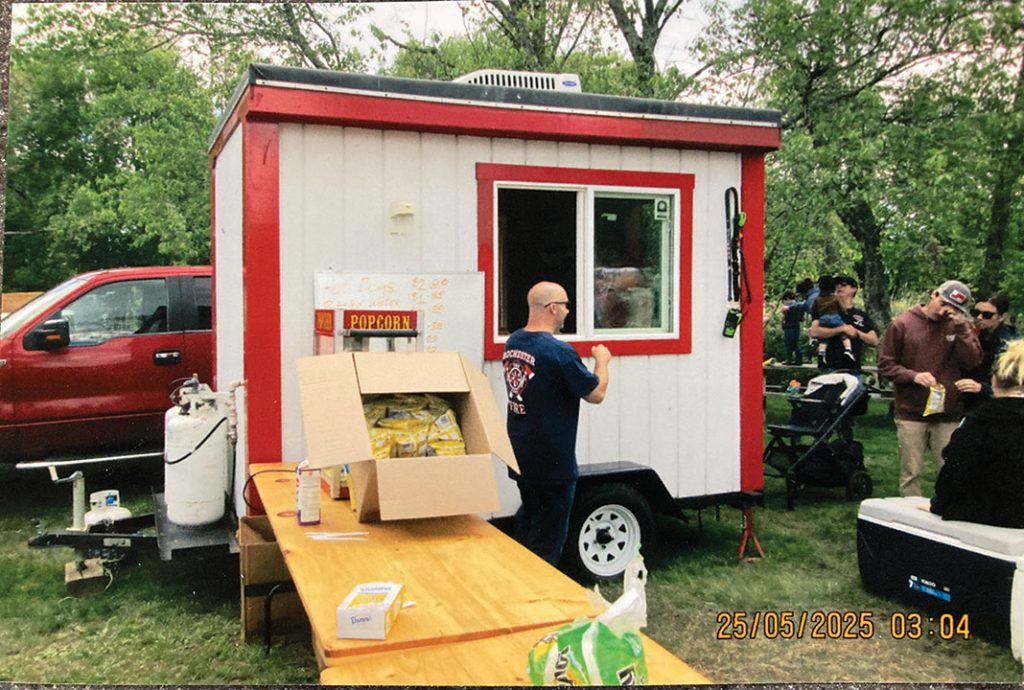
If you had a hot dog or beverage at the Rochester Boat Race finish line this Memorial Day, then you encountered “The Dorothy” shown here in this picture. The Dorothy started as a peanut wagon bought by then  Dorothy Bray for entertainment at a friend’s party. Later, Dorothy married that friend, Joe Plumb. After its party participation, she insisted on gifting the wagon to the Brotherhood.

            For many years, the Brotherhood was a group of about 30 “older men” most from Rochester. They were active in the community with projects of all kinds and the sponsoring of a variety of groups. The Dorothy had wheels and could be towed to different events where food could be cooked. Maybe it was the prototype for today’s food trucks.

            After the Brotherhood was disbanded, the Dorothy became the property of the Rochester Fire Department as the Rochester Firefighter Association took over the annual clambake, the sponsorship of the Boat Race (now sponsored by Town of Rochester Fire Department) and other Brotherhood projects and has been serving hot dogs at the race finish line for over 50 years. So, if you had a hot dog on Monday, you took part in a long-standing Rochester tradition.

By Connie Eshbach

Rochester Republican Town Committee

Rochester Republican Town Committee will hold its next meeting on Monday, June 8, at 6:30 pm.  The meeting will be held at the Ponderosa Sportsman Club, Acushnet. Come and be informed about the happenings in and around Rochester. All are invited to attend.

A Tale of Two Cemeteries

            Note: Although written during Memorial Day weekend, this column is less about public commemoration than personal reflection – shaped by visits to two very different cemeteries; one historic and world-famous, the other intimate and deeply familial.

            Sometimes the overlooked graves, obscured with ivy and weeds, are the most interesting. These were my thoughts as I wandered through Père Lachaise Cemetery, the largest cemetery in Paris and the most visited necropolis in the world, attracting some 3.5 million visitors each year.

            I came here a month ago as much for its parklike atmosphere and towering old-growth trees as for its famous graves. My quest was to pay homage to Jim Morrison, lead singer of The Doors, who was buried here in 1971 at the age of 27. His remains rest in what is still the cemetery’s most visited grave.

            Finding it, however, is no simple task in such a vast and winding place. But the journey itself is part of the pleasure, with each turn revealing another variation on the cemetery’s timeless themes of memory, art, and decay. Having neglected to pick up a map, I relied instead on a more informal method of navigation: waiting until I heard an American speak. It did not take long. Soon I was pointed in the right direction, though the route still seemed to require a mathematical genius – which I most certainly am not – to navigate its labyrinthine paths.

            Père Lachaise Cemetery is organized into 97 numbered divisions spread across 110 acres of hilly, cobblestoned terrain. Designed in the style of an English landscape garden, it is a place of winding, tree-lined avenues, hidden corners and elaborate mausoleums. Traditional graves, family tombs and a central columbarium are woven into a carefully planned layout that somehow still feels delightfully labyrinthine to the wandering visitor.

            Père Lachaise stood as the inaugural grand garden necropolis, serving as the definitive archetype for the landscaped burial grounds that emerged across the Western world in the 1800s. During the reign of Napoleon Bonaparte, the state assumed authority over interments, championing the revolutionary concept that every individual – irrespective of their faith or rank in society – was entitled to a respectable final rest within a setting of profound beauty.

            Initially, local residents were hesitant to seek interment so distant from the city center in soil not sanctified by the church. This changed through a strategic effort to relocate the remains of luminaries like Molière and Jean de La Fontaine, along with creating a tomb for Abelard and Héloïse (look them up as theirs is an interesting story) – rapidly establishing the site as a fashionable destination. While its first year saw a mere 13 burials, that figure surged to nearly 30,000 in a quarter-century; ultimately, the cemetery became the resting place for more than a million souls.

            Many visitors arrive with maps in hand, navigating directly to the graves of notable figures buried there. To name but a few: Honore de Balzac, Sarah Bernhardt, Bizet, Chopin, Olivia de Havilland, Modigliani, Edith Piaf, Marcel Proust, Gertrude Stein, Oscar Wilde, Richard Wright; not to mention scientists, philosophers, and historical figures as well as ordinary people. In fact, my daughter and son-in-law recently attended a memorial service there. So, though it does still take burials, only if you lived or died in Paris, there is a waiting list as burial sites are few and far between. Still, I noticed workers excavating a new one during my visit.

            The cemetery rewards a less structured approach to exploring. Much like The Louvre, it is impossible to absorb everything in a single visit. Beyond a handful of celebrated sites, some of the most memorable discoveries come from simply wandering its cobblestone avenues and encountering overlooked corners, weathered monuments and unexpected scenes along the way.

            Here you will find a range of architecture, where the ancient and the modern often stand side by side. As I maneuvered its pathways – what with the up and down and cobblestones it can be dicey – I found myself wondering about the many tombs that resemble small telephone booths or miniature chapels. Were they designed simply as monuments, or as places where grieving visitors could briefly step inside for privacy and reflection?

            Some graves appear polished and almost new, while others are so weathered by time that the names have nearly disappeared beneath moss and lichen. Fresh bouquets sit beside faded flowers long past their prime, along with plastic arrangements and hardy miniature evergreens meant to withstand the seasons.

            Without the shade of the old trees and the softer greenery woven throughout the grounds, the cemetery might feel almost gothic – a landscape crowded with stone monuments, statues and crosses that at times evoke the atmosphere of a Dracula novel. At one point, a black crow passed me on the path, giving me a momentary start.

The juxtaposition of old and new has a great vibe. After passing a row of Victorian-era tombs suddenly I was struck with a fully modern one. The grave belongs to still-living French photographer Andre Chabot and bears a camera on its frontispiece. After some research I found that he has photographed 700 cemeteries and has more than 195,000 images of them! His tomb has a large camera facing out and there is even a QR code on the outside that takes you to a link about the creations he has in the cemetery. Talk about personalizing your future resting place!

            As I wandered in search of Morrison’s grave, I happened upon the shiny granite slab that marks the remains of the author Colette. What a coincidence that I was reading one of her books (My Mother’s House) on this vacation. I eventually found the singer’s grave, marked by a cornucopia of flowers, candles, photographs and personal notes – not to mention a maraca. By far, it is the cemetery’s most colorful resting place, transformed daily by the offerings of devoted fans. It’s impossible to not feel the spirits somehow in this cemetery at rest with bird song, beautiful sunshine and greenery, and closing them here for eternity. Like many older cemeteries, Père Lachaise Cemetery has evolved into an unexpected urban refuge for wildlife. Improved environmental practices have helped create a surprisingly rich ecosystem, where orchids and cyclamen grow among the graves and foxes, tawny owls and dozens of bird species now thrive.

            From the grand scale of Père Lachaise Cemetery, my thoughts shifted closer to home and to a far more personal landscape: the family plots at St. Mary’s Cemetery in Uxbridge, Mass. Over the weekend, accompanied by my parents, I returned to the graves of relatives I had not visited in several years. The visit became less about history in the grand sense and more about family memory – a quiet reconnection with my father’s side of the family. We walked the hilly grounds together, me trying to record locations for posterity while my parents recalled names, dates and stories attached to each stone. Some belonged to relatives I never knew, including my great-great-grandparents and “Coica,” who died when I was only a year old, yet who somehow continues to live on through stories told by my father.

            Not only does my father remember our own relatives, he seems to be familiar with many who rest here. As we walked, he recounted stories about families, local characters and former mill owners whose elaborate mausoleums still dominate parts of the cemetery. “This cemetery looks like something out of a Hollywood movie,” I remarked while taking in the sloping entrance lined with mature trees. “It was,” my mother quickly replied. The cemetery served as the opening funeral scene in Oliver’s Story, the sequel to Love Story.

            Our hour-long visit became more than a walk through a cemetery; it unfolded as a tour through my father’s memories of Uxbridge itself. Along the way came stories of where my parents attended prom, roads where local boys once rode their bicycles, rivers where my father hunted and fished, remnants of old mills and the country road where my great-grandfather farmed and owned land. In many ways, the landscape and the memories seemed inseparable.

            There is much to be said about places like cemeteries. We often overlook them, even though they surround us everywhere. Yet the feeling they evoke is difficult to fully describe – a quiet sense of peace, reflection and, ultimately, contentment. In many ways, a cemetery serves as a reflection of society itself, revealing how we remember, honor and remain connected to those who came before us.

            “The boundaries that divide life from death are at best shadowy and vague.” – Edgar Allen Poe.

The Seaside Gardener

By Laura McLean

Machacam Club

The next meeting of the Machacam Club is scheduled for Wednesday, June 3. We meet at the American Legion Hall on Depot Street. Social time begins at 5pm followed by dinner at 6pm. Our speaker will be introduced at 6:40 pm. Chef Colby is planning another satisfying meal. Callers, please send your counts by 9:00 pm Monday, June 1. Please submit inquiries to cwmccullough@comcast.net.

Thoughts on… Naps, Powernaps and Politics

            Here we are a week after the town election and two weeks have passed since the annual Town Meeting and there is nary a whisper of controversy brewing.

            The annual gathering of those voters who pay attention whizzed through early articles in record time. There are three possible reasons for this. One is everything is okay, functioning perfectly, and all is copacetic. Two, voters are sick of politics and wanted to get home as soon as possible to watch the three-hour finale of American Idol, or three, everyone was in a hurry to get to the free meal the town put on afterward in the school cafeteria. (I made the last one up, but I bet you wished for a second you had attended.) A $36 million plus budget passed with little debate.

            The annual town election followed a week later, and 1774 registered voters exercised their right of self-governance. That number would be about 30 percent of all eligible voters. Put another way, 4200 people stayed home. (Two more voters and we could have said the election commemorated the birth of our nation. If we had held a UFC Fight like the one planned at the White House, maybe more registered voters would have turned out.) This was the first election since voters increased the selectboard to five members. To many observers of town politics, it was a pleasant surprise to have six candidates running for three positions. Alas, there were still nine other uncontested races. Oh well.

            There may be a few signs still around, but an eerie silence has settled in at the Town Hall. The winners have been sworn in and there are no apparent controversies brewing, no personality conflicts have arisen, and no fisticuffs have erupted. According to my confidential mole there are no signs of corruption or under-the-table deals being made. What’s a muck-raking investigative reporter supposed to do? Even Abner Harlow, former Town Clerk and resident Town Hall ghost has been quiet. He must be taking a long nap.

            Speaking of naps, our insomniac commander-in-chief whose name escapes me, who spends his nights posting humorous videos to entertain the world, is known to take a nap or two during the day. These naps seem to occur unexpectantly during important meetings, usually when someone else is talking. Well, you go Buddy! I am all in favor of a good nap. I have attended my share of meetings where a good doze was called for. He calls it multi-tasking. Being able to take a short powernap and ignore all around you is a talent and a powerful tool for a busy chief executive.

            I find the need for a nap is becoming more and more frequent. The big guy and I are the same age, so I understand how important it is for him to get his rest. I don’t have insomnia, but I generally seem to need a nap in the late morning and sometimes another in the afternoon. If I am reading a book, it is all but guaranteed I will be asleep in twenty minutes.

            Getting back to more important local issues. I suggested in an earlier column that now with five selectpersons they might have to take down a wall in the conference room and purchase a longer table to accommodate the new members. Rumor has it that instead of renovations (nobody listens to me anyway), selectboard meetings may be moving from the historic Town Hall to the bigger fire station meeting room, an appropriate venue considering the possibility of heated discussions and fiery debates over many hot topics.

            Mattapoisett resident Dick Morgado is an artist and happily retired writer. His newspaper columns appeared for many years in daily newspapers around Boston.

By Dick Morgado

Academic Achievements

Madeline Wright, of Mattapoisett was recently inducted into the Beta Beta Beta (TriBeta) honor society.

First Time for Everything

            Thank you, Vince (White, co-head of school). I am so lucky to have worked with you this year and will truly treasure our friendship forever.

            Good morning, faculty, family, friends, and the Class of 2026. My name is Chloe Fox.

            I think for most of high school, I believed that growing up meant eventually feeling like you knew what you were doing. I imagined that by senior year, we would have everything figured out. That one day, I would wake up confident, experienced, and completely prepared for life. And now that we are finally here, I think we can all admit that that is not true at all. Because if high school taught us anything, it is that life never stops giving us first times.

            During the past four years, we’ve all experienced so many things for the first time. The first time you had to introduce yourself in a room where you knew nobody. The first time getting lost in the Acky. The first time failing a test you studied so hard for, and the first time realizing you could bounce back from failure. The first time staying up way too late convincing yourself you could somehow finish by morning.

            And beyond academics, there were bigger firsts too. The first steps you took towards living on your own. The first time you sailed on a boat like the Tabor Boy. The first moment you realized that someone believed in you before you believed in yourself. And the first of many friendships at Tabor that brought so much joy.

            On the first day of my freshman year here at Tabor, my good friend Mavis was wearing a romper that was a bit too long. She tripped on the fabric and face-planted, but jumped right back up after her fall and filled the awkward what-just-happened silence with laughter. This was the first laugh we shared together in the first moment of our friendship.

            Looking back, that moment feels like a great representation of high school itself. Every year here, we became beginners again. Just when we finally thought we understood something—whether it was academics, friendships, or ourselves—life handed us something completely new. That’s what makes high school so strange, but also so valuable. Tabor taught us that unfamiliarity leads to growth.

            This incredible environment nurtured our curiosity and encouraged us to learn through every experience. There were always new perspectives to consider, new people to learn from, and new experiences waiting to change the way we think. There were new first days, uncomfortable moments that built resilience, and new challenges that pushed us further than we had expected.

            We came to the school as new students stepping into unfamiliar territory, and over time, without noticing, we became the people sitting here today. People shaped by what we have learned and excited for what comes next.

            Even after we graduate, there will be more firsts. Maybe next year you pick up a hacky sack for the first time. Maybe you travel the world. And maybe you create Tender Tuesdays wherever you land next, because some traditions are just too good to leave behind.

            Whatever it is, I urge you to embrace being a beginner. Some of us might feel afraid of what our futures hold—new people, new routines, new expectations. But if the past four years have proven anything, it is that we know how to begin. As we leave Tabor and step into the unfamiliar, please keep in mind that some of the best parts of our lives started as firsts.

            It has been my true honor to serve as the co-head of school for the 2025-2026 school year. Thank you to all of the family, faculty, and friends that supported us in our journey here at Tabor. A special thank you to my parents and my twin brother, Andrew, for being by my side from the beginning—truly the best first of all. And shout out Big Mike.

            Congratulations to the Class of 2026. It has truly been the most memorable four years. Thank you.

Tabor Academy Co-Head of School Senior Address

By Chloe Fox ’26