Surety Discussed for Age-Related Development

            For over a year, an age-related residential subdivision has been wending its way through the permitting process in Rochester. Long hearings with both the Conservation Commission and the Planning Board, site visits, engineering modifications, peer reviews, and continuances have been required by town officials to satisfy their questions and concerns in what will be a very high-profile construction project when shovels start moving dirt near Plumb Corner.

            Thus, it was no surprise when Repurpose Properties, represented by both Brian Wallace and John Churchill of JC Engineering, Inc., when coming before the Rochester Planning Board on February 12, found the hearing once again continued, this time over the matter of surety – the type of surety Rochester was willing to accept.

            The site is located in the heart of Rochester at the intersection of New Bedford Road and Route 105. The 44-unit, over-55 community on property owned by Gibbs V. and Patricia Bray Trustees, has gone through many iterations in terms of drainage designs and protection of contiguous wetlands, but on this night the theme was surety.

            Wallace said that he had responded to all final site-related questions posed by peer-review consultant Ken Motta of Field Engineering. He also noted that he was in receipt of a letter from the Historical Commission indicating there were not issues with the placement of the project at the proposed location. 

            Wallace also discussed how fresh water will be supplied to the residential units, saying that project planners were in discussion with the Town of Marion, which supplies water to that location and that the Mattapoisett River Valley Water District had confirmed acceptance of the plans.

            Then surety was discussed. Churchill suggested holding units would be sufficient for ensuring that the project will be completed as planned. But members of the Planning Board said that was not what Rochester was looking for. They stated that the town had moved away from solely holding units until such elements as roadways and infrastructures were completed to their satisfaction, to cash or bonded sureties up to 50 percent of the value of Phase 1, in this case over $1 million.

            “A fifty-percent contingency is standard,” stated Chairman Arnie Johnson. 

            Discussion continued for nearly 30 minutes, during which Johnson explained that a bond was needed up front, then once the roadway binder was in place along with utilities and drainage infrastructure, a switch to units could be considered. “We can amend the surety agreement afterwards,” he stated.

            Churchill expressed concern that a bond would be a financial burden to the developer, saying “…I don’t want to bond the entire Phase 1; usually the developer starts with infrastructure, then goes as far as you can with financing.” 

            In the end, it was decided that Churchill would return with a surety plan that included bonding for Phase 1. Once that surety is in place and Phase 1 roadway(s) and infrastructure completed, Johnson said the developer could apply for building permits, build model units, and have surety agreements reviewed. The hearing was continued until February 25.

            Also coming before the board was Pedro Rodriguez, Solar MA, regarding a 35-acre solar array planned for 0 Old Middleboro Road. Requested plan modifications were discussed including the protection of historic features such as stone walls and homestead foundations. Construction waivers were also discussed. The project hearing was continued until the next meeting.

            The next meeting of the Rochester Planning Board is scheduled for February 25 at 7:00 pm in the Town Hall conference room.

Rochester Planning Board

By Marilou Newell
Centennial Celebration – The Road To The Vote

            In softly spoken tones, Katherine Dibble, former director of Public Service at the Boston Public Library, gave a presentation at the Mattapoisett Public Library on February 15 on the struggles of the suffragettes who fought the battle for women’s right to vote and won. 

            While the world may know Susan B. Anthony as the most famous suffragette, her work was not a solo effort. This year is the 100th anniversary of the 19th Amendment, and to celebrate that monumental achievement the Boston Women’s Suffrage Trail is taking its show on the road to educate the public about the activism of local women. The lecture series highlights the work of many Massachusetts women in the pursuit to secure voting rights for women. 

            Few in attendance were familiar with many of the names Dibble shared, names that should not be lost to history. Thus, through the establishment of the BWST, suffragettes from the Commonwealth are finally getting recognition they deserve, she said.

            Dibble began by sharing that as far back the 1700s Abigail Adams was lobbying her husband, “…do not forget the ladies” when drafting legislation. The notion of women being fully capable of participating in government and in electing officials was still in the distant future. While the letter exchanged between the Adams showed a rather modern concept of the relationship between men and women and their roles in life, Abigail simply wanted women to be thought of as more than property. It would more than 100 years more before the 19th Amendment solidified that women did, in fact, have the mental capacity and human qualities needed in order to vote. 

            It is a short amendment, a mere 39 words that reads, “The right of citizens of the United States to vote shall not be denied or abridged by the United States or any State on account of sex. Congress shall have the power to enforce this article by appropriate legislation.” By August 19, 1920, the required 36 states had ratified the agreement. Massachusetts was the eighth state to accept ratification. The long years of campaigning, lecturing, publishing, traveling near and far, spreading the doctrine of equal voting right for women had at last succeeded. 

            But who were those women of Massachusetts who put their private lives on hold, who tested the male-dominated legal system, who were arrested, sent to prison, and in some cases persecuted for their belief that voting rights should be granted to women? 

            Lucy Stone (1818-1893), in Dibble’s estimation, is deserving of far more recognition than Anthony. But Anthony ”and Elizabeth Cady Stanton wrote the early history of the movement,” she said, possibly solidifying their position as singular engines of change. 

            Stone had had a falling out with Anthony over the inclusion of voting rights for African Americans. Dibble described Stone as being very modest and preferring to work behind the scenes. More than a century later her work is being publicly hailed. 

            In the Boston State House, along with Josephine Ruffin (1842-1924), Mary O’Sullivan (1864-1943), Sarah Remond (1814-1894), and Florence Luscomb (1887-1985), is a bust of Stone, who is also celebrated with a bust in the Boston Public Library along with her daughter Alice Stone Blackwell (1857-1950), who was an activist for suffrage, human rights, and peace. 

            Stone’s image can also be found at Faneuil Hall and as one of the three women depicted in the Boston Women’s Memorial located on Commonwealth Avenue at Fairfield Street. This later monument also includes Abigail Adams (1744-1818) and Phillis Wheatly (1753-1784). Wheatly is remembered for being the first African American female poet published in book form. Today she is known as the mother of African American literature. 

            Remond was a free-born African American and a well-known speaker against slavery as well as an advocate for women’s right to vote. O’Sullivan moved to Boston from Missouri, becoming a labor organizer and suffragette. Ruffin published the first newspaper by and for African American women. Luscomb was the first woman to graduate from Massachusetts Institute of Technology, a leading suffragette who also fought for prison reform and factory safety, and many years later became an activist against the Vietnam War.

            The Morey women, mother Agnes (1868-1924) and daughter Katharine were prominent leaders of the movement. They were arrested for picketing against President Wilson when he came to Boston. Agnes had also been arrested and imprisoned in Washington, D.C. for picketing the White House.

            Sisters Sarah (1792-1873) and Angelina (1805-1879) Grimke made some of the first attempts at securing voting rights for women. They were also abolitionists.

            Dibble’s presentation carefully mentioned more than 30 Massachusetts female movers and shakers for women’s right to vote. Of special note there was Clara Barton (1821-1912), also known as the “Angel of the Battlefield” for her nursing of the wounded during the Civil War, Mary Rice Livermore (1820-1905), also an abolitionist and advocate for the vote traveling hundreds of miles for years for those causes, Mary Eliza Mahoney (1845-1926), the first African American woman to become a registered nurse and also the first woman in Boston to register to vote, and Jennie Loitman Barron (1891-1969), the first full-time female judge in Massachusetts was also an outspoken advocate for women’s right to vote as she stood on street corners declaring her position to passersby.

            Dibble’s presentation was sponsored by the Friends of the Mattapoisett Library and the Southcoast League of Women Voters. To learn more about Road to the Vote: The Boston Women’s Suffrage Trail, visit www.bwht.org.

By Marilou Newell

Rochester Democratic Town Committee Caucus

The Democratic Town Committee will hold its caucus on Saturday, March 7 to elect delegates to the State Democratic Convention. The caucus will take place in the Rochester Town Hall from 11:00 to about 11:30 am. 

            Everyone may attend the political event but only registered Democrats may run for delegate or vote. Voter registration forms will be available for Rochester residents who would like to register that day. 

Early Voting in Marion

Early Voting at the Marion Town Clerk’s office begins Monday, February 25 and ends Friday February 28 during regular business hours. In addition, there will be an Early Voting session (open to all voters registered in Marion) held on Thursday, February 27 between 11:00 am and 1:00 pm at the Benjamin D. Cushing Community Center at 465 Mill Street. For questions, please call Lissa Magauran at 508-748-3502.

Elks Student of the Month

The Elks of Wareham/New Bedford Lodge No. 1548 sponsors the Elks Student of the Month and Student of the Year Awards for students enrolled in local area high schools. The criteria used in nominating a student includes a student who excels in scholarship, citizenship, performing arts, fine arts, hobbies, athletics, church, school and community service, industry and farming.

            We congratulate Senior Luke Couto of Mattapoisett for being selected as Student of the Month for January by the Old Rochester Regional High School Faculty and Staff. Luke has great character and consistently helps the students around him with tough material when the opportunity arises without being asked to do so. He also is a fantastic actor who has earned a lead in every single school play since he arrived at ORR. He is a great kid with a great future and a great representative of what a student at Old Rochester can and should be.

Six Good Reasons

To the Editor:

            No question, we live in an extraordinary town. How did it get that way, and how will it stay that way?  By caring, dedicated residents like you stepping up to serve on boards!  

In three months, the town will hold its annual elections. On Friday, May 15, Marionites need to fill: a three year term on the Board of Assessors, a one year term for Moderator, one three year term on the Board of Health, one three year term on the Select Board, two three year terms and a one year term on the Planning Board, two three year terms on the Marion School  Committee, one three year term on the ORR School Committee, two three year terms on the Marion Open Space Acquisitions Commission, and one three year term on the Upper Cape School Committee. Thirteen positions for you to consider! SIX GOOD REASONS!

1. To keep Marion Great!  2. To give your kids something to brag about!  3. To save a sidewalk!   4.  To start your training to run for governor, Senator, or President!  5. To Add to your Resumé 6. To indulge your sense of civic duty!

            Election papers are now awaiting you at the Town Clerk’s Office in the Town Hall. You need to get twenty signatures and bring them back to Clerk Lissa Magauran by March 23 at 5 pm. Please give this serious consideration! Marion needs you to run for office! Looking ahead to the election season:

            NOW – Candidates’ papers available – Town Clerk’s Office  

            March 23 – Candidates’ papers due -Town Clerk’s office, 5:00 pm

            April 17 – Candidates’ Night – Music Hall, 7 pm

            May 13 – Annual Town Meeting – Sippican School – 6:45 pm

            May 17 – Town Elections – 8 – 8 – COA (Route 6)

            For more information, contact the Clerk’s Office at 508-748-3502.

Tinker Saltonstall, Member, League of Women Voters

                  The views expressed in the “Letters to the Editor” column are not necessarily those of The Wanderer, its staff or advertisers. The Wanderer will gladly accept any and all correspondence relating to timely and pertinent issues in the great Marion, Mattapoisett and Rochester area, provided they include the author’s name, address and phone number for verification. We cannot publish anonymous, unsigned or unconfirmed submissions. The Wanderer reserves the right to edit, condense and otherwise alter submissions for purposes of clarity and/or spacing considerations. The Wanderer may choose to not run letters that thank businesses, and The Wanderer has the right to edit letters to omit business names. The Wanderer also reserves the right to deny publication of any submitted correspondence.

Comprehensive Maintenance Pitched for Town Roads

            David Willett, Department of Public Works Director, opened his presentation to the Marion Board of Selectmen at its February 18 meeting at the Marion Town House by introducing Megan Davis, the DPW’s new engineer.

            From there, he delegated a presentation to Conrad Leger from Data Group, a full-service engineering firm. Leger made a PowerPoint presentation on capital infusion to maximize value when addressing the maintenance of Marion’s roads.

            The so-called Pavement Management Plan is a five-step program aimed at helping the town efficiently maintain its 28.31 miles of town-managed roadway. There are more road miles than that in Marion, including approximately eight miles of either unaccepted or private roads, along with 14.42 miles of state roads.

            “The goal,” said Leger, “is to put every pavement segment into a category.”

            Every segment has a 0 to 100 maintenance-category rating, beginning with a zero rating where no maintenance is required at the time of the study.

            Routine maintenance costs the town 50 cents per square yard, including crack sealing. Preventative maintenance, at $6 per square yard, includes chip-seal and microsurfacing overlay. Minor rehabilitation at $14 per square yard includes mill and overlay, and major rehabilitation at $40 per square yard means complete reconstruction.

            Roads were graded on rideability rather than appearance, and Marion’s road-surface rating (RSR) is 75.54, which is average for the region.

            Leger stated that there is a backlog of maintenance right now, and addressing the needs of each and every town-managed road would cost $2.15 million. These are curb-to-curb costs and do not address drainage, sidewalks or ramps.

            “Roads are typically inspected every 3-5 years,” said Leger, whose program is meant to address what happens in between those inspections. “This program alters priority from worst repair to cost-benefit value.”

            The bike path is not part of the program.

            Marion’s Chapter 90 allotment of $170,000 is based on miles (66 percent), population, and number of business employees within the town.

            Willett will present this program to the public during the 6:00 pm, February 24 Informational Meeting on trash and pavement management at the Music Hall.

            Opening Tuesday’s meeting, Town Administrator Jay McGrail read a letter from Chief of Police John B. Garcia announcing Garcia’s retirement effective January 2, 2021. Garcia, who has been with the department for 34 years, thanked the board for its support. McGrail, Board of Selectmen Chairman Randy L. Parker, Vice Chairman John Waterman and clerk Norman A. Hills all voiced appreciation to Garcia.

            Waterman said that, despite knowing Garcia just two years, “I appreciate what a great person you are and we’ll miss you.” 

            “Thirty-four years is a helluva commitment and we certainly appreciate it,” added Hills. 

            In spending matters, Paul Naiman spoke on behalf of the Capital Improvements Planning Committee, noting that Marion has 26 planned projects totaling $2.3 million.

            Waterman credited the CIPC with bringing order to the projects the town considers and allows the Board of Selectmen to get a big picture.

            “This team has been together. We hope you stay together,” he said.

            In other business, the board voted to approved a Water/Sewer Commitment of $1,156,868 in quarterly water and sewer billing as of February 7.

            The board voted to approve Water/Sewer commitments of $4,130.58 (for final readings and miscellaneous bill dated February 6), $2,348.78 (for final readings dated December 3, 2019), and $550 (for new service dated December 3, 2019.

            The board voted to approve an update to Town Administrator’s contract.

            The board voted to approve one-day, all-alcohol licenses to Marion Social Club for its chicken barbecue from noon to 4:00 pm March 1 and for the Marion Firefighters Association clamboil on March 28 from 4:00 to 8:00 pm.

            The Board also approved the appointment of Jeff Oakes as Town of Marion representative to the South Coast Bikeway Alliance through June 30, 2021 and approved Marion Art Center’s annual request to use Bicentennial Park for Arts in the Park on July 11 from 9:00 am to 5:00 pm with a rain date of July 12.

Marion Board of Selectmen

By Mick Colageo

Music Recital at Tabor Academy

Join the talented music students at Tabor Academy for their Winter Applied Music Recital on Monday, February 24 at 6:30 pm in Lyndon South, located at 242 Front Street in the Stroud Academic Center.

            Kerry Saltonstall, Director of Communications said, “The recital provides a wonderful chance to see growth and change through this milestone event. The Applied Music students have been practicing all winter every day after school, as well as working with our private music instructors, to prepare and perfect a piece or two for this performance. It is an exciting and nerve-wracking process to prepare a performance piece for the public. A lot goes into deciding what to perform. The piece needs to be challenging enough to practice for many weeks, and it needs to be enjoyable for the audience. We welcome you, and hope you will come out and support the musicians and enjoy the variety of music presented.”

Sippican Historical Society

Marion (Old Rochester) is one of the oldest towns in the United States, and the Sippican Historical Society maintains an extensive collection of documentation on its historic buildings. In 1998, the Sippican Historical Society commissioned an architectural survey of Marion’s historic homes and buildings. Over 100 were cataloged and photographed. SHS will feature one building a week so that the residents of Marion can understand more about its unique historical architecture.

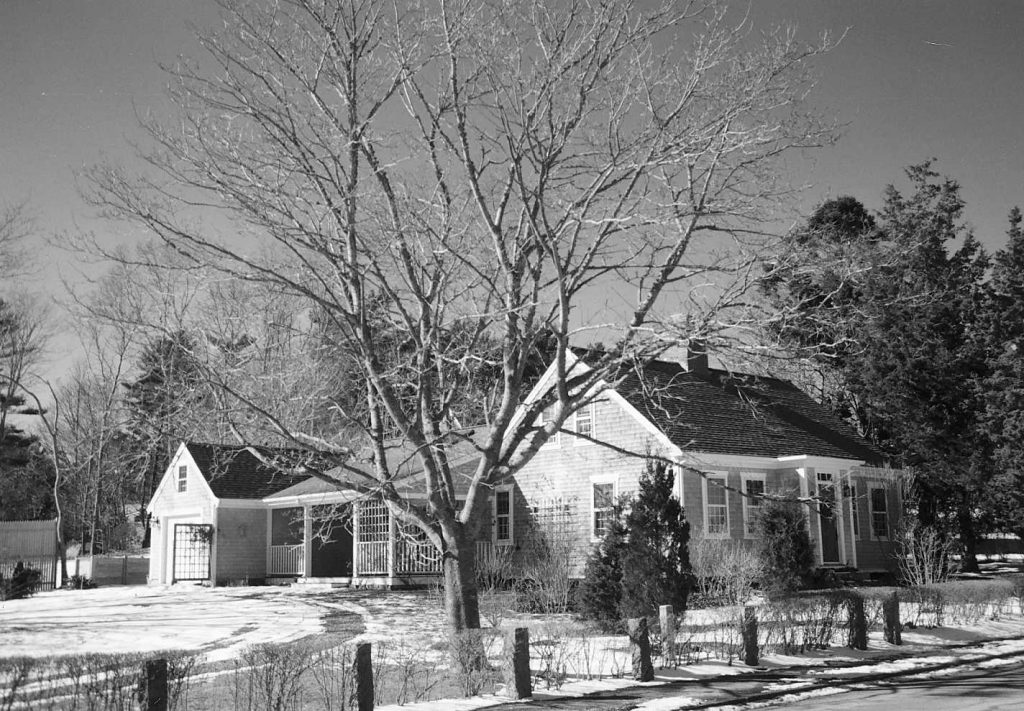
            This installment features 182 Front Street. Situated near the northeastern edge of the Wharf Village area is a well-preserved 1790 cape at 182 Front Street, which has been lovingly preserved by the Ryder family. Walter Hellier owned this house at one time. The center entrance residence has a small, projecting, and enclosed entrance accessed by several heavy granite steps. Simply framed by narrow vertical and horizontal boards, its front door has a three-pane transom over it. Rising from the center of the roof is a substantial chimney.

Community Service Learning at ORRHS

The Old Rochester Regional High School Community Service Learning (CSL) Club has been busy.

            The 2019-20 school year began with over 50 members joining the club, learning about volunteer opportunities to participate on their own, as well as sharing ideas for group projects to explore more during the year. The club meets once a week after school.  

            Under the leadership of sophomores Sally Butler and Maggie Brogioli, CSL collected 130 pairs of socks for their “Socktober” event in October. The socks were donated to the Women’s Center in New Bedford. As October came to a close, sophomore student leaders Maria Psichopaidas and Cameran Weaver inquired about collecting Halloween candy and donating it to troops abroad. Next year, they hope to raise money and send the candy from our school directly.

            Interns at Gifts to Give in Acushnet, juniors Jordan Duarte and Jo Dumas also organize ORRHS CSL group visits for one Saturday each month. In November, students sorted comics and on other Saturdays they clean and organize toys, clothing, and books for local children in need.  

            Student leader junior Jill Langlois organized our first visit to the Happy Hope Factory in Bourne, MA in November, where students packaged special gift bags for children who are hospitalized. Students volunteered again on January 20, 2020, for the “Martin Luther King Day of Giving” event.

            In December, Maria and Cameran organized our Toys for Tots collection with the special “Stuff a Cruiser” event held Friday, December 13. They were very happy to see two cruisers stuffed with toys for local children and appreciate the generosity of our Tri-Town residents in making these donations.

            For our first half day of school at the high school (February 5), students volunteered for the afternoon with the Sippican Land Trust clearing brush on a trail connected to the high school.  They also plan on volunteering with the Mattapoisett Land Trust on the next half-day in March.

            The CSL club members and co-advisors Karen Browning and Andrea Moniz look forward to students volunteering all year long in new and on-going projects such as tutoring at the Junior High School and planning a beach clean up in the spring.

            And finally, in June of 2019, we honored students who earned the “President’s Volunteer Service Award”. Thirty-one students volunteered for a total of 4,352 hours during the year (March 31, 2018 to April 1, 2019). This award, given at the national level, is based on the age of the student and the number of hours that they volunteered. 

Teens: ages 11-15

Bronze (50 – 74 hours): Desmond Sinnott, Autumn Tilly

Silver (75 – 99 hours): Joseph Dumas, Emilia Pinhancos

Gold (100 or more hours): Abigail Forcier, Eddie Gonet, John Kassabian, Paige Long, Payton Lord, Victoria Perry (458 hours), Daphne Poirier, Julia Sheridan

Young Adults: ages 16-25

Bronze (100-175 hours): Brielle Correia, Carly Drew, Emily Humphrey, Ryu Huynh-Aoyama, Kaitlin Kelly, Alexa McLeod, Elise Mello, Christian Noble-Shriver

Silver (175-249 hours): Sara Campopiano, Emily Kirkham, Colin Mackin, Aidan Ridings, Claire Noble-Shriver, Geneva Smith

Gold (250 or more hours): Bethany Cabral (395 hours) Brianna Lynch (304 hours), Rachel Perry (742 hours), Mia Quinlan (332 hours), William Stark (251 hours)