F.H.S. Class of 1960 Reunion

In light of the COVID-19 virus which has engulfed the world, the reunion committee of the F.H.S. Class of 1960 was polled as to what should be done about the reunion. With regret, it was decided to postpone the reunion until June of 2021.

            More information will be forthcoming as we plan for next year. Meanwhile, stay safe and healthy.

Route 6 Study Reveals Need for Less Speed

            It was two years in the making and involved many hours of discussion, contemplation, and study, but the Route 6 Corridor Study has been completed and, further, has received approval from the Southeastern Massachusetts Metropolitan Planning Organization.

            The SMMPO, as that group is known, was established to implement federally mandated transportation planning. It is a decisionmaker in the process of determining how federal and state funding of roadway and bridge projects will be allocated, according to the organization’s website. There are 13 MPO’s in the state chaired by the Secretary of Transportation. On March 27, in coordination with the Southeastern Regional Planning and Economic Development District (SRPEDD), final concepts and recommendations were released.

            In the final report produced by SRPEDD, the two-year process that culminated in the report was included to add context to the project and the manner in which the towns participated. Noted was that at the request of the towns of Fairhaven, Marion, Mattapoisett and Wareham, as well as members of the Massachusetts Department of Transportation District 5, SRPEDD was engaged to study current conditions as well as the impact of future growth.

            When public meetings and workshops were rolled out, the number-one item on everyone’s list of concerns regarding Route 6 was “safety.”

            Community members expressed their concern over traffic speed, pedestrian and bicyclists safety and the lack of a designated bike lane. As the months went by, added to the list were intersections deemed hazardous locations by residents and town officials.

            The study itself acknowledges that Route 6 was originally designed as the main throughway connecting Providence and points west to Cape Cod. Despite Route 195’s extension out to Route 25 in the 1970s, Route 6 has not been updated to better serve an increasing regional population.

            Even Mattapoisett’s almost 2,000-foot stretch of shared-lane roadway between North and Main streets is over 30 years old. Marion has no such variety. There are lights at the Front Street intersection but not at nearby Spring Street, and there are no protected, left-turn lanes.

            “We think, if you look at the report, our sections have more safety issues to address than any other town (on the corridor),” said Marion Selectman John Waterman.

            Safety crossing Route 6 is a major concern where residences make up approximately 80 percent of the roadside properties to the east of Front Street. The stretch of road, a four-lane highway with only two yellow stripes separating the direction of traffic, abides like a relic from the 1950s.

            A longer look at the stretch from the Marion-Wareham line at the Weweantic River all the way to the Mattapoisett line reveals Point Road and Front Street as the only two places where one can safely cross the highway.

            “I think what we’d like to do is slow down (through) traffic,” said Waterman. “The roads in Marion are not only about cars, they’re about pedestrians and bicycles, too. I want people with kids to be able to get across Route 6 safely.

            “I would like to see over time a kid who lives on Converse Road be able to bike to visit a friend who lives out by Kittansett… Right now, we have none of that.”

            Despite Route 195, both local and through traffic persist along Route 6. Waterman thinks that making intersections safer by adding traffic lights, dedicated turning lanes, and bike lanes would naturally slow traffic to the point it would create the “second-order effect.”

            “To the extent speed limits are slowed down, that will push more of the through traffic onto 195, which will be good for our community,” he said.

            In Mattapoisett, Highway Surveyor Barry Denham discussed the importance of taking this opportunity to modify several intersections along the corridor that was problematic for motorists. Those locations are the intersections of Brandt Island Road, Church Street extension, and Marion Road. He lobbied to “straighten” out the geometry of the intersections.

            In a conversation with Mattapoisett Selectman Paul Silva on April 18, Silva told The Wanderer, “Some intersections pose disaster.” He pointed to the intersection where Marion Road intersects with Route 6 as an especially dangerous layout. Other areas of concern that Silva said were pointed out in the report were the intersections at Route 6 and Mattapoisett Neck as well as Brandt Island Road.

            Silva did not agree with one overall design concept, however, the removal of a left-hand turning lane between Main Street and North Street. “I would not want to lose that,” he said. Despite the current lane configuration’s calming allows of traffic as well as flow, Silva stated, “…it probably doesn’t do enough to slow traffic down in that busy area.”

            Bonne DeSousa, a community volunteer who has spearheaded or been a prime mover in several critical projects in Mattapoisett including Complete Street projects, bike-path grant-writing, and the Industrial Drive reconstruction, commented via e-mail on the report.

            “SRPEDD made some changes to their draft based on public input,” DeSousa wrote. “The report recommended continuing with plans for intersection changes and other less safe conditions regardless of lane reconfiguration. Changes at major intersections are really important. Any changes that make it easier to cross the road will be important.”

            DeSousa noted the importance of District 5 design engineers’ advantage of greater latitude to change conditions than that of the transportation planners who authored the report. Designers can seek out “design exceptions” in the interest of safety, she said. DeSousa also noted a separate Department of Transportation effort going on, apparently begun after the study was undertaken, to look at the possibility of new ways to set speed limits. “It will take a long time to change the speed limit, but doing so will create better conditions,” she said, adding that community groups working on, “…road conditions that impact the pleasure, safety and prosperity of neighborhoods,” will stay involved in the conversation about traffic speeds.

            While SRPEDD’s study says it does not function to homogenize a solution, Waterman is less than confident Marion will see its unique problem areas addressed if residents and/or officials do not step up and push at the state level. The trump card, right now, is COVID-19 and a state throwing every resource possible into limiting the pandemic.

            “I honestly think if the state was going to redo Route 6, you’re probably looking at a huge price tag so not much is going to happen with it unless certain towns push,” said Waterman. “You’re not looking at a dense population with a lot of voters. It’s going to be up to the individual towns.

            “I would be very happy where we could get this at the point in the next two years where we’re talking with the Department of Transportation and we, ideally, get them thinking about designs for parts of Route 6 in Marion. I would consider that a major next step.”

By Marilou Newell and Mick Colageo

Trash District Drops Civil Embezzlement Lawsuit

            The committee for the Carver, Marion, Wareham Regional Refuse Disposal District (CMWRRDD) announced on April 15 that it was dropping its civil lawsuit against the surviving defendants involved in the Ray Pickles embezzlement case.

            The CMWRRDD filed the lawsuit on June 22, 2018, alleging that the former executive director for the trash district, Ray Pickles, age 85 at the time, defrauded the CMWRRDD of $838,000 between 2012 and 2017, while also listing Pickles’ wife, Diane Bondi-Pickles, 67, and former CMWRRDD committee chairman and Carver Health Agent Robert Tinkham, Jr., 58, as defendants.

            A Grand Jury on March 18, 2019, indicted Pickles and Tinkham on criminal charges. Pickles faced six felony counts of Grand Larceny for allegedly stealing $675,000 from the CMWRRDD, and Tinkham was charged with one count of Larceny and one count of Presentation of False Claims for allegedly accepting unauthorized payments totaling $35,000 issued by Pickles and backed by phony invoices for services not rendered.

            The trash district’s civil lawsuit was temporarily suspended while the plaintiff awaited the outcome of the criminal trial that was scheduled to begin February 24, 2020.

            Pickles died on December 20, 2019, at the age of 86, resulting in the dismissal of those criminal charges against him and Tinkham.

            The CMWRRDD committee maintained the option to continue its civil lawsuit against Bondi-Pickles and Tinkham to try to recover its losses, but according to a statement issued by CMWRRDD Chairman Stephen Cushing the committee voted on April 9 to drop the civil lawsuit against all the parties involved.

            “The difficult decision was made after the Massachusetts Attorney General’s office recently dropped its criminal case against all defendants following the death of… Ray Pickles, the primary suspect in the case,” stated Cushing.

            Cushing continued, “Due to these factors, the committee was advised by its legal counsel that the cost of continued civil litigation against the remaining defendants would cost more than the district would likely be able to recover if the lawsuit was successful.”

            What sparked the events that led to the civil lawsuit and subsequent criminal charges came in March of 2017 when Pickles issued the Town of Marion a bill for waste disposal for $25,000, the town’s first bill since 2012. As a district, the three towns would owe a total of $153,000 despite the full reimbursement of the district’s operating costs by SEMASS and income from the district’s two transfer stations.

            The CMWRRDD committee had rarely met regularly during the years in question, with the exception of the odd postings of a few meetings taking place in restaurants. A newly constituted committee started reviewing the financials for the trash district in January 2018, finding various irregularities and transactions without supporting documentation.

            The committee fired Pickles on January 29, 2018, and began to meet regularly as it sought a forensic financial audit of the last six years of Pickles’ tenure.

            Pickles had been the executive director for the trash district since its formation in 1973, while also serving as the executive secretary to the Marion Board of Selectmen from 1972-2001.

            When the civil lawsuit was filed, the complaint alleged that Pickles had cashed checks he wrote to himself totaling nearly $113,000, made unauthorized cash withdrawals totaling $150,000 from secret bank accounts he allegedly opened under the CMWRRDD, collected $31,000 in mileage reimbursements, and used over $13,000 in district funds to fuel his private boat.

            Upon retirement from his position as executive secretary in 2001, Pickles began receiving his salary under the name Moss Hollow Management, a corporation that listed Bondi-Pickles as the president, Pickles’ son Christopher Bondi-Pickles as director, and Pickles himself as secretary. The civil complaint named Moss Hollow Management as a defendant, accusing Pickles and Bondi-Pickles of further embezzling another $281,000 in unauthorized payments exceeding Pickles’ regular salary from 2012 to 2018.

            Pickles pleaded not guilty to the charges and blamed his age and the CMWRRDD committee’s lack of oversight for the alleged financial discrepancies.

            Pickles was still the elected town clerk for the Town of Marion when the civil case and subsequent criminal case was first introduced. The Marion Board of Selectmen asked Pickles to resign during its April 19, 2019 meeting, and then just weeks later Town Meeting voted to de-fund the town clerk’s salary line item for the fiscal year 2020 budget.

            Pickles officially resigned as town clerk on September 3, 2019, citing his diminishing health.

            Since 2018, the future of the CMWRRDD had never been more uncertain as the December 31, 2020 expiration of the district’s contract with SEMASS loomed. The CMWRRDD committee in December 2019 hired a new temporary, part-time executive director, Jeffrey Osuch, to guide the committee as it considered its options and to oversee the transition should the committee decide to dissolve the district.

            Marion was the first town to initiate the withdrawal process from the district upon Marion voters’ acceptance of the motion during the October 2019 Fall Special Town Meeting, which kicked off negotiations between Marion and the district for an equitable exit. In February of this year, the committee voted to call it quits on the CMWRRDD, and voters during the three towns’ 2020 annual spring town meetings will vote to accept the dissolution agreement.

            The dissolution agreement will include granting the Town of Marion ownership of the Benson Brook Transfer Station, one of two district-owned transfer stations.

By Jean Perry

Benvinda A. (Alves) Lobo

Benvinda A. (Alves) Lobo, 89, of Mattapoisett, died April 23, 2020 in the German Centre for Extended Care in West Roxbury. She was the daughter of the late Antone and Mary (Lopes) Alves.

She was born in Wareham and lived in Mattapoisett for many years. She then lived in Boston from 1967 to 2003 before returning to Mattapoisett. 

Mrs. Lobo worked as a receptionist in the Radiology Dept. at the Boston University Hospital for many years.

She enjoyed music, dancing and going for walks.

Survivors include her children, Donnetta Andrews of Boston, Ronald C. P. Lobo of Chesapeake, VA, Richard K. Lobo of Boston, Dana K. Lobo of N. Reading, David K. Lobo of Boston, Donald C. Lobo, Sr. of Mashpee; her sister, Mary Owens of Seaside, CA; 11 grandchildren; 9 great grandchildren; many nephews and nieces. 

Her services are private.  

A public celebration of Benvinda’s life will be scheduled when it is safe to do so.  To share a memory or to leave the family a message of condolence, please visit: www.ccgfuneralhome.com.

Arrangements are by the Chapman, Cole & Gleason Funeral Home, 2599 Cranberry Hwy., Wareham.

High School Seniors Feel Sting of School Cancelation

            When Massachusetts schools were forced to shut their doors due to the novel coronavirus outbreak, leaving students to remote learning, student-athletes saw their spring sports seasons put on pause. There was resulting concern as to whether or not there would be spring sports at all in 2020.

            On Tuesday, April 21, Governor Charlie Baker announced the bad news many expected: Students will continue to learn at home for the remainder of the school year, taking away the spring season for so many student-athletes — the seniors, in particular.

            “I think it’s just a disappointment,” Old Rochester athletic director Bill Tilden said. “I think everybody saw that this was probably coming down this way. We were all doing our best to fill out the schedules and I think there were a lot of people that really worked hard to make sure that we were ready to go when it started… It’s just a gut punch for everybody who’s put all this work in — for the kids and the adults.

            “Kids should have a blast throughout their school career, not have all the greatest things… in the end of senior year. Well, obviously things can happen and stuff doesn’t work like that. So we need to learn to spread stuff out.”

            In the world of high school athletics, junior year is also crucial for student-athletes looking to pursue a college playing career — perhaps for the spring athletes more than any others.

            “If you’re a junior, this is hurting you hard, too,” Old Colony athletic director Matt Trahan said. “Because (recruiting) is based on stats, and it’s based on record and it’s based on what you did last year. And there’s a lot of ifs and buts right now. So I feel for them all.”

            Tilden echoed a similar sentiment.

            “(Our) junior class has some exceptional athletes in both track and in lacrosse, baseball, softball, that aren’t getting a look-at,” he said. “And especially junior boys, they’re not the same kid as they were as freshmen or sophomores. They’re going from boys to men and colleges are looking for those kids to offer them scholarships because they can’t wait and until next spring to take a look at these kids. They’ve already filled all their slots.

            “I think those kids are the ones that are really missing out on future opportunities of possibly going off to these schools when they can’t show them what they can do.”

            Like Tilden and other athletic directors across the state, Trahan has kept tabs on his schedule with his contemporaries and checked in with officials, too. But Old Colony’s athletic director had previously expressed that he wanted to do something for student-athletes in the event the spring sports season was canceled.

            “I don’t want to wait too long because I think it loses its effect,” Trahan said. “We’ve got people we want to honor, things that we want to do. And really, if you wait until August or September, those kids are either now away at (college) or they’re off to work and whatnot. So I’m going to be spit-balling with my coaches and whatnot. And we’re going go to try to do something, I don’t know, maybe with a little bit of humor? Because I think everybody needs that right now, and we could be doing something via Zoom (video conference) or whatever it may be — that seems to be the platform everybody is using. But we’re definitely not going to let the spring go by, the year go by, without doing our due diligence.”

            While Tilden and Trahan wish Baker’s decision had been different, they understand why the governor took the route he did.

            “We can’t complain,” Trahan said. “I mean, I think we’re all upset. But God forbid anything happened to any of these kids that we’re talking about. I think keeping them safe and healthy is the number one priority. I really do appreciate — and I think a lot of people have liked the way Charlie Baker has done business. I think he’s been a good communicator. (He) definitely looked out for people’s best interests.”

Sports Roundup

By Nick Friar

The Hummingbirds of Allen’s Point

            At this time of year in Marion, there is a glorious bright spot which I look forward to with great excitement and anticipation: the return of the Ruby-throated Hummingbird! It seems especially poignant and uplifting this year.

            These fascinating “fairy” birds travel thousands of miles every year to return to their birth nesting origins. Some estimate that only 30 percent will survive the grueling journey. They generally spend the winter in Central America, Mexico, and Florida, before migrating to Eastern North America to breed in the summer. They double their weight prior to embarking on this arduous marathon flight over the Gulf of Mexico, which offers no landing in sight! I often think of what these little lives have had to endure to arrive back here at my feeders; storms, predators, lack of food sources, and all that mother nature can throw at them. In some way, they seem to help put our current circumstances into perspective.

            I can’t remember exactly when I became enthralled by these miracles of nature, but it has been several years of utter infatuation for me. It began with one feeder and a handful of hummingbirds, but when the fighting over the feeder started, I put up a second feeder and then a third. Currently, I have a total of six feeders, and I estimate between 30–50 hummingbirds who have made our property their home. Guests have witnessed the incredible activity of my birds with awe and amazement as they zip and buzz over our heads from nest to feeders incessantly.

            Filling six feeders and keeping them clean is a full-time summer job! Every day, I refresh the formula, which consists of one cup of sugar to four cups of water, lightly heated over the stove until the crystals are dissolved. It’s also necessary to regularly run the feeders through the dishwasher to reduce bacteria and keep hummingbirds healthy. As the weather warms up, the feeders have to be refreshed and cleaned at least every other day. It is a labor of love that I anticipate every spring and mourn with their departure in the fall.

A few fun facts about these little marvels:

Average length: 3.5 inches

Average weight: 1/8 ounce

Body temperature: 105-108 degrees (F)

Wing beats: 40-80 per second, with an average about 52 

Respiration: 250 per minute

Heart rate: 250 beats/minute resting; 1200 beats/min feeding

Flight speed: 30 mph normal; 50 mph escape; 63 mph dive 

Hummingbirds are the only birds that can fly backward.

Females typically lay two eggs that are the size of a Tic Tac! Hummingbird eggs are among the smallest eggs of any bird species. The Bee Hummingbird is the smallest hummingbird and often mistaken for a bee due to its minute size.

            The biggest threat to hummingbirds are humans, who when landscaping often cut branches that hold their tiny camouflaged nests. If this ever happens to you or you find a hummingbird nest on the ground, try to put it back as close to its original location as possible, as the mother will search for days for a missing nest. If you can ask landscapers to prune limbs in late fall after the hummingbirds have migrated, it may save these little lives.

            So, while confined and quarantined, shrouded with an onslaught of depressing news and negativity, I am uplifted with great anticipation and excitement, tracking the migration for the arrival of my precious, darling fairies! If you keep an eye out, you just might see some, too!

By Elizabeth Hatch

Village Infrastructure, Creek Road Have Heavy Price Tags

            Department of Public Works Director David Willett told the Marion Board of Selectmen that he was pleasantly surprised that CDM Smith engineering sent him its computer-aided-design (CAD) files for the roadway at the center of the Village Infrastructure Project Phase 1B during the Board’s April 21 remote-access meeting. 

            “I’m a little reticent about talking about it,” said Willett. “They did a big favor for us… It’s going to save us an enormous amount of money even if we use another contractor.”

            The work, worth $21,800, had been revised and is still essentially the same proposal involving sewerage, roadway design, and the stormwater system.

            “In my opinion, it’s quite a bit overdesigned for what you need there,” said Willett, adding that while the village is a mature area, a peer review will evaluate the information and give its opinion on rehabbing versus reconstruction of the system.

            Further analysis may yield conceptual changes to the stormwater plan that would, in turn, reduce the cost and allow the redirection of money to other road projects that the village needs.

            Selectman Norm Hills said that he wants to make sure that the latest rainfall data is taken into account when that gets decided. Willett said that, with the sea-level rising, it would be nice to see the potential evaluation of Marion’s village infrastructure.

            A motion to approve an allocation of Chapter 90 funds was tabled until Thursday, April 23, when the board members will have had ample opportunity to review the proposal. Town Administrator Jay McGrail told the board there needs to be a meeting on April 23 anyway to vote on a solar contract.

            “A peer review is a good investment for us. We need to get this moving. All this work isn’t going to get cheaper while we allow this to drag on,” said Selectman John Waterman.

            Willett addressed other subjects, including the town’s pavement management program. He was pleased to learn than Marion’s roads were given a 75 percent rating; the best rating he had seen prior to in another town was 70 percent.

            Willett reported that Beta Engineering is suggesting Marion spend $265,000 for the next five years in order to capitalize on minor road repair opportunities and thereby maximize the present value of its roads and minimize future costs. Willett is looking to allocate more than the $170,000 it would take to get Marion to a Grade D; $190,000 might get Marion to Grade B.

            Waterman pointed out that Creek Road is in dire need of repair and should not fall behind, but the approximately $400,000 it would take to reconstruct the middle section of Creek Road alone outweighs the $265,000 that is suggested Marion spend to maximize value in its other roads.

            Willett countered that the overall value saving should not be sacrificed to reconstruct Creek Road, which is already in need of a major overhaul. All present were amenable to Creek Road repair being put in the capital budget for FY22 so it will not slip further behind.

            “So, I’ve got a two-headed road program,” summarized Willett.

            The board gave Willett the right to waive the town’s $5,000 bonding requirement for contractors in the case of emergencies and special circumstances so as not to hold up smaller street-opening permits by rules designed more for large contractors doing large jobs.

            Waterman later suggested that, before vegetation grows is a good time to get done the spring beautifications to the Village, focusing on painting and signs.

            In his report, McGrail updated the Board of Selectmen on the Board of Health meeting an hour earlier in which the reopening of the beach parking lot was discussed but with no firm plans until at least May 4 with a May 5 Board of Health meeting scheduled.

            Meantime, Assistant Harbormaster Isaac Perry will begin installing the floats at the town dock, getting it ready to open for the public in time for May 5, pending the governor’s guidance. 

            The state’s stay-at-home advisory expires on May 4, but with Tuesday’s announcement that schools are closed for the duration of the 2019-20 academic year, it’s a game of hurry-up-and-wait where it concerns non-essential businesses and public facilities.

            Hills made the point that boats could soon be coming north, as snowbirds return from winter in the south, and asked if they should be asked to self-quarantine upon arrival. It was noted that one way to identify potential newcomers would be tax bills mailed to out-of-area addresses.

            McGrail told the board that, for now, the plan at Town House to have staff working two days in the office and three days at home has kept the business of government running. “It’s working out well,” he said.

            McGrail reported that General Electric has offered the best bid proposal for Marion’s interest in a solar project and, at the same time, in proposing a straight lease, is the town’s only legal option. General Electric will have to apply for the interconnection with Eversource, and that fee could kill the project, according to McGrail.

            The board approved the promotion of Jonathan Castro to permanent status as a member of the Marion Police Department and welcomed aboard two others to one-year probationary periods. Castro, formerly with the Fall River Police Department, has been on for a year, met all requirements, and was in line to be appointed to a full-time permanent position.

            Kaylah Medeiros, a member of the National Guard, was brought on as a full-time officer for a one-year probationary period. Chief of Police John B. Garcia welcomed her, saying, “Congratulations; you earned it.”

            Connor Flynn of Plymouth was also brought on for a one-year probationary period as a special officer. A Mass Maritime Academy graduate, Flynn had been an assistant harbormaster in Duxbury and a lieutenant junior grade in the Naval Reserves. Hills, retired U.S. Navy, told Flynn, “I appreciate your service, too… I’m sure the chief has work for you to do.”

            Garcia told the board, “We now have all five branches of the service covered.”

            In other business, the board approved $1,950 needed to complete restoration of the piano at the Music Hall.

            The board approved a water-sewer commitment of $10,000 for new service.

            The board approved the appointment of Jessica Govoni to the Scholarship Education Fund committee.

            Chairperson Randy Parker praised fundraising work done by Judy Rosby, who spearheaded the raising of $164,000 for the Elizabeth Taber statue. The Sippican Historical Society has donated $50,000 and been the receptacle for all the money coming out of that privately-raised fund. The Society is planning an August 2 event on Taber’s birthday.

            Parker also praised the group of citizens that formed a team picking up trash around town during the weekend. “It didn’t go unnoticed,” he said.

            The Memorial Day parade, currently planned on a low profile, will be on the board’s agenda for discussion at its next meeting, Thursday, April 23, at 3:00 pm.

            The board proclaimed May 3 through 9 to be Children’s Mental Health Awareness Week.

Marion Board of Selectmen

By Mick Colageo

Sippican Historical Society

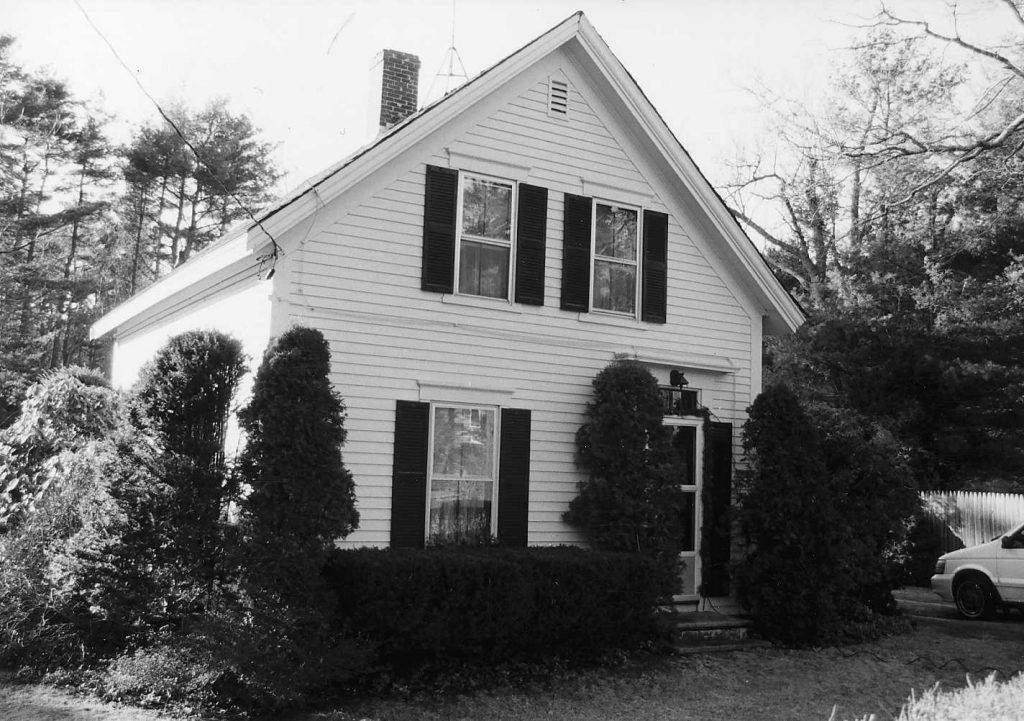
Marion (Old Rochester) is one of the oldest towns in the United States, and the Sippican Historical Society maintains an extensive collection of documentation on its historic buildings. In 1998, the Sippican Historical Society commissioned an architectural survey of Marion’s historic homes and buildings. Over 100 were cataloged and photographed. SHS will feature one building a week so that the residents of Marion can understand more about its unique historical architecture.

            This installment features 194 Spring Street. The charming, diminutive Greek Revival-style cottage at 194 Spring Street was built between 1855 and 1870. It was the home of William R. Gifford, who became well known to tourists in Marion’s Gilded Age as their gracious transportation on the last leg of their seasonal quest for beauty, peace, and recreation.

Edward P. Ashley

Edward P. Ashley, age 73, of East Freetown, formerly of Rochester, died on Friday, April 24, 2020, at the Tobey Hospital in Wareham.

Ed was born in Wareham, the son of the late Karl & Grace (Paradis) Ashley.  He grew up in Freetown, lived in Rochester and settled in East Freetown.  Ed was a farmer, growing cranberries in his cranberry bogs.  He was a U.S. Navy Veteran, proudly serving his country during the Vietnam Era War Period.

Ed was the beloved husband of Sherri (Kauranen) Ashley; loving father of Megan Blevins & her husband Jonathan of Florida, Lisa Malatesta of Rochester, Eddie Ashley of Fall River and Ashley Carey of New Bedford; cherished grandfather of Samantha, Evelyn and Maxwell; dear brother of Alexis Blowers & her husband Brian of East Freetown, Scott Ashley & his wife Kymberly of Rochester and the late Karl Ashley & his surviving wife Wendy of East Freetown.  Ed is also survived by many dear nieces, nephews, cousins and friends.

Funeral and interment services will be private and held for the family only.

In lieu of flowers, contributions in Ed’s memory may be made to the New Bedford Vet Center, 73 Huttleston Avenue, Suite 2, Fairhaven, MA 02719.

For online condolences, please visit our website: www.ashleydrolettefuneralhome.com

Confessions From a Home Economics Failure

            In 1965, I entered Wareham High School. I had one major goal: graduation – period – nothing else. Graduation meant, as far as I was concerned, total liberation from teachers who, for the most part, tolerated me as I tolerated them. Not that I was a class clown or worse, troublemaker, no. I was just an anonymous frowning face in the crowd, destination unknown. But there were certain classes I enjoyed either because of the teacher or in spite of the same.

            I liked typing and shorthand. Good thing because my rudimentary skill-level of those business-office must-haves landed me much-needed jobs right out of high school. I also enjoyed Civics (if you were born after 1970 you won’t know what that is), Social Studies, History, English Literature (not grammar as you know), and Science.

            Most of the other girls in my class also enjoyed Home Economics simply called “Home-Ec.” These girls liked learning about household budgets, baking pans, cooking from scratch, and sewing. I did not. But Home-Ec was mandatory for girls as shop classes were for boys. It was either in the sophomore or junior years we were conscripted for duty in our practical vocational classes.

            At home there had been times when I was pressed into cooking duty because Ma was sick, or when I was younger still because I needed to make a fully planned meal for a Girl Scout badge. But I didn’t enjoy being in the kitchen. For one thing, my mother didn’t enjoy cooking. It was a chore primarily featuring canned meats and frozen vegetables. Occasionally she’d get creative and cook-up cream chipped beef over mashed potatoes, French toast as a dinner entrée or macaroni soup with melted Velveeta cheese. Yum. But mostly it was food for sustenance, not flavor.

            Sewing in our home was handwork, not sewing machine. Like prepackaged foods, Ma preferred off-the-rack clothing.

            In Home-Ec class, the bubbly instructor, Miss Jackson, enthusiastically described the joys of cooking, keeping a clean home, especially the bath and kitchen, and (drum roll please) how to operate a sewing machine.

            The Home-Ec classroom was set-up in two sections: a fully equipped kitchen and the sewing-machine room. We were required to spend half the year in the kitchen and the other at the machines. While the boys were busy learning carpentry and automotive skills, we were being prepped to become homemakers.

            Our teacher was perfect for her role. Miss Jackson was a peach; really, if a person can be called a fruit, peach suited her. She was originally from the south, wore her hair in a teased bouffant up-curl of yellowish fluff, and dressed each day in a stiffly starched, shirtwaist dress. She was a vision complete with either pinky pink or peachy peach lipstick. I did like her.

            Unfortunately, I was an incompetent seamstress, making me the bane of Miss Jackson’s day whenever my group rotated into her schedule. First and foremost, while I could darn socks, replace buttons, sew up a split seam and other small clothing-maintenance functions, the sewing machines terrified me. The worst part was winding the bobbin and threading that thick mechanized needle.

            Operating the sewing machine, whether it was an antiquated black Singer or a modern Zig Zag style, required the capabilities of an engineer to operate. There was the take-up lever, the tension wheel, spool pins and, last but not least, the needle.

            I wish I could tell you that I eventually achieved a level of adequacy that gave Miss Jackson the opportunity to move on to more complicated details of making a garment from whole cloth, but I’d be lying. I did not. She always had to help me, going slowly step-by-step until the machine was ready to actually sew parts together.

            Every year for decades, girls were required to complete two sewing projects to receive credit for the class – an a-line, wrap-around skirt and an apron with a pocket. These were considered easy projects quickly executed by anyone capable of chewing gum and walking at the same time. 

            As memory serves, we had to shop for the patterns at the 5 & Ten Store. Back in class we gingerly removed the paper patterns from their envelopes. Miss Jackson decoded the pattern’s language and symbols with the precision of an archeologist at a pyramid dig. Everyone seemed able to grasp the inner meaning of the markings on the pattern except yours truly. Fear coursed through my arms and hands as I tried with everything I had to understand the mathematics involved – yes, math. Another class I struggled with while learning how to operate an adding machine. But that’s another story.

            Suffice to say, Miss Jackson had to stand beside me to ensure I didn’t ruin the denim fabric intended to become, through some miracle, a skirt I could actually wear to school. Those who were really good at sewing were making two-piece ensembles of tweed trimmed with velveteen. I was simply hoping the seams of the four panels that made up my skirt would hold.

            Here’s what I remember clearly: I wasn’t able to finish on my own and, as the deadline for the fashion show, yeah the fashion show, approached, Miss Jackson helped me. The waistband’s attached belt was left for me to finish. It was a bit too short and poorly executed to say the least, but I sewed it onto the skirt and was grateful this exercise in humiliation was over. I was sick (cough-cough) the day of the fashion show.

            Oh, the apron faired a bit better, but the pocket was crooked and the tie uneven. My aunt, who wore a fresh clean apron every day of her life, became the recipient of that work of abstract art. Bless her soul, she did wear it whenever I was around.

            Sewing with a needle and thread minus the machine has served me well over the years. But today one of my regrets is not learning how to operate a sewing machine. I could and would be sewing up face masks instead of suffocating my husband and myself with the “no sewing required” models.

            I have been able to purchase cloth facemasks online. They arrived today. I studied the seams and the shape of the fabric while thinking, “I should have tried harder in Home-Ec.”

            Miss Jackson, wherever you are, thank you and I am sorry.

This Mattapoisett Life

By Marilou Newell