Gravestone Art and Symbolism in the Tri-Town

            The Mattapoisett Museum hosted a virtual presentation by the Gravestone Girls, experts in the field of deciphering not only the craved imagery of early gravestones but also burial practices of the past. And while this is the time of the year when cemeteries play to dark themes in a run-up to the Halloween celebration, cemeteries through history have largely been places to cherish and even to enjoy.

            Founding member Brenda Sullivan gave the October 8 presentation with an amazing command of the subject matter that was both entertaining and informative. In a word, brilliant.

            Calling the Pyramids of Egypt “giant gravestones,” Sullivan briefly talked about early belief systems, most of which included an intact resurrection requiring burial goods such as food, drink, clothing, and, oh yeah, and possibly a few servants to accompany the deceased as they ascended. As for the Egyptian rulers who were entombed in the Pyramids, they deemed themselves gods so it was only right that, in death, thought to be a transient state of being, they were worthy of heaps of gold, too. If you’ve ever seen Tut’s golden mask, you’d know of which I speak.

            Moving on, the primary focus of Sullivan’s presentation centered on burial practices and associated religious beliefs during the Colonial and Victorian eras and modern centuries. She toured Mattapoisett and used photographs from local graves to illustrate various points in her talk, making sure to say as a cautionary note that the viewer might recognize an ancestor’s gravestone so, “… please don’t be shocked.”

            Over the course of an hour, Sullivan brought local cemeteries to life, so to speak. She explained that in the 1600s strict religious themes ruled how burials were carried out, including the type of imagery that was carved into gravestones.

            “The head and feet of the deceased were arranged in an east-west orientation,” Sullivan explained. She said today when we look at old burial grounds, we are not seeing them as they would have been. “Headstone and footstones have been moved over the years to accommodate maintenance.” Inscriptions on stones would have been facing west and the body facing east. “Gabriel would be coming from the east,” she said of the early believers, “… so they had to be facing east when they sat up in their graves to fly away with him and go meet their maker.”

            Speaking to the gravestones from the early 1600s that still bear the image of a skull with wings, Sullivan said that the skull represented the immortal soul and the mortality of humans. “It depicted the idea that we are all mortal,” and therefore, “it was the humans’ job to behave well while alive.” Most people were unable to read, she pointed out, thus the cravings helped to drive home the doctrines taught by religious leaders. “Death was omnipresent.”

            By the 1700s, the winged-skull motifs were evolving into faces with flesh, but there were also images of the sun representing its setting caused by death, stars as guiding lights to heaven, and crowns for those considered righteous. There were also hourglasses marking the ebbing away of life on earth.

            Sullivan said that some of the gravestones from this period also showed a “wagging finger” that spoke to the need of being prepared for the end by doing the rights things while living. On a happier note, she said that the early settlers also believed that the grave was not the end, that death was not permanent, and that, “the grave was God’s hiding place while they waited for Gabriel – it was the promise of something more.”

            During the 1800s there was a revival of Greek and Roman decorative themes, Sullivan shared. “We’d had a revolution, people fought to govern themselves, there was a great deal of archeology taking place; neo-classical themes seeped into everything including 19th-century stones.” Urns and weeping willow trees replaced darker themes. These updated symbols became common gravestone images, and there was the rise of the garden cemetery where families could meet neighbors, have picnics, and remember their dearly departed.

            “People were moving into the cities from rural areas, they were working in factories, they were becoming the nouveau riche,” Sullivan said. These economic and societal shifts were part of the reason that cemeteries became gardens, not just simple burial grounds but “sleeping places.” These were the first green spaces Sullivan stated complete with flowering bushes and ponds. “When the Mt. Auburn Cemetery opened people flooded to it, it was a sensation,” she said.

            About this same time, family plots became popular with borders that were like foundations to rooms. These were social spaces. Softer symbols started to appear such as floral cravings. Marble was introduced for gravestones newly available with the advent of transportation systems. Marble, however, would prove a less-than-ideal material due to its porous structure. Today marble gravestones are stained black. “Use your mind’s eye as to how they would have looked when first placed at a grave,” Sullivan advised. Other favorite symbols of the Victorian era were shaking hands. “They are saying hello and goodbye …” anchors, birds and, for children, lambs.

            With money came the hill vaults and tombs. Sullivan said that the famous stained-glass maker Tiffany made windows for tombs, tombs that might even contain furniture for the visitors to use. But the Victorian period would also fade in time.

            “The modern period is different from other periods,” Sullivan began. She said there was a backlash against all things overdone. “We wanted to simplify.” Also during this time, the Arts and Crafts movement with its clean lines and uncluttered appearance came into vogue. But also changing was the way cemeteries were designed. Sullivan said that lawn cutting required straight rows of a given width and that people no longer went to gravesites to picnic and visit the deceased.

            Granite became the preferred material for gravestones. But today’s stones also provide a deeper look into the life of the deceased. Sullivan said that early gravestone gave little detail except for a person’s name, age and whether or not they were a wife, husband, or child. Today the gravestone tells so much more. Photography can now be etched into the stone’s surface and many stones also speak to the deceased interests such as golf, fishing, or dancing.

            Before Sullivan closed out her comments, she pointed out that in local cemeteries there are rather-unique gravestones made from zinc. These “stones” were called “white bronze” but were, in fact, made of zinc. They were a less expense headstone option between 1870 and the advent of World War I. Only one manufacturer in the entire country offered these cemetery markers that could be ordered from catalogs. The Monumental Bronze Company was located in Connecticut and did a thriving business until the US economy shifted to manufacturing military supplies for WWI. The company’s history also noted that the color of the metal, a cool blue-gray tone, was thought to be cold.

            Today there are examples of the zinc cemetery monuments in both Marion and Mattapoisett. They are very noticeable in older cemeteries because they are antimicrobial; lichen and moss will not grow on their surfaces. They gleam much as they did when first installed.

            Speaking of the aging and appearance of gravestones, Sullivan cautioned not to clean gravestone yourself. But if you do try, you should use soft brushes and lots of clean water. She also said that the organization Friends of the Middleborough Cemeteries understands the cleaning process and can be very helpful to those wishing to learn more.

            Sullivan said that some cities and towns have returned to using cemeteries as places for people to gather. She noted that yoga classes, beekeeping, dog parks, and road races raise money, in some cases monies that are used to maintain the cemetery. If you missed the Gravestone Girls presentation, you can watch it on YouTube (search for Mattapoisett Museum Gravestone Girls).

            A quick count of the number of cemeteries in the Tri-Town area came out to 17, but I am sure there are others hidden deep in pine forests or along the edge of sub-divisions that I missed. Why not take a cemetery tour and see how many you can find?

By Marilou Newell
Sippican Historical Society Shop Opening

The Sippican Historical Society’s new shop at 141 Front Street, opening October 17, has a focus on children. A special assortment of new and gently used books will include beloved classics, hard-to-find nautical and sailing-related books, and picture books for preschoolers. A smattering of unusual toys (stilts anyone?!), puzzles, games, and art supplies will round out the tempting items designed to encourage creative play away from electronic devices.

            The Shop will host a rummage sale of children’s toys at the Historical Society (141 Front Street) on October 17 from 12:00 to 2:00 pm. Don’t miss this opportunity to buy fun, gently used toys for great prices.

Marion Special Town Meeting

The Town of Marion Special Town Meeting will be held at the Old Rochester Regional High School Auditorium at 135 Marion Road, Mattapoisett on Thursday, November 5 at 6:45 pm.  Face coverings are required and social distancing will be required.

Building a Taj Mahal on Sippican Harbor

To the Editor;

            Building a Taj Mahal on Sippican Harbor

            There was a great turn out for the presentation on the proposed Maritime Center.  While the public was generally positive, discussion regarding the size of the building, the amount of office space, and the proposed uses was noticeably missing.  

            It will have a footprint of 5,343 square feet, 2,000 square feet of office space, and be 36.4 feet high (from the ground to roof ridge).  Such a large building will dominate the site.  A friend called it the “Taj Mahal on the harbor.”

            The 2,000 square feet of office space calls for three private offices and onsite record storage.  Our police officers don’t have private offices.  One private office for the Harbormaster, which can double as a conference room, would be sufficient.  Record storage needs to be centralized at the Town House.

            It calls for consolidating all harbormaster functions and personnel at Island Wharf including records and physical storage under the building.  This is nonsensical even with an elevated building.  The site is in the velocity zone, only 6.5 ft above mean low tide. 

            When the first storm comes through flooding low lying areas, our harbormaster resources will be tied up evacuating their own facility, including records and equipment stored there.  The building might survive the flooding and the high winds, but might not survive a large size boat dragging anchor and crashing into it.  

            While there is grant money available for these types of projects, we need to be sensitive to the total cost to make a credible grant proposal and because it is likely Marion will need to fund 25% of the project cost.  This design appears to have been done with no budget limit.  We also can’t ignore the cost of maintaining and cleaning this large facility.  In no time, our Facilities Director will be discussing the need to hire another person. 

            Only essential functions and personnel should be located at Island Wharf and other needs accommodated elsewhere.  We need a “command and control” tower with expansive views, a small counter for customer service, and public bathrooms there.  It would be nice to have a public observation deck above them.  This small facility will maintain open space, preserve water views, and preserve public access to the harbor at Island Wharf.

John P. Waterman, Marion Resident and Selectman

The views expressed in the “Letters to the Editor” column are not necessarily those of The Wanderer, its staff or advertisers. The Wanderer will gladly accept any and all correspondence relating to timely and pertinent issues in the great Marion, Mattapoisett and Rochester area, provided they include the author’s name, address and phone number for verification. We cannot publish anonymous, unsigned or unconfirmed submissions. The Wanderer reserves the right to edit, condense and otherwise alter submissions for purposes of clarity and/or spacing considerations. The Wanderer may choose to not run letters that thank businesses, and The Wanderer has the right to edit letters to omit business names. The Wanderer also reserves the right to deny publication of any submitted correspondence.

Old Middleboro Road Solar Shut Down Pending New Application

            The Rochester Planning Board met on October 13 to address certain conflicts that have been raised surrounding work being done on the Old Middleboro Road Solar Project. On a visit to the site, Town Planner Steven Starrett discovered that the construction group tasked with completing the project has been following a set of plans that never received approval from the Rochester Planning Board.

            Although the board granted approval to the proposed solar project, construction on the site has been deviating from the rules and regulations that were established during the board’s public hearing on the proposal. Starrett explained that the changes to the plans were made to adhere to specific regulations that were put in place by the Rochester Conservation Commission. Since the applicants never brought the Conservation Commission’s requirements before the Planning Board, the project is now essentially being constructed without the town’s approval.

            Planning Board Chairman Arnold Johnson expressed his own hesitation toward the development and revealed his concern that the secluded location of the construction area may make it difficult to monitor what is happening in the area. In addition, the Planning Board has received reports that tree clearing in the area has already taken place without any approval from the town.

            Johnson also received notice that bonds required for the project to go forward were never provided to the town. Starrett told the board that it is likely that the project managers decided to move forward with the work in order to complete an access road to the site before their October 15 deadline. With a lack of the required bonds and a clear conflict between the plans being used and the plans approved by the board, Johnson made it clear that the work being done is not permitted.

            Rochester Planning Board member Bendrix Bailey proposed a motion to halt all development of the project until new plans are presented to the board and the required bonds are in place. The board unanimously carried the motion to halt all progress on the Old Middleboro Road Solar Development.

            Developers will need to submit a new application to the Planning Board containing the set of plans they intend to use on the site going forward. Johnson explained that the opportunity to review the new plans will allow the Planning Board to determine whether the changes to the plans required by the Conservation Commission constitute significant or insignificant changes to the development.

            Pending the board’s approval of the new plan set, the development could face punitive measures if work continues. Johnson explained that it may be in the board’s best interest to have its peer-review engineer group, Field Engineering, establish a site office at the development at the applicant’s expense in order to guarantee that any work being done is fully in accordance with approved plans. Ultimately, the board agreed that halting work at this site is in the best interest of the town, as allowing it to continue could set a dangerous precedent.

            The board concluded its business with discussions relating to a solar development on Featherbed Lane. The Featherbed Lane Solar North project, represented by Beals and Thomas Inc., which dates back to May, will no longer move forward. The applicant for the project submitted a Withdrawal without Prejudice after the anticipated purchase of the required property was not completed.

            With the prospect of the future development no longer practical, the board voted to withdraw the application and bring any proposed work relating to the development to an end. Despite the closure of the application, there is still another proposed solar development on Featherbed Lane. The draft decision for that proposal, also represented by Beals and Thomas Inc, will come before the board for approval in its next meeting.

            The next Rochester Planning Board meeting is set to take place at the Rochester Middle School, with remote access provided via Zoom, on October 27.

Rochester Planning Board

By Matthew Donato

Three Towns, Three Approaches to Emergency Preparedness

            The COVID-19 pandemic presents complications to an aging core of community volunteers in Marion, Mattapoisett, and Rochester, and each of the Tri-Town communities has a distinct model of its own in mind to maximize success in times of crisis.

            Mattapoisett is affiliated with Middleborough-area Medical Reserve Corps (MRC), a national collaboration of medical and non-medical volunteers who are organized locally.

            “In Mattapoisett at least, the system we have in place is our MRC volunteers know they would be contacted if needed. If our existing resources were exhausted, we maintain a database,” explained Amanda Stone, the part-time Mattapoisett health nurse.

            Some of Mattapoisett’s MRC volunteers transitioned for ease of management to the statewide Mass Responds management system, but Mattapoisett is not a member per se. “In Mattapoisett, we decided that’s run by the state, but we would keep our MRC locally. The bottom line is that … we all work together ultimately,” said Stone.

            People join Mattapoisett’s MRC by completing application forms including whatever licenses and skills that they may have, including non-medical volunteers like computer skills that could be useful. “We certainly don’t turn anybody away,” said Stone.

            For an emergency dispensing site – those must be approved by the Massachusetts Department of Health – the town needs 69 volunteers available on a 24-hour shift. In reality, people wear many hats because there are so fewer than 69 available at one time.

            The MRC conducts drills and walk-throughs. Old Rochester Regional High School is the state-designated emergency dispensing site for Mattapoisett’s MRC so plans are already in place should an emergency occur. “You may need two EDS’s up and running, you just don’t know. It’s a live program in Mattapoisett,” said Stone. “We have a nice balance in Mattapoisett in medical versus non-medical volunteers and a variety of ages.

            “In many communities, CERT (Community Emergency Response Team) and MRC work together if they need to. The goal for both organizations is to dispense emergency-response capabilities. We just have a very active MRC in Mattapoisett.”

            Stone is retiring from 16 years as the public health nurse at the end of February, but added eight months on a part-time basis. Emily Field is the new public-health nurse in Mattapoisett. “We’re sharing the workload,” said Stone.

            Stone saw the community through the H1N1 flu in 2009 and is now book-ending her tenure with COVID-19. “Every community is different,” she said, noting that Massachusetts is the only state in the union in which health is part of town government. “Massachusetts has 351 boards of health.”

            But even in the Tri-Town, there are distinct approaches meant to fit the profile of the individual community and address the needs of the residents. Marion is transitioning from what it considers an unsuccessful MRC affiliation to a CERT affiliation.

            “One of the primary roles for the MRC was the staffing and management of emergency shelters. The number of volunteers has declined in the last few years. There is a concern that the name ‘Medical Reserve Corp’ may be attributing to the reluctance of people to volunteer for the group if they don’t have some type of medical background,” stated Marion Chief of Police John B. Garcia in an email to The Wanderer. “A Community Emergency Response Team (CERT) has the potential to have a broader role in community emergency response. The main focus will still be on staffing and management of the shelters, but once the team is fully established, we may be able to expand the role and training to other areas such as search and rescue. We are hoping that we will have most of the current MRC volunteers transition to the CERT so that we don’t lose the expertise and experience they have accumulated over the years.”

            Dr. John Howard, who serves on the Marion Board of Health and is an active physician, traces the roots of CERT and MRC to the September 11, 2001 attacks on the US. “Gradually, the funding has kind of drifted down so it’s pretty much voluntary now,” he said.

            The structure of each organization is regionally based now, so the Marion unit will be part of the Lakeville-area CERT chapter, and Mattapoisett’s team is affiliated with the Middleborough MRC.

            Howard remembers as many as 10 volunteers who participated in events like flu clinics, “but they never really got into an active training program or been mobilized. A lot of folks are older, retired, and older.”

            Some, said Howard, had some medical training. He wonders now if people with military experience or possibly Tabor Academy faculty could work with students. He would like to see students offered opportunities to connect to their community in a meaningful way. Through monthly training sessions, he suggests men and women alike can learn chain of command, the proper use of radios, and other aspects of emergency management.

            “CERT is clearly where we’re headed now and because of the relatively weak response to the MRC … people heard MRC and they heard ‘medical’ and they got nervous,” he said. “I’m not a nurse, I’m not an EMT … I probably can’t help out very much there. It’s a perception thing.”

            Garcia became a part-time police officer in 1983 at age 20. On January 3, 2021, he will hand over his title to Lieutenant Richard Nighelli and, along with it, the lead role in Marion’s emergency response. Before he does, he is looking to build some momentum for a CERT program.

            “We are hoping that the ‘rebranding’ will appeal to a wider range of people. It will be a challenge to draw in new volunteers. Reports indicate that volunteerism across the nation is down,” Garcia stated in the email.

            In an independent approach that neither asks for, nor genuflects to, the trend toward regionalization of assistance and services, Rochester Board of Selectmen Chairman Paul Ciaburri oversees a town-centered, town-supplied emergency response plan – for the town by the town. It’s as old-school as can be, but the results speak for themselves.

            “We’ve got a list of people, some young, some older, plus everybody on the Fire Department helps out. We’ve been very fortunate because our shelter is the Senior Center, which has worked out very well so far. We take it one storm at a time, we do the best we can. Sometimes we get a lot of volunteers, sometimes we get just enough,” said Ciaburri. “I’ve always looked at it as my first job is to take care of the people in Rochester. We’d take people from Marion and Mattapoisett if need be. The regional shelter stuff, it’s never worked very well.”

            Pragmatism rules in Rochester, where affiliation is counterproductive. Ciaburri said he didn’t get Rochester involved in CERT because of the many requirements, including potential deployment of volunteers to other locations.

            “We’ve done some shelter training when Mass Emergency Management has some classes so they have some ideas and rules. I did not want to put them in some position where they were going to be taken to the Plymouth shelter or the Mattapoisett shelter. I go to some of those meetings … but we’re not affiliated,” he said.

            Ciaburri said that on one occasion, Wareham closed its shelter and Rochester kept the person to the end of the week, then told its neighbor it’s their responsibility. “At that point, you have to put them in a hotel or motel … it can be a budget buster. If we didn’t have the people we have, it would be very expensive,” he said.

            Between comfortable beds against the height of cots in a school building or the simplest things like a nice meal or snack and a place to charge a cell phone when the power is out at home, Ciaburri says the Senior Center on Dexter Lane has been an excellent resource for the town. And it avoids the expenses that come with police detail and janitorial and cafeteria staff.

            “The seniors are very comfortable there. The last time we had a shelter, everything went well,” he said. Rochester served 290 meals over five days. “The one lucky thing we have here is people genuinely don’t like to leave their house unless it’s really bad, and that’s kind of worked in our favor.”

            Tree damage, downed wires, those things will send residents to the Senior Center, but it’s rare they need to stay over.

            At 67, Ciaburri figures it’s time the town started figuring out how to replace or evolve the role, which for him has been a volunteer position since he began as Rochester’s emergency manager in 1980. “I’ve enjoyed doing it. I always got the support from the Police, Fire, Board of Selectmen, office staff. I’ll be here a few more years yet,” he said.

By Mick Colageo

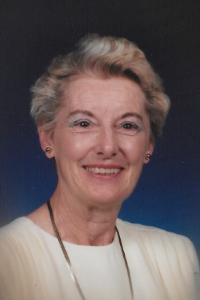
Beverly Morey Farwell,

Beverly Morey Farwell, 95, of Buzzards Bay, formerly of Mattapoisett, passed away on October 14, 2020, at Tobey Hospital, following a period of declining health. She was the wife of the late Donald P. Farwell with whom she shared 71 years of marriage. Born in Mattapoisett, daughter of the late Francis K. Morey and Ethel (Dexter) Morey, she lived in Mattapoisett and Sharon most of her life.

            She was a graduate of Fairhaven High School, Bridgewater State College, and Boston University where she received a Masters Degree in Library Science. She taught in Athol, MA, New Brunswick, NJ, and Sharon, MA, until her 1986 retirement after 40 years of teaching.

            Beverly was a member of the Massachusetts Teachers’ Association, an active supporter of the Mattapoisett Congregational Church, and a dedicated volunteer at the Zeiterion Theater and Mattapoisett Library.

            She and Donald enjoyed travel, with frequent vacations to Bermuda and winters on Marco Island. In addition to spending time with family and friends, Beverly enjoyed opera and was an avid reader, belonging to several book clubs. She knit hats and sweaters for newborns at St. Luke’s Hospital, chaired the Old Women’s Colony Fellowship knitters group, which sent hats, blankets and sweaters to Massachusetts General Hospital, and was a faithful blood donor.

            She is survived by her brother, Francis C. Morey of Dartmouth; her nephew, David F. Morey and his wife Cheryl of Mattapoisett; three nieces, Susan J. Dias and her husband John of Dartmouth, Sandra Bartlett and her husband Rollin of Barrington, RI, and Joanne Farwell Hess and Warren Sodt of Clearwater, FL; seven great nephews, Daniel M. Johnson, Gregory P. Margis, Charles D. Margis, Christopher D. Morey, Charles M. Beeghly III, George W. Bartlett, and Nathan S. Bartlett; and eight great-great nieces.

            She was predeceased by two sisters, Florence M. Morey and Catherine L. Macomber; her nephew, James C. Macomber; and her great niece, Elizabeth A. Morey

            Due to the Covid virus, a limited visitation will be held on Saturday, October 17, from 9:00 to 10:00 am at Saunders-Dwyer Mattapoisett Home for Funerals, 50 County Rd., (Rt. 6), Mattaposiett. A private service and burial will follow. Her service will be available on Zoom. E-mail David Morey for log-in details at mcicoach@aol.com. In lieu of flowers, donations may be made to the Mattapoisett Congregational Church, PO Box 284, Mattapoisett, MA 02739 or to the Zeiterion Theater, 684 Purchase St, New Bedford, MA 02740. For online obituary and guestbook, visit www.saundersdwyer.com.

Marion Cub Scouts Trunk or Treat

Marion Cub Scouts welcome children from Marion and the surrounding area to a contactless Trunk or Treat drive-through experience on Saturday, October 24 at the Marion Community Center from 1:00 to 4:00 pm. Cars from the Cub Scout, Sippican Land Trust, Marion Police Department, and more will be handing out candy and treats to children. We encourage everyone to dress up and enjoy this amazing Halloween event in these unique times. Anyone who would like to donate to the scouts for this event or join them please contact Kristen Saint Don-Campbell at ksaintdon@gmail.com. Happy Halloween to all.

Call for Entries to Final Show of Season

The Marion Art Center announces a call for entries for its 2020 Small Works show. Artists are invited to submit up to four pieces for this juried exhibit, the final show of the season. Works should be no larger than 14″ in any direction, including the frame. All works must be ready to hang/install (framed, wired, etc.) and available for sale. Works in this annual holiday show can be collected by the buyer upon purchase. Applications are due October 31

            To apply for an exhibition, send name, email address, phone number, and up to four high-quality images to info@marionartcenter.org, with “Small Works 2020” in the subject line. Images should be labeled in the following format: LastFirst01_Title (ex: SmithJohn03_HarborView). The exhibition committee will notify accepted applicants the first week of November, and artists must schedule individual appointments to drop off work. The show runs November 13 through December 18.

            The Marion Art Center will also be seeking participants for its holiday shop, presented in a new online format this year. Vendors must provide high-quality images and a detailed inventory sheet. The MAC will retain a commission on goods sold through the website. For more information, please call the MAC at 508-748-1266 or email info@marionartcenter.org.

Restaurant Facing Non-Compliance Hearing

            With an increasing number of confirmed COVID-19 cases being reported at both the state and local level, the Mattapoisett Board of Selectmen believes it is their responsibility to protect the residents of the community. To that end, responding to complaints that a local eatery was not complying with state guidelines, a public hearing was opened on October 13 for Nick’s Homemade Pizza, owned by George and Daphne Vrakes.

            A letter sent to the business owner(s) via certified mail was not responded to by the hearing date. That led to a rather long discussion on whether or not the board could or should hold the meeting in the absence of the business owners or continue to a later date.

            But first, read into the meeting minutes was the litany of complaints the Board of Health had received, complaints that centered around masks not being worn by employees of Nick’s Homemade Pizza. Between May 26 and September 30, there were 13 calls to Town Hall stating that masks were not being properly worn at the pizza restaurant by the employees. On October 1, Mattapoisett Health Agent Kayla Davis visited the establishment and was told by the owner, “I will not follow fake mask rules.” Davis had been sworn in by attorney Brian Riley of KP Law, the town’s counsel, earlier in the hearing for the purposes of providing her testimony.

            Selectman Paul Silva said that anonymous complaints were followed-up on but that those could not be used to build a case against the business. “We need people to identify themselves,” he said. When the number of complaints where customers had been willing to identify themselves reached critical mass, the board sought to take action.

            After a considerable discussion that included Silva stating, “My concern is the timing, there have been five new cases in eight days … if this goes on, we could be hurting someone.” He pushed to have the board re-open the hearing at the earliest possible date and time. It was determined that it would be in the best interest of the town to have a hand-delivered hearing notice brought to the business by a police officer or a constable to ensure that the Vrakes were positively notified.

            The hearing will reopen on Friday, October 16, at 5:00 pm via the remote platform. The Vrakes were to receive the notification on October 14, within the 48-hour notification requirement. Weighing in the balance are both the common victualer and alcohol licenses that the Vrakes currently hold.

            In other business, Dale Leavitt of Blue Stream Shellfish reported that during the past year, he has been mired in red tape at both the state and local levels when it was uncovered that all the permits from the previous business owner had expired. The situation has taken the entire year to untangle, but Leavitt said he was confident things would be cleared up in the coming days. The board decided to rollover the $2,000 fee Leavitt paid last year that granted him 10 acres in Nasketucket Bay. They also agreed that his agreement with the town would be “re-set,” giving him all the provisions previously granted. Leavitt noted deep appreciation to Conservation Agent Liz Leidhold for assisting him with documents.

            John Cornish of the Matt-Sail program said that the summer season had been a good one with some 89 youngsters participating in the summertime program. There ensued a decision of finding a permanent location for the 24 boats used in the program. For several seasons they have wintered over at the former Holy Ghost grounds now owned by the town. Selectman John DeCosta voiced his concern that the boat storage might eventually interfere with the property being used for other activities. In the end, it was decided that Town Administrator Mike Lorenco would work with the Board of Health to secure a location at the town landfill.

            Turning to the matter of whether or not the town should discourage the October 31 ritual of door-to-door trick-or-treating, the selectmen heard from both the Mattapoisett Police Department and the Mattapoisett Lions Club about alternative activities that would offer a bit of festive fun for children and their families.

            Silva said, “These are difficult times. Our goal is to keep the residents of Mattapoisett as safe as possible,” so discouraging door-to-door trick-or-treating was in everyone’s best interest.

            Kimberly Ray of the Lions Club discussed a drive-through event on October 24. She said that plans include passing out pumpkins and goodie bags to children while they pass by Lion Club members stationed along a roadway loop. Police Chief Mary Lyons said that the department wanted to do a similar activity on Halloween Day.

            Where to hold such events safely without causing traffic snarls and endangering pedestrians was discussed. In the end, it was decided that Old Hammondtown School offers the best central location and can be safely accessed by participants. Lorenco said he would reach out to the school department and let them know about the events.

            In his report to the board, Lorenco said the Police Department was close to finalizing updated Emergency Management Plans and hoped to have them ready for the board’s review by next week. He said that work on reorganizing the shellfish-enforcement duties with the Harbormaster’s department was underway and that engineering for the solar array planned for the town’s landfill was also well underway.

            On the topic of possible new revenue sources, Lorenco said he was reviewing such areas as a local commercial-rental excise tax of 6 percent, short-term rental tax of 3 percent, and a new cell tower on town property, and would embark on a feasibility study for the latter of these. Lorenco also reported that he was working on a possible new bylaw aimed at establishing local littering fines.

            Board of Selectman secretary Melody Pacheco announced that scallop fishing will open for the inner harbor for residents on Thursday, October 15, and for commercial entities on Sunday, November 1.

            The Vrakes’ public hearing will be held on Friday, October 16, at 5:00 pm and regular meeting of the Mattapoisett Board of Selectmen will be held on Tuesday, October 27, at 6:30 pm.

Mattapoisett Board of Selectmen

By Marilou Newell