Alvin’s Silence is a Sign of Winter

            The comical, animated chipmunk that entertained us all last summer by scurrying back and forth across our backyard with cheeks stuffed with seeds and nuts is a comical personality of the larger squirrel family.

            The chipmunk appeared regularly, every morning during daylight hours, industriously finding and transporting food to be stored up for this winter. After the chambers of the den were dug for storage, it used dirt to plug the working tunnel and then began another hidden entrance under a woodpile, which is out of sight of predators.

            Now the animal is hibernating with its treasure trove of food in a torpid state of lower temperature and slower heartbeat. It may wake up every few days to eat and then go outside to defecate. Then it goes back down to go to sleep in its subterranean shelter from the ice and snowstorms of a past winter blizzard as snug as a bug.

            When this chipmunk scampered across our yard, it held its flat furry tail joyfully in the air, as in my illustration, with a cute, mischievous expression and made a short chipping sound from which it gets its description title. It is believed the chipmunk was named from the “chetamon” native title given it by the Chippewa Indians.

            The stage name Alvin was inspired by writer and composer David Seville as the naughty ringleader of the performing trio that also included Simon, the bespectacled intellect, and Theodore, the animated chubby character clown. All three personalities have very strong qualities associated with real people that have high squeaky voices and a humorous repertoire of animated song and dance. This attribution of human behavior to Alvin and the Chipmunks is a classic example of a phenomenon in children’s literature called “anthropomorphism.”

            Anthropomorphism has ancient roots in storytelling as well as illustrations of both domestic and wild creatures. Prehistoric caveman reproductions of wild animal figures of prey are determined to be approximately 32,000 years old. In print, there are also ancient fables with lessons of behavior to be read by youngsters that put animals in a pleasing light and enjoyable as fairytale telling in early childhood. In film entertainment, television, and video games, some notable examples are Walt Disney’s Mickey Mouse, Donald Duck, and female singing chipmunks called The Chipettes, and Warner Bros.’ Porky Pig.

            A familiar Christmas theme found its way into the Chipmunks’ home, where Alvin turned over a new leaf of bad behavior just in time to ensure that Santa Claus would climb down their chimney. The “Christmas with the Chipmunks” album ranked in popularity with Rudolph the Red-Nosed Reindeer, with the Chipmunks’ penultimate number, the entertaining “The Chipmunk Song (Christmas Don’t Be Late).”

            In Christmas mode, Alvin became the most successful children’s artist of all time. He earned five Grammy Awards, an American Music Award, a Golden Reel Award, three Emmy Awards, and a star on the Hollywood Walk of Fame.

            From the back porch of our seaside residence in Little Bay, we will be glad when the winter and pandemic are behind us. We look forward to the return of the ospreys to the nearby net, the gulls diving down over returning schools of striped bass, and, especially, the comical entertainment of the anthropomorphic chipmunk. Let them take us back to the magical moment of the arrival of the springs we used to know with their hopeful promises of a healthy environmental renewal.

By George B. Emmons

Eric Worthington O’Brien

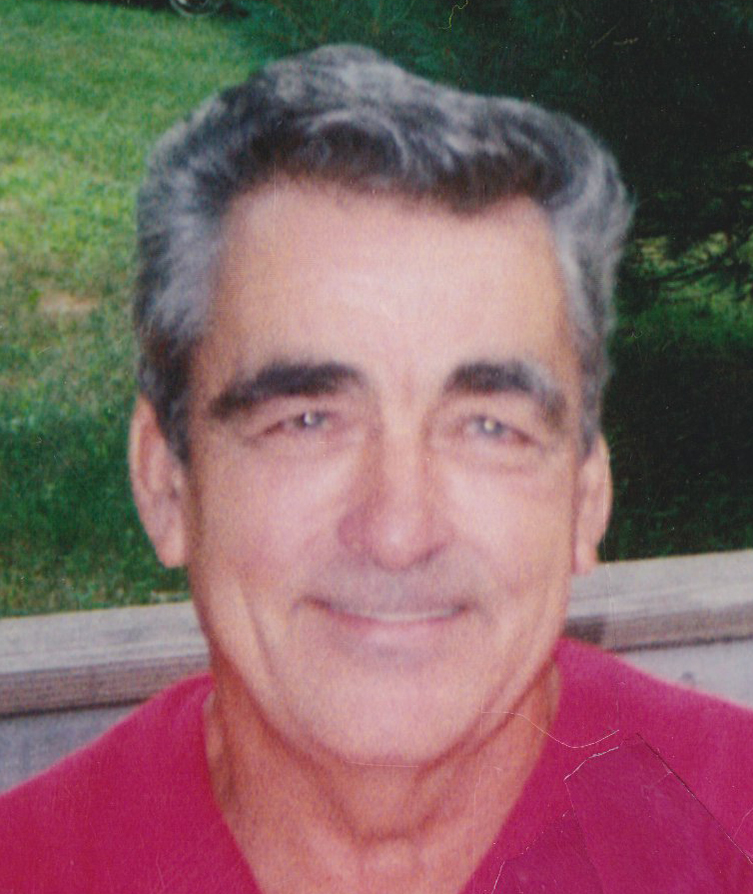
Eric Worthington O’Brien of Medfield, MA., Mattapoisett, MA and Norfolk, MA died on January 7, 2021, peacefully with family by his side, after complications with pneumonia. He was 81.

            Eric is survived by his wife of almost 54 years, Claudette Prefontaine O’Brien; his five children, Erin M. O’Brien, Kerry A. Durkin, Colleen L. O’Brien, Meghan A. Taylor and Peter T.C. O’Brien; his brother, Kevin Bryan and nine grandchildren: Ryan, Alison, Mikayla, Mara, Julia, Will, Ella, Dylan and Warren.

            Eric was the son of Maurice O’Brien and Laura Cunningham O’Brien. He attended Newton High School, then went on to Fairfield University in Fairfield, CT. Upon graduation in 1961, Eric entered the United States Navy where he was a Lieutenant, serving on the USS Hank, USS Roberts and USS Huse. Upon exiting the Navy in 1965, Eric began his career as a sales representative for M.E. O’Brien and Sons, Inc., a family business. In 1983 he became the company’s owner and President working tirelessly to grow the business. M.E. O’Brien and Sons is dedicated to assisting municipalities, developers and private corporations to design and build public spaces and urban landscapes. Eric’s vision was to offer clients everything they needed to complete their recreation space.

            Not only did he continue to build a thriving family business, but also worked toward the advancement of public parks. Eric passionately volunteered countless hours promoting and developing parks and recreation at local, regional and national levels starting with his involvement with the Town of Medfield, Massachusetts’ Parks and Recreation Department (1973-1978, 1990-1991), the Downtown Study Commission and Open Space and Recreation Planning Committee (2013-2014). He also served as Medfield’s Cemetery Commissioner where his priority was to plant trees all over Vinelake Cemetery to create a park-like setting. At the statewide (Massachusetts) level he served on the Governor’s Blue-Ribbon Panel on Land Protection (1998) and the Olmsted Parks State Advisory Board (1980-1990).

            Eric started his involvement with the National Recreation and Park Association (NRPA) in 1985. His various roles were member of the board of trustees (1985-1994), chair of the board of trustees (1995-1999), member of the national forum (2003-2008), and member of the strategic planning committee (2004). Eric was on the board of governors for the National Recreation and Park Foundation (NRPF) to support research, public policy, and public awareness efforts to advance parks, recreation, and environmental conservation (2006-2012). He served on the board of the Foundation for Sustainable Parks and Recreation created in 2012 and later served as the foundation’s chair until 2017.

            Eric served as trustee on the board of advisors for the National Association of Olmsted Parks (1984-1990), on the City Park Alliance Board of Directors (2006-2009), and as a world judge and corporate director for Nations in Bloom, Ltd. (1996-2003). Eric also served as a steering committee member for Clemson University’s U.S. Play Coalition (2007-2015) and was on the board of directors for the Sajai Foundation, a nonprofit organization dedicated to teaching children about healthy lifestyle and nutrition decisions (2007-2010).

            His activism led to many awards and recognitions including the 1992 New England Regional Council Award, 1998 New England Park and Recreation Association John F. Howard Award, 1998 Rhode Island Recreation and Park Association John Cronin Award, 2005 American Park and Recreation Society Citizen’s Award, 2007 New England Park Association Award, 2009 Rhode Island Recreation and Park Association Hall of Fame,  2012 Connecticut Park and Recreation Association Distinguished Service Award, 2013 Connecticut Park and Recreation Hall of Fame Inductee, 2014 National Recreation and Park Association Cornelius Amory Pugsley Award, and the 2015 New England Park Association President’s Award.

            He also served as editor of the New England Park Association’s quarterly newsletter, The Exchange, for many years.

            Eric was a true gentleman who enjoyed spending time with his family and friends. He loved playing golf, boating and reading. He was a faithful member of the Medfield Lions Club and for many years was a member of the MEMO business organization in Medfield.

            At this time, the family will have private services. Memorial Services will be held at a later date.

            In lieu of flowers, the family asks that memorial contributions be made to the U.S. Play Coalition’s Fran P. Mainella Play Conference Scholarship Fund. Tax-deductible donations can be made online at www.bit.ly/Give-Play or send checks payable to “US Play Coalition” to Stephanie Garst, US Play Coalition, 263 Lehotsky Hall, Clemson University, Clemson, SC 29634-0735

Sippican Cinema Series Continues

Our first film discussion was a resounding success. Join us on January 11 when co-host Anne Converse leads a discussion of “Two for the Road” with interesting insights into the characters, music, and backstory of this bittersweet romantic comedy. It’s easy to participate.

            Watch the film on your own (YouTube, Amazon Prime, or other platforms), then email us at info@sippicanhistoricalsociety.org to register for the Zoom link.

            Join us on Monday evening, January 11 at 5:00 pm via Zoom for a fireside chat hosted by Anne Converse and Diane Kelley. Just the thing for a cold January evening!

            Read the bios of our co-hosts here: sippicanhistoricalsociety.org/calendar-of-events/action~agenda/request_format~json/.

            Questions? Contact diane.sippicancinemaseries@gmail.com.

Campus Center Would Replace Hayden Library

            The Marion Planning Board opened a public hearing on January 4 to hold a Major Site Plan Review for Tabor Academy’s proposed Campus Center at 85 Spring Street, the site of the Hayden Library.

            The 22,750 square foot academic building would replace the one-floor Hayden Library with a modern, two-floor facility that would be nowhere near as long but considerably wider, resulting in a 10-percent footprint increase. Associated parking, drainage improvements, and utilities would result in two access/egress points as opposed to the one that now exists from Spring Street.

            Julie Salit, Tabor’s interim head of school, said the new campus center would accommodate day and boarding students who need to take a break in a comfortable space. Salit described a library and resources on the second floor with social and office space on the first floor earmarked toward diversity and inclusion.

            “We’re reworking the spaces into what will … better suit the programs that we have up and running,” said Salit.

            Bob Field of Field Engineering pointed out a new water-quality structure at the last catch basin, so all roof runoff will be treated before its release into the town’s sewer system. Field said there will be a slight increase in pervious surface area, but a recharge method will help compensate.

            Planning Board Vice Chairman Andrew Daniel presided over the entire meeting, including the public hearing, while Chairman Will Saltonstall sat out under the conflict of interest rule as lead architect for the project. Saltonstall Architects was represented at the Zoom meeting by Tristan deBarros and C. Jay Wilbur.

            Daniel told meeting attendees that the Planning Board has contracted SITEC Engineering & Environmental Consultants, Inc. for its own site plan review, including a stormwater management report, but that it is too early in the process for feedback.

            Board members Norm Hills and Eileen Marum posed respective questions as to rainfall data source and maintenance. Marum pointed out a discrepancy in Field’s report between the number of times annually that all paved surfaces will be swept for water quality. According to Marum’s review, page 5 (1.7) of the report said twice, while Appendix B No. 10 indicated once.

            Field said he would get Hills the information he wants and that the report will correct the maintenance schedule to an agreeable frequency. Field also said plans can be modified to accommodate the Marion Department of Public Works’ request that the new sewer surface not be constructed below the recharge area.

            The topic that dominated the December pre-submission conference was Spring Street traffic, as board member Chris Collings had sought measures that would utilize the new construction as an opportunity to address the traffic snarls that occur at times in that area.

            Field came to the January 4 public hearing with a project memo addressing the subject with acknowledgment of spikes in traffic when Tabor hosts events. Marum, who publicly thanked Field for clarifying the parking issue, and board member Joe Rocha had seen the memo that was included in their packets; Hills did not, and Collings was also in the dark, having accessed the meeting late while commuting back from Maine.

            “I look at the project as an opportunity for them to address some of the long-standing traffic issues,” said Collings. “We need to take these opportunities to incorporate … for everyone [and] put less pressure on the town overall.”

            Marum took the opportunity to update Collings on the progress, and Collings was pleased to hear it. Daniel said the topic would receive more thorough treatment when all members have read Field’s project memo.

            Other questions from the board included the new building’s height, which is 34 feet, 11 inches maximum from street level, an inch below the 35-foot maximum allowed in Marion. When public comment was invited, Heather Burke, 68 Front Street, sought clarification, and Daniel explained that while the tower at the center of Hayden Library rivals the height of the proposed campus center, more of the new structure is designed to that height.

            Noting that by the year 2030 all new construction will have to be built to a net-zero energy consumption standard, Marum asked if the campus center is a net-zero building. The answer was no, but Wilbur said Tabor is exploring solar power.

            “Tabor purchases energy credits from sustainable energy factories…. Tabor committed to reducing carbon footprint as much as possible,” he said.

            Hills noted the absence of a librarian’s office in the plans. Salit said Tabor’s librarians plan to use circulation desk space as their office.

            Plans to relocate Tabor’s library on an interim basis are not finalized, Salit said, but the school has determined that it has space on campus to accommodate classes currently held in the Hayden Library. A space inventory is ongoing. The hearing was continued to January 19.

            Town Planner Gil Hilario told the board he will get a progress report on the town’s peer review and, if necessary, postpone the board’s next meeting scheduled for January 19 at 7:00 pm.

Marion Planning Board

By Mick Colageo

Frederick Roderick

Frederick Roderick, 91, of Mattapoisett died January 6, 2021 at home after a brief illness.

            He was the husband of Mary G. (Moniz) Roderick.

            Born in New Bedford, son of the late William and Elizabeth (Vieira) Roderick, Fred was raised in Dartmouth and lived in Mattapoisett most of his life.

            He was formerly employed as a mason for many years with Fleurent Construction, later starting his own company.

            Mr. Roderick served in the U.S. Army during the Korean War.

            He enjoyed fishing, boating and working.

            Survivors include his wife; 2 sons, Kevin Roderick and his wife Debra of Mattapoisett and Michael Roderick and his wife Robin of Rochester; a sister, Nancy Silva of New Bedford; his grandson, Ryan Roderick; and numerous nieces and nephews.

            Fred was the brother of the late William Roderick, Jr., Edith Sousa, Casey Grundy and Thelma Gonsalves.

            Due to COVID-19, a Memorial Service will be held at a later date.

            Arrangements are by the Saunders-Dwyer Mattapoisett Home for Funerals, 50 County Rd., Mattapoisett. For online condolence book, please visit www.saundersdwyer.com.

Cherrell V. Hughes

Cherrell V. Hughes died on December 8, 2020. She was the daughter of the late Howard Cahoon and Ruth (Butler) Cahoon.

            She was born in Hyannis on September 4, 1936. She grew up in Harwich and was a graduate of Harwich High School. She received a degree from Simmons College in Boston.

            She married James S. Hughes in New Bedford in 1961. Cherrell lived in New Bedford until 1971 at which time she moved to Marion, MA. She spent part of the year in Stuart, Florida for the last 37 years.

            She taught elementary school in Fairhaven. She also taught in the Headstart program in New Bedford. Later in life she was a realtor employed by the Converse Company Realty for 20 years.

            She is survived by her husband James S. Hughes and her three children, Katherine Hughes Gutman (Dr. Ned) of East Providence, R.I., Michael Hughes (Meg) of Needham, MA, Jeremy Hughes (Lori) of Wellesley, MA. She was a devoted grandmother to eight grandchildren, William, Sophie, Kaleigh, Abbey, Sam, Sydney, Jack and Piper. She also leaves a brother, Rick Cahoon (Joanna) of Chatham, MA. Cherrell was a kind, gentle, supportive wife, mother and grandmother. She will be deeply missed.

            Donations may be made in her name to the Community Nurse Home Care, 62 Center Street, Fairhaven, MA 02719.

            Due to COVID restrictions, burial will be private. A Funeral Mass at Saint Anthony’s Church is planned for summer.

            Arrangements are by the Chapman, Cole & Gleason Funeral Home, 2599 Cranberry Hwy., Wareham. To share a memory of leave a message of condolence, visit: www.ccgfuneralhome.com.

Steen Presents Revised Heron Cove Plan

            In a meeting spilling over with significant matters, the Marion Board of Selectmen opened a public hearing with developer Ken Steen of Steen Realty to discuss a Comprehensive Permit for his Heron Cove residential development on Wareham Road.

            Steen’s former application for a 96-unit residential complex has given way to a revised plan seeking 120 units in order to mitigate the costs that will come with infrastructural requirements. The 24 new units in what is described as a friendly 40B project will add 5,280 gallons per day in sewage, raising the total from 22,640 to 27,920 gallons.

            Represented by designer Phil Cordeiro of Lakeville-based Allen & Major Associates and attorney Mark Bobrowski, Steen sought the selectmen’s approval of proposed revisions for the sake of petitioning at the state level.

            Approximately a year and a half ago, the Marion selectmen approved a friendly 40B project along Route 6 before utility study results came back from Marion’s consultant engineer with costs that Steen found to be prohibitive. On January 5, Steen came back seeking the selectmen’s approval of his revised Local Initiative Program (LIP) application geared toward affordable housing.

            The revision includes eight new buildings, each containing three two-bedroom, triplex units mainly focused on using an area of land previously reserved for Approval Not Required (ANR) development. The two ANR lots will now be a campus-like project.

            “We are fully confident that the site is fully supportive of these elements,” said Cordeiro. Steen characterized the original plan as being at a dead end. The revised layout connects all roads and maintains a fire emergency exit.

            The responses were mostly positive.

            Selectman John Waterman thanked Steen for being responsive to the needs of Marion seniors to downsize. Waterman asked about incoming students to the public school system. Steen, who is presently building near the junction of routes 28 and 58 in Rochester, said the revised project would generate 12-15 new students over a 12 to 24-month range of absorption.

            Stressing that an immediate answer was not expected, Waterman further requested incentives to help more first responders and town employees at large move in. “I think it would generate a tremendous amount of goodwill,” he said.

            “If everything went well … maybe nine months we could move some people in, but probably 12 months is a more realistic target,” said Steen.

            Bobrowski said the timeline for a locally approved revision would depend heavily on the state Department of Housing and Community Development (DHCD). If directed to reapply, it would take another 60-90 days. “I’m already at 120 days,” said Bobrowski hypothetically. He said plans to go back to the Marion Zoning Board of Appeals on January 19 would be postponed.

            Marion Town Administrator Jay McGrail said the town’s intention would be to have the selectmen ready to vote on January 19 and said he would seek to set up a meeting for that date.

            “We look forward to getting this permit and getting a shovel in the ground,” said Steen.

            “We’re not talking about a simple process here; we just need to work together,” said Selectman Norm Hills.

            In a 4:30 pm public hearing, Liz Argo appeared on behalf of the Cape and Vineyard Electric Cooperative Inc. (CVEC) regarding the solar array proposed for the Benson Brook landfill.

            The project is still in design stages, and the town is still waiting on the utility company Eversource for news on interconnection fees. If the fees are heavy, CVEC will return to Bill Saltonstall and discuss whether the project is still considered feasible.

            While developer Distributed Solar Development is reportedly very interested in seeing the project go forward, Argo doesn’t expect Eversource to report until the spring.

            In his Town Administrator’s Report, Jay McGrail told the selectmen that Marion has been accepted by the state as a First Responder Vaccination Clinic, starting next week with a drive-thru COVID-19 clinic (Moderna) for all first responders in the towns of Marion, Mattapoisett, Rochester, and Wareham. Some 400 vaccines have been offered at the Cushing Community Center by appointment only.

            In a 4:15 pm appointment, Jeff Doubrava of the Community Preservation Committee pitched the selectmen on a new Community Preservation Act bylaw that could be on the warrant for the annual spring Town Meeting. As Doubrava explained, right now, there is no mechanism by which the town can take back funds lying dormant instead of being used for the purposes for which their allocation had been approved. Doubrava does not want an arbitrary timeline, saying that each situation is different. No vote was taken; the proposal will be on the Spring Town Meeting warrant, then the selectmen will vote.

            Chief of Police Richard Nighelli’s contract was ratified with a vote of the selectmen. The new police chief thanked the board, McGrail, the community, and retired Police Chief John Garcia. “I’ve received a lot of support since I was named chief,” said Nighelli, extending his thoughts to the men and women of the Marion Police Department. “Without them, I wouldn’t be in this position.”

            The selectmen also approved special officer Connor Flynn’s appointment to full-time officer on a one-year probationary period. Later in the meeting, the selectmen also voted to permanently appoint Nighelli as Marion’s emergency management director. Fire Chief Brian Jackvony had been serving in an interim capacity.

            After much discussion and review, the Board of Selectmen accepted McGrail’s recommendations to delay the reassignment of the aquaculture permits pending the ratification of a comprehensive set of regulations.

            Harbormaster Isaac Perry said he could offer the selectmen a timeline during its next meeting on January 19. Deputy Harbormaster/Shellfish Officer Adam Murphy said, “This won’t stop the applicants; it will prolong the process. There is opportunity.” McGrail said he would let the applicants know that Marion is not moving forward at this time.

            The reopening of the Benson Brook transfer station scheduled for January 2 has been delayed by the ongoing removal of compacter and wiring equipment owned by the Carver, Marion, Wareham Regional Refuse Disposal District. When that is finished, then Waste Management will install new equipment.

            The board approved two requests to connect to municipal sewer from Briggs Lane and from 17 Moorings Road. Waterman recused himself from the 17 Moorings Road vote, citing a personal friendship. Still, he did strongly urge special conditions to an approval so that the town can best control sewerage into private roads.

            The Conservation Commission requested the appointment of Ethan Gerber as a full member.

            The selectmen approved the filing of an Annual Report to the Alcoholic Beverages Control Commission (ABCC).

            The next meeting of the Marion Board of Selectmen is scheduled for Tuesday, January 19, at 4:00 pm.

Marion Board of Selectmen

By Mick Colageo

‘Moby-Dick’ Marathon Moves Online

“As for me, I am tormented with an everlasting itch for things remote…” – Ishmael, Moby-Dick

            The best-known literary event centered on Herman Melville’s iconic American novel, “Moby-Dick,” is moving online in 2021. The New Bedford Whaling Museum’s annual Moby-Dick Marathon attracts thousands of people of all ages from around the world who share a fascination with the sweeping story. The 25th anniversary of this remarkable read-a-thon falls in the middle of a pandemic, so organizers have moved the event online. The Moby-Dick Marathon runs from January 8 – January 10. Details are at www.whalingmuseum.org.

            Every winter, the Whaling Museum’s Moby-Dick Marathon marks the anniversary of Melville’s January 1841 departure from the Port of New Bedford aboard the whaleship Acushnet. Melville would later pen “Moby-Dick,” publishing the famous novel in 1851. Although the marathon will be virtual in 2021, Whaling Museum President and CEO Amanda McMullen is confident that participants “will still be drawn in by the drama and excitement of the hunt for the while whale. As always, there will be plenty of opportunities to have fun and to dive deeper into the content in our hosted talks with experts on Zoom.”

            Hundreds of readers from across the country recorded themselves reading passages from the book and sent them in to the museum to be stitched together as a full cover-to-cover reading of “Moby-Dick.” The final product will be played beginning Saturday, January 9, at 11:30 am and run through Sunday, ending around noon.

            Activities begin on Friday, January 8, at 7:00 pm with a lively online presentation, “‘A Wonder, a Grandeur, and a Woe’: Melville and Human Progress,” with Steven Olsen-Smith. A past president of The Melville Society, Olsen-Smith is professor at Boise State University and general editor of “Melville’s Marginalia Online.” Tickets for the Friday event must be purchased in advance and cost $10 for Whaling Museum members and $15 for non-members.

            All weekend long, people living in Dartmouth, New Bedford, Acushnet, or Fairhaven, Massachusetts can have warm chowder, delicious brews, or a full meal well-suited for a hungry sailor delivered to their homes, thanks to the museum’s event partners. Go to the museum’s website for details on how to order.

            A virtual chat with Melville Scholars takes place at 2:30 pm on Saturday, January 9, via Zoom. Whaling Museum Curator of Maritime History Michael Dyer will pair artworks with Melville’s writings during “Visualizing Melville: An Exhibition of Words, Ideas, Images, and Objects,” an online presentation on Sunday beginning at 10:00 am. These events and activities, as well as the reading itself, are all free and open to the public.

            Although participants will not be able to gather for the traditional “Stump the Scholars” session, scholars from The Melville Society have created a Moby-Dick quiz, so everyone can test their Melville knowledge. The quiz will be available online during the Moby-Dick Marathon on the museum’s website.

            The Whaling Museum, in collaboration with The Melville Society, is the established home of the Melville Society Cultural Project and the Melville Society Archive, which is housed in the Whaling Museum Research Library. The archive constitutes one of the best collections of Melville scholarship and resources anywhere in the world.

            Visit www.whalingmuseum.org for the full schedule of events and details on how to participate.

Marion Waste Water

To the Editor;

            Let’s stop spreading incorrect and confusing information about Marion’s Sewer issues.

            It is puzzling why Mr. Rasmussen’s writes at this time; his motive is not clear. His article is unfairly extremely critical of Marion and its management.  His comments require clarification so that Marion’s residents understand the complete picture. He says:

            “Marion’s sewer rates are ridiculously high” – Marion’s rates are high.  We already know that. This is not some concealed fact or startling revelation.

            “It’s not because the town treats its sewage to a better standard than anyone else. In fact, the opposite has been true” – Mr. Rasmussen choses to ignore the fact that the Marion Wastewater Treatment Plant (WWTP) effluent meets or exceeds the MassDEP and EPA requirements of our operating permit; a comparison is not necessary.

            “Marion residents pay more than double the statewide median” – This statement and the initial “ridiculously high” are not helpful.

            ‘The Selectman’s current advocacy aiming to secure a $2 million state grant is falling back on some tired political tactics – baseless rejections of science and scapegoating – and does little to set the town on a new course to fiscal responsibility” – Three years ago, we asked Representative Strauss for State help to offset the ratepayer financial burden. He identified an Environmental Bond Bill option for towns on Buzzards Bay with wastewater lagoons. He was successful in getting $2 million included in the approved bill. Marion applied for the grant and was approved; we are still waiting for the State to allocate the money to us. This is the reason for the October 29th letter. The charge of baseless rejections of science is insulting and is Mr. Rasmussen politicizing the use of the word, science. I have an engineering education, a career devoted to the design and construction of nuclear submarines, and was a member of the Conservation Commission for 15 years, science has been my whole career.

            “We’ve all learned a lot over the past decade about just how negligent the town has been in its management of the sewer infrastructure….bad decisions and deferred maintenance…” – This characterization is self-serving and baseless. Marion built a whole new wastewater treatment plan in 2005 that included the lagoons as an integral component.  It met all federal and state environmental requirements at the time it was built, and has been successfully operated and maintained it ever since. There have been no equipment breakdowns and no unauthorized discharges. Yes, parts of the collection system are 50 years old.  Marion is not alone, it is true for most towns in Massachusetts including Wareham, a town that Mr. Rasmussen puts on pedestal for its wastewater management.  Marion is making a systematic effort to repair it, primarily through lining pipes in our aging collection system.  We have budgeted approximately $200,000 per year for this work and will accelerate this repair work if more funds become available.

            “For 49 years now, Marion’ sewer plant has held raw sewage in the unlined lagoons prior to treatment” – Raw sewage is diverted to the lagoons only when the incoming flow temporarily exceeds the plant’s capacity to microbiologically treat it, which happens only when there is significant rain event increasing infiltration of storm water into the collection system. Subsequently that influent is pumped back into the plant for processing. The waste activated sludge product from Sequencing Batch Reactors is then discharged to Lagoon #1. Raw sewage has not been stored in the lagoons for 49 years.

            “Those lagoons leaked through their bottom into the town’s groundwater….fact first confirmed in a 2011 study….that finding was confirmed by the Town’s own engineers…” – The 2011 study had many technical errors. It indicated that there might be leakage, it did not confirm leakage. The Town’s engineers did an independent water balance study of the data from rain/snow, evaporation, and plant capabilities. Included was an uncertainty analysis of the calculations. The uncertainty could be attributed to rain/snow data measurement accuracies, evaporation estimations, plant pump/motor capacity variations, effluent addition/removal, or lagoon leakage. This is not confirmation of a leak, only indication that a leak could be a contributing factor. The sludge removed from Lagoon #1 was over a foot deep and basically impermeable to liquid transfer; think of peanut butter. Lagoon #3 is partially in the Aucoot Cove watershed, it is the least frequently used and never for raw sewerage.  Engineers estimate it would take 50 years for any leaking effluent to reach Aucoot Cove. Claiming that the lagoons have been polluting Marion water bodies for their whole existence does not make it true.

            “toxic sewage sludge….lot of toxic contamination sitting in town….sludge holds the accumulated stock of all of the contamination…” – Toxic sludge originates from industrial processes, only 1% Marion’s tax base is industrial. We simply to not have the potential for a  “lot of toxic contamination” in the sewage sludge. In fact, sludge from Lagoon #1 was chemically analyzed to determine the disposal method, the analysis revealed that the sludge is non-toxic.

            “Let’s be clear, the costs that Marion is facing right now to properly dispose of their sludge is not a new expense and Marion is not being treated unfairly” – Let’s be clear, there is no environmental requirement to periodically dispose of sludge. This is new, never required before the BBC interference.

            “…the town has no one to blame other than their own engineers (for misjudging the amount of sludge)…” – True. After the fact an independent expert noted that in his experience the amount of sludge is generally underestimated.  The fact the amount of sludge was initially underestimated does not change the final cost for removing it.

            “Marion is going to continue to go-it-alone and update its sewer infrastructure” – Implied is that Marion should be participating in the Wareham multiple community project. Marion is in fact participating in this ongoing concept exploration, a project that is probably 10 years away at best from having any operational facility. Meanwhile Marion has agreed to MassDEP and EPA compliance requirements that have specific near-term completion dates. Not complying with these can result in crippling fines.

            “Why is Marion still having just 1700 rate payers…” – Expanding the number of sewer system ratepayers requires expanding our service areas. Weston & Sampson was hired to prepare a Comprehensive Wastewater Management Plan which will identify and prioritize the parts it makes economic sense to extend the sewer to. As part of the contract, Weston &Sampson is required to hold several public hearings to review the report with the public, seek feedback and answer any questions. The preparation is behind schedule due to Covid. Our problem will be finding the money to expand service areas, while containing the burden on the taxpayer. 

            “Upper Bay Regional Wastewater Plant….provides long-term economies of scale…” – To date Marion is participating in this ongoing concept exploration. The key words are “long-term” as this project is many years away from any final design, construction, and operation. In the meantime, Marion is required to spend millions to upgrade its plant to meet legally imposed completion dates.

            “Marion has lot of work ahead of it as it transitions from decades of mismanagement to a town that is both financially and environmentally sustainable” – Accusing Marion of mismanagement without detailed evidence is less than useful and borders on libel.

            “The Selectmen should lay off the scapegoating and denial of science….” – Interesting that Mr. Rasmussen multiple times referred to the 2011 study, what it said and how it was used but when Marion talks about it it’s scapegoating. Their 2011 study had many technical errors. It is no coincidence that the first draft MassDEP/EPA operating permit reflected the 2011 study.

            In summary Mr. Rasmussen’s opinion is misleading and unhelpful. If the BBC seriously is concerned about funding the project work, they should make a significant donation to the Town for the project. Every penny we don’t have to borrow is money that the ratepayers will not see in their bill.

Norm Hills, Marion

Mr. Hills is a Marion Resident and a Selectman

The views expressed in the “Letters to the Editor” column are not necessarily those of The Wanderer, its staff or advertisers. The Wanderer will gladly accept any and all correspondence relating to timely and pertinent issues in the great Marion, Mattapoisett and Rochester area, provided they include the author’s name, address and phone number for verification. We cannot publish anonymous, unsigned or unconfirmed submissions. The Wanderer reserves the right to edit, condense and otherwise alter submissions for purposes of clarity and/or spacing considerations. The Wanderer may choose to not run letters that thank businesses, and The Wanderer has the right to edit letters to omit business names. The Wanderer also reserves the right to deny publication of any submitted correspondence.

‘Sammy Swims’ Raises $15,000 for Travis Roy Foundation

            In the face of a daunting task, Sammy Davis got nervous just like anyone else would. It wasn’t December’s 45-degree ocean water that bothered her, more so she was afraid of letting down the Travis Roy Foundation.

            “I was nervous we wouldn’t reach our original goal,” Davis told The Wanderer.

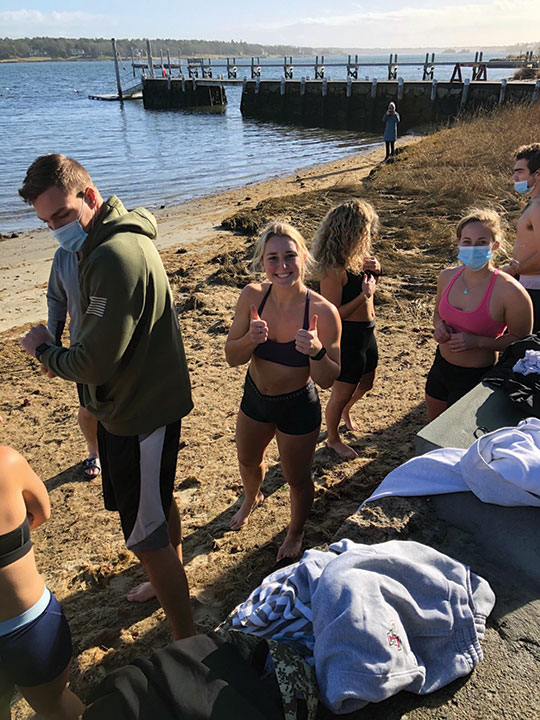
            Uncertainty proved to be no match for the 2015 Tabor Academy graduate and her friend, Jenna Seibold, who together swam offshore for 24 straight days in December and raised $15,372 for the Travis Roy Foundation.

            The original goal was $2,400; it was topped in less than a week. Davis and Seibold blew their second goal of $5,000 out of the water as well. Momentum built as word got out, and more and more people wanted to jump in. A $14,000 goal was ultimately set, and they beat that one, too.

            “We’re over $15,000, and we were still swimming,” said Davis, overwhelmed with community support that ranged from family and friends from Tabor, her native Pembroke, and the Boston University and Boston Pride hockey teams. Even Boston Bruins right winger Chris Wagner, a Walpole native, joined in the fun.

            That Davis would find time to dedicate the first 24 days of December to such a fundraising mission alone suggests effort, considering holidays with the family, the advent of a professional hockey career— the BU graduate was drafted first overall into the National Women’s Hockey League by the Boston Pride— and a simultaneous path toward a doctoral degree in occupational therapy from Mass General Hospital Institute of Health Professions.

            “It can get busy at sometimes and overwhelming,” said Davis, whose surgical history, including both hips and a hand injury that led to treatment by an occupational therapist, influenced her career choice.

            Despite missing the entire 2017-18 hockey season, Davis came through successfully and returned to the Terriers in 2018-19 as a captain. She was named a Hockey East Distinguished Scholar by the conference.

            In an interview with uscho.com, Davis described how the thoughts that led to the 24-day effort had been simmering while she was in school.

            “Towards my end of my college career, I started learning that we have a voice and people want to listen to us. I knew I wanted to make change in something,” Davis said. “I’ve just been thinking a lot about Travis and thinking about how much he’s done to the hockey community and for people with spinal cord injuries in general. I just knew I wanted to do something for him. There are always people out there that need help. I think that that was one of our biggest takeaways. I feel like right now, in life, I am satisfied. I have everything that I could want. So how can I help somebody else?”

            Roy, who passed away in October due to complications related to his paralysis, wore No. 24 with the BU men’s hockey team, which retired the number in his honor. By the end of 2020, the foundation bearing his name helped over 2,100 people paralyzed by spinal cord injuries. In 2020 alone, there were 156 Quality of Life recipients of grants from the foundation for equipment to significantly improve their day-to-day lives. The foundation also contributes to research, and Roy tirelessly advocated for stem-cell advances.

            The idea for “Sammy Swims” came together at the gym where Davis works out and met Seibold, an Endicott College hockey player, who was 90 days into a 150-day swimming mission. Davis decided out of curiosity to take the dip. Then she connected the dots. “I already knew I wanted to donate money … why not do this? Let’s do 24 swims,” Davis told The Wanderer. “It went by so fast; it’s so crazy.”

            Making time to volunteer for her community is something Davis was already doing while attending Tabor Academy. “She’s an incredibly giving person, and there is no better cause than the Travis Roy Foundation for her to contribute her time and treasure, especially during this year,” said Tabor Interim Head of School Julie Salit.

            A three-sport star in field hockey, ice hockey, and softball, Davis excelled on the rink and was a First Team NEPSGIHA All-Star senior. In 2015, she was named winner of the Bruins’ John Carleton Memorial Trophy annually presented to the outstanding boys and girls high school hockey players in Massachusetts. Davis significantly expanded her hockey horizons in 2015 when she wore the “A” while helping Team USA’s U18 women’s team capture gold in the IIHF World Championships.

            Davis continued climbing at Boston University, where she was unanimously selected to Hockey East’s All-Rookie Team and finished second in the running for 2015-16 Rookie of the Year. As a senior, she led the Terriers in scoring and completed her college career with 66-76-142 totals.

            “If you’re really passionate about it and you want it, I love hockey, and I love being a part of a team. I told myself I’m going to have to make it work [and] sacrifice some things like a social life,” said Davis, whose lack of a conventional social life may hurt on certain days, but “one door closes and another door opens.”

            Davis’ volunteerism with the Bandits, her Bridgewater-based junior hockey program, participation in clean-up efforts at Mattapoisett town beach and a recycling facility in New Bedford, volunteering at Acushnet-based Gifts to Give, and working with New Bedford kindergartners are some of the other ways she has taken the lead in her school community.

            “She’s always been a leader. She was always one of those kids if something needed to get done,” said Tabor girls hockey coach Eric Long, who is also director of Admissions and Financial Aid. “As a high school kid, in the gym she was the hardest-working kid, getting up hours before school. She was the best role model for kids.”

            Long compared Davis’ effect similarly to former local hockey players, including Rochester’s Haley Frade, who went on to play at Providence College, and Halle Silva, who went on to play at Northeastern University. Silva, now Halle Young, is Long’s assistant coach.

            “All those kids, they feed into one another,” said Long, accentuating motivation that translates into academics and community involvement as being more integral to a program’s success than natural ability in a sport. “You have these kids who make my job really easy. They set the highest standard you can set…. Erin Kickham was that kid. [Davis] heard those names, too, and added on. It’s really neat to see the kids do that.”

            While the destiny of the Tabor girls hockey season is not yet determined, students tentatively return to campus on January 28. “I’m hoping we can get some games in,” said Long, who will see four 2021 graduates leave to play in Hockey East schools next fall. “We haven’t created a bubble by any means, but we have a more closed community.”

            Now six years removed from Tabor, Davis enjoyed revisiting the Marion campus for the final swim of her 24, accompanied by many supporters.

            Her hockey will be played inside a bubble in Lake Placid, New York, beginning January 23. The six NWHL teams will play a five-game, round-robin schedule, followed by a playoff round that will produce four semifinalists and finally two finalists for a Friday, February 5, title contest for the Isobel Cup.

            “I’ve been there before, it’s beautiful, it’s awesome and a great platform and great venue,” she said.

            As her world expands and the adventures pile up, Davis remains confident that she’s never far from home and all the leaders who helped her get where she is. December’s chilly ocean resides in her mind like a summer dip.

            “I think I benefitted more from [the fundraising project] than the foundation. I think I grew as a person, and I needed it,” said Davis. “It was the coolest 24 days I’ve ever been a part of and a great way to end 2020 on a positive note.”

By Mick Colageo