The Noble Train Reaches Its End

            ​This week in Revolutionary War history, let’s check up on what was going on 250 years ago in and around the colonial Province of Massachusetts Bay. Last week, news of the catastrophic defeat and decimation of the Continental forces assaulting Quebec City finally reached General George Washington in Cambridge. Urgent back-to-back War Council meetings were then called to discuss retreat, regroup, and the possibility of another assault. The main worry is weather the British would now wage a counter-attack from the north. Washington and the army’s current priority is still Boston, with the siege of the city still continuing well into the new year.

            On January 21, 1776, Washington issues his General Orders to Colonels and other Commanding Officers, instructing them “to buy up such arms as are wanted for his regiment.” Supplies are low and if an attempt is to be made on Boston, which the General and the Continental Congress wish to do soon, officers should scour the land and buy up any arms they can find from locals. Washington promises monetary reimbursements should the officers prove funds were used for this purpose. He also notes that any new recruits that furnish their own arms, or show up with their own guns, are to be paid one dollar for the use of them, hopefully alleviating more supply needs.

            That same day, Brigadier General David Wooster writes Washington from Montreal, confirming “the loss of the brave and most amiable General Montgomery and the other brave officers and soldiers who fell with him.” He also confirms the tragedy at Quebec. There is no update on the status of Brigadier GeneralBennedict Arnold, but Wooster finishes, “The taking of Quebec must be a matter of the greatest consequence to the Colonies but at present we are very ill provided for it, the place is strong I believe they are determined to defend it” before requesting back the artillery taken from Ticonderoga for another potential attack on the Canadians later.

            Speaking of artillery taken from Ticonderoga, on January 25, John Adams writes in his diary from Framingham, stating the “the Train of Artillery” is passing through and is nearing Cambridge. Two days later, on January 27, Colonel Henry Knox arrives in Cambridge, bringing an end to the famous “Noble Train of Artillery,” or “Knox’s Expedition” after over two months of trekking.

            That same day, Washington pens a letter to Bennedict Arnold, with no record indicating they have yet spoken following the Battle of Quebec. Washington says, “I received the melancholy account of the unfortunate attack on the City of Quebec, attended with the fall of General Montgomery, and other brave officers & men, & your being wounded – This unhappy affair affects me in a very sensible manner, & I sincerely condole with you upon the occasion.” He then reassures the Brigadier General that three more regiments are on their way from Connecticut and New Hampshire and adds the prospect of more from New Jersey and Pennsylvania. He stresses the importance of operations in the north, saying “I need not mention to you the great importance of this place, & the consequent possession of all Canada in the scale of American affairs – you are well apprised of it – to whomsoever it belongs, in their favor probably, will the balance turn.”

            Though an attack on Boston is eminent, Washington, with pressure from Congress, is not yet ready to give up on their aspirations of capturing Canada. He finishes, “If It is in ours, success I think will most certainly crown our virtuous struggles – If It is in theirs, the contest at best, will be doubtful, hazardous, and bloody.” Not much time remains of winter, and soon, rivers like the Saint Lawrence will begin to thaw, closing their window of opportunity for good.

This Week in Revolutionary War History

By Sam Bishop
Upcoming Events at the Elizabeth Taber Library

Save the date for Take Your Child to the Library Day on Saturday, February 7. Crafts, storytime, and more, between 10:00 am and 3:00 pm.

            Join the Banned Book Club on Tuesday, February 10 at their new time, 1:00 pm, to discuss John Green’s “Looking For Alaska,” the most banned book since 2021.

            Swipe Right, February 10 at 6:00 pm: Join us for our 2nd Annual Romance Readers night. Librarians will be sharing their favorite romance reads, as well as reading some of our favorite experts out loud. Valentine’s crafts and treats to follow. This is a free event and open to all 18+ please RSVP on our website or by calling the library.

            Join the Cozy Cup on February 11 and February 25 as they discuss M.C. Beaton’s “Death of a Valentine”. As always, coffee and tea are provided.

            On Saturday, February 14, join clinical psychology doctoral student Morgan Browning for a special valentine’s themed Fun with Feelings storytime at 11:00 am. This program is designed for kids ages 4-8 and features a craft after storytime.

            If you’re planning ahead for February Vacation week – we’ve got a week full of activities. We’ll be hosting Tri-Town Against Racism and the Excellent family for Black History Month storytime on Tuesday, February 17 at 10:30 am for kids of all ages. Kids of all ages can drop in anytime between 10:00 am and 5:00 pm on Thursday, February 19 for crafting. Finally, on Friday, February 20 at 11:00 am join Professor Bugman for an arthropod petting zoo. This program is for ages 3+ and requires registration. Please register via our website.

            For more information on the Elizabeth Taber Library visit us at www.ElizabethTaberLibrary.org or email the library at ETLibrary@sailsinc.org. 8 Spring Street Marion, MA 02738. 508-748-1252.

“Love Bird” Walk

Calling all bird lovers and lovebirds alike. Join Sippican Lands Trust and members of the Nasketucket Bird Club for this free program on February 14 at 1:00 pm.

            Winter is the best time to see many of our northern duck and waterbird species floating around Marion’s harbors before their migrations to the north and Arctic.

            We will start at Silvershell Beach in Marion and carpool to a few hot spots for bird views. Bring binoculars and dress warmly for a tour of Marion’s quiet waters.

            To register or for more information, visit our website: Sippicanlandstrust.org/events

Minneapolis

Dear Editor,

            In recent weeks, Minneapolis has been the scene of intense public concern and political conflict following multiple shootings involving federal immigration agents deployed under a large enforcement operation. On January 24, 2026, 37-year-old ICU nurse Alex Pretti was fatally shot by federal agents in Minneapolis during an immigration enforcement action, an event that sparked protests and widespread calls for accountability. Video from the incident and statements from local officials have raised serious questions about the circumstances of the shooting.

            This shooting was the third in a short span involving federal agents in the city. Earlier in January, Renée Good, a 37-year-old U.S. citizen and mother of three, was fatally shot by an ICE agent on January 7. Another man, Julio Cesar Sosa-Celis, was wounded in the leg by an immigration officer and survived.

            These incidents have heightened tensions between federal and local authorities. Minnesota’s governor and city leaders have condemned the use of force, called for independent investigations, and urged federal immigration agents to withdraw from certain operations. Federal responses have included legal defense of agents’ actions and attempts to restrict local investigative access to crime scenes.

            Amid this backdrop, many are asking: What can ordinary citizens do to address and prevent further violence? And what roles should Congress and the courts play?

            Constructive Actions for Concerned Citizens

            1. Participate in Peaceful Civic Engagement:

            Attend lawful protests and community forums to voice concern about federal enforcement policies and demand transparency from elected officials. Support or organize community discussions that bring diverse voices together to articulate shared goals for safety, civil rights, and immigration policy reform.

            2. Document and Share Information Responsibly:

            When witnessing law enforcement activity, record conduct lawfully from safe distances and share verified evidence with journalists or legal advocacy groups to ensure public accountability. Support independent investigations by providing credible documentation to state investigators or civil liberties organizations.

            3. Advocate Through Democratic Channels:

            Contact federal and state representatives to express concern about the use of force by federal agents and urge legislative oversight of immigration enforcement practices. Support ballot measures or policy proposals aimed at enhancing civil rights protections and law enforcement accountability.

            4. Support Legal and Community Organizations:

            Contribute time or resources to civil liberties groups that provide legal assistance to people affected by enforcement actions and that challenge potential abuses in court. Engage with neighborhood associations to build collective resilience and mutual aid networks.

            What Congress Can Do:

            1. Oversight and Funding Conditions:

            Hold hearings to scrutinize federal immigration enforcement operations, including use-of-force policies, training standards, and compliance with civil liberties safeguards. Consider conditioning funding for federal law enforcement agencies on meaningful reforms that bolster accountability, transparency, and community safety.

            2. Legislative Reform:

            Propose or advance laws clarifying the limits of immigration enforcement authority, strengthening reporting requirements, and ensuring judicial review of aggressive enforcement tactics. Address systemic issues in immigration law that contribute to confusion or conflict between federal operations and local communities.

            What the Judiciary Can Do:

            1. Ensure Independent Review:

            Courts can oversee or appoint independent investigations into law enforcement use of force to ensure impartial evaluation of evidence and protection of due process. Judges can enforce constitutional protections, including First Amendment rights during protests and Fourth Amendment safeguards against unreasonable use of force.

            2. Interpret Limits of Federal Power:

            Through litigation brought by states or individuals, the judiciary can clarify the scope of federal authority and the rights of citizens and residents under existing law.

            In a deeply polarized environment, meaningful progress comes from upholding the rule of law, protecting human rights, and fostering constructive dialogue. Concerned citizens can push for accountability and reform through peaceful engagement, support for transparent investigations, and participation in democratic processes. At the same time, legislators and courts have critical roles in shaping legal frameworks and ensuring that enforcement practices respect constitutional rights and community safety.

Eileen J. Marum, Marion

The views expressed in the “Letters to the Editor” column are not necessarily those of The Wanderer, its staff or advertisers. The Wanderer will gladly accept any and all correspondence relating to timely and pertinent issues in the great Marion, Mattapoisett and Rochester area, provided they include the author’s name, address and phone number for verification. We cannot publish anonymous, unsigned or unconfirmed submissions. The Wanderer reserves the right to edit, condense and otherwise alter submissions for purposes of clarity and/or spacing considerations. The Wanderer may choose to not run letters that thank businesses, and The Wanderer has the right to edit letters to omit business names. The Wanderer also reserves the right to deny publication of any submitted correspondence. All letters must be typed and submitted directly to: news@wanderer.com.

What’s Up There?

            This is the continuing monthly column for the astronomer in all of us; or the aspiring astro-physicist. Compared to areas near Boston or New Bedford, generally speaking, the Tri-Town has pretty good dark skies, and we are very fortunate in that regard. Though we can’t normally make out the Milky Way’s signature glow, we can still spot a lot. This year has already brought with it some great stellar sights, including increased solar activity leading to the lingering possibility of seeing the aurora borealis, though that is never a given.

            A full moon will occur on February 1, that being the “Snow Moon” ironically enough, as more snow is forecast that day. It is also known as the “Storm Moon” for similar reasons or the “Hunger Moon” by the nomadic Native Americans during a traditionally harsh time to search for food.

            In huge space news, the launching of NASA’s Artemis II is currently scheduled for February 7. The Orion spacecraft will be carried on the long-developed SLS rocket system designed for lunar missions. It will carry four astronauts, Victor Glover, Jeremy Hansen, Christina Koch, and Reid Wiseman, on a flyby of the moon. The last time any astronaut did a flyby of the moon, landing or otherwise, was Apollo 17 in December 1972, nearly 54 years ago. The craft will leave Kennedy Space Center and is scheduled to return about a week later on February 15.

            There is no visible meteor shower for us this month, with February’s only meteor show being the Alpha Centaurids visible in the Southern Hemisphere and peaking on February 8.

            On February 16, Venus will have its “greatest illuminated extent,” meaning it will be at its brightest point for the year. It will be to the west after sunset near Mars. Also on this day, February 16, Neptune and Saturn have their “final conjunction,” or a point when they are very close in the sky. The next time they appear this close together will be the year 2132, or nearly after a Neptunian orbital period of 165 Earth years.

            A New Moon will occur on February 17, and if you find yourself far, far to the south near Antarctica, there will also be a partial solar eclipse. There will be a lunar eclipse early next month that will be partially visible to us!

            On February 28, there will be a planetary alignment of six planets, with four being visible to the naked eye: Mercury, Venus, Jupiter, and Saturn will all be visible without help, while Uranus and Neptune are there for any with telescopes. The Moon will be nearing its full stage, making viewing fainter objects more difficult, but the four nearest planets will be bright enough to spot easily, stretching between the Moon and the horizon.

            There are plenty of apps, websites, and other resources you can use to make your cosmic journey easier. NASA offers satellite tracking, too, so you can await the ISS on its flyovers.

Astronomy Update for February

By Sam Bishop

From the Files of the Rochester Historical Society

Rochester’s early settlers led lives that we would find difficult. No running up to Friend’s Market at Plumb Corner to get a forgotten supper item or to Wareham Crossing for a new shirt. Pretty much anything you ate or wore had to be grown by you or a neighbor willing to barter.

            One crop grown in Rochester in those early days was flax. The cultivated flax plant, scientifically named “Linum usitatissiman” by Carl Linneaus in his book “Species Plantarum” (no doubt a big seller) in 1753, has been grown and used since the 5th millennium B.C. The word, flax, is used to denote both the plant and its spun fiber. The cultivation of it was introduced to North America by the colonists settling there. Flax likes certain growing areas, one of which is in the soil just above the water line of a cranberry bog.

            This plant is quite interesting as well as being essential in the 1800’s. It has a fairly short growing season and is harvested soon after flowering and forming seed capsules. This is usually in early summer. The plant which reaches 3 ft. is pulled completely out of the soil.

            The flax plant is full of edible seeds but was grown primarily for its long fibers which after much preparation could be spun into thread (yarn) and then woven into linen cloth, an important colonial commodity. Linen was absorbent, washable and durable, so it was perfect for everything from underclothes to men’s shirts.

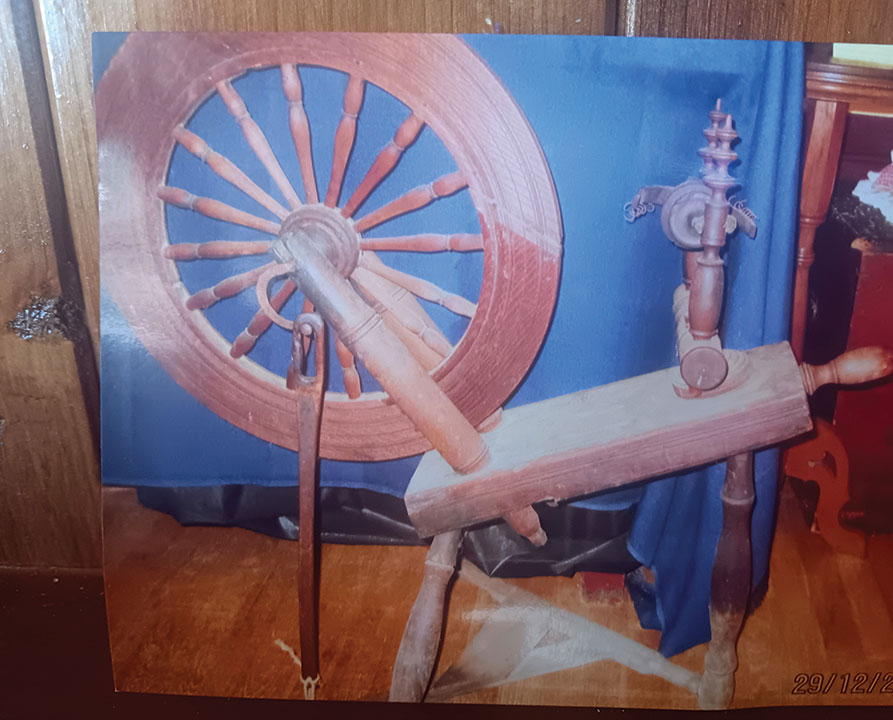
            The harvesting is the easiest part of getting flax thread. Once the plant is pulled from the garden there are several steps to get the flax to the flax wheel pictured here with its distaff and recently donated to the museum by Pam and Orrin Robinson.

            After drying the plants by laying them out in the sun, they need to be “retted”. Retting is the process of breaking down the pectins that bind the fibers. The most common way to do this was “pond retting”. Placed in a shallow part of a pond the water would basically rot the plant, loosen the unwanted fibers and as a by-product release a “prodigious odor.”

            L.C. Humphrey, in his papers, says that in Rochester, the flax would be taken to Mary’s Pond for this process to take place. Its clear bottom made it an ideal location and there are/were old stones on the south side that shows where the flax was placed.

            Once softened, it had to be again dried in the sun until it was “bone dry.” The flax was then beaten against a board with a blunt wooden knife. A contraption called a “flax break” was used. Next a “scutching knife” was used to “scutch” or break out the woody stems.

            The next tool was a “hetchel”. This tool came in sizes from large to small and looked somewhat like the wool comb in our exhibit. These were used to remove the remaining woody stems and short fibers, gradually refining the fibers. As the combing process continued, discarded fibers were saved to be fire starters or to be made into rope and even socks.

            When the fibers were smooth and start to look like hair (source of term, flaxen haired), they were finally ready to be spun into the thread used to weave linen cloth. The distaff on the wheel held the flax and spinners would wet their hand to ensure smooth not fuzzy yarn.

            Obviously, it was linen’s durability that made it worth all the work entailed in making it. Colonials had few pieces of clothing and wore them for many years.

By Connie Eshbach

Hanna R. Milhench

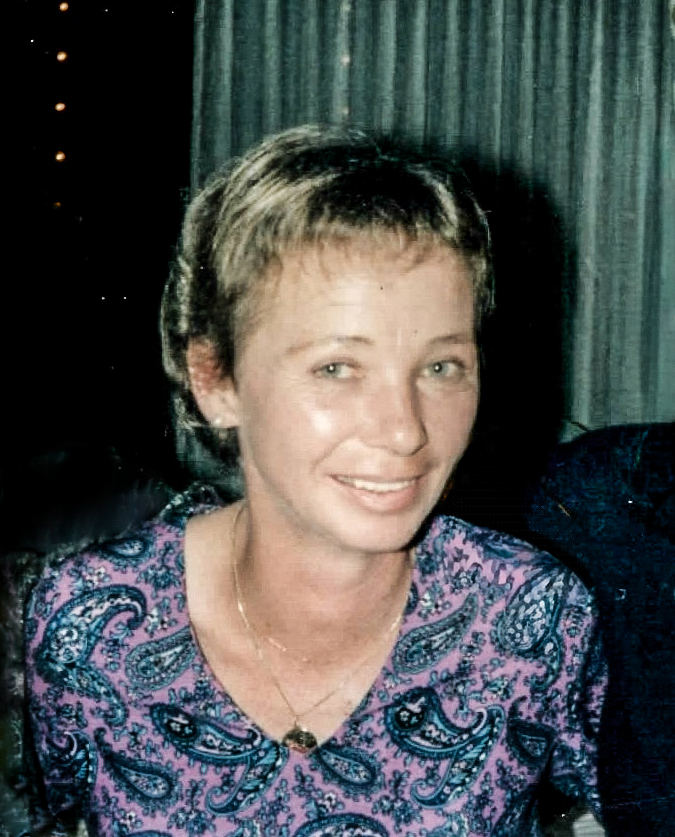
Hanna R. Milhench, 86, died peacefully at her home in Marion on Friday, January 23rd, 2026. A devoted wife, mother, proud grandmother and community member, Hanna lived a life of faith and serving others.

Born and raised in Lemgo, Germany, Hanna was the daughter of Hermann Rossmann and Else Klages Rossmann. After completing high school and vocational school, Hanna came to the United States in 1961 to au pair for the See family of Marion.

It was here in Marion where Hanna met Arthur Milhench, and a courtship ensued. In October of 1964 they were married in Germany, a marriage that would last forty years.

This marked the beginning of an indelible period: a family was started and a home was built on Butler Point.

Hanna was one of several German au pairs to enter the genteel Marion scene during this time. As one longtime friend put it, “These women were beautiful inside and out. They brought to Marion a European flair, they cherished their husbands, families and their new lives in America. And they wore bikinis!”

A devoted wife and mother of four, Hanna immersed herself in Marion. She led numerous projects at Saint Gabriel’s Church, including Fair Noel, Gardens by the Sea and Friendship Table. She was also a project leader at Damien’s Pantry and CRN. Hanna spoke with actions. A friend remembers, “Hanna was always doing for others, with folks not knowing half of what she did”.

Hanna took up golf under the care of Kittansett’s Ray Dennehy and grew to love the game. She competed successfully in numerous Club events and led Ladies Golf for three years. A creative problem solver, she was a talented seamstress, even sewing wedding dresses for four family members. But it may be her famous rum cakes that will live on indefinitely; this Christmas tradition she started for friends, has since become a Milhench Supply institution.

Hanna was happiest at home on the Point. Her love of gardening, the outdoors and the weather were the perfect match for living five miles out into the Bay. This setting, often filled with many of her eleven grandchildren, brought her true serenity. Fiercely independent and with an indomitable spirit, she lived at home to the very end.

Hanna was predeceased by her brother, Jürgen Rossmann, and her husband, Arthur Milhench.  She is survived by her sister, Christel Dudey; her children Heike Milhench (Barratt) of Marion, Loren le Gassick (Stuart) of Mattapoisett, Elke Pierre of Marion, and Mark Milhench (Kerry) of Marion; eleven grandchildren – Alexander, Anne Louise, Bessie Marie, Philip, Markus, Peter, Ella, Luke, Annalise, Henrik and Else; four nieces and nephews, and eight great nieces and nephews.

A memorial service will be held for Hanna on Saturday, March 21st, at Saint Gabriel’s Episcopal Church in Marion at 10:30am. In lieu of flowers, donations can be made to the Harwood Society at Saint Gabriel’s, P.O. Box 545, Marion, MA 02738.

Arrangements by Chapman Funerals & Cremations – Wareham.  For directions or to leave a message of condolence visit: www.chapmanfuneral.com

Marion Natural History Museum

The Great Backyard Bird Count (GBBC) is a free, fun, and easy event that engages bird watchers of all ages in counting birds to create a real-time snapshot of bird populations on February 4 from 3:30 pm to  4:30 pm. This year’s bird count runs from February 13 to 16. Participants are asked to count birds for as little as 15 minutes (or as long as they wish) on one or more days of the four-day event and report their sightings online at birdcount.org. Anyone can take part in the Great Backyard Bird Count, from beginning bird watchers to experts, and you can participate from your backyard, or anywhere in the world.

            With the help of Nasketucket and Brookline Bird Club member Carol Molander we will be learning how to identify some of our more common bird species, taking a walk into the woods to see what we can find and then learning a little more about this important event. Warm hats, gloves and boots are highly recommended for our excursion.

            Let’s learn the basics before these important dates are upon us. Please register at www.marionmuseum.org.

Academic Achievements

The University of Hartford is pleased to announce that Jay Carrillo of Marion has been named to the University of Hartford’s Dean’s List for the fall 2025 semester. The Dean’s List recognizes students achieving superior academic standing. The requirement, with some exceptions, is a grade point average of at least 3.0 and no grade below C.

            Regis College today recognizes Jenna Lynch, of Mattapoisett, whose academic excellence and commitment to learning have earned them a place on the fall 2025 Dean’s List. To qualify for the Dean’s List, students must earn a GPA of 3.5 or higher. First-year students qualify with a GPA of 3.25 or higher.

            Henry Bailey of Rochester was named to the Champlain College Dean’s List for the Fall 2025 semester. Students on the Dean’s List have achieved a grade point average of 3.5 or higher during the semester. Bailey is currently majoring in Game Design.

            Stonehill College is pleased to recognize Matthew Curry of Mattapoisett, Hannah Squires of Mattapoisett, Nathan Yurof of Marion, Andrew Poulin of Rochester, Martha Savage of Mattapoisett, and Allison Winters of Rochester to the Fall 2025 Dean’s List. To qualify for this honor, undergraduate students must have achieved a semester grade point average of 3.50 or higher with a minimum of 12 credits from courses graded with standard letter grades.

            Palmer Clingman of Mattapoisett, Will Hurlbut of Marion, Bree Killion of Rochester, Brady Lee of Mattapoisett, Drew Mastovsky of Marion, Owen Osterday of Marion, George Psichopaidas of Mattapoisett, Holyn Turner of Mattapoisett, and Zachary Zutaut of Rochester have been named to the Fall 2025 Dean’s List at Roger Williams University in Bristol, RI. Full-time students who complete 12 or more credits per semester and earn a GPA of 3.4 or higher are placed on the Dean’s List that semester.

Stephen E. Perry

Stephen E. Perry, 81, of Mattapoisett passed away Monday, January 26, 2026 at home surrounded by love after a brief illness. He was the husband of the late Drusilla L. (DePina) Perry, with whom he shared 47 years of marriage.

            Raised in Cataumet, son of the late William and Florence (Perry) Barrows, he lived in Mattapoisett for most of his life.

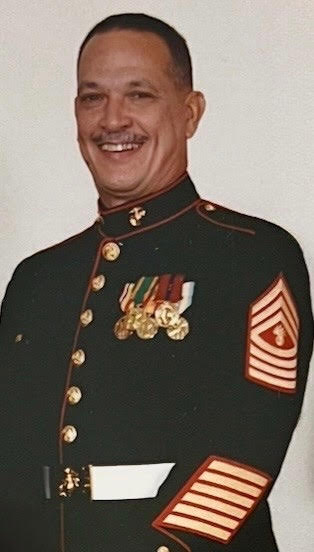
            Stephen attended New Bedford High School until he left at age 17 to enlist in the United States Marine Corps. He loved being a Marine and served honorably for many years, both active duty and as a reservist, retiring as a Master Gunnery Sergeant.

            He was formerly employed as a building and grounds supervisor for the Town of Marion for many years until his retirement.

            Stephen enjoyed time spent with family, friends, and his beloved dog, Cash. He was an avid golfer and loved traveling, listening to music, and watching sports, especially the Boston Celtics.

            Survivors include four sons, Anthony Perry and his wife Melanie, Brandon Perry, Shawn Perry, and Stephen Perry; his daughter, Charnelle Perry; two brothers, Donald and Jack Barrows; five grandchildren, Mikenzie Perry, Jason Perry, Ella Perry, Charlotte Perry, and Shawna Rose Pires.

            He was predeceased by his brother, Ronald Barrows.

            His Funeral Mass will be held Friday, February 6, 2026 at 12 Noon at St. Anthony’s Church, 26 Hammond St., Mattapoisett, with everyone invited to meet directly at Church. Visiting hours are omitted and burial at the Massachusetts National Cemetery will be private. For directions and guestbook, visit www.saundersdwyer.com.