Mattapoisett Library Reopens Seed Exchange

The Mattapoisett Library is excited to announce the return of our beloved Seed Library. As the days grow longer and the snow gradually melts away, it’s a perfect time for local gardeners and nature enthusiasts to prepare for spring planting. Whether you’re starting a new garden or expanding your collection, our Seed Library is restocked and ready for you.

            This season, we’re offering a wide variety of plants, including mizuna, parsnips, beets, tomatoes, kale, radishes, peas, and corn. We also have native wildflowers to beautify any landscape. Supplies are limited. Please take only what you need so we can ensure plenty for everyone.

            Seeds do not need to be returned. However, we encourage patrons to bring in any seeds they’ve collected or no longer need when they come check out new ones. And while you’re here, visit our Library of Things for all the tools and kits necessary to dig in and grow a garden, including Soil Testing Kits, Soil Block Kits, Tillers, and more.

            The Seed Library is free and open to everyone, regardless of gardening experience. Patrons only need an active SAILS library card to participate.

            No library card? No worries. Just bring your ID and sign up for one when you visit to browse our seed selection. Library cards are free and provide access to resources offered at the MFPL and surrounding SAILS libraries.

            Stop by 7 Barstow Street in Mattapoisett and borrow what you need to start your garden today. For more information, visit the library, email mfpl@sailsinc.org, or call us at 508-758-4171.
Erosion Control and Storm Debris

            The Marion Conservation Commission met on February 11 at the Police Station’s conference room and took no issue with a few small projects proposed.

            Ryan Burke, of Seahorse Way, filed a Request for Determination of Applicability for water service to two parcels he owns, explaining that the shoreline neighborhood has water services and relies on a water distribution tank. Burke proposed that the water line be connected via Dexter Way and service his home there. Burke said, in the long haul, other homeowners can also tap into the line. Burke also said the flood zone is not within the parcels that he owns.

            At member Millie Seeberg’s motion, the commission voted Burke’s proposal a Negative Box 2 determination, thereby approving his plan.

            For another project at 137 Allens Point Road, applicant Hope Sidman filed a RDA proposing demolition of a cottage on her property and the addition of an entertainment room. Sidman’s engineer, Bob Rogers of G.A.F. Engineering, disclosed that the work proposed for the property would include disturbing land at the fringe of the 100-foot buffer zone to the coastal bank. In explaining his RDA application as opposed to a Notice of Intent, Rogers said that all excess material would be removed from the site and pointed out on his site plan that the new construction only slightly penetrates the 100-foot buffer zone.

            Commissioner Shaun Walsh made a motion, which was approved by the entire board, to issue a Negative Box 3 determination, allowing the work as long as the builders take erosion-control measures to protect the nearby buffer zone prior to the start of any work at the site. Walsh said that the presentation showed limited work that could lead to erosion, but a plan on the record would protect neighboring lands. “We want to make sure it doesn’t fall toward the harbor,” he said.

            The agenda on February 11 featured three hearings, but the first one was withdrawn by the applicant – demolishing a home on Beach Street and building a new one.

            Commissioners also discussed an ongoing problem but made no motion for change. However, they cautioned residents and officials to be vigilant of the number of downed trees and limbs that have littered various areas in town due to the snowy, windy weather this season.

            The next meeting of the Marion Conservation Commission is scheduled for Wednesday, February 25 at 7:00 pm in the Marion Police Station.

Marion Conservation Commission

By Jeffrey D. Wagner

Thomas P. Lovett

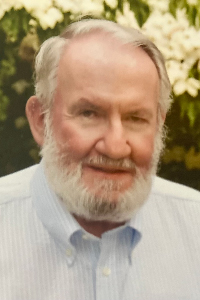
Thomas P. Lovett of Weston and Marion, MA died on February 14, 2026 with his family around him. He was born in Cambridge, March 23, 1947, the son of William F. And Kathleen (Geaney) Lovett of West Roxbury. He leaves his wife of nearly 55 years, Elena H. (O’Neill) Lovett and two sons, William C. Lovett and his wife, Jacqueline (Gange) of Needham and Thomas P. Lovett, Jr. and his wife, Camila Eisenstadter of Cohasset and grandchildren, Ryan, Kaitlyn, Maya, Lia and Samuel. Tom is also survived by two brothers-in-law, Charles T. (Ted) O’Neill and J. Patrick O’Neill, both of Belmont, and a sister in law, Michaelene O’Neill McCann of York, ME. He is predeceased by brother in law, Robert K. O’Neill, and sisters in law, Suellen A. O’Neill and Maura O’Neill Walsh. He is also survived by many nieces and nephews and many cousins here and in Ireland.

            He was a graduate of Catholic Memorial High School, West Roxbury, Class of 1964. He was a graduate of Fitchburg State College and received his M. Ed. From Bridgewater State College. He taught Industrial Arts for 34 years in the Schools of New Bedford, Fairhaven and E. Bridgewater, where he served as Department Chair of Industrial Arts and Home Economics and in Natick, where he served as Coordinator of Industrial Arts Co-operative Work Education. He was a builder who designed and built two homes for his family. He also owned two businesses, Tom Lovett Charters and Tom Lovett Cabinetry.

            Tom, Elena and their sons sailed the New England Coast together for many years out of Sippican Harbor in Marion. They sailed the Caribbean on charted trips many times. Later, their sons’ spouses and grandchildren often sailed with them. Tom also crewed on the El Greco II in the 1979 Marion to Bermuda Race.

            Visiting hours will be held at the George F. Doherty & Sons Funeral Home, 1305 Highland Ave, Needham on Thursday, Feb. 26 from 4-7pm. His funeral will be held from the funeral home on Friday, Feb. 27 at 10am followed by a Funeral Mass in St. Joseph’s Church, Needham at 11am View Live Stream. Relatives and friends kindly invited. Interment on Saturday, Feb. 28 in Little Neck Cemetery, Marion at 10am.

            In lieu of flowers, please consider donations to: Alzheimer’s Association; Att: Donor Services (Research donation); 225 N. Michigan Ave, Fl. 17; Chicago, IL 60601.

            This is the live stream link: https://www-harborview-live.filesusr.com/html/fee40e_617b11c0ec089abf64bc1fa77b22869a.html#

Marion Social Club Chicken Dinner

The Marion Social Club will be having a Chicken Dinner on March 8 at the Club located at 44 Pumping Station Road in Marion.

            The Dinner will include a barbequed chicken, baked potato, vegetable & dessert. Cost is $18.00 for each ticket, and the cutoff date is March 1. For ticket information please call Betsy Youngson at 508-295-8253. Doors open at noon for socializing, dinner will be served at 1 PM. We are always looking for new members if anyone is interested.

Preparing Dorchester Heights

            This week in Revolutionary War history, let’s check up on what was going on 250 years ago in and around the colonial Province of Massachusetts Bay. Last week, British General Henry Clinton disembarked in New York, just as the American Major General Charles Lee arrives to prepare the city’s defenses. Tensions are high, but Lee leaves shortly after to the south. Though attention is split between New York, Quebec, and New England, General George Washington is pressing ahead with preparations for a move on Boston.

            On February 11, 1776, Lieutenant Colonel Rufus Putnam writes to Washington and informs the general that this area around Roxbury in the south and Bunker Hill in the north are unsuitable for fortifications. He recommends Dorchester Heights as a staging post, due to its proximity to the city and the suitability of the earth, as ground in other areas is frozen. Washington and Colonel Henry Knox are out this day surveying land, along with the army’s chief surveyor Colonel Richard Gridley. They spend their time looking for wig lines to Boston and the best places to station artillery.

            Just as Dorchester begins to be seriously considered and prepared, the empire strikes back. On February 14, British troops under General William Howe make haste across the frozen and not-yet-filled-in South Bay. They raze houses and other potential fortifications before slipping back across to Boston. Washington writes to President of the Continental Congress John Hancock, saying, “Last night a party of regulars, said to be about five hundred, landed on Dorchester Neck and burnt some of the houses there, which were of no value to us, nor would they have been, unless we take post there.” He notes as soon as a response was mustered, the enemy retreated.

            On February 16, Washington holds a Council of War with most commenting officers around Cambridge with the express purpose of finally putting forth a plan to capture Boston. He states reinforcements are arriving, as well as, crucially, gunpowder. There are few defenders left in the city, with the general noting, “the state of Boston Harbor has been all this year, and now is, a bombardment might probably destroy the town without doing much damage to the ministerial troops within it.” His estimation is that there are currently around 5,000 defenders, though reinforcements are likely. The army currently under Washington’s command around the city numbers around 12,600, far less than he expected to have. With that, he recommends against an immediate attack and instead, await supplies, reinforcements, and to fortify Dorchester with cannons and mortars. By the time the artillery is in place, the general believes powder will have arrived.

            Adrenaline is high on February 17, as Washington instructs, through his General Orders, army regimented immediately prepare for battle with 24 rounds of ammunition each. Men are to be ready for an assault at a moment’s notice, and cannons are to be prepared and primed, entrusting the latter to Colonel Knox. At long last, Washington’s men in Cambridge and surrounding Boston are mobilizing and preparing to break the siege, nearly ten months after the Battles of Concord and Lexington.

This Week in Revolutionary War History

By Sam Bishop

Elizabeth A. (Jaillet) Dawson

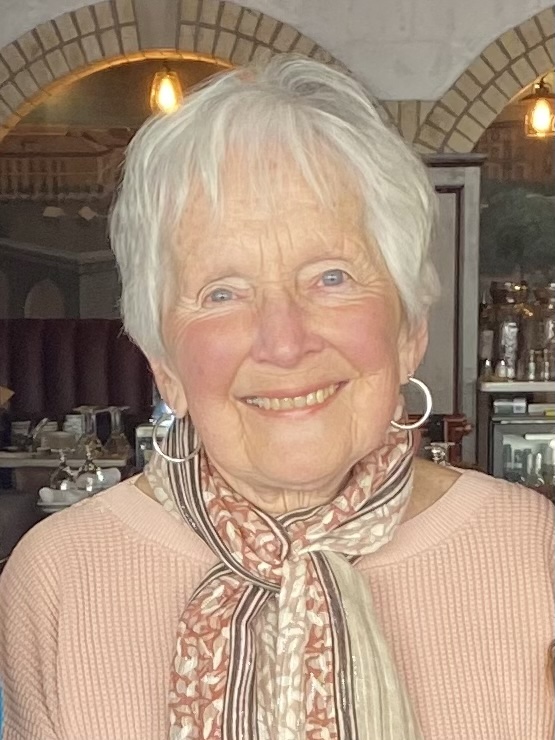
Elizabeth A. (Jaillet) Dawson, 85, of Mattapoisett, formerly of Boxford died February 21, 2026 peacefully at Tobey Hospital surrounded by her family.

She was the wife of the late John Dawson, with whom she shared 56 years of marriage.

Born and raised in Lowell, daughter of the late Henry and Elizabeth (Tumelty) Jaillet, Elizabeth and John married in 1963 and made their home in Manchester, Connecticut. They relocated to Saugus and eventually settled in Boxford to raise their six children before retiring to Mattapoisett. Elizabeth was a graduate of St. Elizabeth’s School of Nursing. She worked as a registered nurse at St. Elizabeth’s Hospital, Lawrence General Hospital, Hunt Hospital and Union Hospital. In retirement, she traveled with her husband John, spent countless hours with her grandchildren, and volunteered her time as a long-term care ombudsman, a hospice aide, with St. Vincent de Paul, and Nativity Preparatory School.

Elizabeth was a devoted communicant and choir singer at St. Anthony’s in Mattapoisett. She loved having coffee with friends, spending days on the beach with her grandchildren, attending Boston Symphony Orchestra concerts, and engaging with her community. She will be remembered for her consistent devotion to family before herself.

Survivors include her six children, Anne O’Leary and her husband Kenneth of Medfield, Sheila Geiger and her husband Robert of Reading, John Dawson and his wife Michele of Beverly, Maureen DiNapoli and her husband Richard of Harvard, Michael Dawson and his wife Jennifer of Sherwood, OR and Kevin Dawson and his wife Laura of East Greenwich, RI; 13 grandchildren, Caleigh and Stephen O’Leary, Jessica Echerarria and her husband Joseph, Molly and Jack Geiger, Henry, Peter and Curtis DiNapoli, Andrew and Brian Dawson, Micah, Maeve and Eliza Dawson; and several nieces and nephews.

She was predeceased by her grandson Daniel O’Leary and sister Lorraine Barry.

Her visiting hour will be held on Saturday, February 28th from 8 – 9 AM in the Saunders-Dwyer Mattapoisett Home for Funerals, 50 County Rd. (Rt. 6), Mattapoisett followed by her Funeral Mass at 9:30 AM in St. Anthony’s Church. Burial will follow in St. Anthony’s Cemetery. For online guestbook, visit www.saundersdwyer.com.In lieu of flowers, memorial donations may be made to Dana Farber Cancer Institute.

Upcoming Events at the Elizabeth Taber Library

Participate in the Elizabeth Taber Library’s adult winter reading program! Earn raffle tickets for checking out books, attending programs, and writing book reviews. Weekly drawings every Friday.

            Join our young adult and adult Makerspace program on Thursday, February 26 from 4:00 pm to 6:00 pm. Learn to create a cloth herb sachet with the library sewing machine. This program is librarian-led and all materials are provided. RSVP on the website to reserve a spot.

            Save the date for March 28 at 1:00 pm for Traditions of Chinese Acrobatics. This exciting acrobatic show features performer Li Liu and will be held at the Marion Music Hall. This program is hosted by the Elizabeth Taber Library with funding support from the Marion Cultural Council.

            For more information on the Elizabeth Taber Library visit us at www.ElizabethTaberLibrary.org or email the library at ETLibrary@sailsinc.org. 8 Spring Street Marion, MA 02738. 508-748-1252.

Project GROW Preschool Program Registration

Superintendent Michael S. Nelson is pleased to announce that registration for the Old Rochester Regional School District and MA Superintendency Union #55 Project GROW preschool program is open for the 2026-27 school year.

            Project GROW has long provided high-quality pre-schooling to children in Marion, Mattapoisett and Rochester.

            “Project GROW continues to be an important entry point into learning for many of our youngest students,” Superintendent Nelson said. “Project GROW reflects our commitment to early childhood education by offering a welcoming, supportive environment where children can build confidence, curiosity and essential social skills.”

            The program provides children with a part-day, high-quality preschool experience in a public school setting, in addition to an inclusive learning environment for children with special needs.

            The program is being offered at three district schools:

Sippican Elementary School, Marion (9:00 am – 1:00 pm)

Center School, Mattapoisett (8:50 am – 12:50 pm)

Rochester Memorial School, Rochester (9:00 am – 1:00 pm)

            The program consists of two classes:

Tuesday and Thursday ($2,520/year)

Monday, Wednesday, Friday ($3,780/year)

All classes follow the ORR public school calendar.

            This four-hour program is open to all children residing in Marion, Mattapoisett, and Rochester who will be 3 years of age before September 1, 2026.

            Each Project GROW class is held at the town elementary school where the family resides.

            Parents and guardians are reminded that they are responsible for providing transportation to and from the program each day.

            “Project GROW is designed to meet children where they are developmentally while encouraging independence, creativity and collaboration,” said Early Childhood Coordinator Doreen Lopes. “Our educators focus on meaningful experiences that help children develop a strong sense of readiness for kindergarten and beyond.”

            Each preschool class is staffed by a certified teacher and assistant. The program aligns with the Massachusetts Curriculum Frameworks and follows the High/Scope curriculum.

Understanding

To the Editor;

            When I was about five years old, my father would take me hiking into the forest behind our house. In those days the woods felt endless. Ferns crowded the path, moss climbed the trunks of trees, and sunlight broke through the canopy in pale, shifting columns. This was where we were closest – my father and I – bound by a shared love of the forest. He taught me the names of trees, showed me animal tracks, paused often to admire what he called nature’s handiwork.

            At a particularly beautiful clearing, he stopped. We stood quietly, listening. I remember nodding along as he spoke about how perfect it all was – the order of things, the balance. I understood that much. The forest made sense to me. It was alive and generous and complete.

            Then, still standing there, he told me that in nature men were meant to be with women and women with men. Anything else, he said, was an abomination. Nature didn’t allow it. God didn’t allow it either.

            God was new to me then – an invisible ruler introduced without warning, hovering somewhere beyond the trees. I tried to imagine Him while looking at the forest, but the two didn’t quite line up. The forest was right in front of me. God was not.

            Later, deeper into the woods we both loved, my father explained what he believed should be done about “the gay issue.” His voice was calm, practical. He said the best solution would be to put all the gays on an island, let them infect each other with AIDS, and allow the rest of us to remain uncontaminated.

            I don’t remember responding. I don’t remember asking questions. What I remember is the forest – still, indifferent, alive. Birds calling. Leaves shifting in the breeze. Life continuing everywhere around us as if nothing had been said.

            Even then, something didn’t fit. The forest I knew made room for everything: decay feeding growth, fallen trees nurturing saplings, countless lives intertwined without permission or purity. Whatever God my father was describing felt smaller than the place we stood in, more brittle, more afraid.

            Much later, I would understand that our disagreement wasn’t really about sexuality. It was about authority, about fear, about who gets to claim nature – and God – as evidence for cruelty. Standing in that forest as a child, I couldn’t name it yet, but I sensed the fracture clearly.

            We loved the same woods.

            We did not love the same world.

Jesse J. Green

The views expressed in the “Letters to the Editor” column are not necessarily those of The Wanderer, its staff or advertisers. The Wanderer will gladly accept any and all correspondence relating to timely and pertinent issues in the great Marion, Mattapoisett and Rochester area, provided they include the author’s name, address and phone number for verification. We cannot publish anonymous, unsigned or unconfirmed submissions. The Wanderer reserves the right to edit, condense and otherwise alter submissions for purposes of clarity and/or spacing considerations. The Wanderer may choose to not run letters that thank businesses, and The Wanderer has the right to edit letters to omit business names. The Wanderer also reserves the right to deny publication of any submitted correspondence. All letters must be typed and submitted directly to: news@wanderer.com.

Wintertime

            I love seeing boats in the winter, their exposed underbellies and hearing their musical halyards play when the wind comes through, waiting for warmer days. Likewise, I hold a great reverence for trees (especially deciduous) that sit out the season showing their skeletal outlines that are cloaked during the bloom season. On the practical side, the bare branches are advantageous to the pruning season and also in mapping further plantings. I take my cue from these things, as I lean into winter.

            Winter more than any season prompts discussion and speculation, and quite frankly I’m inclined to find the subject a tad boring, yet it’s something that we tend to check daily (if not twice a day). Yet I don’t really organize my days based on what the meteorologists say. I just like to be somewhat informed.

            As we well know, the South Coast winter offers a whole different world than summer. In the warm months everything goes full steam, while winter brings it all to a grinding halt. There’s the rub: that balance of nature and of life that we treasure.

            It’s not as silent as it seems, though. Flocks of birds also stay through the winter. They don’t have barometers and supermarkets but seem to know where to find what they need. Many a winter’s day finds us engaged in studying them. I noticed several that resembled robins with their red breasts, but their behavior had me stumped.

            Stationed on tree branches, they dart among the thorny brambles that hug the stone wall, gobbling up berries. I thought robins dined on worms but learned that in the winter months they alter their pattern, roosting communally and eating fruits and berries.

            I’m curious to know the results of the Great Backyard Bird Count that took place over this past weekend and hope to follow up here with the results. A quick Sunday morning check using my Merlin app heard the following birds: song sparrow, bluejay, northern cardinal, purple finch, house finch, house sparrow and tufted titmouse (although no robins were heard). We do feed our wild plumed friends to keep them healthy through the winter and are careful to keep the feeder full.

            Like the robins, we modify our diets and our daily rituals in the winter. This slowed pace precedes the frenetic activities of spring. Lest you wonder, it doesn’t shut off my gardening ambitions but diverts them to a different medium.

            Instead of digging the dirt, I’m channeling my energies to mental activities – foraging for information. There is little time for serious reading from spring through fall, so I consider myself lucky to have the winter.

            One of my standard cold-weather reads is the little yellow Old Farmer’s Almanac which, among other things, contains the weather forecasts for the different regions of the country, planting tables and astronomical data, as it has since 1792, when Robert B. Thomas published his first edition. Among the numerous articles there is one that has suggestions for planting according to the age-old practice, using cycles of the moon.

            I thought the editor’s note on “Weathering” was interesting. “To read 234 years of the Almanac is to witness that the human condition is about weathering storms – both literal and allegorical – about coming through, persisting. How we endure matters.” writes Carol Connare, editor in chief, adding, “Whether weathering foul weather, personal challenges, or a public crisis, time is the only fix we can count on. With time, everything changes – including the weather.” The Almanac also has several feature stories on garden-specific topics such as women who pioneered landscape design throughout history. (More about those in a future article.)

            This winter, according to the Old Farmer’s Almanac, winter along the Atlantic corridor will be milder and drier, but that’s not been the case this year, though it predicts a late-February snow. It says that trend will continue into March with temperatures 3 degrees above average and precipitation 2 inches below average. April and May will end up hotter and drier than usual, and summer will follow suit with rainfall above normal. A chart for expected precipitation as well as blow-by-blow predictions for each month are printed.

            These forecasts are derived from a secret formula devised by Thomas in 1792 and enhanced by the most modern scientific calculations based on solar activity and current meteorological data. The almanac asserts that “nothing in the universe occurs haphazardly, but that there is a cause-and-effect pattern to all phenomena. However, although neither we nor any other forecasters have as yet gained sufficient insight into the mysteries of the universe to predict the weather with total accuracy, our results are almost always very close to our traditional claim of 80%.”

            That’s more scientific than the rite practiced by my former ski club in the White Mountains. Preceding ski season each year, a mock battle was staged with members dressed up as characters from Scandinavian mythology. As I recall, Odin, representing rain, would always lose out to Ullr, the god of snow. If the weather didn’t follow suit, we made the most of things. … A good life philosophy indeed.

            I have to agree that one mustn’t put too much stock in predictions whether by Puxataney Phil or even the Almanac – but they are certainly fun to follow. Obviously, local meteorologists are more dependable. Historically we usually get thawing temperatures around mid-February, but it’s running lower than average now.

            On that note, I’m going to strap on my cross-country skis and tootle around the back yard, before the snow begins to melt! My motivation comes from the Winter Olympics – all that shushing! And those cowbells! My neighbors, by the way, built a veritable ski slope in their backyard for their three children to slide down, so let’s hope we can keep this mini-Olympic village going for a bit longer. Apologies to those who aren’t snow enthusiasts, including my cat and chickens!

“Chill airs and wintry winds/ My ear

Has grown familiar with your song,

I hear it in the opening year,

I listen, and it cheers me long.”

– Henry Wadsworth Longfellow

The Seaside Gardener

By Laura McLean