Student Alumni Connection Board

Throughout the school year, a number of new groups have formed in the Tabor Academy community as a result of the brainstorming done at the second annual Leadership Symposium. The theme of that day was to think of new positions or programs that could enhance certain areas of life at Tabor. One group focused on alumni relations and, as a result, the Student Alumni Connection Board (SACB) was recently formed.

Sara Yeransian, an officer in the advancement office, leads the 11 students on the board. “The overall purpose of the group is to better connect current students with the alumni base,” says Yeransian.

In order to achieve this purpose, the group plans to implement a number of activities and events. For example, next year the board will focus on organizing an alumni speaker series during which graduates will come to Tabor and speak about something that interests current students, who will recommend the discussion topics.

According to senior board member Ellie Sullivan, “We’re planning some events in the spring to get alums back on campus.” These events will be beneficial because, although many graduates in the Boston area would like to return, Sullivan points out, “There aren’t very many opportunities for them to do so.”

These events include a lunch in which young alumni can sit at different tables to discuss schools, sports, music, and other post-graduation endeavors.

Additionally, the board is planning an alumni weekend during which alums can attend sports competitions as well as participate in other activities and meals with students.

Currently, many off-campus events exist for alumni and the group is hoping to bring students to these gatherings to improve the connection. For example, at a recent reception where John Fish ‘78 spoke about his effort to bring the Olympics to Boston, three Tabor seniors were able to attend, listen and talk to alums.

Julia Furneaux, a board member, recognizes that “Tabor does have an alumni newsletter to update them on life at Tabor”; however, she says, “We are just now getting ideas on how to connect student to the alumni on a more personal level.”

Technology and social media are crucial in forming these connections. According to Yeransian, Matt Paliotta, a board member, “just created a group on the Tabor Alumni LinkedIn page that will serve as a method of communication between students and alumni.” Students who choose to utilize this link will hopefully find it helpful for forming relationships with alumni and finding access to summer internships and more.

An improved connection between alumni and students will be beneficial to both parties. According to Sullivan, with a medium of social media, “Students can go to find alums who may have jobs or internships open and want to hire a Tabor student, or for juniors and seniors who want to hear from a former Tabor student about a certain school they attended.” For the alumni, this is equally beneficial as they would be able to seek out students for said internships.

Additionally, a new campaign titled “How did you seas the day?” inspired by Tabor’s waterfront location, has been started by the board. This is a series of videos published on Instagram in which a few students and faculty are featured weekly stating how they seized the day at Tabor. This again will be an accessible way for alumni to stay involved in current Tabor life.

Although the SACB has only been in action for a few months, improvements in connections between alumni and current students have been made. Isabelle Rodgers is passionate about her involvement in the board, “I know that I will always want to be connected back to Tabor and having this board set up will allow me to feel like I never really left after I graduated and that I still have a connection to the school.”

By Julia O’Rourke
Tabor

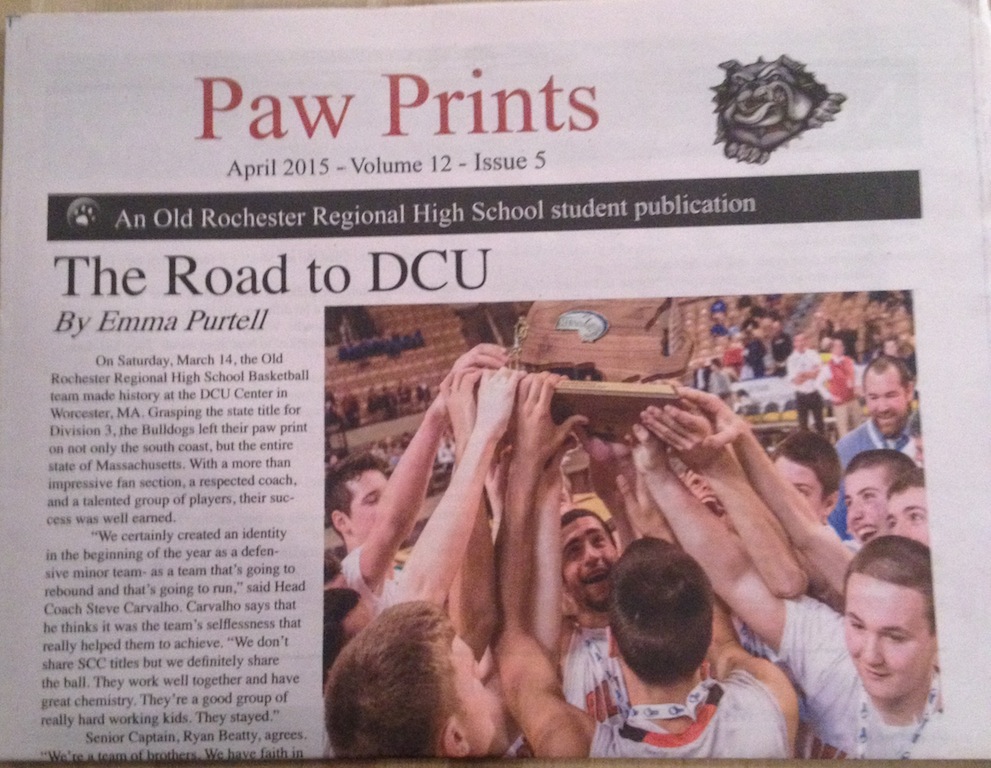
Paw Prints Leaves Its Mark at ORR

For a newspaper to work, a lot of things have to go right. Writers, editors, and photographers have to work together. Interviews, articles, and photos have to meet deadlines. To sum up the process in one phase, timing is everything. It’s that study of newspapers that makes Journalism and Media Literacy a popular class year after year at ORRHS. Taught by Bertrand Allain, who primarily teaches English for sophomores, the class intertwines information about the newspaper industry with an examination of the media at large. Students spend most classes working on interviews and writing articles for the Paw Prints publication, which prints six issues per school year. For this article, Allain, Editor-in-Chief Kate Cunningham, and fellow senior Gwen Plante shared their thoughts on ORR’s student publication.

The best part of Allain’s role as an advisor to the paper, in his words, is “watching students take full ownership of the journalistic process.”

This is Mr. Allain’s third year as the advisor to Paw Prints, and he really enjoys the position. His favorite thing to see in a student writer is comprehension of the interview process. “I like when it’s clear that a student has learned the value of a good interview. When they master that, the student can do any type of Journalism in the future,” he explained.

One of his goals for the future is to see the newspaper focus on covering the issues of greatest importance to the student body.

Plante stepped into Journalism class this year and took on a big role by becoming editor of the news section. “[Journalism] helped open my mind to a new world,” she said. “It helped that Mr. Allain was really easygoing about it.”

The best part about journalism, in her opinion, is that “you get to choose what you want to write. I’m the news editor, but I don’t always have to write a news article,” Plante said.

Most of all, the journalism experience will prepare her for next year as a college freshman, where she is considering studying photojournalism.

Cunningham edited the paper’s sports section in her junior year, and assumed the title of editor-in-chief for her senior year. Last year, the paper’s sports section earned an award from Suffolk University’s High School Journalism Conference, marking a major achievement for Cunningham.

Describing her position, she said, “It’s a lot of work, but it’s all worth it as soon as I see it in print.”

Cunningham’s main duties are editing the articles for each issue of the newspaper and formatting them, along with the photos, into a cohesive publication.

She also writes stories for the paper, mostly in the News and Special Features sections. “I have to handle my time efficiently,” she said. “My main priority is getting the paper out for the student body.”

Cunningham said her overall goal is to work for a newspaper while living in New York City. “The experience I have received here will prepare me for something like that,” she said.

It’s been a very successful year for Paw Prints. Five issues have been released thus far, with the most recent being released on Thursday, April 16, in celebration of the Boys’ Basketball Team’s title run. A sixth issue is being prepped for May, with a focus on senior farewells. Thanks to the guidance of Mr. Allain, the hard work of Cunningham, and the quick adaptations made by section editors like Plante, Paw Prints continues to thrive as a major part of ORR student culture.

By Patrick Briand

PawPrints

Rochester Memorial Day Boat Race

The Rochester Memorial Day Boat Race on the Mattapoisett River, sponsored by the Rochester Fire Department, will take place on Monday, May 25 starting at 8:30 am at Grandma Hartley’s Reservoir, Snipatuit Road, in Rochester and finishing at the Herring Weir, River Road at Route 6, in Mattapoisett.

The race is open to persons of all ages. There will be two persons to a boat. The boat must be a homemade river racer design of any material you choose. There are no limitations or restrictions on types of paddles.

Divisions include open/men’s, women’s, junior boys, junior girls, co-ed and parent/child. Junior division teams are both contestants under 14 years old. Parent/child is for a parent with his/her child (child under 14 years old) or an adult (25 or older with a child under 14 years old). Trophies are awarded to the first, second and third place finishers in each division.

Pre-registration is required. Contestants may register at the Rochester Grange Hall, 205 Hartley Road, on Friday, May 8 and Friday, May 15 from 6:30 to 8:00 pm. No registrations will be accepted after Friday, May 15 at 8:00 pm. It may be prudent for contestants who raced last year to submit their paper work on the first night of registration in the event of unforeseen circumstances that prevent them from attending the last registration and losing the starting position they earned based on last year’s finish position. This would also make the work load on the registration staff a bit easier on the last night of registration.

Rules and registration forms may be obtained at Lloyd’s Market and at the registration sessions. A signed registration form must be submitted by each contestant for a team to be eligible to draw a starting position.

The Boat Race Ham & Bean supper will be served on the Saturday evening of Memorial Day weekend, May 23 from 5:00 to 7:00 pm at Rochester Memorial School.

Tickets for the supper may be purchased at the door. Proceeds from the supper, along with donations, fund the expenses of the race. (There is no registration/entry fee to race.)

Trophies and prizes will be awarded Memorial Day at Rochester Memorial School at 7:30 pm.

For further information, contact Boat Race Chairman Arthur F. Benner, 508-763-2024.

Goodspeed Island Pier Hearing Draws Hundreds

“On my fiftieth birthday, my husband gave me a signed purchase and sale agreement for land on the water…” Thus began Laurie DaRosa’s comments about how she and her husband, Daniel, came to purchase the parcel on Goodspeed Island, a location she said was the culmination of years of hard work and the fulfillment of their dreams.

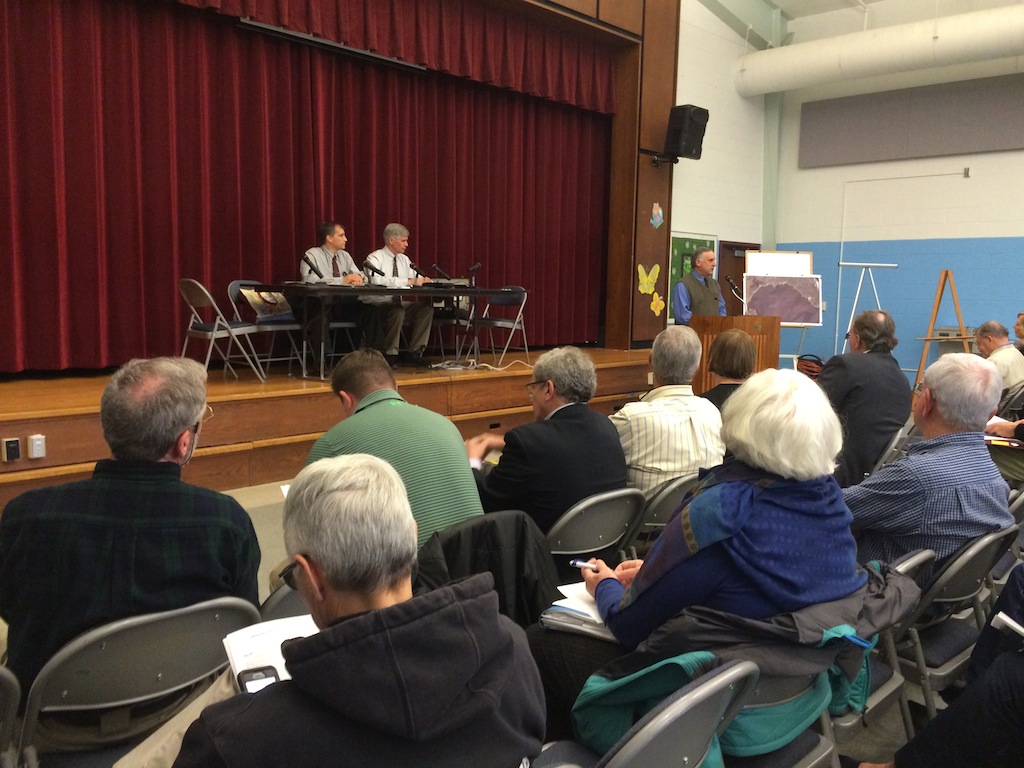
DaRosa was speaking to approximately 200 residents who packed the Massachusetts Department of Environmental Protection Chapter 91 public hearing held in the cafeteria at Old Hammondtown School on April 16, at the request of the Mattapoisett Board of Selectmen. She told them that her family’s plan had always been to build a pier from their home out into the harbor “for our grandchildren to run on.” She said, since applying for various permits (Army, U.S. Army Corps of Engineers, DEP, Chapter 91, and the Mattapoisett Conservation Commission), she and her husband have had their good name negatively affected by harsh media coverage and by unwelcoming residents.

DaRosa said that when her husband was introduced to another resident during a benefit event in town, the reaction was, ”Oh, you’re the guy who wants to build the dock,” and not, “Thank you for your donation.”

“We have always been kind, generous, giving people,” DaRosa stated, asserting they have taken great pride in all the properties they have owned. She also stated that the property was littered with trash when they first acquired it and questioned why the Town had not cared before then about the conditions on Goodspeed Island.

Next, the public was invited to speak by DEP officials Carlos Fragata, Waterways Regulations Program environmental analyst, and David Hill, DEP environmental engineer.

The overriding concern of the public in attendance was the proposed size of the pier. It took two and a half hours for those comments to be aired.

Representative William Straus was the first to speak after Mrs. DaRosa’s impassioned opening statement.

“This isn’t about you,” Straus said to the DaRosas. “It’s about the harbor … what it means to the people.” He said the outpouring of public sentiment against the pier pointed to the importance of the harbor to all the people and not just a single family. He said to the two DEP officials, “The ability to travel over waters unimpeded depends on the Commonwealth to protect…” He concluded his comments by saying decisions of this sort should “tilt in favor of public use…. This pier should not be licensed under Chapter 91 … it is too large an impact.”

There were supporters of the DaRosas present. Coming forward in support of the pier’s construction was Anthony Campbell, 3 Goodspeed Island. He said, due to the extremely shallow waters in front of the Darosa property, swimming and other water activities were almost never something that he witnessed. He suggested everyone get in bathing suits and experiment to see just how shallow the water was in that location. He said the need to preserve the location for public recreating was not factual. He was not alone in that conclusion.

The DaRosas’ attorney, John Gushue, provided technical printouts and correspondence sent to the DEP last October that supported the project.

In an email printout dated October 21, 2014, Conservation Commission member Mike King wrote, “There are those that would have you believe that this project will infringe upon the right of the public to enjoy the harbor, that it will negatively impact the ability of average citizens to recreate on the harbor … that the area proposed for this pier is of high recreational use and it will prevent them from their enjoyment of this area.” He continued, “I submit to you that this is false testimony.” He went on to describe the shallow water issues he associated with poor recreational quality and concluded it was his belief that the project should be permitted.

Also supporting the DaRosas’ proposal was F. Mitchell Suzan, Jr. of 8 Main Street via written comment.

“In my opinion, the opposition to the DaRosa pier is shamelessly trying to manipulate the permit process by making trumped-up claims of impact from the pier, but it’s really about change and people just don’t like change … plain and simple,” wrote Suzan.

On the other side was the response from the public and some town officials who provided their own technical reasons why the application should be reviewed further to expose any perceived negative impact from the pier construction, as well as personal reasons why they think the pier will be a detriment to the public’s use of the harbor.

Speaking against the issuance of a permit was BOS Chairman Paul Silva and Selectman Jordan Collyer. Silva noted, of the 23 miles of shoreline in Mattapoisett, only half of one mile was open to the roughly 7,000 residents of the town; the remaining 22.5 miles was in private ownership. Collyer said that the DaRosa location was perfect for teaching children about water sports, specifically because it was shallow most of the time.

William Madden of G.A.F. Engineering questioned the Zoning Board of Appeals decision to deny the project because it found the DaRosa property was not directly on the waterfront but instead was one lot back from the beach.

Madden said the DaRosas have an easement, but that easement specifically called for approval from local agencies. He said bylaws require accessory structures to be on the same property, not traversing easements. He said the ZBA misunderstood that point. He also pointed out what he called “deficiencies” in engineered drawings presented to the U. S. Army Corps of Engineers.

Other town-appointed and elected officials coming out to ask the DEP to decline permitting of the project were Ray Andrews of the Assessors‘ Office, Water/Sewer Superintendent Nick Nicholson, Shellfish Officer Kathleen Massey, former Harbormaster Horace Field, and Robert Moore of the Mattapoisett Marine Advisory Board.

Of the residents speaking against approval, all conveyed the importance of the area in front of the DaRosa property as a place where the public used small watercraft, went shellfishing, and generally enjoyed water activities. Many said a smaller pier would not be met with dissent.

Brad Hathaway of Aucoot Cove said at the end of a long evening of residents giving voice to their concerns, “I have never sailed in the harbor, I have never swum in the harbor, I have never fished in the harbor,” but approving the pier, he said, would set a precedent in other areas and therefore, “You’ve got to say no.”

Fragata then asked the DaRosas if they wished to offer any rebuttal. Gushue declined the offer in favor of responding to each written statement submitted to the DEP during the public comment period in writing.

Fragata told the assembled that the public comment period closes at the end of the business day on May 6. He said each person submitting a letter would receive a response with the DEP’s decision. He also said anyone wishing to appeal the DEP decision would have had to submit a letter of comment during the public comment period.

Letters may be sent to: Carlos Fragata, Environmental Analyst, DEP Waterways Regulation Program, MA Dept. of Environmental Protection, 20 Riverside Drive, Lakeville, MA 02347.

All correspondence should also include RE: Waterways No. W14-4226, Timber Pier, 3 Goodspeed Island, Mattapoisett.

By Marilou Newell

Pier_042315

Rochester Historical Society

To the Editor:

The Rochester Historical Society would like to thank everyone who made our fundraising dance on Friday, April 10 at the Reservation Golf Club a success. We appreciate the support of the Rochester Women’s Club and all the businesses who donated to our Silent Auction. Thank You.

Edyie Johnson, Rochester Historical Society


The views expressed in the “Letters to the Editor” column are not necessarily those of The Wanderer, its staff or advertisers. The Wanderer will gladly accept any and all correspondence relating to timely and pertinent issues in the great Marion, Mattapoisett and Rochester area, provided they include the author’s name, address and phone number for verification. We cannot publish anonymous, unsigned or unconfirmed submissions. The Wanderer reserves the right to edit, condense and otherwise alter submissions for purposes of clarity and/or spacing considerations. The Wanderer may choose to not run letters that thank businesses, and The Wanderer has the right to edit letters to omit business names. The Wanderer also reserves the right to deny publication of any submitted correspondence.

MNHM Summer Program

The Marion Natural History Museum’s Summer Program is one of the most well known and well regarded in the South Coast area. Children from across the country visit us each summer and participate in the program. The programs are designed to be small groups, and registration is limited to 15 children per session.

Our Life Along The Shore program for grades entering 1-2 includes visiting the shoreline and exploring the plants and animals that live in our area’s many coastal habitats. With the use of games, journals and introductory science techniques, this is a wonderful first look at life in our coastal environment. During our Coastal Explorations I program for grades entering 3-4, we feature explorations of our rocky intertidal shorelines, salt marshes, estuaries as well as freshwater riverbanks, swamps, ponds and bogs. We take a close-up look at the birds, amphibians, fish and invertebrates that make these areas so special. And in our Coastal Explorations II program for grades entering 5-8, we increase our investigations into the unique habitats Marion has to offer, which include several field trips and meetings with specialists to expand our knowledge of our coastal and freshwater ecosystems.

Time for all programs is 9:00 am – 12:00 pm, Monday – Friday. Session Dates: Session I: July 6-17 and Session II: August 3-14. Cost for each program: $200/ members; $250/Nonmembers. Registration information is found at our website: www.marionmuseum.org. Hope you can join us!

3rd Annual Ballroom & Line Dancing Party

There will be a Ballroom & Line Dancing Party on Saturday, May 2 from 7:00 to 11:00 pm at the Knights of Columbus Hall, 57 Fairhaven Road, Route 6, in Mattapoisett. Music is provided by Dave Valerio; all proceeds benefit the Mattapoisett Council on Aging.

Free parking and light refreshments are included. Tickets at the door are $25 per person; tickets purchased prior to April 26 are $20. Reserved table seating is available by advanced payment and is on a first-come, first-reserved basis.

This fundraiser is hosted by the Friends of the Mattapoisett Council on Aging. Door prizes are awarded and a silent auction is part of the party. For more information and tickets, please contact Jo Pannell at 508-758-2654.

An Afternoon with Walt Whitman

“I celebrate myself and sing myself,

And what I assume you shall assume,

For every atom belonging to me as good belongs to you.”

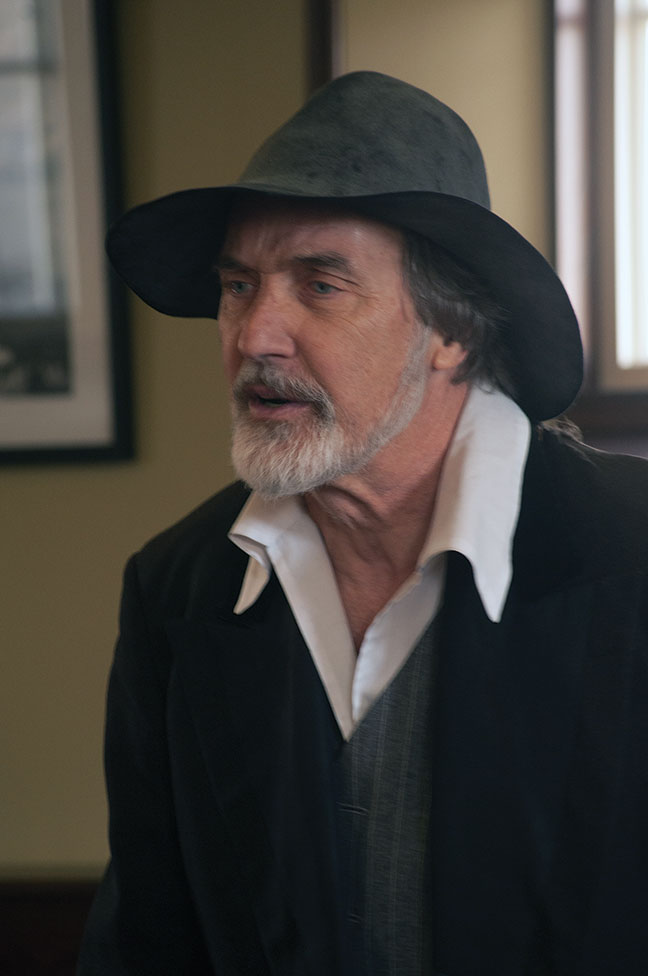
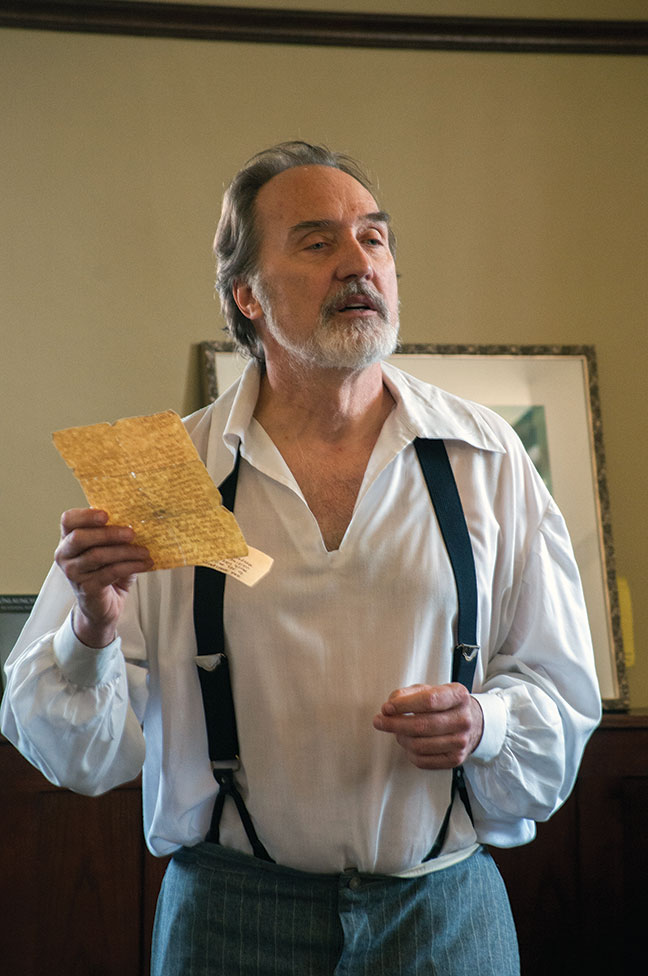
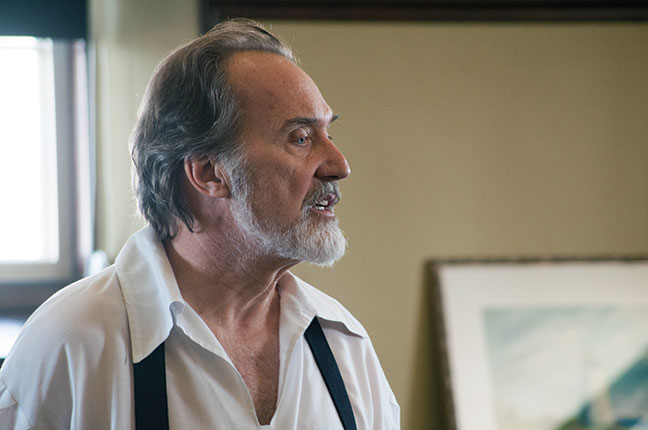
The words of “America’s poet” rang out inside the Mattapoisett Library hall on April 19 as never before. Each syllable of every poem fresh and green within Leaves of Grass dripping wet from the mouth of Walt Whitman – new life breathed into each word by Stephen Collins, actor and re-creator of the past made present for an audience that delighted in the afternoon setting of May 31, 1889, Whitman’s 70th birthday.

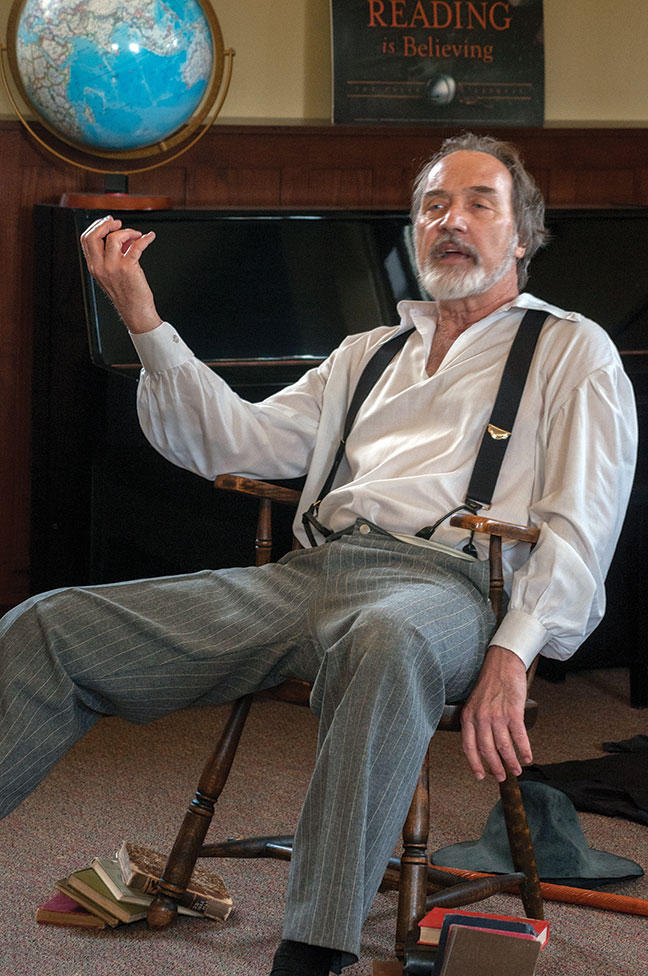
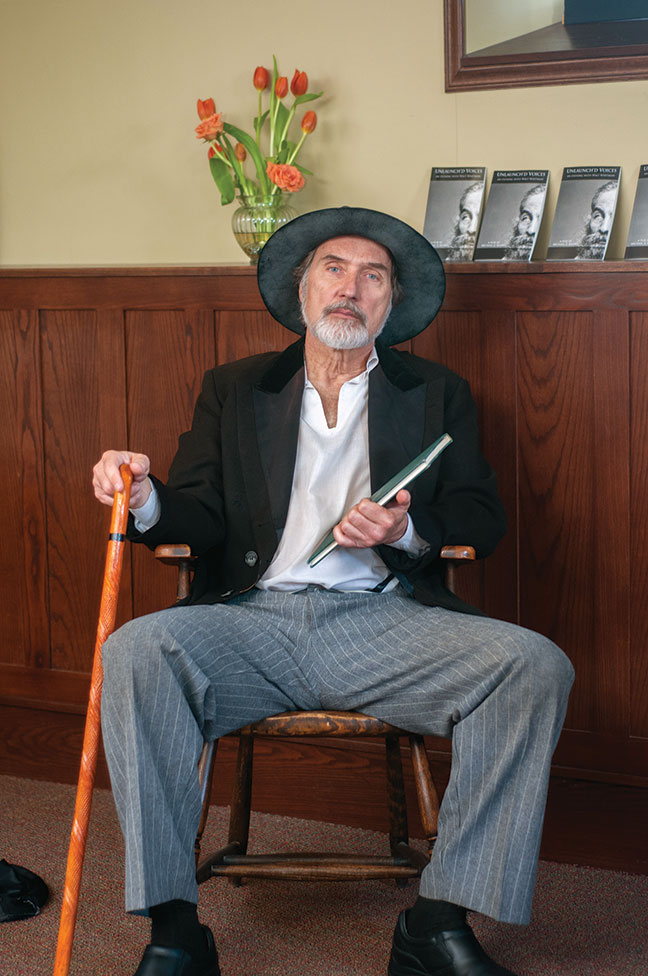
Before them stood Whitman in a long black overcoat, round-rimmed felt hat and cane. A limp, a cough, and a “howdy’ do,” as he looked around piles of books in confusion and urgency seeking his friend Horace’s black notebook. Within this notebook were the diligent recordings of conversations incorporated into the script “Unlaunch’d Voices: An Evening with Walt Whitman,”written by Michael Keamy and inspired by Collins’ portrayal of Whitman.

A smile, another “howdy’ do”…

“How-dy-do. Ain’t that a good word? It has phonetic significance … a truly American greeting. It rolls off the tongue more readily than ‘good evening,’ don’t you think?”

At that, the audience is invited into the mind of Whitman as he stands in his study, bent and leaning upon his cane, clenched fingers punctuating his every idea beginning with the introduction of his most famous work, Leaves of Grass, and the perceived failure of his book of poems, evidenced by folded, yellowing papers containing reviews of the work by offended and unmoved critics.

In retrospect of his earlier life, Whitman in his frail physical state takes us into a room within his heart, offers us a seat in there, and tricks us into thinking the experience real. The ensuing hypnotic swirl of dialog weaves within it poetry and prose and makes us unaware of the shift like the transition into a dream state where nothing is questioned and time loses meaning.

Collins by now had convinced us all to assume ourselves witnesses of Whitman’s memories of torment, youthful unrest, the celebration of life and human flesh. He talks of a mystical experience in nature that forced Whitman into the throes of a creative whirlwind that became his Leaves of Grass, hailed by Ralph Waldo Emerson as “the most extraordinary piece of wit and wisdom America has yet contributed.”

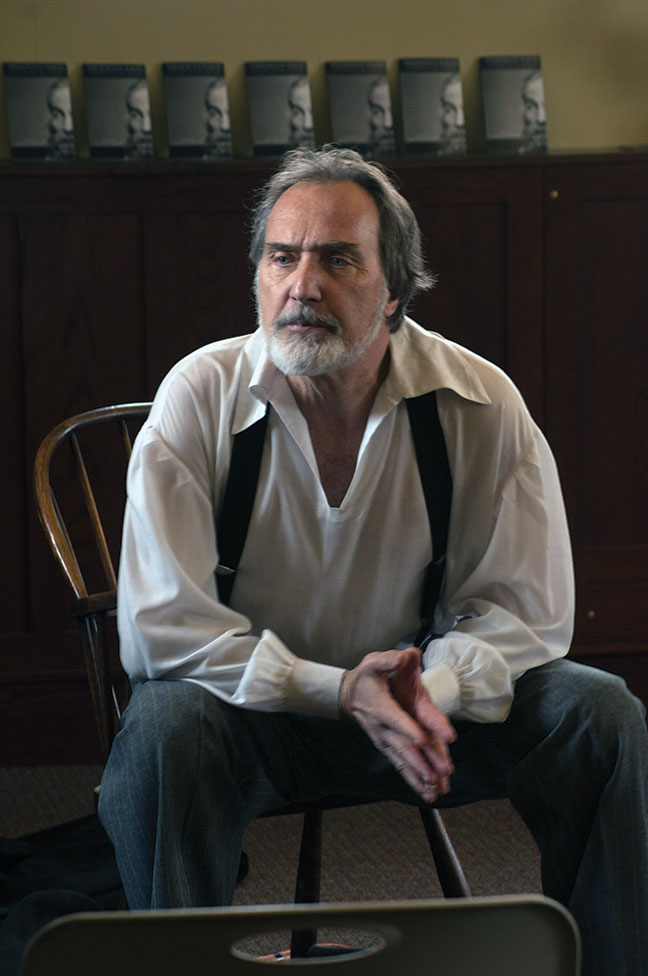
Within that whirlwind of thoughtful dialog intermingled with poetry, the arched backbone appears straightened as Whitman’s overcoat is removed and tossed off. Loose fingers unbutton the dress vest to reveal a disheveled open-chested white shirt. Whitman, looking wild and larger than life, then dug his youthful heels into the poem “Song of Myself” that broke new ground in 1855 with its sexual straightforwardness, and celebration of the sacrosanctity of the physical, the savage, and nature.

Was it Whitman’s words alone or was it the deliverance that likely led some of us to resist squirming in our seats during the explicit verses of the poem “Children of Adam” that describes the female form “too fully,” as Emerson thought.

“Lost in the cleave of the clasping and sweet-flesh’d day…”

Impassioned words brought forth moments of a man on his knees as if begging for mercy from his own creation, clenched fists, and arms locking his own chest in an embrace.

“I am he that knows the pain of unrequited love,” shouts the man between verses of the poem. “Agonies are one of my changes of garments … Yet out of that I have written these songs…”

Act Two comes on with the warning of war, a time that left on him the imprints of mortality, morality, and “the most real work of my life,” read from a letter written by Whitman to his mother.

The dialog slows after a series of letters, and the man pauses and looks into the collective eyes of the audience.

“Have you seen someone die? Have you had the privilege? I have. Hundreds of times.”

Collins slowly walks to retrieve his overcoat, hat, and cane and returns to the frailty of Whitman’s 70-year-old self. He moves again into poetry seamlessly and without hesitation and winds down into the verses of Leaves of Grass again:

“I am the poet of death as the poet of life. / I welcome you.”

A copy of Leaves of Grass in hand, the old man offers us one last moment of Whitman’s rebirth and own words channeled through Collins’ body:

“Love the earth and sun and the animals, despise riches, give alms to everyone that asks, stand up for the stupid and crazy … take off your hat to nothing known or unknown or to any man … go freely with powerful uneducated persons and the young … read these leaves in open air every season of every year of your life … and your very flesh shall be a great poem … not only in its words but in the silent lines of its lips and face … and in every motion and joint of your body.“

At that, he discovers Horace’s notebook, acknowledges his “gabbing and loitering,” and bids farewell to the people waking up from reverie and leaves us, reciting a few more precious verses before he retreats into his own transience.

Collins the actor is welcomed back with a lengthy applause from the audience he thanked and deemed acutely attentive and appreciative, which is what fuels a great performance such as this one, he said.

“I’ve been doing this for a long time and I still get nauseous for the first few minutes,” said Collins, who also performs several other one-man performances portraying other greats such as William Shakespeare. “I wake up everyday … and work at finding beauty in this life and work at being grateful,” said Collins. “I’m grateful every day. I’m grateful that I’m not a salesman.”

Collins said 90 percent of Keamy’s script that he recites is of Whitman’s own words, either through poetry or via Horace’s written recordings.

How does he remember the entire text for a lengthy solo performance such as this, someone asked.

“On the way down here, I went over this entire show in my head,” said Collins. Every now and then, he said, he tells himself, “Ok, it’s time to re-cement my mind,” which he usually follows-up on while running for exercise. “Once it’s hard-wired, once it’s in there, pulling it out of your memory bank isn’t a problem.”

And as for his portrayal of Walt Whitman, Collins said, “I have a pretty good sense of who he was.” Collins said he himself has spent some time in nature and has visited some of the same places Whitman once did.

“I love it,” said Collins of his work bringing to life great men from the past. “I absolutely love it.”

By Jean Perry

WaltW_545 WaltW_571 WaltW_577 WaltW_582 WaltW_586 WaltW_615

Ukraine’s Revolution of Dignity

The Sippican Historical Society and Elizabeth Taber Library will join together on Thursday, May 7 to co-sponsor Ukraine’s Revolution of Dignity: Its History, Progress & Future, a lecture by Myron O. Stachiw. A glance at the TV news or any newspaper will quickly reveal that the past decade in Ukraine has witnessed a series of social and political upheavals – so much so that a half-second internet search including the terms ‘Ukraine’ and ‘upheaval’ will actually garner almost 400,000 results. This timely lecture will explore the long social and cultural history of the conflict between Ukraine and Russia; the nature of the Orange Revolution and the Revolution of Dignity; and the possible future outcomes of the current, frozen conflict facing Ukraine and the world.

Speaker Myron Stachiw is an educator, historian, archaeologist, and architectural historian. Currently a visiting lecturer at UMass Amherst, he is also engaged as an historical consultant to museums and historical agencies, as well as to state and local preservation organizations and agencies. He recently completed a project as guest associate curator with the Ukrainian Museum in New York City. Mr. Stachiw lived in Ukraine from 2004 – 2012, first as a recipient of a Fulbright Scholar Award (2004-2006) and then as the director of the Fulbright Program in Ukraine. The latter position required close collaboration with the Department of State and the U.S. Embassy in Ukraine, and close and frequent interactions with institutions of higher education in Ukraine, the Ukrainian government, and Ministry of Education and Science in Ukraine.

The presentation, to be held at the Marion Music Hall (164 Front Street) at 7:00 pm is offered free to the public, with no reservations required. Ample parking is available across the street at Island Wharf. For more information, contact the Sippican Historical Society at 508-748-1116 or the Elizabeth Taber Library at 508-748-1252.

Mattapoisett Road Race

It’s time to dust off your running shoes and start training for the 45th annual Mattapoisett Road Race, which will start at Shipyard Park at 9:00 am on July 4. The 5-mile course is mostly shaded and winds through the village of Mattapoisett, around Ned’s Point lighthouse and back to Shipyard Park. There are cheering crowds, plentiful water stops, and drinks and fruit for the runners at the finish line. All proceeds from the race are awarded to college-bound Old Rochester Regional High School athletes. Thanks to the generosity of our sponsors, over $125,000 dollars have been awarded throughout the history of the race. Award applications are available on the website or at the ORRHS guidance office. The deadline for the applications has been extended until May 1.

More information about the race and registration is available on-line at mattapoisettroadrace.com. T-shirts are guaranteed to the first 750 entrants.