Doug Dakin (The Duke)

Doug Dakin (The Duke) 80 yrs of Middleboro, MA passed away September 12, 2015. Born in Lynn, he lived most of his life in Rochester, MA.

He was the husband of the late Joan Dakin (Ellis). Survived by two sons Warren Dakin & his wife Julie, Darren Dakin & his wife Barbara, two granddaughters Jillsley & Heidi, & great grandson Hunter Dakin. He is also survived by his brother Dale Dakin & his wife Barbara, loving nieces & nephews, and his companion Laurel Walker.

Doug enjoyed living life to the fullest, motorcycles, cars and trains. He was a fun loving family man and friend to all those that crossed his path. He will be deeply missed. As were Doug’s wishes, the funeral service will be private.
South Coast Summer Bike Challenge

The official tallies have not yet been released, but Mattapoisett and Fairhaven are at the top of the leaderboard in the South Coast Summer Bike Challenge and in the Massachusetts Bike Challenge as well. Mattapoisett men and women putting in a strong showing include Marc Anderson, Gary Johnson, Jack Hiller, Steve Estevez, Lisa Winsor, Kim Deleo, and Becky Lockwood. Marc, however, has led the Mattapoisett team by logging more than 4000 miles over the course of the summer. See if that is enough to beat out his Fairhaven challenger for the most miles ridden by a South Coast bikeway Alliance team member. Please come out to the YMCA Fall Family festival at the Dartmouth YMCA on September 19 to see if Mattapoisett will be able to take the trophy for most miles per capita from last year’s winner (Fairhaven.) The ceremony will begin at 11:00 am at 276 Gulf Road, Dartmouth. A 15-mile bike ride to the ceremony starts at 9:00 am from Depot Street. For more information, contact www.southcoastbikeway.com.

Tri- Town Field Hockey

Mattapoisett and Marion Recreation are offering a new fall program to Tri-Town residents in Grades 3-8. Former Junior High coach and alumni ORR field hockey player Kayla Souza will run an instructional clinic and fall field hockey league for Tri-Town children in Grades 3-8. The field hockey season kicks off on September 22 at Silvershell Beach fields in Marion.

Come see what it’s all about at our introductory clinics on Tuesday, September 15 and Wednesday, September 16 from 6:00 – 7:00 pm at Silvershell Beach Fields. To kick off the program, we are offering free clinics to come and meet the coaches and learn a little bit about the sport. ORR Varsity field hockey players will be there to run the warm up and help with drill stations and practice. Please bring shin guards and mouth guard. There will be two age divisions: Grades 3-5 & Grades 6-8.

Players who register for the season will receive a Longstreth camp package that includes a pinny, ball, lanyard, water bottle and backpack. Sticks can be borrowed for the clinic and ordered for the season through South Coast Sport & Consignment. Clinics will be on Tuesdays and Wednesdays from 5:30 – 7:00 pm at Silvershell Beach Fields. Drill sessions will be followed by games. Program runs September 22 – November 10 and the cost is $80. Register for field hockey through MATTREC at www.mattrec.net or through Marion Recreation at www.marionrecreation.com or at clinics. Program open to Tri-Town residents.

Mattapoisett’s Connection To Alaska

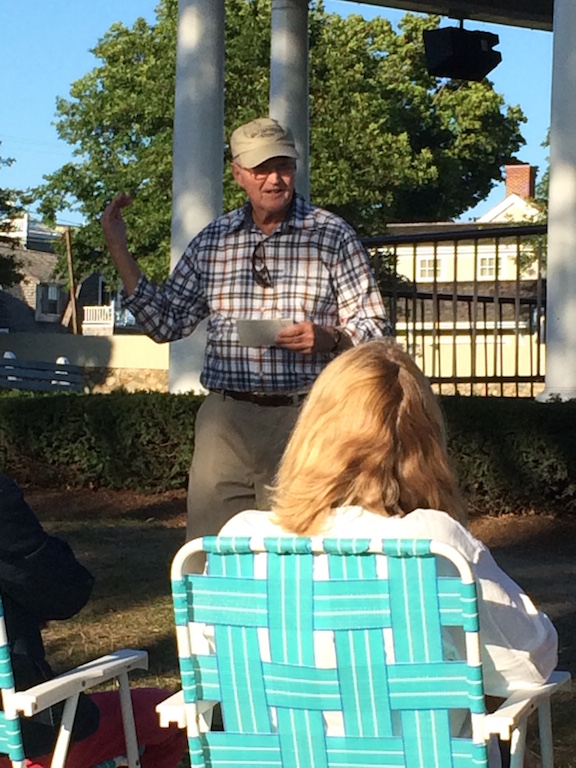
On a balmy August 6 evening, a group of people sat next to the gazebo in Shipyard Park and listened to Seth Mendell as he spoke nearly extemporaneously for 45 minutes sharing the history of Captain Charles Bryant. Mendell, a well-known local historian and past president of the Mattapoisett Historical Society, gave one of his last lectures for the summer season.

Bryant’s life, as told by Mendell, is the stuff of which fiction is made. From the farm to the marbled halls of Congress, from the fields of Rochester to the turbulent oceans of the world, from south sea island maidens to the frozen vastness of the great northwest and beyond, Mendell took his audience there. But this was not, and is not, fiction. Bryant’s life was adventure, was danger, was impactful, and helped to expand the boundaries of our nation.

Bryant was born in 1820, one of seven children on a farm near Witch Rock in Rochester. As a young boy, he shouldered his fair share of farm chores, including taking produce in a horse-drawn cart down to market in Mattapoisett’s harbor.

Mendell asked the listeners to imagine those times. The smell of freshly sawn lumber would have filled the air as shipbuilders clamored from stem to stern over boats being built along the water’s edge. The sounds of hammers and voices intermingled creating a type of music and excitement by which a young boy like Bryant would be influenced.

Thus it was that Bryant at an early age “fell in love with all that was happening at the water’s edge,” as Mendell described it. With 37 working boats shipping out of Mattapoisett in the 1800s, with a working customs office, with the ebb and flow of people, Bryant would hear stories of far-away places that excited his young mind with adventures to be had. Bryant shipped out for the first time when he was 20 years old. That first trip would not only change him; it would also change the course of America’s expansion.

For the next several decades, Bryant would work on whaling ships traveling the globe. From Polynesian islands to the cold frontiers of Alaska and beyond, Bryant saw the world and experienced exotic cultures first hand. He also moved up the ranks within the sailing hierarchy, from a mere seaman to the captain his own ship.

These experiences, especially those along the Aleutian Islands and into the Bering Sea, allowed Bryant to see for himself the great natural wealth the region held. But Russia had known this for decades.

Russian hunters had long known the value of these frozen lands and had established colonies along the coast in support of a rich fur trade. Yet for Russia’s tsar, that wasn’t enough.

By the time Bryant beheld the wonders of the northern climes, Russia was struggling to sustain itself from conflicts with England. In spite of the wealth its hunters were exporting from Alaska and the surrounding territories, the tsar was eager to sell it off.

Through four U.S. administrations, the government had tried to put together deals to purchase the landmass. But lack of interest by Congress, ignorance of the vast wealth, and the potential security importance of the area impeded any deal being made.

In the meantime, Bryant had retired from whaling, returned to his much beloved port-of-call, and had settled down on his own farm in East Fairhaven with his wife, Anna, and began to enjoy a quiet domestic lifestyle. That wouldn’t last for long.

One of Bryant’s contemporaries was Senator Charles Sumner. Sumner knew of Bryant’s travels. Both Sumner and Secretary of State William Seward prevailed on Bryant to speak to Congress about the richness of the Alaskan territory. Bryant was invited to Washington to tell the senators everything he knew about Alaska. It would be many years before he would return to this area – so needed were his talents by the post-Civil War government.

Bryant’s testimony was persuasive and led to the purchase of Alaska from Russia for $7.2 million. He was named “territory administrator” and worked under the arm of the Treasury Department. His duties would require him to live in the region, forge regulations to remove Russian hunters, and mindful harvesting of seals and other animals, as well as the building of schools, hospitals and libraries as the U.S. colonized its new lands.

By 1878, Bryant was back to the gentle harbor he so loved, returning again to farming and purchasing waterfront property, and he became an innkeeper of the Bayside Tavern. That building is now known as the Inn at Shipyard Park.

Locally, Bryant remained involved in public service as a member of the school board. He could be seen walking the village streets of Mattapoisett in the winter wearing a great heavy cape he had used in Alaska – once a small boy on the farm, now a man of wealth and fame.

Several towns claim Bryant as their own: Rochester, where he was born and is buried at Sherman Cemetery; Mattapoisett, where he worked and from where he shipped; and Fairhaven, where he farmed. But, as far as Mendell is concerned, “We have the best claim on him because he loved our waterfront.”

By Marilou Newell

SETH_091015

Rochester Cub Scout Sign-up

The Rochester Cub Scouts are having an Ice Cream Social and sign-up night on Friday, September 18 from 6:30 to 8:00 pm at the Rochester First Congregational Church at Plumb Corner. Come and see what Cub Scouting is all about. Cub Scouting is for boys in Grades 1-5. For further info, please call the Cub Master at 508-763-4596.

Mattapoisett Recreation

Mattapoisett Recreation still has space in the following Fall Programs:

            Fitness, Fun & Games: Ages 3-5 years. A new program that allows young children to expend some energy and make new friends. Props such as parachutes, tunnels, hoops and puppets will be incorporated to make sessions fun and kid friendly! Classes are held on Tuesdays from 4:15 – 5:00 pm at Center School Gymnasium.

Yoga: Ages 6-10 years. A new program that will teach children age-appropriate yoga poses, basic stretching exercises and creative movement. The class will promote strength, flexibility and coordination. Classes are on Tuesdays from 3:00 – 4:00 pm.

Introduction to Portuguese: Ages 7-12 years. This class will introduce children to the Portuguese language and culture. They will sample popular Portuguese foods and learn about the culture while building on common vocabulary throughout the session. Offered on Tuesdays from 3:00 – 4:00 pm.

There are still spots available in Golf on Wednesdays at 5:00 pm, Gymnastics on Fridays at 5:15 pm, and Fit Kids on Tuesdays & Fridays from 3:45 – 4:45 pm.

Tennis, Flag Football, and Crafting are closed as registration is full. Please visit www.mattrec.net for more information regarding our programs and to register online.

Selectmen Approve Special Town Meeting Warrant

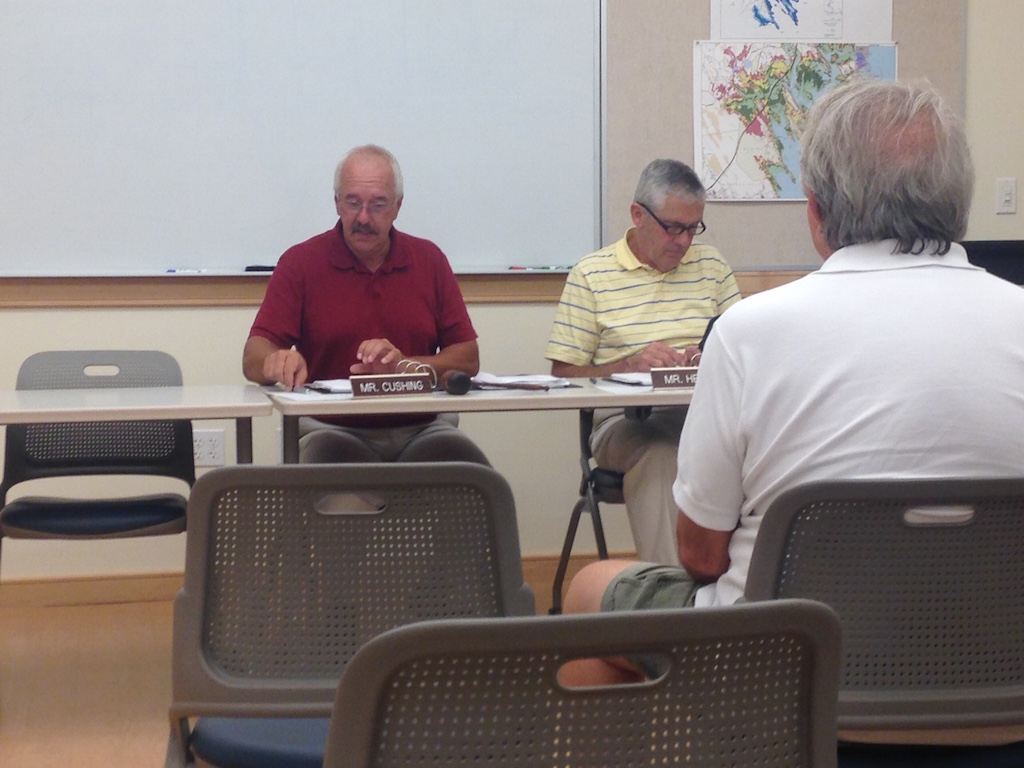
The Marion Board of Selectmen closed the Special Fall Town Meeting warrant on September 8 and approved the five articles, with one potential article to be taken off the following day. The Special Town Meeting is scheduled for October 26.

One article, Article S5, according to Town Administrator Paul Dawson, will likely disappear from the warrant as of the next day when he receives written confirmation that damage caused by a July rainstorm that flooded three town buildings will be covered by insurance.

The article, submitted by the facilities manager, would have covered the $12,000 in damages and costs accrued during the cleanup, which Dawson said was a significant hit to the facilities line item of the budget.

“It won’t even be on the warrant if I get that written confirmation tomorrow,” said Dawson.

Article S1 on the warrant pertains to a prior 2013 Town Meeting vote that authorized the Town of Marion to collect water bills from out-of-town resident water consumers. The original article, explained Dawson, lacked specific language that would formally accept the statute, and this special article would correct the situation.

Article S2 would appropriate $10,000 for gypsy moth and winter moth aerial spraying should a spring 2016 outbreak arise. The funding request, submitted by the tree warden, would be expended only if needed, and the funds would come from the free cash treasury.

Article S3 is the ambulance article that was passed over at the 2015 Annual Town Meeting. The article would appropriate $241,000 to purchase a new emergency ambulance for use by the Fire/EMS Department. Dawson noted that the Special Town Meeting article is $4,000 higher than the previous town meeting article, accounting for an increase in the quoted price of the vehicle.

Article S4 would approve the transfer of $50,000 from the treasury to be used as the Town’s required contribution toward a grant totaling $200,000 from the Buzzards Bay and Narragansett Estuary Programs as part of the Town’s ongoing program of sewer-related improvements.

“This is a grand opportunity where the Town could receive $200,000 in grant money opportunities for the town,” said Dawson. “This is really just a placeholder that allows us to appropriate the funds.”

Also, Dawson asked residents of the town to not read too deeply into the omission of an article on the warrant that would address the plowing of private roadways.

“This is one of those articles … that can be overrun over the course of the year,” Dawson stated. He explained that it would be better practice to simply make a funds transfer request during the Special Town Meeting to be held during the Annual Town Meeting to cover the cost of the snow and ice removal of eligible private roadways that meet certain criteria for plowing, such as wide enough roads and the pruning back of low overhead hanging branches that could damage equipment.

Dawson advised that selectmen hold a discussion with Department of Public Works Superintendent Rob Zora during the next meeting for further clarification.

Also during the September 8 meeting, selectmen met with Board of Health Chairman Albin Johnson regarding a request to add a sewer connection on Point Road, despite a general moratorium on new sewer connections in town. Johnson said this particular new development would be positioned exactly near an existing sewer line, saying, “We prefer to have them tie in to the town sewer now, rather than later.”

Selectmen Chairman Stephen Cushing recommended tabling the discussion until the next meeting so Zora could attend and shed further light on the subject.

The next meeting of the Marion Board of Selectmen is scheduled for September 22 at 7:00 pm at the Marion Town House.

By Jean Perry

MRsel_091015

Machacam Club

The Machacam Club will hold its first meeting of the new season on October 7 at the Legion Hall, 3 Depot Street. Social time is 5:30 pm; dinner is at 6:00 pm.

This meeting will be our first “Rib-Eye Steak Bake.” The dinner will be prepared by one of our own: Chef Frank Beatriz, who will introduce us to a new taste treat to start our new menus.

Coincidently, our speaker for the evening will be Cal Perkins, Frank’s father-in-law. Cal will present a program titled “An Introduction to South Africa” that, literally, took five decades to develop. For it was there that Cal met Donnetta, the love of his life and his wife for all these years! I know you will find this presentation memorable and very interesting!!

Callers and members are asked to bear in mind the importance of call list accuracy. Caller lists should be done and reported no later than 9:00 pm on October 5 by email to GPFNR@aol.com or by phone to Mike at 508-758-9311. Members with requests or changes can contact either no later than 9:00 am on October 6.

A Celebration Of Our Fair Lady In Marion

Many energetic, fascinating and generous women have been remembered in charming Broadway musicals: “Unsinkable Molly Brown,” “Evita” and even “Annie Get Your Gun.” Now, the Marion Music Hall’s 125th anniversary celebration will feature our town’s extraordinary Mrs. Elizabeth Taber in a concert musical, “Our Fair Lady.”

Kim Teves, a soprano actress with a local and New York “bio,” will sing the role of Elizabeth with Carl Denney in the cameo role as Clark Howland, the first headmaster of Tabor Academy. The Occasion Singers – a polished, professional Octave directed by Ms. Cassandra Morgan – will bring stunning close harmony to the lyrics that tell the story of the village folks, then and now. Performances even include a song about our technically savvy children, three generations since the Mrs. Taber Era.

The Music Hall itself was donated and endowed by Elizabeth Taber, along with The Library, the Natural History Museum, the Congregational Chapel, the Town Hall, and Tabor Academy. The Music Hall itself will be dressed up for this special occasion with new landscaping, interior décor, vintage costumes, sets and, of course, music!

Come to laugh and enjoy the familiar tunes and joyous spirit, directed by

Barbara Gee with a committee who promises gracious hospitality and sponsored by The Music Hall Advisory and The Town of Marion.

To buy your tickets, take a check to the Marion Bookstall, the Marion General Store, Serendipity, the Town Hall, or the Elizabeth Taber Library! We expect three sell-out performances. Show times are Friday, October 2 at 7:30 pm; Saturday, October 3 at 7:30 pm; and Sunday Matinee, October 4 at 2:00 pm.

Nepal Destruction Hits Home in Marion

Not often anymore does the devastation caused by two major earthquakes in Nepal earlier this year get coverage in the media. But even months later, efforts to alleviate the suffering of the Nepalese people and the destruction of their homes and infrastructure continue, and many have been helped so far due to the kindness of some Tri-Towners and many others.

Sally Hunsdorfer’s organization “The Himalayan Project,” under the umbrella of the Marion Institute and born of her passion for the people and landscape of Nepal almost 20 years ago, has continued its efforts to rebuild the small mountain village of Chaurikharka and bring relief to its people before the cold weather of October sets in.

Hunsdorfer was on her way to Bhutan in Southeast Asia to visit her son when she heard of the first 7.8 magnitude quake in Nepal on April 25. Panic set in, said Hunsdorfer, with an ensuing urgent concern for her friends of Chaurikharka.

“Of course we were in a state of complete shock,” said Hunsdorfer. She and her husband Peter made swift contact with friends from the village via social media and were happy to hear there were no deaths to report. But everyone lost their houses, and a beloved school, for which Hunsdorfer had contributed over the years to improve, had been badly damaged.

Hunsdorfer continued on to visit with her son, but the trip was colored by what was happening in Nepal and she was already making contact with associates, soliciting donations and planning her next visit. At that point, Hunsdorfer was concerned that a spontaneous side trip to Nepal might be more of a hindrance to the people than a help, so she contacted her sources in the capital city Khathmandu and asked if the hotel was still open and if there were taxis running from the airport to the hotel – it was, and there were.

“I turned to my husband and I said, ‘We have to go.’” And one week after the earthquake, the Hunsdorfers were back in Nepal.

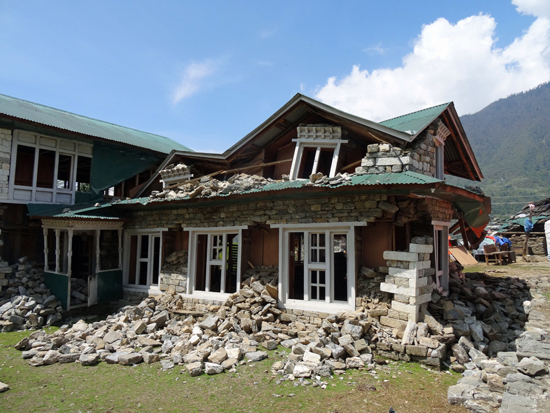
“People were still reeling and trying to figure out their lives,” Hunsdorfer said. She spoke to all who live within the 54 damaged homes in the village and they shared their woe with Hunsdorfer. “I was just so happy that I had gone because I could assess the damage. I met with every family and, of course, every family wanted to put their life out there to me.”

The Hunsdorfers photographed each destroyed home and, along with a village council, assessed the financial needs of the community. They returned to Kathmandu on May 12 to begin efforts to rebuild the village when, suddenly, that day, the second earthquake struck the village, destroying what was left standing, including the school that was just days ago salvageable. The soonest Hunsdorfer could return to Chaurikharka was in mid-July, and she returned to villagers living and learning beneath makeshift tents, tarps, and small structures made from the salvaged tin roof of the school – tiny tin classrooms that simply will not do once the weather turns cold in a matter of weeks.

“And I was just heartbroken because I saw a school that didn’t exist anymore,” said Hunsdorfer. “When the cold weather sets in, they need something more permanent.”

With the help of the Marion Institute, Hunsdorfer made contact with donors for the relief project and the response was amazing.

“I was very anxious to be timely about contacting people on a regular basis,” said Hunsdorfer. “I was just so shocked and blown away by how generous people were.” Together with her community and associates, Hunsdorfer raised $145,000 for immediate relief. She said people had wanted to contribute to the Nepal disaster but were wary of the international aid agencies where just pennies on the dollar actually make it to the people who need it the most. Of the billions in aid, said Hunsdorfer, government officials have skimmed about 25 percent from the top.

“But we managed to get every single penny over there and distributed it to everybody who needed it,” said Hunsdorfer. “I have big plans … to raise $500,000 for the school to be rebuilt.” An earthquake-resistant school this time, she added.

“There’s always something good that rises from the ashes,” said Hunsdorfer.

To make a contribution to help rebuild the school in Chaurikharka, you can contact the Marion Institute at 508-748-0816 or visit the website at www.marioninstitute.org.

By Jean Perry

Nepal