Women-On-Target Program

The Sippican Rod & Gun Club is pleased to announce its annual NRA Women-On-Target program, which will be held on Saturday, September 26, at 215 Dexter Lane in Rochester. The program will begin at 8:00 am and finish at 5:00 pm. The program’s morning session will teach the NRA Home Firearm Safety Course, which qualifies participants to apply for a Massachusetts License to Carry (LTC) or Firearms Identification (FID) card. Following a catered, healthy lunch, we will provide participants with practical and safe shooting experiences by rotating through the club’s pistol range, 50- and 100-yard rifle ranges, and shotgun trap range. The $110 fee includes all training materials, eye and ear protection (which will be yours to keep), use of the club facility, morning snacks, lunch, ammunition, and use of firearms. If you have any questions, please contact Bill Fredericks at 508-317-0203 or airborne1715@gmail.com.

            To register, please provide: your full name (including middle initial), mailing address, email, telephone number, and date of birth, along with a check made out to the “Sippican Rod & Gun Club” for $110 and mail to: Sippican Rod & Gun Club, Attn: Women-On-Target, PO Box 182, Rochester, MA 02770. The class is limited to the first 24 participants registered. When the full class is registered, we will provide further information about the program details via email. Considering that previous programs have had a waiting list, all those interested are encouraged to apply soon. We hope to see you there.
Successful Opening at Rochester Historical Museum

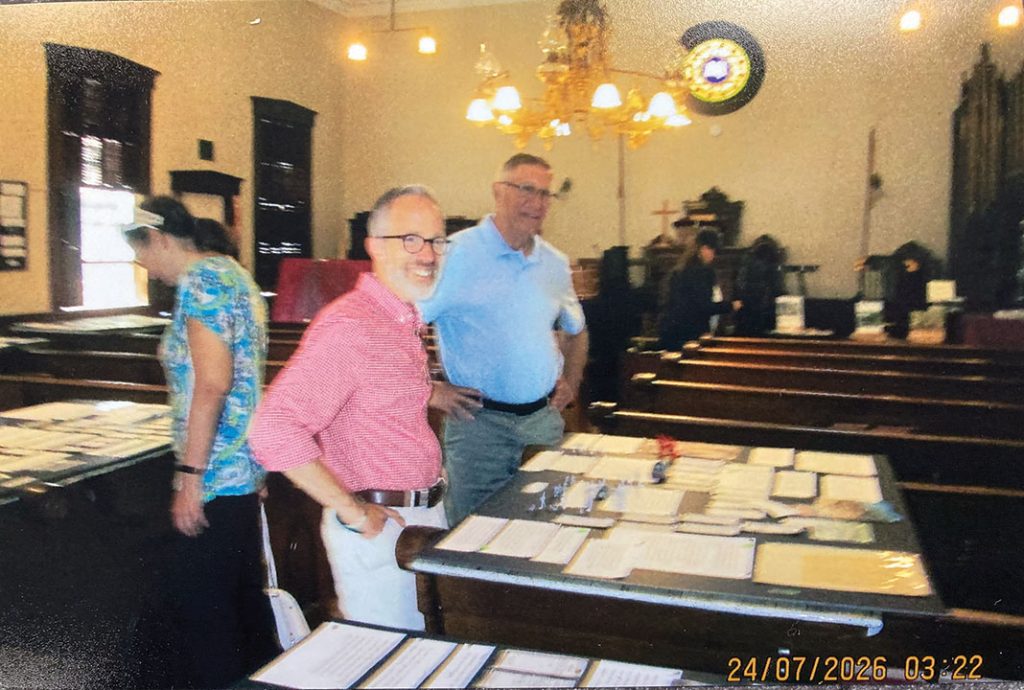
This past Saturday, we presented our 250th Anniversary exhibit, “Rochester and the Revolution.” Thank you to all those who contributed to a successful day. In addition to learning history, we also sold 250th Anniversary hats, pies and cookies. Thanks, as always, to our bakers. The Phinneys provided a glimpse into the past with their Revolutionary War campsite and other colonial exhibits. Mack also crafted a replica of Rochester’s Liberty Pole (very accurate, although less than 45 feet tall).

            We had many people view the exhibit with positive feedback and, all in all, had an A-plus day. None of this would be possible without the members who helped with the setup and takedown, manned the cash register, and did all the other jobs that needed doing.

            I also want to thank Rep. Sylvia and Sen. Rodrigues for taking time out of their busy schedules to stop by to view the exhibit. It’s nice to know we have at least two history buffs in the State House.

            The exhibit will be in place as we celebrate 250 years since the fight for American independence. We will be open at varying times throughout August, the first being August 4 from 1:00 pm to 3:00 pm. If you drive by the museum at 355 County Rd. and see the open flag out, stop by. Additional times to view the exhibit will be announced through The Wanderer.

Cosmic Close Call Lands Close to Home

            The loud boom heard across Massachusetts and Rhode Island on May 30 was not thunder, an earthquake or a blown transformer. It was a meteor traveling approximately 42,000 miles per hour.

            That cosmic close call provided a timely opening for “Asteroids, Meteors, and Cosmic Close Calls,” presented by Dr. Sarah Caudill on Friday, July 24, at the Marion Natural History Museum.

            Elizabeth Leidhold, executive director of the 154-year-old museum, introduced Caudill, associate professor of physics at UMass Dartmouth and member of the UMass-URI Gravity Research Consortium. Caudill’s research includes gravitational waves, black holes and neutron stars.

            Caudill recalled hearing the May 30 boom from her kitchen.

            “I thought it was thunder, but I thought it was odd because the sun was out,” she said. “Then I thought, ‘Maybe it’s construction down the street.'”

            The actual cause was a meteor about 5 feet in diameter and weighing an estimated 5.6 metric tons. It fragmented roughly 40 miles above northeastern Massachusetts and southeastern New Hampshire, producing the sonic boom heard across the region. Surviving pieces are believed to have fallen into Cape Cod Bay.

            NASA estimated that the meteor released energy equivalent to about 230 tons of TNT as it broke apart. Much of that energy was dispersed as light, heat and sound while the object traveled through the atmosphere. No injuries or property damage were reported.

            Caudill used the event to explain some commonly confused terms. A meteoroid is a relatively small rock traveling through space. When it enters Earth’s atmosphere and produces a visible streak, it becomes a meteor. Any piece that survives and reaches the ground is called a meteorite. Asteroids are larger, rocky or metallic objects orbiting the sun.

            The May 30 object is believed to have contained a significant amount of iron, explaining how an object roughly as tall as Caudill could weigh more than 5 tons.

            Asteroids can be made of metal, silicate rock or carbon-rich material. Some contain water-bearing minerals and amino acids, the building blocks of proteins. Scientists believe asteroids and comets may have delivered water and some of the essential ingredients for life to early Earth.

            Caudill also explained that meteor showers come from debris left by comets. The “shooting stars” visible from Earth can be produced by particles no larger than grains of sand.

            Small objects like the one over New England are difficult to detect before they reach the atmosphere. Larger asteroids capable of causing serious damage are generally easier for astronomers to identify and track – and such impacts are far less common.

            For those interested in watching the night sky, Caudill recommended the American Meteor Society’s online Meteor Shower Calendar, which lists upcoming showers and the best times to see them.

            The remnants of the May 30 meteor may now rest about 100 feet beneath Cape Cod Bay, making recovery difficult. For New England residents who heard it, the event offered a rare reminder that Earth is not separate from the activity of the solar system.

            Sometimes, we can even hear it.

By Jeanne Hopkins

Beware the Trojan Horse at the ballot box.

To the Editor:

            Beware the Trojan Horse at the ballot box.

            The most dangerous threats to democracy rarely announce themselves as threats. They arrive draped in the language of patriotism, carrying banners of security, promising only protection. They ask not to storm the gates, but to be welcomed through them.

            That is why the ancient story of the Trojan Horse still endures.

            The Greeks did not conquer Troy by overwhelming its walls. They prevailed because they persuaded the Trojans to dismantle their own defenses in the name of triumph. The deception succeeded not because people were malicious, but because they believed they were accepting a gift.

            The Save America Act bears an unsettling resemblance to that legendary horse.

Its title is an exercise in political poetry. Who could oppose saving America? Who would object to secure elections or confidence in the ballot? Those aspirations belong to every citizen, regardless of party. Election integrity is not a partisan value; it is the foundation of self-government.

            But history teaches us to judge legislation not by its title, but by its consequences.

            Critics argue that requiring documentary proof of citizenship for voter registration would create new obstacles for eligible Americans who lack easy access to passports, birth certificates, or other required records, particularly after name changes, natural disasters, or bureaucratic errors. Supporters counter that such requirements are a necessary safeguard against unlawful voting. That disagreement deserves serious debate rather than slogans.

            Democracy has never depended on choosing between security and participation. It demands both. A republic worthy of the name protects the ballot from fraud without erecting unnecessary barriers for citizens entitled to cast one.

            Every generation faces moments when liberty is tested not by obvious assaults but by appealing promises. The erosion of democratic norms is seldom theatrical. It is incremental. It is justified as temporary, reasonable, or merely procedural. It advances one carefully worded statute at a time; each defended as common sense until the cumulative weight begins to bend the principles it claimed to protect.

            That is why skepticism is not cynicism. It is citizenship.

            The Trojan Horse is not a warning against accepting every proposal. It is a warning against confusing reassuring rhetoric with sound policy. The question before us is not whether America should have secure elections. It absolutely should. The question is whether, in pursuing that goal, we inadvertently narrow the very democracy we seek to defend.

            A confident nation does not fear scrutiny of its laws. It demands it. Because once the gates are opened, history reminds us that discovering what was hidden inside is far more difficult than asking hard questions before the doors swing wide.

            Eileen J. Marum, Chair, League of Women Voters SouthCoast

The views expressed in the “Letters to the Editor” column are not necessarily those of The Wanderer, its staff or advertisers. The Wanderer will gladly accept any and all correspondence relating to timely and pertinent issues in the great Marion, Mattapoisett and Rochester area, provided they include the author’s name, address and phone number for verification. We cannot publish anonymous, unsigned or unconfirmed submissions. The Wanderer reserves the right to edit, condense and otherwise alter submissions for purposes of clarity and/or spacing considerations. The Wanderer may choose not to run letters that thank businesses, and The Wanderer has the right to edit letters to omit business names. The Wanderer also reserves the right to deny publication of any submitted correspondence. All letters must be typed and submitted directly to: news@wanderer.com.

Become a Coastal Explorer with the MNHM

Discover tide pools, marshes, forests, rivers, and the amazing wildlife of Marion in a week of hands-on outdoor adventures as a Coastal Explorer: Monday, August 3, through Friday, August 7, 9:00 am to 12:00 pm. Designed for children entering 2-6, this engaging program inspires curiosity, confidence, and a lifelong love of nature.

            We uncover the incredible habitats that make Marion’s coastline unique, from rocky tide pools and salt marshes to winding estuaries, freshwater rivers, forests, swamps, ponds, and bogs. Every morning features hands-on exploration, exciting experiments, creative nature-inspired crafts, outdoor journaling, and up-close encounters with the natural world. Curious young explorers build observation skills, make new friends, and create lasting summer memories.

A full-day option is available through our partnership with the Marion Recreation Department. Reserve your child’s spot today at www.marionmuseum.org.

Teen Events at the Mattapoisett Library

The Teen Summer Reading Challenge continues at MFPL. Teens who read books from their assigned reading list and fill out a book review get to pick a prize. Students going into grades 7-12 are eligible to participate.

            Join us for a Teen Craft Workshop on Wednesday, August 5, at 6:00 pm. Make a vintage card catalog junk journal and earn raffle tickets toward the Jennifer Mason-Black gift basket giveaway.

            Attend a special Summer Reading Book Club meeting on Friday, August 7, at 3:30 pm. Read Sometimes the Girl, and come ready to discuss. Earn raffle tickets toward a gift basket for participating.

            Jennifer Mason-Black, author of the YA novel Sometimes the Girl, is visiting the Mattapoisett Library for an Author Talk on Saturday, August 8, at 2:00 pm. Join us for a presentation and Q&A and earn raffle tickets toward winning a gift basket.

            As always, our programs and events are free and open to everyone. For more information, please visit us at 7 Barstow Street, online at www.mattapoisettlibrary.org, or call the library at 508-758-4171.

A Declaration Signed

            This week in Revolutionary War history, let’s check up on what was going on 250 years ago in the Thirteen Colonies. Last week, General George Washington and other Revolutionaries sought a way to stop the British from amassing on Staten Island, though a planned attack was called off. Admiral Richard Howe and his brother General William Howe have conversed with Washington by letter, hoping to find peace, but Washington does not seek a meeting.

            On July 26, 1776, in his General Orders, Washington commands the Continental Army soldiers to treat locals with respect. He writes, “Complaints have been made that some of the soldiers ill-treat the country people, who come to market; the general most positively forbids such behavior, and hopes the officers will exert themselves to prevent it: good policy as well as justice, demands that they should have all possible encouragement as the health of the soldiers much depends upon supplies of vegetables; those who have been guilty of such practices, will do well to consider what will be our situation, at this season, if we drive off the country people, and break up the market – the healthy will soon be sick, and the sick must perish for want of necessaries: no favor will be shown to any offenders hereafter.” These orders come after numerous reports to Washington of embezzlement of food and goods by soldiers. As many in New York remain Loyalists to the Crown, it is imperative to maintain what remains of public support; as well as supplies for the army.

            The next day, Brigadier General Nathaniel Greene of Rhode Island writes that he has captured four local New Yorkers who were attempting to board a boat for Staten Island, where the British forces are concentrating. He would write back later that day, after “examining the prisoners,” noting he “find them to be a poor parcel of ignorant cowardly fellows.” Of the interrogation, he finds, “They candidly confess they set off with an intention of going to Staten Island, but not with any intention of joining the enemy; but to get out of the way of fighting here.” In other words, the fighting age men look to avoid conscription. He concludes, “Never did I see fellows more frighted, they wept like a parcel of children and appear exceeding sorrowful.”

            On July 28 in his General Orders, Washington moves away from talk of bolstering defenses, raising more men, or bettering the supply network and instead writes that he is, “finding the number of sick to increase.” He moves to better organize the sick, by severity of illness and condition, and also asks a registry of said sick soldiers be made and updated weekly. Interestingly, he makes efforts to change the diet of the sick, ordering, “As the rations issued for men in health, are very improper for those who are sick, the following resolutions are to take place – whenever a person is taken sick he is not to be borne on the provision return; but the value of his rations be obtained in suitable supplies from the General Hospital to be drawn by the surgeons of the regiment who is to conform to the rules of diet established in the General Hospitals and to account with the Director General.” Thereby, he orders the sick be given food more apt to help them in recovery.

            Far off, in a land that will, in less than 100 years, be part of the United States, on July 29 Francisco Atanasio Domínguez and Silvestre Vélez de Escalante depart Sante Fe to chart an overland route to California for the Spanish colony of New Spain.

            On August 1, Samuel Adams of Massachusetts speaks before Congress, as the body moves to sign the Declaration of Independence. In his fiery speech, he says, “We are now on this continent, to the astonishment of the world, three millions of souls united in one cause.” He continues, “We have no other alternative than independence, or the most ignominious and galling servitude – Our union is now complete; our constitution composed, established, and approved. You are now the guardians of your own liberties. We may justly address you, as the Decemviri did the Romans, and say: ‘Nothing that we propose can pass into a law without your consent. Be yourselves, O Americans, the authors of those laws on which your happiness depends.’” Adams draws comparisons to the establishment of the Roman Republic, and claims the revolutionaries have the hand of God on their side.

            The next day, on August 2, 56 members of the Continental Congress signed the Declaration in the Pennsylvania State House. Signatures are grouped by state, except President John Hancock, who famously signed larger and toward the top.

This Week in Revolutionary War History

By Sam Bishop

Water and Sewer Operations Building Approved

            More than 60 people filled Mattapoisett Town Hall or joined remotely Monday night for a Conservation Commission hearing on plans to replace existing rental houses on Mahoney’s Lane with seven larger single-family homes.

            They did not get to hear the proposal.

            The commission addressed the Mahoney’s Lane application first but continued the hearing after attendance exceeded the Town Hall conference room’s 42-person capacity. More than 20 additional participants were logged into the July 27 meeting through Zoom.

            Commission members said the hearing could not proceed when everyone who wanted to attend could not be accommodated. Once the postponement was announced, people who had come for the Mahoney’s Lane hearing were told they were free to leave. Much of the room emptied before the commission continued with the remainder of its agenda.

            The hearing had previously been continued from July 13.

            Dennis Mahoney & Sons, Inc. has filed a Notice of Intent to demolish the existing houses at 1–7 Mahoney’s Lane and build seven larger single-family homes on the property. The site is near salt marsh, Eel Pond and Mattapoisett Harbor, placing portions of the proposed work within areas regulated by the Conservation Commission.

            Neighbors have raised concerns about the size of the proposed homes, their proximity to protected wetlands, potential flooding and the effects of construction on the surrounding salt marsh.

            Because Monday’s hearing was postponed before the application was presented, the commission did not review the plans, hear public comments or reach any conclusions about the project or the concerns raised by residents.

            Dave Davignon of Schneider, Davignon & Leone, Inc., representing the applicant, agreed to the continuance.

            Commission staff will look for a larger location capable of accommodating the anticipated turnout. The fire station was mentioned as one possible venue. A new hearing date and location will be announced.

            Scheduling the hearing may be complicated by the expected recusals of two commission members. At least three eligible commissioners must be available to establish a quorum and hear the application.

            The ConCom’s next regular meeting is scheduled for August 10, but no new date for the Mahoney’s Lane hearing had been set by the close of Monday’s meeting.

            The Mattapoisett Conservation Commission also approved plans for a new Water and Sewer Department operations building at 15 Industrial Drive during the meeting.

            The proposed 140-by-120-foot metal building will include a carport. Most of the project will be outside the 100-foot wetland buffer zone, although a portion of the parking area and a new stormwater infiltration basin will extend into the buffer.

            The commission approved the project with several conditions.

            The department will use an existing dewatering basin during construction rather than build another one. The existing basin has sufficient capacity, and its reuse will reduce the project’s cost to taxpayers.

            The commission also required the project’s stormwater Operation and Maintenance Plan and Long-Term Pollution Prevention Plan to remain in effect permanently.

Approval is contingent upon the Massachusetts Natural Heritage and Endangered Species Program raising no adverse concerns about the project.

            The commission also approved the removal of approximately 650 square feet of invasive knotweed at 18 Crystal Springs Road. The work will be performed by hand-pulling and grubbing the plants.

            Commission members added a condition prohibiting the use of wood chips or Tyvek within the protected resource area.

            At 9 Oliver Street, the commission reviewed a proposal to replace an existing shed with a 15-by-25-foot shed and attached carport.

            The property is located within a coastal velocity zone subject to storm flowage. The new structure must be supported by helical anchors or concrete sono tubes that allow floodwater to flow beneath it. A structural engineer must review and approve the foundation design.

            The commission issued a Negative 2 Determination with those conditions, allowing the applicant to proceed without filing a full Notice of Intent.

            A wetland boundary filing for 0 and 31 Randall Road was continued after commissioners found that the resource-area flags marking the property were no longer readable. The applicant must refresh the flags before the commission conducts a site visit.

            The commission approved proposed site improvements at 84 Angelica Avenue with its standard conditions. The hearing had been continued from July 13 while the applicant waited to receive a file number from the state Department of Environmental Protection.

            A three-year extension was granted to the Crescent Beach Association for its previously approved beach-nourishment work.

            Commission members also discussed scheduling a site walk at the former Wolf Island cranberry bogs after August 3. The Buzzard’s Bay Coalition has proposed removing a dam and water-control structures and restoring the Mattapoisett River’s natural flow, riverbanks and floodplain.

            Commissioners may inspect the property during the site walk, but commission business cannot be discussed or deliberated unless the visit is posted as a public meeting.

            The commission’s next meeting is scheduled for August 10. Its planned August 24 meeting has been canceled because the Town Hall meeting room will be used for early voting.

Mattapoisett Conservation Commission

By Jeanne Hopkins

Academic Achievements

Laura Pardo of Marion was named to the College of the Holy Cross’ Spring 2026 Dean’s List.

From the Files of the Rochester Historical Society

This article was meant for the week after the 4th of July, but it kept getting pushed back by other topics.

            As I looked through several files and other sources, I found few references to the 4th of July. I did come across a reference to an annual clambake in Marion, although it didn’t say where it was held.

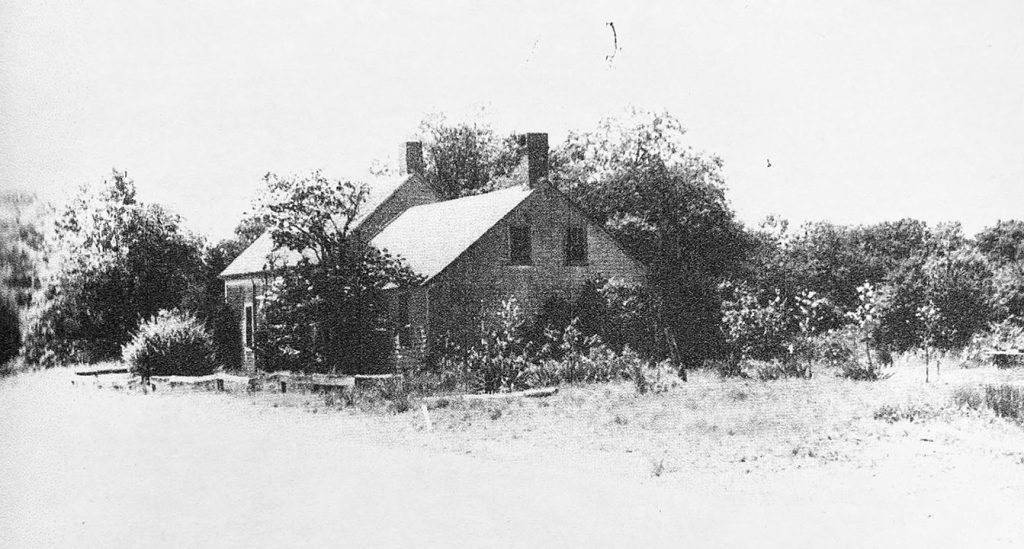
            What I did find was a letter written on July 4, 1880, to Frank Rounseville from his mother, Roxanna Rounseville. Pictured here is the family home. The letters Roxanna wrote were more like a journal that she kept for her son until he returned from his whaling voyage. She felt this would be a good way for him to catch up on what happened in town and with the family while he was away at sea.

            July 4, 1880, was a Sunday. Back then, it meant it would be a quiet day with the “usual stir” on Monday, July 5. Other than the clambake, she doesn’t mention any other activities, but she did have a bit of a “stir” in her own home on July 3.

            Two younger brothers, Allie and Horace, decided to play with some “firecrackers.” Allie got burned quite badly when he leaned too far forward to blow on one of them to make it burn faster. He singed his hair and burned his forehead but fortunately didn’t “put his eyes out.” (This is all conveyed in a seemingly calm way.) Horace also got into trouble when he decided to light his firecrackers in the stove.

            The Rounseville household must have been quite exciting. It’s hard to discern from her writing how she felt about all those firecrackers in her kitchen. She does write, “You must ask them when you write if they don’t want you to bring them some firecrackers.” I’m assuming that was sarcasm.

By Connie Eshbach