The Search for Revolutionary War Soldiers

The August meeting at the Rochester Historical Society Museum will be hosted by both the Society and the Historical Commission on August 20 at 7:00 pm at the Historical Society Museum at 355 County Road, Rochester.

            Cemeteries, Genealogy and the Revolutionary War will be the topic of the evening in the context of beginning a project to find the graves and histories of Rochester’s veterans of the Revolutionary War. We hope to include the information gathered in the 250 anniversary celebrations with the hope of officially recognizing cemeteries with those veterans’ graves.

            Wednesday night will provide information on all the aspects of this search, and the program is opened to any and all who are interested. We are looking forward to a good turnout.
Rochester Grange Fair

The Rochester Grange Agricultural Fair, is almost here. The fair will be held on Saturday, August 16 from 1:00 pm to 7:00 pm. There will be baked goods for sale and raffles. Our Ham & Bean Supper will be at 6:00 pm. Tickets for adults $10.00 and children under 10 $5.00 and may be purchased at the door. There will be an auction of produce, flowers and bake goods from the fair and the raffle drawings beginning about 7:15 pm.

            For those wishing to enter the fair, we will be accepting entries on Friday, August 15 from 2:00 pm to 4:30 pm (a time change from the book) and again at night from 6:30 pm to 8:00 pm (also a change). Judging will start as soon as all entries are in place. Having the entry form in the book or a list on a sheet of paper filled out ahead will help greatly. Remember, anyone can enter from any town and age. If a child is old enough to pull weeds, they are old enough to enter the fair. The Youth categories are up to the age of 16 as of January 2025.

            We hope to see many of you there. For information call 508-295-8908 or email sash48@comcast.net.

Supplies Ware Thin

            This week in Revolutionary War History, let’s discuss what was going on 250 years ago in and around the colonial Province of Massachusetts Bay. The best way to figure out what was going on was to read Washington’s papers and General Orders of the time period, as there was daily correspondence and orders put out to his officers and troops. Last week, Washington, still focused on reorganization, was interrupted by a detachment of British ships leaving Boston and heading south. He sent warnings to Connecticut and Rhode Island to prepare for assault.

            On July 30, 1775, Washington’s General Orders appoint William Tudor of Massachusetts as Judge Advocate of the Continental Army. In another charge for discipline, he commands regiment drummers and fifers to attend to their Major at usual hours. Weighing on his mind, however, is not appointments but rather, his raid ordered the night prior. Washington was woken up today to alarms. A detachment of scouts came under fire, though were able to retreat after freeing two prisoners from British fortifications. He did not record much of this day as he was busy planning for the action ahead and awaiting a potential counterattack.

            Major General Philip Schuyler (father of Schuyler sisters and Hamilton’s father in-law) reports to Washington from Fort Ticonderoga, which was captured in May. The ongoing push into Canada is ill-fated, with Schuyler saying, “I am extremely anxious to hear from your part of the world, reports prevail that a body of troops have left Boston and are gone to Canada. If so I fear we shall not be able to penetrate Into Canada.” So, that detachment mentioned last week wasn’t going south, but instead is going north the resupply and reenforce the Canadian front.

            Finally, the raid! Little Brewster Island, then just called “Lighthouse Island,” sits at the mouth of the harbor coming into Boston. Minor raids on the island had happened before, but on July 31, 300 men under Major Benjamin Tupper of Sharon, Massachusetts. The lighthouse was destroyed with two Yankees killed and 43 British killed or captured.

            Washington would write, “The great advantage the enemy has of transporting troops by being masters of the sea will enable them to harass us by diversions of this kind; & should we be tempted to pursue them upon every alarm, The Army must either be so weaken’d as to expose it to destruction or a great part of the coast be still left unprotected.” Little victories, including the destruction of an already damaged lighthouse into Boston Harbor, was a large victory against British logistics. Washington would personally thank Major Tupper and his men. Prisoners captured were to be marched to Worcester.

            As was an issue for the entire war, Washington and the army needed supplies. On August 1, Elbridge Gerry of the Massachusetts Committee of Supplies informed the Commander that of 200,000 small arms cartridges requested, only 36,000 are available. He also states there are only 36 barrels of powder “this side of Maryland.” Though he states they are expecting shipments from the West Indies. Interestingly, though much of the Caribbean islands were loyal to Britain, they had many economic ties to the American colonies. Of course, the French and Dutch islands were heavily relied on for arms and ammunition. The following day, August 2, General John Sullivan writes Washington from Winter Hill northwest of Boston, saying he is low on powder and “scarcely any balls” of ammo.

            On August 3, Washington discusses looting, a timeless tradition of war. Basically, whatever troops pillage from the enemy in wartime must be brought back to headquarters and auctioned off, saying, “an auction will be held in the front of the encampment for the sale thereof – and the money arising therefrom, is to be equally divided between the officers and men, that took it.”

            Talks are now exclusively on supplies. Not enough powder, not enough ammunition, and not enough clothes for the troops. In his General Orders on August 4, Washington reminds his troops “with indignation and shame,” to stop firing guns in the camp and wasting ammunition. The severity of this shortage is a major subject of stress, with him adding, “Any person offending in this particular, will be considered in no other light, than as a common enemy, and the guards will have orders to fire upon them as such.” A daring plan is in the works, as Washington writes to Nicholas Cooke in Providence detailing the potential of a heist: the powder magazine on Bermuda.

            At this point, the Tri-Town (then, just the Town of Rochester), is also within the range of Washington’s orders. Young men would be able to leave town and in about a day’s time, be able to join up at headquarters in Cambridge. The orders to preserve ammunition would also hold in Rochester, as would the collection and purchase of food by use of the army up north.

This Week in Revolutionary History…

By Sam Bishop

Timeless Tunes, Tales and Tributes

Who wrote “White Christmas”, one of the most popular holiday songs on Earth? Many people think it was Bing Crosby. It was not.

            Who wrote “God Bless America,” a beloved patriotic song? Many people think it was Kate Smith. It was not.

            The answer to both – and to thousands of America’s most memorable tunes – is a poor immigrant from Siberia, named Irving Berlin.

            This September, Marion audiences are invited to discover the genius behind the American songbook in a dazzling live performance:

            Timeless Tunes, Tales and Tributes shows are September 5 and 6 at 7:30 pm and September 7 at 4:00 pm at the Congregational Community Center, 144 Front Street, Marion

            Directed by Paul Sardinha, this lively, joy-filled revue features singers, musicians, and local narrators, with the first public performance on the church’s newly restored Truman Terrell grand piano.

            The evening blends legendary melodies, behind-the-scenes stories, and spirited sing-alongs into a tribute to one of the most influential composers in American history.

            Berlin couldn’t read music and composed primarily on the black keys of a special transposing piano – yet he wrote more than 3,000 songs, including scores for 30 Broadway shows and 17 Hollywood films.

            Berlin’s restless imagination gifted us with songs like “There’s No Business Like Show Business,” “Cheek to Cheek,” “Puttin’ on the Ritz,” “Easter Parade,” and “Anything You Can Do (I Can Do Better).” Composer Jerome Kern said, “Irving Berlin has no place in American music – he is American music.”

            Tickets are $35 and available online or at the Marion General Store, the church office, Penny Pinchers, or by emailing office@marionfirstchurch.org. The venue is equipped with a stairlift.

            This night of celebration will give all of us something more to celebrate.

            Proceeds from this event will support the ongoing restoration of our historic E. Howard clockworks and bell – installed just after the Civil War. The community has already rallied behind the cause, and this special concert brings everyone one step closer to hearing those hourly chimes ring out once more. Don’t miss your chance to enjoy the timeless music you love – live, local, and lifted by the spirit of community. For more information, call 508-748‑1053 or visit marionfirstchurch.org.

From the Files of the Rochester Historical Society

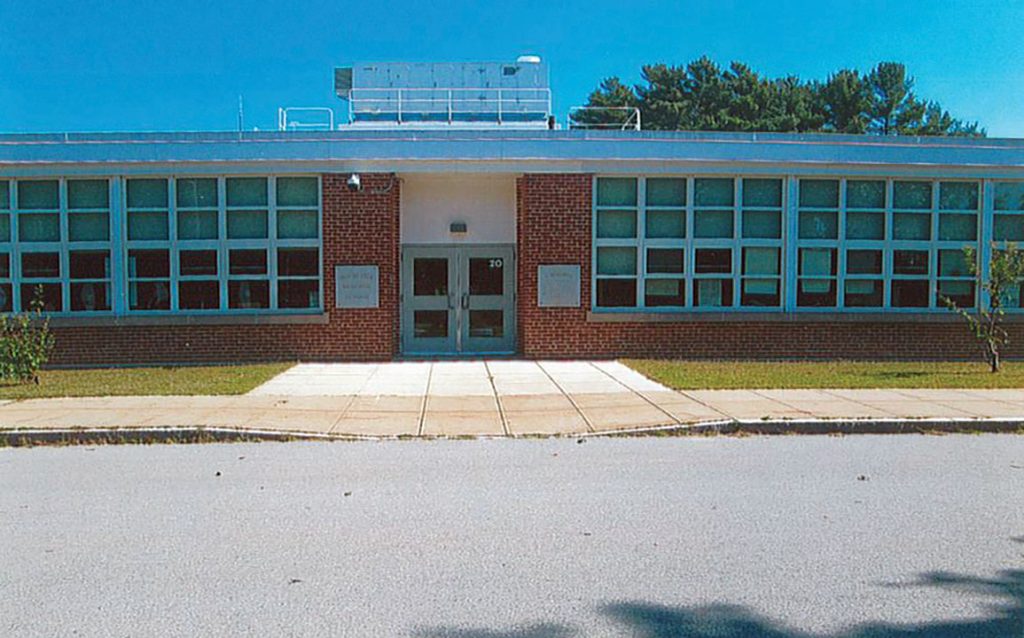
Looking through some newspaper articles assembled in a notebook by Betty Beaulieu, I came across a 1951 Standard Times article about Rochester and its controversy over building a new school. Previously, I had mentioned that it took about 30 years for discussions on building a new school to actually result in the Rochester Memorial School, pictured here. This article actually sets out the pros and cons as told to reporter Norman M. Bryden.

            According to his article, Rochester’s quiet ways were roiled by a vote taken at a special town meeting that authorized $250,000.00 for the building of a new school. As soon as news of the vote reached townspeople (many who had not bothered to vote), there were cries by many, including one town official, that the town would be bankrupted and people would move out rather than pay higher taxes.

            At this time, Rochester was known as a town that was run debt-free and usually had a surplus in its treasury. While this was admirable in many ways, it also meant that little money was spent on improving or modernizing public facilities. Many of those opposed to the new school saw no need for the building as school enrollments had not increased enough to warrant it, with only 29 more students in 1950 than in 1901.

            Other concerns were the town with only a valuation of $1,365,502.00 (in 1950) could not afford the $250,000.00, voted and that only 120 people had voted for it which was only 20% of registered voters. Of course, they failed to mention that out of 624 eligible voters in town, 474 chose not to attend or vote at the well-publicized special town meeting. There were also somewhat silly complaints that those who voted for the school only did so because they had children and that it was just about “keeping up with the Joneses.”

            On the flip side, those in favor of a new building, noted that Rochester had one of the lowest valuations around and the building committee in 1949 determined that in the first year only, there would be an increase in the tax rate of $7.10 if the school project went forward. It was also pointed out that most people worked out of town and had much better wages than earlier residents, so the tax increase would not drive them away.

            Probably the biggest reason put forward for a new school was that no one school in town could house all the students. That meant that grades 1-5 were in East Rochester at the Pierceville School and grades 6-8 at the Waterman School. Both schools were “ancient” and still had outdoor toilets. The Waterman School by then had been cobbled together with two other buildings which meant three furnaces needing to be fueled in the winter. Putting all students together in one building would, it was believed, provide a better, more cohesive educational environment.

            In the end, a lot was selected across from Sherman Cemetery, bids were accepted and the new school with all students under the same roof was built. The town didn’t go bankrupt, the tax hike did not drive people out of town, rather population increased and eventually, all the bitterness and acrimony died down.

By Connie Eshbach

Roof Pitch Muddies Plans for Colonial

            The lot at 28 Marion Road, Rochester, that has been vacant since a fire destroyed the bakery and cafe there in 2011 may finally see a house built upon it. First, however, the plan must get approval from the town Historic District Commission.

            Acushnet engineer Nelson Bernardo, who had already received a building permit and had a bulldozer and material on site when he learned the parcel was in the town’s Historic District, met with the commission on July 31 so the panel could review his permit application.

            He explained he wants to build a 34×40-square foot, two-story Colonial-style house with white trim and windows and a 6-degree angle roof pitch. Commission member Sarah Johnston was first to note her concern. She said a steeper, 8-pitch roof would be more authentic in the Historic District. Bernardo said the roof pitch is a financial consideration. A smaller roof pitch will not require the expensive use of staging in the construction phase. He said he would increase the roof pitch if he finds he can cut costs in other ways.

            Chair Matthew Monteiro said his commission might mandate that condition if no one else in district has the same roof design. His main concern, however, was the need for a public hearing on this petition to seek the abutters’ input.

            He added that there should be a one-time hearing, not a continued one as the town has seen with larger, more complex projects. Then he instructed Bernardo on the next steps: Send notices to all his abutters in 300-square-foot circumference, refine his plan, and wait through the 14 days that must elapse while the hearing is posted in The Wanderer.

            The resulting tentative public hearing date was set for August 26. Bernardo asked what construction work he could do until then. “You mean I have to wait a month?” he asked. “I need to get going with things.”

            Monteiro advised Bernardo the commission has no jurisdiction over the foundation, landscaping and the footprint so he can do “some work.” He then explained the new building commissioner was unaware the lot was in the Historic District. So, the Building Department has instructed the commission to deliver a list of all the addresses in the district to avoid a similar problem in the future.

            The Rochester Historic District Commission’s next meeting will be held on Thursday, August 26 at 6:30 pm at Town Hall, 1 Constitution Way.

Rochester Historic District Commission

By Michael J. DeCicco

Eggs – Good or Bad for You?

I recently came across a study showing that eating 1 or 2 eggs a week modestly reduced the risk of Alzheimer’s disease, postulated to be due to the high choline content of egg yolks. (Choline goes to form a protein that carries signals between nerves.)

            My immediate reaction was to think “yes, but won’t that increase your heart risk?” so I decided to dig further.

            Eggs are nutrient rich, a good source of protein, lutein (important for eye health), choline and other nutrients and low in calories. (Leafy greens are another good source of lutein.) Eggs are also rich in cholesterol. One average egg yolk contains 186 mg of cholesterol, and standard diet advice is to limit our cholesterol to 300 mg/day.

            Things are not so simple, however. While lowering blood cholesterol has been proven to reduce heart attack risk, blood cholesterol is much more sensitive to saturated fat in the diet than to dietary cholesterol. Most of our circulating cholesterol is manufactured in the liver, and if we eat more cholesterol, the liver makes less.

            Most of us, some 70%, have no change in blood cholesterol after eating eggs. The other 30% do show an increase in cholesterol, but both HDL (good) and LDL (bad) rise.

            Multiple epidemiologic studies have shown no increased heart attack risk associated with egg consumption, and a small trial using controlled diets found that increasing saturated fat in the diet raised LDL (bad) cholesterol, but eating two eggs a day did not.

            So, if there is any heart risk from eating eggs, it seems to be the bacon, sausage and butter, all rich in saturated fats, that often accompany the eggs, that are the culprit.

            Replacing a high carbohydrate cereal or a muffin with a couple of poached eggs will generally improve your heart health.

            If you have heart disease or diabetes, get your doctor’s opinion. Otherwise, enjoy your eggs – just lay off the bacon!

            Edward Hoffer MD is Associate Professor of Medicine, part-time, at Harvard.

What Does The Doctor Say?

By Dr. Edward Hoffer

Reviewing the MS4 Bylaw Draft

The Marion Planning Board met on Monday to discuss a subdivision on Front Street and to approve Field Engineering Co., Inc.’s amendment to their Engineering Service Agreement for 78 Wareham Road.

            Following the approval of minutes with some minor grammatical and structural changes, the board then moved on to an Approval Not Required endorsement from William and Dina Quinlan of 586 Front Street. The applicants are looking to divide the lot into two, A and B. Lot A would be about 25% larger and would maintain driveway access for both properties. The board spoke over their worries of possible non-conformities that would come with the division and possible new constructions on the lots. The board said the Zoning Board of Appeals will be involved in talks on this as well. The Planning Board granted the Approval Not Required with a unanimous vote.

            Chair Daniels said there was “nothing out of the ordinary” regarding the amendment to Field Engineering Co., Inc.’s Engineering Service Agreement for work on the housing development at 78 Wareham Road. Discussion on this topic was short, and the amended Special Permit was approved by the board.

            Finally, the board returned to reviewing the draft for the Municipal Separate Storm Sewer Systems (MS4) Bylaw. The board is required to have the draft done and submitted by the next Town Meeting, per order from the Massachusetts Department of Environmental Protection (DEP). “Time is of the essence” said Member Ryan Burke. Daniels said the deadline would therefore be September 2. Town Planner Doug Guey-Lee said there would likely need to be advertisements for a public hearing on MS4, three weeks prior or mid-August.

            The next meeting of the Marion Planning Board is scheduled for Monday, August 18 at 7:00 pm at the Marion Police Department or on Microsoft Teams.

Marion Planning Board

By Sam Bishop

It’s Jazz Jam Time

Once again, the MAC invites musicians from across the SouthCoast to join us for the annual Jazz Jam at the MAC. On Saturday, August 30, become part of the long tradition of the jazz jam session, complete with participation from community musicians. The event will begin at 7:00 pm and will take place at the MAC’s Anne Braitmayer Webb Theater located at 80 Pleasant St, Marion.

            Our house band – Matt Richard on piano, Paul Del Nero on bass, and Gary Johnson on drums – will support the improvisers as they interpret many “jazz standards” in various style formats. Learn about the inner workings of a jam session as trombonist Phil Sanborn leads a question-and-answer session and explains how the songs are structured and how the “road map” for each selection helps the improvisers.

            Join us to listen in, or if you’re a musician, sign up to join us on stage. If you’d like to join the Jazz Jam players on stage, please email info@marionartcenter.org with “Jazz Jam” in the subject line. Please include your name, phone number, and list how you want to participate (instrument, vocals, etc.). Band leader Phil Sanborn will contact all players before the event.

            Tickets for the event are on sale at marionartcenter.org/events and cost $20 for members and $25 for nonmembers. Musicians may join for free, but donations in any amount are always appreciated.

Marion Republican Town Committee

The Marion Republican Town Committee will conduct its next monthly meeting on Monday, August 11 at 7:00 pm at the Marion Music Hall, 164 Front Street, Marion. The public and new members are welcome.  We look forward to seeing you there.