Wetlands Violation Found at Indian Cove

On September 4, Marion Conservation Commission Chairman Jeff Doubrava joined the Mattapoisett Conservation Agent Elizabeth Leidhold at the site of the former Aucoot Cove Marina, now known as Indian Cove.

Ruth Nicolaci, a resident of the waterfront neighborhood, had contacted Marion’s ConCom with concerns over the widening of a footpath leading to the water’s edge. The officials, upon their site visit, also found a boardwalk and floating platform that had been constructed over and in marshlands without permits. Doubrava contacted Leidhold after he determined that the majority of the area in question was, in fact, located in Mattapoisett.

During the September 10 meeting of the Mattapoisett Conversation Commission, Leidhold presented photographic evidence of the offending structure that included a wooden walkway leading to a floating dock and a wide footpath.

Mattapoisett Conservation Commission Chairman Mike King said, “This is not in compliance and is a hazard.” He said that a storm could easily dislodge the wooden structures, sending them sailing through the air or floating further into the sensitive marshlands.

King asked Leidhold to send a letter to the Indian Cove Association asking them to appear before the Mattapoisett ConCom to discuss removal of the unpermitted structure and damage to the marshlands from the expansion of the footpath and to file a Notice of Intent.

In other business, Alan Ewing of Ewing Associates, along with attorney Peter Paul, representing John and Roger Gibbons, returned to the commission with a new plan for record for the paving of Foster Street, a section of which the applicants own.

Ewing presented plans for the replacement of an inadequate stormwater drainage system under the roadway and the placement of rubberized speed bumps.

King said he had visited the site concluding, “I saw nothing that would give me concern in doing my job,” as he continued to support the filing.

During previous meetings, King stated that blacktopping the historically gravel roadway would aid in protecting wetlands in the area versus harming them as several homeowners had suggested.

Ray Silveira, 4 Oakland Street, an abutter to Foster Street, said that the Gibbonses had, over many years, conducted unpermitted widening of the roadway, filling in some areas, and using materials on the roadway that were inferior. “How are they getting away with filling in wetlands? Everything is swept under the rug.”

Leidhold asked if anyone had ever contacted the conservation office. Silveira said not until this summer.

“It’s in everyone’s best interest for improvement to the drainage system,” said King, going on to say that changes north of Foster Street – changes along Route 6, including the development of the Bay Club and commercial businesses, had all impacted stormwater flow along Foster Street.

The commission conditioned the Notice of Intent filing that included Leidhold performing an on-site review of the drainage system before and after new pipes are installed.

After the hearing closed, abutter Laura McLean lamented of the hearing: “We waited too long.”

Also during the meeting, Elizabeth Inglis’ Request for Determination of Applicability filing for the construction of a new entranceway for property located at 104 Aucoot Road received a Negative 3 determination allowing the project to move forward with notice to the conservation office before commencing.

A Notice of Intent filing by Chase Canopy, 117 Fairhaven Road, for the construction of a new 8,000 square-foot storage building was continued until September 24. While the commissioners did not have any questions or concerns when informally polled regarding their acceptance of the project, a pending review by the Massachusetts Natural Heritage & Endangered Species Program (NHESP) required the application to be continued.

Robert Field of Field Engineering representing the applicant asked if the commission would send written confirmation to the Zoning Board of Appeals that, barring any negative review by the NHESP, the commission would condition the project, thus allowing it to continue forward in the permitting process. The site includes a residential structure that Field said would have to be subdivided from the commercial-use parcels. The commission agreed to that request.

Leidhold had requested that the applicant be required to hire a peer review consultant, given the wetlands surrounding the site. However, King told the commission, “Bob is hired by the town as a consultant. It’s a little disingenuous [to ask for a peer review consultant] since the town hires him.” The rest of the commission agreed with King.

The commission agreed to cancel the October 8 meeting of the Conservation Commission due to the Columbus Day Holiday. The next meeting of the Mattapoisett Conservation Commission will be held on September 24 at 6:30 pm in the town hall conference room.

Mattapoisett Conservation Commission

By Marilou Newell
 

MNHM After-School Programs

The Marion Natural History Museum Fall/Winter 2018 after-school programs will include:

September 26– Netting the shore – We will be enjoying one of the last warm days of summer by using the seining net to collect a few critters to identify and document before they move out to sea. Please bring a suit or wear shorts that you don’t mind getting wet if you want to help net. Pick up will be at the Harbormaster’s Beach on Island Wharf at 4:30 pm.

October 10: Tour the Solar System with David Pierce, Astronomy and Physics Instructor at Tabor Academy. We will be viewing some awesome photos of the solar system and discussing the relative sizes of stars.

October 17: Searching for the migrating birds of Fall with Justin Barrett, President of the Nasketucket Bird Club. We will be looking for our summer birds that are moving south and possibly our winter birds that may’ve arrived early. Please be prepared for a walking field trip and feel free to bring binoculars if you have them.

October 24: Fall Nature Walk: We will be collecting fallen leaves, seeds, berries to bring back to the museum to inspect under our microscopes. We will also be creating a mini plant press to preserve our favorite leaves which the museum will laminate once dry for a permanent keepsake.

November 14: Rock-Hound 101: Jim Pierson will be in to talk about his favorite topic, rocks and minerals. A former geologist, Jim continues to be passionate about rocks and minerals. He will be sharing his interest with us by looking at some specimens from the museum’s collections as well as his own.

November 28: Designing a wetland. What goes into creating these vital habitats? Manuel de Costa, professional watershed scientist, will let us in on how to design a wetland for the animals and plants that rely on them.

December 12:Nature craft party. Our annual event is always a popular program. We will be having some fun using natural and recycled materials to make gifts for the holidays. Light refreshments will be served

To register for these programs please go to our website www.marionmuseum.org

Bring a Painting and/or an Opinion

Do you want your artwork to move in another direction? Join the Mattapoisett Area Artists on September 25at 7:00 pm at the Ying Dynasty for an evening of friendly critique of your painting in a nurturing environment. If you have any questions, please feel free to contact: Becky McCann: ramcann@aol.com

Patricia A. Hotte

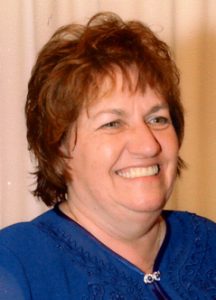
Patricia A. Hotte, 73, of Rochester, died Sept. 13, 2018 at home after a long illness. She was the wife of Lawrence J. Ferreira and the daughter of Edna L. (Loring) Hotte and the late Ernest G. Hotte.

She was born in Casper, Wyoming and grew up in New Bedford. She lived in Rochester for the last 48 years.

Ms. Hotte worked as an office manager for Guido’s Plate Glass Co. in New Bedford for many years.

She was a past member of the Intertribal Indian Council.

She enjoyed genealogy, crafts and reading.  She was a Reiki Master.

Survivors include her husband, Lawrence J. Ferreira; her mother, Edna L. (Loring) Hotte of Jackson, GA; 2 sons, Daniel J. Ferreira and his wife Linda of Rochester and Robert G. Ferreira and his wife Alice of Rochester; a daughter, Kathryn F. Rocha and her husband Joe of Wareham; a sister, Lenora Hotte of New Bedford; a brother, Garrett Hotte of Jackson, GA; 6 grandchildren, Benjamin Ferreira and Nicholas Ferreira both of Rochester, Alex Rocha and Desiree Larson and her husband PJ all of Dartmouth, Abigail Ferreira and Jillian Ferreira both of Rochester; several nephews and nieces and her dog, Mindy. She was the sister of the late Raymond Hotte.

Her Mass of Christian Burial will be held at 10:00 am on Saturday, Sept. 29, 2018 in St. John Neumann Church, 157 Middleboro Road, East Freetown.

In lieu of flowers, donations in her memory may be made to COPD Foundation, 3300 Ponce de Leon Blvd., Miami, FL 33134.

Arrangements are by the Chapman, Cole & Gleason Funeral Home, 2599 Cranberry Hwy., Wareham. For directions and online guestbook, visit: www.ccgfuneralhome.com.

Thomas A. Dutra

Thomas A. Dutra, 67, of Wareham, died Sept. 14, 2018 at home. He was the husband of the late Pamela R. (Ponte) Dutra and the son of the late Leonard F. Dutra Sr. and Margery M. (Kenyon) Dutra.

He was born in New Bedford and lived in Acushnet then in Mattapoisett for many years before moving to Wareham 5 years ago. He served in the U.S. Navy from 1970 to 1974.

Mr. Dutra worked as a maintenance mechanic for Crystal Ice for many years before retiring.

Thomas was a man who cared deeply for those around him. He always put others first, and would do anything to help someone he felt was struggling. He worked tirelessly to ensure that family, friends and neighbors had everything that they needed. He was known for fixing things, and would fix anything for anybody.

Survivors include 3 daughters, Kathryn L. Davis and her husband Scott of Westport, Jennifer Brooks and her husband Peter of Norton and Bethany Kaplan and her husband Nathan of Waltham; a sister, Diana Dean of New Bedford; a sister-in-law, Martha Dutra of Fairhaven; 3 grandchildren; many nephews, nieces, and close friends in his neighborhood. He was the brother of the late Michael Dutra and Leonard Dutra, Jr.


Visiting hours are from 4 to 7 p.m. on Tuesday, Sept. 18, 2018 in the Chapman, Cole & Gleason Funeral Home, 2599 Cranberry Hwy., Wareham.  His funeral will be held at 11:00 a.m. on Wednesday, Sept. 19th at the funeral home. Burial will follow in the Mass National Cemetery, Bourne.

Briggs Development Takes Cautious Approach

Marion resident Sherman Briggs was successful in getting his Spring Street property re-zoned for a housing development, but on October 4 during the Marion Planning Board, it was clear that Briggs’ confidence in the cooperative effort between him and the board was still shaky.

During this discussion, Briggs was looking to clarify his responsibilities pertaining to the affordable housing aspect of the development – three apartments slated for a lot separate from the other market-rate age-restricted condos and houses.

Briggs’ concern was over the process for filling those affordable units – the application, the lottery system, meeting state specifications, and fulfilling the Town bylaw as well. He needed to settle whether he would be undertaking that process or the Town.

Planning Board member Eileen Marum pointed out that in the Marion bylaw it states that the developer is responsible for developing the marketing plan for the affordable housing units and describing how the application and lottery system would work.

“It’s fine that I have to carry the whole thing,” Briggs said. “I just wanted to make sure that we’re all on the same page as we go forward in this process. I don’t want any confusion – I’ll carry the whole thing for those apartments. … It’s just that, six months from now, I don’t want to be debating who’s supposed to do what.”

According to the bylaw, Briggs’ housing development must produce affordable housing equal to 10 percent of the proposed market-value units. These three units would satisfy that requirement.

There was also the question as to how smoothly the process would go as Briggs builds the market-value units, completes the affordable units, and then applies with the state so the affordable units could be counted and inhabited. Briggs was still seeking answers as to whether he would adhere to the 40-B requirements that gives the Zoning Board of Appeals the permitting authority or adhere to the requirements of the states’ Local Initiative Program (LIP), giving the permitting authority to the Planning Board.

Briggs asked whether the Planning Board would have the authority to issue waivers for the project, such as waivers for setbacks, which Briggs would need in order to make the three units fit onto the lot.

“I can file under the LIP process or … under the 40-B. Then there’s no setback requirements [under 40-B]. I’m trying to find out where we gotta go to get there as soon as possible because I don’t want to come in showing these three units 10 feet off the lot line and then you say it’s got to be 20,” said Briggs.

“The Planning Board can make allowances for what he is asking for,” said Marum, things such as setbacks, roadway design, and stormwater management.

Yet, as the board pondered it further, it was still unclear as to whether the Planning Board could issue the waiver, or if the ZBA would need to issue a variance.

“That’s a point that town counsel can clarify,” said Planning Board member Stephen Kokkins.

To Briggs, it sounds like the LIP process could take a while to complete, and he asked, “How can I get the support of the board knowing that’s going to happen and go forward with the condos? …How can we tie-in those apartments … and continue to go forward with the condos at the same time?”

Briggs stated that he wanted the board to understand that this project was going to happen, but he did not want to include the age-restricted condos in the same process as the affordable housing units, which could slow down Briggs’ progress.

“That’s why I’m putting them on the separate lot,” Briggs said.

Board member Andrew Daniel replied, “It’s part of the same project. I don’t think we can have it both ways.”

Planning Board member Norm Hills suggested the board let town counsel weigh in, while Town Planner Gil Hilario suggested the Planning Board could specify in the Special Permit that, upon completion of the 30 market-value units, the three affordable units would be provided and include it with the LIP application.

That LIP process could take up to two years to process, suggested Chairman Will Saltonstall, and perhaps occupancy permits might not be issued for the market-rate units until the LIP process is completed for those three other units.

“You see, that part can’t happen,” said Briggs. “That’s the part that’s not gonna work.”

Daniel, however, was more optimistic, offering, “This is hypothetical. How do you know it’s gonna get hung up for two years? It might not.”

“It took twelve years to do the 40-B!” replied Briggs. “And I’ve been sitting here for ten.”

Saltonstall said he would reach out to Briggs that week with some answers for him after discussing it with town counsel.

Also during the meeting, the board briefly discussed its draft bylaw for a kennel license, and scheduled a public hearing for October 1 at 7:00 pm. This kennel bylaw will appear on the warrant of the Fall Special Town Meeting scheduled for October 22 at 6:30 pm at Sippican School.

The next meeting of the Marion Planning Board will be September 17 at 7:00 pm at the Marion Town House.

Marion Planning Board

By Jean Perry


New Report Card Still Evolving

The Marion School Committee learned on September 5 that data collected by surveys submitted by parents and teachers will result in some changes to the new standards-based report cards implemented last year at Sippican School.

Last year, the report card was reformatted, replacing the old “A,B,C,D,F” letter grading with a new system that emphasizes specific skills in each subject at each grade level, presenting them as benchmarks towards success. After it was piloted, parents and teachers of grades 1-6 presented feedback on how the district might enhance or improve the way the report card is designed, said Dr. Elise Frangos, assistant superintendent.

“Anything that’s great always needs to be modified, revised, looked at, examined, to make it better,” said Frangos. With the data that was collected, Frangos said the original team that devised the new report card reconvened in July to review the survey results and consider the roughly 200 suggested modifications.

“The way that it could be better would be to condense the language of some of the standards, sharpen the language, make them more parent-friendly, and also streamline the data entry,” said Frangos.

One resounding response, Frangos said, “We don’t want to go back to the ‘A,B,C,D,F’ because the omnibus grade doesn’t really tell me much about my child.”

As the group works to improve the report card in time for issuance at the end of the first trimester, Frangos said parents should expect the report card to be revised, … “and hopefully very pleasing to those who are the users of it, as well as the parent consumers of it.”

According to Frangos, the junior high has also been studying the benefits of a standards-based report card and is considering adopting a similar report card. Some parents have expressed a concern pertaining to how eliminating letter grades might affect private school applications and whether their child would have optimal admissions results. Having spoken with some headmasters, Frangos stated, “All of them feel that … you actually learn far more about a child’s capacities and strengths through the standards-based report card.”

Frangos said the school administration would soon schedule a parent outreach session in the junior high school auditorium that will be video recorded and televised for parents who cannot attend.

“I really compliment the team,” said School Committee Chairman Christine Marcolini, pointing out that the new report card development was a huge project that remains an ongoing effort. “We’re still evolving it and we’re still making it better.”

In other matters, the source of poor air quality in an area of Sippican School was identified after a recent air quality test detected elevated levels of fungi in the air.

Business Administrator Patrick Spencer said every year in all tri-Town schools, the administration conducts these air quality tests before the start of the school year that include visual inspections and samples from the entire building that are sent to an analytical lab for study.

One area, science lab 133, had a “slightly elevated level” in what Spencer said was a “raw fungi count.” According to Spencer, the air outside the school tested at 350, while inside the science lab tested at 630, but the EPA guidelines require mitigation efforts when interior air tests at levels above 100.

“We went into the room, used fungicide, did some cleaning … and under further inspection we discovered some dirt and plant material that was stored there so we collected that, … removed it, and disposed of it,” Spencer said.

A recent test of that room yielded a count of just 80, below the EPA threshold.

Marcolini thanked the administration for the attention given to the air quality at the schools.

“Obviously the air quality and the conditions at Sippican is something that’s important to all of us,” said Marcolini. “Our children are here and we care about the staff, so we appreciate that that’s something that you continue to be on top of and to ensure that anything that does pop up with that particular test is remediated and addressed.

Also during the meeting, the committee approved the 25-cent school lunch price increase that is proposed across all Tri-Town school districts. The Rochester School Committee approved its district’s price increase last week to take effect January 1, 2018, and Marion will follow suit with the same date. This is the first school lunch price increase in four years, and Business Administrator Patrick Spencer does not anticipate another price hike for another four years. The USDA sets a minimum lunch cost for school districts to follow, which is currently $2.82. All elementary school districts are anticipated to adopt the increase, bringing the cost from $2.75 to $3 for elementary schools, and from $3 to $3.50 in the Old Rochester Regional school district.

The next meeting of the Marion School Committee will be October 17 at 6:30 pm at Sippican School.

Marion School Committee

By Jean Perry


Pipe Dreams

If I walk slowly through the late summer woods, I can feel the forest around me is charged with an almost supernatural presence. If I look carefully enough, I can see that I’m not alone walking among tiny ghosts that rise up from the forest floor like smoke from an ancient peace pipe. And if I ask nicely, the shy little thieves will reveal themselves and spill their silvery secrets.

Beneath the tree canopy and across the leaf-littered ground sprout delicate white crowns of single-stemmed dainty white flowers; their splendor often overlooked by a mere misclassification as a fungus, a mold, a common mushroom. But when you kneel down beside them and lean in closer, you’ll witness the unfolding of a flower that exists unlike any other and literally and superbly pales in comparison to its green leafy step-sisters.

Monotropa uniflora, which means “a flower once turned,” is likely your favorite flower you never knew existed, and by far the weirdest flower you’ll likely ever meet. Commonly known as “Indian pipes”, “ghost plants”, “ghost flowers”, or “corpse flowers”, Monotropa uniflora thrives in the moist shadows of overgrown ferns, fallen tree trunks, and the shade from overhanging foliage. Completely void of chlorophyll, the non-photosynthetic flower looks down at the earth below, shunning the sunshine and abandoning its reliance on it for energy, going against the very nature of flowerhood that begins and ends with the rays of the sun.

The Indian pipe lives a life of thievery, stealing the sugars and energy she needs from the mycorrhizal fungus that lives in the root zone of the forest ground below. The germinating seedlings trick the fungi by mimicking the root system of a tree, causing the fungi to attach themselves in one of nature’s cleverest forms of identity theft.

Mycorrhizal fungus maintains a symbiotic relationship with nearby trees, attaching themselves to the root systems and causing the tree’s roots to expand, thus able to take in more nutrients and water. In exchange, the tree gives the fungus the carbohydrates it needs to live.

I’m not much of a scientist, though, and when I perceive the Indian pipe, I do so more as a poet. Just the phrase Indian pipe conjures up strange images. Ghost flowers: luminous visions of white crooked wax; ghost plants: tall, transparent stalks spiriting up from a gloomy underworld.

The flowers unfurl up to eight inches in height after a late summer or early fall rain and stay silent and shy with their heads bowed down until fertilization, which then prompts them to turn their faces upwards and open their now discolored petals that have been pinked or purpled by time.

They rot slowly as the mystery pours out of them, but even as they sink into black brittleness, they stand straight like soldiers, still as corpses and motionless in their death dance.

Medicinally, the Indian pipe has been used as an anticonvulsant, analgesic, wart remover, and fever reducer. According to lore, the plant is said to heal the broken heart of those who mourn the loss of a loved one.

The Indian pipe was the favorite flower of poet Emily Dickinson, who often cited its whiteness in her work. It’s my favorite flower as well, though void of color and scent much like a dream, where even in blackness, a flower once turned, a nightmare seed sits inside a swell of summery white smoke.

By Jean Perry


Rochester Council on Aging

For the complete newsletter, please visit us at 67 Dexter Lane, Rochester to pick up a newsletter or visit us on our website at rochestermaseniorcenter.com/ to download the newsletter.

For weekly updates, don’t forget to follow us on our Facebook page: www.facebook.com/rochestercoa/

In September there are a lot of upcoming day trips. So please give us a call or visit the council on aging to sign up in advance. A $5.00 donation is asked to ensure your spot on the van.

On Tuesday, September 18, there is a day trip to “Center for Adaptive Living” Showpoint 12,000 sq ft Showroom in Portsmouth, RI, which includes a tour of the showroom and a presentation. Free Lunch. The bus will leave the council on aging at 9:30 am and will return around 2:30 pm.

There is a day trip on September 20to “The Big E” Eastern States Exposition Springfield. Admission is $5.00. The bus will leave the council on aging at 7:30 am and will return around 6:00 pm.

There is a day trip on Saturday, September 29to the Wachusett Mountain BBQ Fest, Princeton, MA. Admission is $9.00. There will be food, music, craft fair, and farmers market. The bus will leave the council on aging at 8:00 am and will return round 5:00 pm.

On Friday, September 14there will be no Friday Movie. There will however be a Friday Movie the following week which is September 21.

Volunteers are needed for the following positions: Breakfast cooks, breakfast dishwasher, breakfast waitresses, breakfast substitutes, Monday lunch kitchen asst’s, Monday lunch cleanup, afternoon front office receptionists. So please give us a call if you are interested!

As a reminder, we have been sending all SHINE-related questions to the regional SHINE office in the Middleboro COA until our SHINE worker returns to work. 508-946-2490

Hanna Milhench & team will prepare a delicious luncheon on Monday, September 17at 12:00 pm here at the Senior Center. Anyone is welcome to attend, but you must sign up in advance. Anonymous donation of $5.00 per person is suggested for the meal. If you would like a ride in, please call us at 508-763-8723

The Quarterly Birthday Party for those who have or who have had a birthday during the months of July, August, and September, is scheduled for Monday, September 24that 12:00 pm. Anyone is welcome to attend. Birthday invites have been mailed to those who are celebrating! Please RSVP by calling us at 508-763-8723, so we will be sure to prepare enough food for all who attend! You do not have to be celebrating a birthday to come to lunch that day! The more the merrier! A suggested donation of $4.00 per person for the meal is appreciated; Birthday attendees receive a complimentary lunch! Entertainment will also be provided. Let us know if you need a ride in!

Nasketucket Bird Club

The next Nasketucket Bird Club meeting will be Thursday, September 27at 7:00 pm at the Mattapoisett Free Public Library.

Sparrows! Jim Sweeney will speak to us about those confusing brown birds. Jim, from East Bridgewater, Massachusetts, has been an avid birder since 1980 and has birded extensively in New England, the mid-Atlantic states, Arizona, and Iceland. The Mattapoisett Free Public Library is located at 7 Barstow Street and is handicapped accessible. The program is free and open to the public.

Find out more about the club and upcoming bird walks at: massbird.org/Nasketucket/