Teen Events this Summer at the Mattapoisett Library

Our Discover the Universe of the Mattapoisett Free Public Library has officially begun, and teens can find themselves busy all summer long just by participating in Bingo. While learning everything the Mattapoisett Free Public Library has to offer, each Bingo achieved will earn a small prize and a raffle ticket for the grand prize, a gift basket including a 3D pen. Come into the library to learn more and to check out a Bingo card!

            We have also created enjoyable programs especially for teens. Starting on Saturday, July 6at 12:00 pm, we will be opening the “Game Lounge,” a space for patrons to hang out and play games of all types including Xbox Kinect on the big screen. The “Game Lounge” will be continuing through the summer on July 24 and August 3. Snacks will be available.

            On Tuesday, July 9starting at 6:30 pm, teens are invited to join us for Book End Painting to bring life to old bookends the library has accumulated. Teens are welcome keep them or donate their creations to liven up the Student Lounge. 

            On Tuesday, July 23starting at 5:30 pm, all are welcome as we learn Screen Printing! Utilizing a simple method of screen printing, we will print designs on fabrics. The library will provide all of the materials, but for those with a particular design in mind, you are welcome bring in your own. We encourage patrons to sign up by July 16 to ensure we have enough materials. 

            On Wednesday, July 24at 6:30 pm, we will be screening the movie “Hidden Figures.” Come in for the movie and a discussion. There will be refreshments as well. 

            On Tuesday, August 6at 5:30 pm, we will be hosting A Book Tasting. Designed like a food tasting, this will be an opportunity for you to get to know some of the new young adult titles added to the collection this summer. Refreshments will be served. 

            On Wednesday, August 7at 1:00 pm, all are welcome to participate in Sharpie Tie Dye! Use Sharpies to draw designs onto fabrics like tee shirts and add alcohol to create a tie dye look. The library will provide all the materials needed, but if you have a particular design in mind, bring your own! We encourage patrons to sign up by July 31.

            All programs are free and open to the public. If you have any questions or need special accommodations, please contact the library at 508-758-4171 or email the Adult Services/Reference Librarian, Michelle Skaar at mskaar@sailsinc.org.
Marion Art Center

New Hours During ArtStart – The MAC’s ArtStart summer camp is in full swing! Regular hours during this time, June 22 – July 22, are as follows: Tuesday – Friday: 1:00 pm – 5:00 pm, Saturday: 10:00 am – 2:00 pm, Sunday – Monday: CLOSED. 

            Arts in the Park – Don’t miss the annual Arts in the Park Festival at Bicentennial Park in Marion (corner of Main and Spring Streets) on Saturday, July 6from 10:00 am – 4:00 pm, featuring a select group of local artists and artisans. Goods include baskets, ceramics, clothing, collage, fiber, glass, jewelry, woodworking, painted & crafted furniture, paintings, photography, and more!             There will be arts activities in the NBAM/Artworks! ArtMobile, musical entertainment by Yesterdays’ Country Band, food for sale by Walrus & Captain of Mattapoisett, and a table full of unique raffle items provided by our vendors! Arts in the Park is sponsored in part by a grant from the Marion Cultural Council, a local chapter of the Mass Cultural Council. Rain date: Sunday, July 7.

            Marion General Store will sell MAC Fundraiser Tickets – Tickets for Cocktails by the Sea, the Marion Art Center’s annual summer fundraiser beginning July 5. The MAC’s premier event will be held on July 26, 2019 from 5:30 pm – 8:00 pm at 183 Front Street, Marion, at the home of Trevor and Anne Hatton. This year’s fundraiser will feature a silent auction, open bar and light hors d’oeuvres, music by 3rd Shift Jazz, and entertainment from Overhead Arts, Inc.! Tickets – just $75 – can also be purchased in person at the MAC, by phone, or online at marionartcenter.org/events/cocktails-by-the-sea. Special thanks to our 2019 sponsors, American Research & Management, Cape Cod 5, and Eastern Bank. All fundraiser proceeds benefit the MAC’s ongoing operations, programming, and community outreach. Donations to the summer fundraiser (of any size!) are appreciated for those who cannot attend the event.

            Call for Entries – Summer Members’ Show – Drop off dates – On Friday, July 12, the MAC will present its Summer Members’ Show, with an opening reception from 6:00 pm – 8:00 pm. Any current MAC member is invited to participate and can drop off up to 2 pieces for the exhibition. Drop off date for works is scheduled for Tuesday, July 9, 1:00 pm – 5:00 pm. During the reception, we’ll also celebrate the musicians of the Buzzards Bay Musicfest happening July 10-14. Visit https://www.buzzardsbaymusicfest.com/ for more information. 

‘Hobby’ Shop Receives Variance

            With only one hearing on the June 27 agenda, the Rochester Zoning Board of Appeals (ZBA) might have had an easy meeting. But variances are one of the more difficult requests the ZBA has to study while determining the merits of an application, and abutters’ concerns must be taken into consideration.     Such was the case when Christopher Gerrior, a Rochester native and member of Rochester’s Conservation Commission, filed his request seeking a variance for the construction of an over-sized accessory building to be used as a woodworking shop along with a second structure to house a portable sawmill.

            Gerrior read from a prepared declaration of his reasons for requesting a variance. He noted that when he purchased and built his home in 2014, it was always with the intention of placing a woodworking shop and sawmill in the front yard of his 1 Perez Smith Lane location. He explained that other locations in the 11-acre parcel could not be used due to their location near or within wetlands and that constructing in those areas would produce disturbances to the environment that would equate to more costly construction methods. Those two points were his primary reasons for believing a variance was in order.

            Gerrior’s third and stickier point was that the variance requested would not cause problems for the neighbors. On that point things got heated.

            Diana Murphy said that parcels she owns in the area share an ancient way that runs directly through Gerrior’s property granting her rights that might impact Gerrior’s plans.

            Richard Medeiros whose residential lot abuts Gerrior’s said that a stone wall along Perez Smith Lane actually was on his property and he was concerned that sawmill activities with heavy trucks using the narrow roadway would be problematic. He also said that the sawmill would be noisy, disturbing the peaceful use of his property. 

            Abutter Judy Schaaf submitted a four-page letter that most of the ZBA had not had time to read. She was asked to summarize her concerns.

            Schaaf questioned the application’s accessory structure measuring 36 feet by 60 feet and contained a loft area. Schaaf said that the bylaws did not allow for accessory buildings to have a second floor. That was her main complaint, but she also voiced concerns over the noise the sawmill would create. The second structure proposed was a 12-foot by 24-foot three-sided shed that would be used to protect the sawmill itself. Schaaf said that such a structure would not mitigate the noise level.

            “I’m a professor: I work at home,” she said; thus, noise from a loud engine would be a problem.

            Several times throughout the proceedings Gerrior said that the purpose of the accessory buildings was to replicate a woodworking shop his father had had on his Rochester property prior to selling that parcel and downsizing. He said it was always the family’s intention to place his father’s substantial collection of tools in a new shop they would share. Gerrior further said that lumber removed from his father’s property had been relocated to his property, although he also had a forestry plan for his property and had been exercising his right to cut lumber.

            Gerrior explained that the woodworking activity was “only a hobby”, one that the three generations of the family wanted to continue to enjoy together.

            The discussion and debate continued for nearly two hours and became increasingly tense.          Medeiros asked, “What’s the need for such a large building if this is just a hobby?” He inquired if the structures would have utilities and if noise levels would increase. He also added, “In that area there are at least four retirees home all day. Like me, they want their peace and quiet.”

            Gerrior countered that he liked quiet also and that the hobby shop wouldn’t be used every day all day long, but intermittently. He said he was open to restrictions on days and times for running the sawmill.

            In the end, the ZBA agreed with Gerrior, but not before Medeiros continued to try and argue against the variance. He was repeatedly being told by Chairman David Arancio that the public portion of the meeting was closed and he had to be quiet. This only seemed to inflame Medeiros who eventually stormed out of the meeting swearing under his breath.

            The ruling was that Gerrior could construct the accessory buildings in the front yard, which is some 400 feet away from Walnut Plain Road, that the loft could only be used for storage, and that the buildings would not have plumbing, could not be converted into habitable spaces, could only be used for personal activities, could not be used for business activities. Furthermore, the sawmill would only be used between the hours of 10:00 am and 6:00 pm, and a 100-foot long line of evergreens would be planted to the south for screening and noise mitigation.

            The next meeting of the Rochester Zoning Board of Appeals has not been scheduled and will be should any applications be submitted.

Rochester Zoning Board of Appeals

By Marilou Newell

Sippican Historical Society

In 1998, the Sippican Historical Society commissioned an architectural survey of Marion’s historic homes and buildings. The survey was funded one-half by the Sippican Historical Society and one-half by the Massachusetts Historical Commission. Due to the limits of funding, not all of the historic buildings were surveyed, but over 100 were catalogued and photographed. The results of the survey are in digital form on the Massachusetts Historical Commission’s website and in four binders in the Sippican Historical Society’s office (and at the Marion Town Clerk’s office).

            Marion (Old Rochester) is one of the oldest towns in the United States, and the Sippican Historical Society maintains an extensive collection of documentation on its historic buildings. The Sippican Historical Society will preview one building a week so that the residents of Marion can understand more about its unique historical architecture.

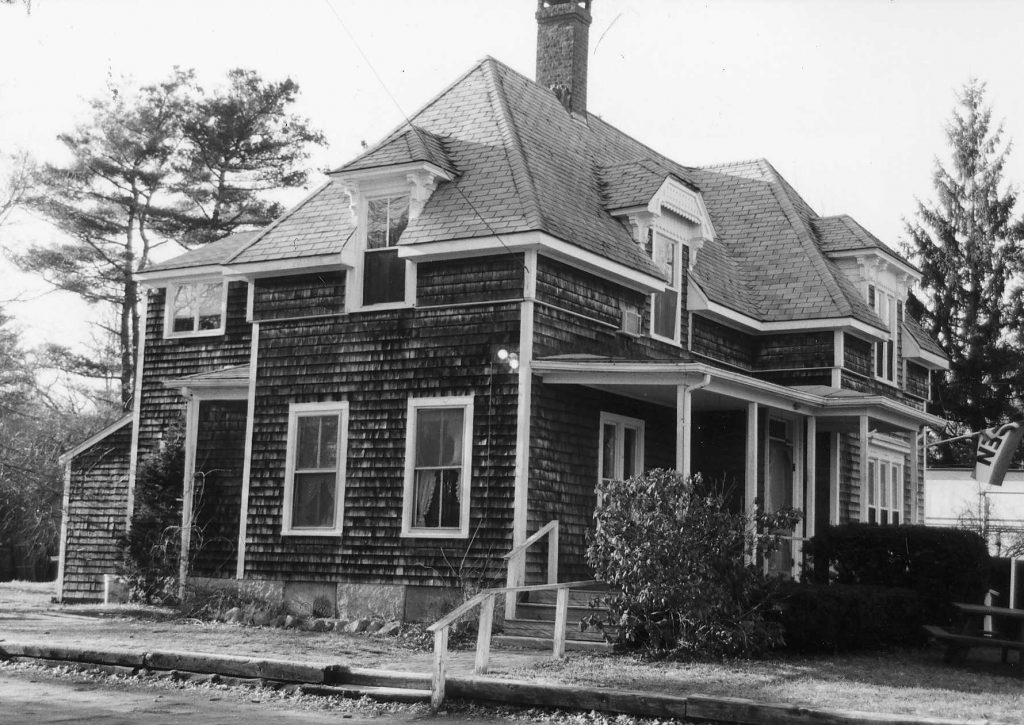
            This installment features 360 Front Street. The building at 360 Front Street is a rare Marion example of a Stick-and Queen Anne-style residence. It was built by the Sisson family in the late 19th century on land that had been carved out from the estate of Capt. Joseph Emerson Hadley.

Life is Wild! God is Good!

Life is wild for kids — full of ups and downs and twists and turns — but they can experience the solid foundation of God’s goodness while having lots of crazy-cool fun! First Congregational Church of Rochester will hold a free Vacation Bible Camp for kids in Preschool – Grade 6 on July 22-26from 5:30 pm – 8:30 pm (includes dinner) at 11 Constitution Way in the center of Rochester. Register online at vbspro.events/p/rochesterroars or call the church office at 508-763-4314.

In the Beginning, there was Rochester

            The last of the Tri-Town tours should have been the starting point. After all, Rochester was, in the beginning, the only town that existed in what we know today as the Tri-Town area. Marion and Mattapoisett were only villages within its borders. But that’s not all, Wareham was also once part of Rochester.

            That aside, on June 29 the final installment of the Healthy Tri-Town Coalition’s walking tours stepped off at Plumb Corner in Rochester. Here, where Route 105 – also known as Rounseville Road –meets New Bedford Road and Mary’s Pond Road was once the beating heart of this rural community. There was a meetinghouse (or several as time went by), a school, a library, a water trough, a public fresh water pump, and a cemetery. Today, many of those features remain.

            Leading the tour was retired educator and ‘home girl’ Connie Eshbach, and longtime member of the Rochester Historical Society, Susan LaFleur. In their tag-team presentation, they gave an impressive overview of Rochester’s past life.

            Threatening skies may have kept sojourners home, but undaunted by clouds they persisted. On hand to thank them for their efforts was now the recently-retired assistant superintendent of the Old Rochester Regional (ORR) School District, Dr. Elsie Frangos, who assisted in the formation of the Healthy Tri-Town Coalition, a group focused on the physical and emotional wellbeing of youths and their families in the ORR system and partner in the Tri-Town tours.

            LaFleur said that Rochester was incorporated in 1686 and the King of England distributed land grants. Those land owners were called “proprietors.” One such proprietor was Mark Haskell who received rights to lands along today’s New Bedford Road in 1692.

            LaFleur shared that, prior to arriving in Rochester, Haskell had lived in Salem and was in the process of being conscripted as a juror in the Salem witch trials. Haskell did not believe in witches or in the guilt placed on those doomed women and girls. Thus, he hightailed it out of town, traveling to Boston and Lakeville before settling down in Rochester.

            Haskell had a large family of six children, many of whom built homes near their parents on New Bedford Road. At one time in the town’s history, some 10 or more homes along the roadway belonged to a Haskell. Haskell served as the first town clerk and first record keeper for the town. It is also believed that he was the first person buried in the cemetery nearby. The first meetinghouse located in the area was his home.

            LaFleur noted that today in the 21stcentury, not a single Haskell descendent resides in the area.

            “They scattered with most going to California,” she said.

            Eshbach added to the fabric of history being sown by LaFleur, saying, “Marion and Mattapoisett were known as ‘daughter towns.’” She explained that one of the rationales presented to Old Colony Court around 1680 for the separation of Wareham, Marion, and Mattapoisett from Rochester was the difficulty in attending town meetings. Such a large landmass made it difficult for those living farther away from Plumb Corner to attend those critical functions.

            Of the early proprietors in Rochester there were the Hammonds, Winslows, and Ellises, surnames that can still be found in the town registers. Eshbach said that the first Ellis in Rochester had arrived in America on the Mayflower.

            Eshbach asked the assembled to imagine Rochester at a time when the town greens were used to pasture farm animals or to collect fresh water. If modern day cars could have been erased, one could easily imagine those days. That intersection is now a major local traffic connector.

            The first church erected in Rochester was located where the cemetery now rests, Eshbach stated. She said that pews in the church were sold to families and those monies were used to help support the church. She continued saying that tithing was a serious matter not taken lightly in those days as generous giving was expected.

            Sunday church services were an equally serious affair, Eshbach said, with early morning services followed by a noon repast and then a return to the church for afternoon prayers. The entire day was dedicated to church without exceptions.

            By 1714, the first meetinghouse was too small and was replaced, but not before serving the community for 94 years. In 1760 a third meetinghouse was erected. Being frugal New Englanders, several of the early meetinghouse structures were repurposed buildings moved and halved, giving them new life and new meaning to the locals.

            Standing on the town greens, the tour group was led into what is today the Congregational Church built in 1837 by local builder and architect Solomon K. Eaton. It is a gothic revival, Eshbach said. At the time of its construction it cost $5,000, a rather princely sum, but money well spent considering the beauty and intricacy of the structure. It speaks to the skill held by those early tradesmen – deeply carved woodwork surrounding the organ gallery in a loft space, complete with an image of Queen Victoria and a cathedral-like ceiling. It was speculated that the structure needs approximately $100,000 in today’s money to finish all repairs and renovations.

            Eshbach said that Rochester believed in educating its children and pointed to the adjacent building, saying it had once housed the Rochester Academy, the brainchild of Reverend Bigelow, Dr. King, and Dr. Haskell in 1839. The students were taught English, Latin, and Greek, but only in the winter months when farming was much less a pressing matter of life and death.

            “Rochester was the highwater mark of country living,” Eshbach rather proudly added – a center of “high thinking” with an emphasis on being well informed on current events.

            Rochester’s original town hall was built in 1854 and was also a school at one time where students who were not attending Rochester Academy could go. In 1892, the current town hall was constructed for $2,000. The building is a Queen Anne structure. At one time, LaFleur said, the police department was located in the basement, a tiny 16-foot by 16-foot room.

            The Civil War monument placed in 1927 in front of town hall honors the 81 men who volunteered to fight. It cost $1,200 to build and consists of one large boulder weighting some 11 tons, flanked by granite wings. LaFleur shared that the last known Civil War veteran to have lived in Rochester was George Randall at the age of 90.

            From the vantage point of the old horse trough, the tour guides directed attention across the road to two private homes. Eshbach said that 1 Mary’s Pond Road had been a store moved to its current location by 40 oxen. It also once served as a tavern and post office.

            The large white clapboard residence adjacent to it was once a shop that sold ready-made clothing and cloth. But Eshbach said most of the cloth was shipped south, as were the finished goods, to be used as rough clothing or “slop” cloth for the salves.

            In the cemetery itself where the tour ended, LaFleur pointed out one grave believed to be the resting place of Lt. Winslow who served in the French and Indian War. She explained that records were incomplete and held few details, but given the date inscribed on his headstone, 1756, he could have died in battle.

            LaFleur said that many of the early slate tablets that mark graves have crumbled away over the centuries, making identification of the people at rest there nearly impossible. All things must come to an end.

            To learn more about Rochester’s history you may visit www.townofrochestermass.com or www.plumblibrary.com/services/rochester-historical-society.

By Marilou Newell

Academic Achievements

Tulane Universityawarded degrees to more than 3,000 graduates on May 18, 2019 at the Mercedes-Benz Superdome in New Orleans. Local student, Sean Deery of Mattapoisett, earned a Bachelor of Science from the School of Science & Engineering. The ceremony’s keynote speaker was Apple CEO Tim Cook.

            Stephen Cassidy of Mattapoisett has graduated from Wentworth Institute of Technologyin Boston.

            Lillian McIntire of Mattapoisett and Emily Josephson of Rochester have been named to the 2019 spring semester dean’s list at Simmons Universityin Boston. To qualify for dean’s list status, undergraduate students must obtain a grade point average of 3.5 or higher, based on 12 or more credit hours of work in classes using the letter grade system.

            Holly Cardoza of Mattapoisett earned a Master of Science in Education from Simmons Universityin Boston. 

            Springfield Collegehas named Ashley Pacheco of Rochester to the dean’s list for academic excellence for the spring 2019 term. Pacheco is studying Health Science/Pre-physician Assistant.

            Suzanne Buglione, Vice President for Academic Affairs at Bristol Community College, has announced the dean’s list for spring 2019. Tri-Town students included in the list were:

            From Marion: Danae Arone, Emily Cronin, Timothy Dix, Tiffany Faria, Amber Reis, and Julia Smith

            From Mattapoisett: Andrew Bichsel, Ashley Brzezinski, Angelina Cosgrove, Joseph Gauvin, Henry Jones, Mikayla Mooney, Ethan Mort, Kira Pedrosa, Zebediah Perkins, Meghan Seguin, Dion Selha, Amy Smith, Makenzi Tache, and Anfernee Thompson

            From Rochester: Jason Adriano, Colin Bourgeois, Amanda Costa, Leah Costa, Arissa Francis, Tyrell Harrison, Isaac Morris, Benjamin Rounseville, Kurt Thompson, Mia Vercellone, and Amber Viera

St. Philip’s Episcopal Church

For 135 years, St. Philip’s Episcopal Church in Mattapoisett has held summer only services for parishioners.

            Each Sunday through Labor Day, visiting clergy from Massachusetts and beyond conduct services, using the 1928 Book of Common Prayer, at 8:00 am and 10:00 am.

            On Sunday, July 7, services will be officiated by the Reverend Nathan Humphrey, Rector, St. John the Evangelist, Newport, RI.

            All are welcome at our historic church next to the Town Beach in Mattapoisett.

Board Discusses Snow Subdivision Project Sans Shouting

            Mattapoisett Planning Board Chairman Tom Tucker promised engineer Rich Rheaume on July 1 that this time he wouldn’t yell at him during this continuation of Scott Snow’s Form C Definitive Subdivision Plan public hearing and he followed through with that promise.

            Snow’s prior continued public hearings were unlike this one that was seemingly contention-free and short, lasting roughly only 20 minutes.

            All that was up for discussion this time were the easement drafts from Snow’s attorney, which Planning Board member Janice Robbins said needed more specific notation on what the easements were for rather than a general mention of the presence of an easement at various lots at Snow’s proposed subdivision at 6 and 8-8R Prospect Road.

            “These are not set up correctly and not one of the easements have a purpose,” said Robbins. “They just created an easement … but it doesn’t describe the purpose.”

            Robbins pointed out that the language locates easements on lot titles but does not describe the nature of the easements, which she said is necessary.

            “It should describe the purpose because it’s not for any other purpose,” Robbins said, adding that she doubted the attorney correctly understood the ownership of the lots and thought Snow would be acquiring Lots 1-5.

            Rheaume said he would seek to reconcile the correct grantor of the easements and purposes of the easements, and the board agreed that prior issues with the plan and the requested waivers have been resolved. However, the board was not comfortable accommodating Rheaume’s request that the board approve a schedule for the releasing of the lots that night.

            “When the time comes, [Snow] will come before the board and say [he would] like to release this lot and we’ll know what the status of the project completion is,” said Robbins.

            The board continued the hearing until July 15 pending the return of the corrections to the easements and the homeowners’ association agreement.

            Immediately after, Tucker requested a brief recess to speak privately with Snow outside the Town Hall and was back 30 seconds later.

            The next meeting of the Mattapoisett Planning Board is scheduled for July 15 at 7:00 pm at the Mattapoisett Town Hall.

Mattapoisett Planning Board

By Jean Perry

Congregation Moves Summer Worship to Church Hall

Summer worship should be cool and casual and leave plenty of time for enjoying God’s creation. Starting July 7, Mattapoisett Congregational Church, UCC, will worship Sunday mornings at 9:00 am in Reynard Hall. The summer theme is “Sacred Rhythms,” celebrating the holy balance of all of life’s activities.

            All the usual worship elements are there including music, prayer, scripture, and sermon. The mood will be more upbeat and casual. Worshippers are encouraged to dress comfortably and bring their own coffee. All are invited to join in celebrating an open (inclusive) Communion the first Sunday of the month.

            “Matt Congo” is located at 27 Church Street. For more information on Summer Worship, visit the website at mattapoisettcongregatonalchurch.org.