Elizabeth “Liz” Ann Westgate Waring

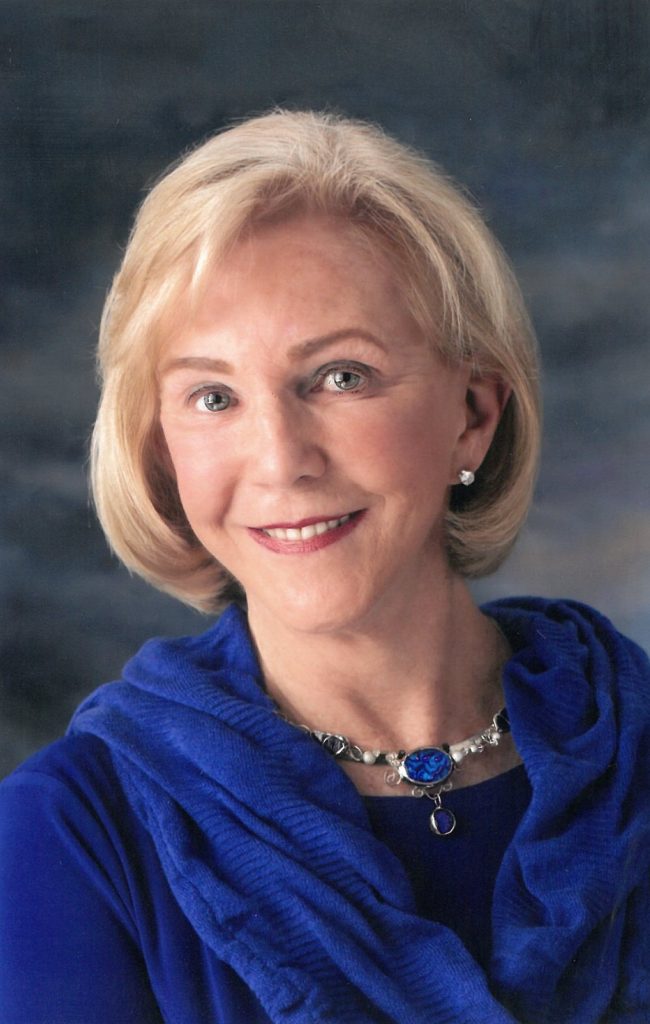
Elizabeth “Liz” Ann Westgate Waring, age 83, passed away on September 6th, 2026. She was the wife of the late Sumner James Waring, Jr., sharing 45 years of marriage.

            Born in Fall River, MA, she was the daughter of Atty. Ray C. Westgate and Muriel Barlow Westgate, the sister of David F. Westgate, the sister-in-law of Barbara and Robert Chamberlain and Sally and Thomas Buffinton all whom predeceased her.

            Surviving are her beloved children, Sumner James (Jay) Waring III, his wife Kristin and Christine Elizabeth Waring, her granddaughters, Abigail, Elizabeth and Frances Waring, her sister-in-law, Sally Westgate and many nieces and nephews.

            A professional photographer, Liz established Waring Portrait Art, located for many years at the historic Carr-Osborn House in Fall River. Specializing in photographic images of children and families, she also created official portraits of judges, clergy, and several mayors for the gallery at Fall River Government Center.

            Clients’ portraits were often created in their favorite environments, and sometimes in a storytelling, painterly manner for large wall displays. With children, her style ranged from classic and elegant to whimsical. Her family benefited from her photographic talents, regularly documenting her growing children and grandchildren through the years in extensive album collections for each child. Her casual snapshot albums are overflowing. Friends were often recipients of unique photographic hand-made cards.

            She authored and illustrated the book, Up with Aging, the art of growing older with zest. Seniors posed, illustrating positive ideas to embrace elder years with passion and vigor in the light-hearted black and white hand-colored images. Text supported the ideas to age well, including articles and quotes of well-known gerontology experts.

            Focus on Photos was an illustrated lecture about the history and art of photography she created and presented to several organizations throughout the Northeast and New Smyrna Beach, FL.

            In later life, retiring from studio responsibilities, she created mixed media paintings of pets. An annual dog parade organized with a friend annually benefitted the local humane society in Florida. Her large painterly images of young children, playing tennis, golfing and swimming are displayed at The Bay Club, Mattapoisett.

            She was Past President of The Fall River Women’s Union, an organization founded in 1873 benefitting nonprofit agencies supporting women and children. Additionally, she was Past President of the following: UMass Dartmouth Carney Library Associates, the Junior League of Fall River and the Women’s Club of Fall River, as well as the former Vice President of Fall River Art Association. A former Trustee of the Durfee Alumni Scholarships, Bristol Community College Foundation, Adams House and Bay View, she was honored by the Fall River Chamber of Commerce with an Outstanding Citizen Award in 1990.

            Liz participated with her husband in many of his extensive civic volunteerism endeavors as well as in his profession and his many years on the board of National Funeral Directors Association, culminating with his Presidency of NFDA and Vice President International Association which included extensive meetings and travel.

            Using her artistic vision to create a warm, gracious home for family and friends, Liz was inspired by music of all forms, her collection of photographic art books, and the peaceful, harmonious beauty of nature.

            For all of her professional accomplishments, her greatest joy and happiest times were with her family and close friends. Her creative talents and giving nature provided many special times and joyful memories that will live forever.

            She graduated from BMC Durfee High School, Colby Junior College (now Colby Sawyer), Katherine Gibbs School in Boston, and UMass Dartmouth. A resident of New Smyrna Beach, FL, she spent many happy years in Swansea, Westport Harbor, and finally Mattapoisett, her summer childhood hometown.

            Her Funeral will be held on Friday, September 11, 2026, at 10:00 am in the Waring-Sullivan Home at Cherry Place, 178 Winter St., Fall River.  Visitation will be held on Thursday from 4:00 to 7:00 pm. Relatives and friends are invited. Flowers welcome or donations may be made to the Fall River Women’s Union, 101 Rock St. Fall River, MA, 02720 or to the Fall River Historical Society, 451 Rock St. Fall River, MA 02720.  Burial in Beech Grove Cemetery, Westport. To view photos and online tributes, please visit: www.waring-sullivan.com
Over 400 Rock With Elvis Tribute Band

Elvis has left the building. The Rochester Council on Aging (COA) building, that is.

            The Rochester COA’s outdoor free summer concert series ended on a high note, thanks to a legendary performance by Robert Black and the Elvis Express Band on Friday, August 28.

            More than 400 people showed up on that hot summer night, lounging on blankets and chairs while enjoying the Elvis magic, according to Eric Poulin, Rochester COA Director. The outdoor concert took place on a large green space adjacent to the Rochester Council on Aging building at 67 Dexter Lane.

            “The crowd ended up stretching back toward the woods. It was a very big crowd,” Poulin said, calling the event a “tremendous success.”

            The tribute band featured Black, dressed like Elvis Presley, putting on his best dance moves and belting out tunes like “Blue Suede Shoes” and “Mama Way.” He encouraged plenty of audience participation, including clapping along to “Mess of Blues.” He bantered with the concertgoers, jokingly asking for them to share their food. (Hot dogs, hamburgers, and other traditional summer fare were available to purchase.)

            “The music was great, but the time spent with friends socializing was even greater,” Poulin said.

            The show topped off a great season of concerts — all sponsored by the Friends of the Rochester Senior Center, a nonprofit working alongside the town’s COA to support older adults. Earlier this summer, on July 24, about 200 music fans came out to enjoy the beloved local band The Relics, Poulin said.

            The concerts and live music are fun, and the camaraderie is good for the soul.

            “It is especially important as people grow older to continue to socialize, as studies have shown that this contributes to good health. Isolation can be harmful both physically and mentally to seniors, and to all of us,” Poulin said.

            “Events like these also give people a chance to get out and listen to music and enjoy themselves at a time in their lives when they may not be driving as far as they used to for socializing and entertainment,” he added. “This is our third year of outdoor summer concerts, and we plan to keep on doing them as they have been very well-received.”

            The mission of the Rochester Council on Aging is to advocate and support the community’s older adults, their families, and their caregivers while promoting independent and positive lifestyles, in a welcoming and secure environment. Individuals or businesses that wish to donate to the Council on Aging to support similar events may contact Poulin at 508-763-8723 or EPoulin@townofrochesterma.gov.

By Laura Pedulli

September Rochester Historical Society Events

There will be two events this month. The first is our Wednesday meeting on September 16 at 7:00 pm at the Historical Society Museum, 355 County Rd. After a short meeting, there will be a program: How does a small family-owned cranberry grower survive today?

            Anyone arriving at 6:30 pm will have a chance to view the current exhibit, supported by the Rochester, Mattapoisett and Marion Cultural Councils, local agencies, and the Massachusetts Cultural Council, a state agency. The exhibit can also be visited by appointment by calling Connie at 617-750-2818.

            Also, on September 26 from 11:00 am to 4:00 pm, we will be joining the Rochester Historical Commission and others at the COA Block Party to celebrate Good Neighbor Day and America’s 250th. Come visit our booth and play our early American games and win some prizes. All ages welcome.

Marion Cultural Council

Turn your creative vision into reality with funding from the Marion Cultural Council. Whether you are an individual artist, an educator or part of a cultural organization, online grant applications are open for projects that enrich the Marion community through the arts, humanities and STEM. The Mass Cultural Council has set a firm deadline of October 15 to submit your proposals.

            Don’t let a lack of funding hold your ideas back. These grants are specifically designed to back local creators. They can cover everything from solo art exhibits and community festivals to school performances, public workshops, lectures and short-term artist residencies. If you have a project that inspires, teaches or connects people, this is your chance to get it funded.

            As part of the largest grassroots cultural funding network in the nation, the Marion Cultural Council is dedicated to putting state-backed resources directly into the hands of local talent.

            Apply online: Review local priorities and submit your proposal at www.mass-culture.org/Marion.

            Learn More: Discover how the grant system works on the Local Cultural Council Program page, massculturalcouncil.org/communities/local-cultural-council-program.

            Get Support: Reach out directly to local organizers with questions at marionculturalcouncil@gmail.com.

Marion Weighs Solar Expansion at DPW Site

            A plan seeking to double the number of solar panels at the Marion Department of Public Works (DPW) administrative office was shared during the Energy Committee meeting on Monday, August 31. The plan, proposed by chair Christian Ingerslev, would leverage federal subsidies to reduce the project cost by $80,000.

            According to committee members, the expansion would support their goal of reducing greenhouse gas emissions in Marion by giving the DPW a greater source of renewable energy. The current 25-kilowatt panels, which Ingerslev said were designed for such an expansion, are estimated to deliver payoff in energy savings after four years.

            The proposal would use approximately $40,000 that the Town is set to receive through federal credit incentive programs from installing the DPW’s current solar panels for nearly $100,000.

            Ingerslev argued a duplicate project would see the same incentives, costing a net $20,000. The upfront $60,000 would come from Marion’s free cash pool, which needs approval at the Town Meeting to be used. Free cash is money certified by the Massachusetts Department of Revenue as unneeded for bills, enabling it to be used as needed by municipalities.

            There is no guarantee the free cash will be certified before the upcoming November 19 town meeting, according to Heather O’Brien, Marion finance director. Because some federal programs established under President Joe Biden are expiring soon, the array will need to be approved by the end of the year, according to Alanna Nelson, a committee member.

            Ingerslev shared the plan with Marion’s Select Board on Tuesday, September 1. Chair John Hoagland said he would support the proposal appearing at Town Meeting, under the condition the $40,000 credit had been received and approved by the time of the meeting. Clerk Randy Parker said he opposed the purchase until the current solar panels’ impact was known — which began collecting power earlier that day.

            During Monday’s Energy Management Committee meeting, Nelson also shared that an unnamed developer may be interested in constructing a 2.5-acre solar array by the town Transfer Station adjacent to the DPW building. Connecting the proposed array to Eversource’s grid was estimated to cost $1 million by the Cape & Vineyard Electric Cooperative in 2024.

            The Select Board is authorized to lease the space for a solar array in a 2014 town meeting vote.

Marion Energy Management Committee

By Zakary Sarkarati

In Search of the Perfect Tomato

Every vegetable gardener envisions the perfect tomato, but how many have actually realized their dream this year?

            Our tomato crop has been somewhat disappointing. It’s not that we don’t have any; it’s just that their usual largesse never quite materialized. And while the weather would seem to have been perfect for these heat-loving plants, I suspect a few factors played a role: late planting, less-than-ideal soil and, of course, the dryness.

            I also have to admit I didn’t primp the plants as I usually do. I let the suckers run a little too freely and wasn’t as attentive to their needs as I could have been. In short, I’ll take the blame. Sometimes the garden gives you a bumper crop, and sometimes it gives you a lesson.

            Late summer weather is shifting, and the sun is handily ripening the vegetables, but can it recoup the languishing tomato crop? The ensuing weeks will tell.

            I have to wonder, as I fret over my tomatoes, did these scrumptious fruits produce the same anxiety for the early South and Central Americas who first cultivated the plants? Perhaps not until their versatility was recognized. Tomatoes are the heart of a lot of culinary treasures, a debt we owe to those early cultivators and the explorers who brought the fruit to a wider population.

            Some historians say it was Christopher Columbus, who brought the first tomatoes to Europe in 1493. Others contend it was the Spanish explorer Cortez who captured the small yellow version of the fruit when he seized the Aztec city of Tenochtitlan, now Mexico City, in the early 1500s.

            The progenitors of today’s tomatoes were herbaceous green plants with small green fruit growing in the highlands of Peru. These early members of the Solanum family diversified into the dozen species of tomato recognized today. The Aztecs called it xitomatl, meaning plump thing with a navel, and it was later called tomato by other Mesoamerican peoples.

            While reading up on tomatoes, I came across a saved article in the British magazine Gardener’s World. Here is the skinny on saving seeds.

            If and when you find the perfect tomato, you can bank on having it again and again. Most tomatoes are self-pollinating, so the offspring will be identical to the parent plant. All you need to do is save your seeds.

            Drying is the preferred method for saving small amounts of seed. Collect seeds from ripe or overripe fruits of any variety you wish to grow again next year. Slice the tomato in half and scrape out the seeds carefully onto a clean plate with the point of a sharp knife.

            To save a few seeds, leave them to dry on the plate or on a piece of paper towel, spreading them out so they don’t go moldy. Once dry, put them in a paper bag or envelope and store in an airtight box.

            For saving a large quantity of tomato seed, a technique known as fermenting is recommended. To remove the gel that protects seeds from disease, scoop the seed pulp into a jar and leave it in a warm place. After two days, a yeasty smell will show that the gel is fermenting. When you notice a white fungal layer after about five days, rinse the seeds thoroughly in a sieve.

            Spread them out to dry for a week or so, then store as previously noted in a cool, dark place to keep the seeds viable.

            I remember summers when the garden seemed determined to keep pumping out tasty, plump tomatoes, one after another, with hardly a thought given to whether I had done anything to deserve such bounty. That is what I’m hoping for next year. In the meantime, I’ll amend the soil, pay closer attention to my plants and try to create the conditions for a better crop.

            And perhaps I’ll keep a few tomato seeds aside, too. After all, the Pueblo people believed that those who witnessed the ingestion of tomato seeds were blessed with powers of divination.

            If that’s true, I may have found my answer.

            Once the final tomatoes are picked, I’ll sit down with one, swallow a few seeds and see if I can divine what next summer has in store. Given this year’s crop, I figure I have nothing to lose — and everything to gain.

            Perhaps the perfect tomato is out there waiting for me. I just hope my powers of divination tell me where.

            “You say tomato, I say tomahto.” — “Let’s Call the Whole Thing Off” by George and Ira Gershwin

The Seaside Gardener

By Laura McLean

Teen Events at the Mattapoisett Library

The school year is almost here. Start planning your after-school activities with some of our weekly library programs. Each Wednesday, from 3:00 pm to 5:00 pm, teens in grades 6–12 can join us in the Student Lounge for snacks, crafts and chill time. Teens and tweens in grades 4–12 can also join us every Friday for T(w)een Friyays in the Student Lounge from 3:00 pm to 5:00 pm to play games, read or relax.

            Looking for a fun back-to-school craft? Stop by the library on September 15 at 3:00 pm to create your own beaded metal bookmark. All materials are provided, and a librarian will guide you through the process. Teens in grades 6–12 are welcome. No registration is required.

            As always, our programs and events are free and open to everyone. For more information, please visit us at 7 Barstow Street, online at www.mattapoisettlibrary.org, or call the library at 508-758-4171.

Sing with Sippican Choral Society

Rehearsals for the SCS December 2026 concert, “A Festival of Carols,” will begin on Monday, September 14, at 7:00 pm, at Wickenden Chapel, 86 Spring St., Marion. Doors open at 6:30 pm, and singers are asked to come early to register and pick up their music envelopes.

            If you are unsure about being able to sing with the group, come anyway, try out the music for two weeks, then decide. All singers must pay dues of $40 by the third rehearsal. Membership details and concert program information are available on our website at sippicanchoralsociety.org.

The Thin Green Thread

Regardless of what we think of them,

the plants keep rising —

through broken earth,

through poisoned rain,

reaching always

toward the sun.

In this fragile planetary moment,

they offer us another way

of being alive:

quiet, ancient,

and fiercely green.

They are not scenery.

Not decoration.

Not machines built

to serve us.

They breathe oxygen into our lungs,

turn sunlight into sugar,

and build our bodies

from the light they gather.

Before our first heartbeat,

they were already preparing

the world for life.

And still, we barely see them.

They sense the world

in ways we cannot imagine,

feeling light and gravity,

moisture and touch,

exchanging messages

through roots and fungal threads.

They inhabit a world of information

hidden from our eyes,

reminding us that intelligence

does not require a voice,

a face, or a brain.

Now, as our planet trembles,

the plants keep rising.

Root into darkness.

Stem into light.

Quietly turning

sunlight into life,

earth into bodies,

air into breath.

They remind us

what we have forgotten:

we were never separate

from the living world.

We are made of it.

We owe our lives to it.

And the thin green thread

that holds us here

is more fragile

than we ever imagined.

Eileen J. Marum, Marion

Commission Approves Rail, Pig Farm Plans

Rochester’s Conservation Commission approved plans for MassDOT Cape Main Rail and Transit railroad tracks and a pig farm at its meeting on Tuesday, September 1.    

            In response to a request for a Determination of Applicability to conservation bylaws for MassDOT’s proposal to remove vegetation within the wetlands buffer zone around its third track near SEMASS, the commission issued a Negative Determination, meaning no further ConCom review is required.  

            Conservation Agent Merilee Kelly explained that the agency wants to trim and clear brush, shrubs and grass to rehabilitate that track. Commission chair Christopher Gerrior questioned only whether the work was entirely within the railroad. Kelly responded that it was.

            With that, the commission approved the negative determination unanimously.

            Also on the agenda, the commission granted a negative determination for a plan presented by Cody Woods to add a small pig pond to his 14-acre pig farm on Northern Avenue. Woods told the board he submitted a layout of his plan, even though it is work he is allowed to do because his property is agricultural. He said it is a construction.

            It would need ConCom’s approval if it were a reconstruction. Here, too, the board’s negative determination was quick and unanimous. In other action, the board approved a Certificate of Compliance for substantial completion of a home construction at 28 Marion Road.

            The commission continued to October 6 the Notice of Intent hearing on a plan to construct a garage, shed, stone retaining wall, fence and 12-foot-wide gravel driveway extension and gate at a single-family dwelling at 527 High Street.

            The board continued to September 15 the Notice of Intent hearing on a plan to place a ground-mounted solar array system within a 100-foot wetlands buffer zone on Walnut Plain Road. The board continued to September 15 the Notice of Intent hearing for High Street Solar, Site B, which proposes work within the 100-foot wetlands buffer zone for a massive ground-mounted solar array on the northern lots of the site near Mayflower Lane.

            The next Rochester Conservation Commission meeting will be on September 15 at 7:00 pm. at the Town Office Building, 1 Constitution Way.

Rochester Conservation Commission

By Michael J. DeCicco