ORR High School MCAS Scores Soar

            Old Rochester Regional High School Principal Mike Devoll was pleased to present the school’s 2019 MCAS results to the ORR School Committee on October 23, scores that reflect significant improvement over last year’s scores.

            “I think we hit a homerun this year, as we thought we would,” Devoll said. “I’m very proud of the work that was done.”

            The data clearly showed improvement, especially in the high school, despite the change from the traditional MCAS and the subsequent MCAS 2.0 that has evolved into the current standard, Next-Gen MCAS, as Superintendent Doug White explained.

            “As you know, we are in a time of change with the state as far as MCAS,” said White. “We’ve also changed what we identify as accountability factors, whether that be at the junior high school or the high school.”

            The accountability categories are scored from zero to four points, and each annual target is set by how students performed the prior year that determines the target percentage of improvement the school is expected to achieve the next year.

            “It is a moving target,” said White. “That target is always moving. As you do better, it gets harder to meet the target moving forward, per se.”

            Adding to the complexity, this was the first time students would take the science portion of the MCAS online instead of the paper and pencil version. Nonetheless, Devoll was able to proudly report that, overall, the school had had a banner MCAS year.

            What stands out the most, Devoll said, are the notable improvements in student growth and achievement, especially in English Language Arts (ELA).

            “These are the strongest growth scores that we have had in my career,” said Devoll, reflecting on the overall ELA increase from a proficiency score of 45 percent in 2018 to 60 percent in 2019, and the 47-percent to 52-percent leap in Math proficiency over last year.

            Grade 9 students scored an 83 percent in the science assessment compared to the 74 percent state average of students meeting or exceeding expectations in the subject.

            In the realm of accountability, the school scored in the 65th percentile, a huge increase over last year’s 38th percentile, meeting its target percentage.

            “Tremendous improvement,” said Devoll. “I think we can still push further with better attendance with this whole district adopting a new attendance policy.”

            The school did not score so well when it came to chronic absenteeism, a newer state measurement that deducts points for student absences. Furthermore, there are no longer excused absences in the state’s absenteeism calculation, which has prompted the school to review its attendance policy to reflect the change.

            Devoll said his greatest source of pride for the school is that leap in ELA and Math proficiency that puts the school 50 percent higher than the state average.

            “Which is a major change from a year ago,” said Devoll.

            Devoll credits the Bulldog Block program initiated at the school that sets aside time for the lowest performing students to receive intensive instruction in areas of weakness and support in their current studies. From this, Devoll said, “I’m not surprised to see the increase in those students.

            “I’m proud of the work that my teachers have done, and the students this past year did a great job,” said Devoll.

            Over in the junior high, Principal Silas Coellner was equally pleased with his students’ MCAS performance.

            “In my 10 years at the junior high, this is one of the best years that we’ve ever had,” said Coellner.

            The school’s overall achievement made a huge jump from 25 percent to 82 percent, with growth reflecting an increase from 50 to 63 percent over last year.

            “Lot of great improvement there,” said Coellner. But the improvement in ELA, he said, “This is really the highlight of our performance in MCAS last [school] year.”

            Students overall scored higher in the area of ELA, but in Math, Coellner said, “Math wasn’t quite as successful as ELA… They all went down just a little bit, but not, I wouldn’t say, significant.”

            Further points of pride, Coellner said, include improvement for students with disabilities who exceeded the expected achievement targets in all three subject areas. And in science, all students have shown a marked improvement from 40 percent proficiency to 63 percent proficiency.

            Coellner said the school’s improved performance came from more robust skill development and curriculum support, similar to at the high school.

            “Silas, these are really impressive results and it really shows all the great work you are doing in the junior high – and your staff,” said ORR School Committee member Heather Burke.

            White said the plan for further improvement would focus on the rigor of the curriculum, “And also ensuring that we’re finding ways for growth for all students.”

            The committee, pleased with the results, was quick to comment.

            “We’ve heard so much criticism… from town officials, especially from Marion, that have openly criticized our performance,” said ORR School Committee Chairman Carey Humphrey.

            “There’s nothing ‘mediocre’ about these scores,” said Devoll.

            “The bottom line is, this school district is providing an excellent education,” Humphrey said. “The data is here; it’s proven.”

            “It speaks volumes of what’s happening in our schools,” said ORR School Committee member Michelle Smith.

            In other business, the committee voted to accept the school athletic transportation bid received from Amaral Bus Company.

            According to White, the district needed to change bus companies after the current company could no longer service after school and athletic bus services.

            “We actually got a better rate for this coming year,” said White.

            The three-year contract is for $115,000 for the first year, $119,000 for the second, and $120,000 for year three. White said the new contract will take three years to reach the rate the district pays its current bus company.

            The next meeting of the Old Rochester Regional School Committee is scheduled for December 11 at 6:30 pm in the ORR Junior High media room.

Old Rochester Regional School Committee

By Jean Perry

ConCom Approves NOI for Flood Zone Home

            The Marion Conservation Commission on October 23 granted approval for an elevated single-family house with garage and an accompanying extension of a boulder embankment, but not after a continuation from the previous hearing that had neighbors voicing their concerns about stormwater management and over-eradication of vegetation bordering the beach and an adjacent path.

            On behalf of Laura and Frank Utano, 68 West Avenue, David Davignon presented the commission with the updated plans as requested, with enhanced stormwater measures to ensure stormwater would be redirected to the center of the Utanos’ property and not neighboring yards.

            Furthermore, the boundary of work for the vegetation removal would be clearly marked by siltation fencing.

            The Utanos will be demolishing an existing cottage on the property that lies within the flood zone and the new single-family raised house will comply with FEMA flood regulations.

            In other business, the Department of Environmental Protection approved the Notice of Intent filed by the Marion Conservation Commission to eradicate and manage invasive species at the stormwater management pond known as Sprague’s Cove. The DEP determined that the work would not adversely affect the resource area.

            Last year, Town Meeting approved the $15,100 cost of the three-year project that entails brush clearing during the first year, cutting and mowing the second year, and planting and seeding in the spring of the third year.

            The commission issued a Negative 2 determination for the Request for Determination of Applicability filed by Monica Gracia, 28 Parkway Lane, to install a natural gas pipe using an open trench method.

            The public hearing for the NOI filed by Kathleen Welch, 82 West Avenue, was continued until November 13.

            The next meeting of the Marion Conservation Commission is scheduled for November 13 at 7:00 pm at the Marion Town House.

mrccMarion Conservation Commission

By Jean Perry

Not to Slay a Dragonfly

            Fossils of dragonflies date back to 300 million years on Earth, and today the insect is found on every continent of the world.

            Using the name “dragon” for an insect may have come from the myth that they were once dragon-like creatures during the time of the dinosaurs. In Japan, the Samurai warriors saw them as warrior spirits of agility, power, and victory. In China, they were a symbol of prosperity, harmony, and domestic fortune as food. To Native Americans, they were a totem of success, speed, and purpose of flight, as if a living spirit of the wind itself.

            In New England, four indigenous species prevail along waterside coastlines of both salt and fresh water inlets, lakes, and ponds. The largest, about two-and-a-half inches long, is the Green Darner dragonfly in my illustration about to eat a summer mosquito. Mosquitos are the favorite prey of the dragonfly’s insect diet, making them both beneficial and detrimental as infectious disease carriers to humans.

            The dragonfly has four wings, each of which can be folded back and adjusted to fly in any one of six different directions evasively, and back and forth like a darning needle. Amish farmers warned children telling lies that their lips could be sewn up by what was called the Devil’s dragonfly.

            There is a similar but smaller cousin to the dragonfly, the damselfly, with swept back wings that are less effective in predation. 

            Dragonflies mate in flight, holding each other in a circular embrace from head to toe, flying in tandem for insemination and propagation. The female then will lay several thousand fertilized eggs on or near the surface of the water, usually on a split leaf of an underwater plant. They will, in about a week, begin to hatch as aquatic nymphs called larvae, not to take flight until the water purity conditions are favorable. Consequently, most of the dragonfly’s life is initially underwater.

            Now the autumn migration of adults has already been orchestrated, like waving a magic wand of a frost line southward along the Atlantic flyway. Like the Monarch butterfly, the dragonfly uses the position of the sun in the sky as a guide, with an inner clock to compensate its position in the Earth’s rotation. Dragonflies also stage up at Cape May, New Jersey to cross the Chesapeake on their way to Florida and beyond. They are estimated to move in clouds of hundreds of thousands for safety in numbers in passage.

            Like Rachael Carson’s book on the detriments to the environment, Silent Spring, intended to save the hatching of bird eggs from sterilization of insecticides, so may my article appeal to you as a reader to encourage environmentally-friendly means of addressing issues of nature that face us, such as mosquito control; for example, the effective method of supplying thousands of dragonfly larvae to the standing water of communities has been developed and is becoming available. Saving, even if only a few, the once-upon-a-time mythical and now mortal benefactor to mankind was the inspiration for my narration and drawing I call “Not to Slay a Dragonfly.”

By George B. Emmons

Machacam Club

The November meeting of the Machacam Club is scheduled for Wednesday, November 6. Club meetings are held at the American Legion Hall on Depot Street. Social time begins at 5:30 pm with dinner served at 6:00 pm. This month’s speaker will begin at 6:45 pm.  Chef Colbey along with his first assistant Bill O’Keefe have planned a delicious dinner and desert. Callers please email your lists to cwmccullough@comcast.net by Monday, November 4. Anyone interested in knowing more about the Club, please email Chuck or call 508-758-1326.

Sippican Historical Society

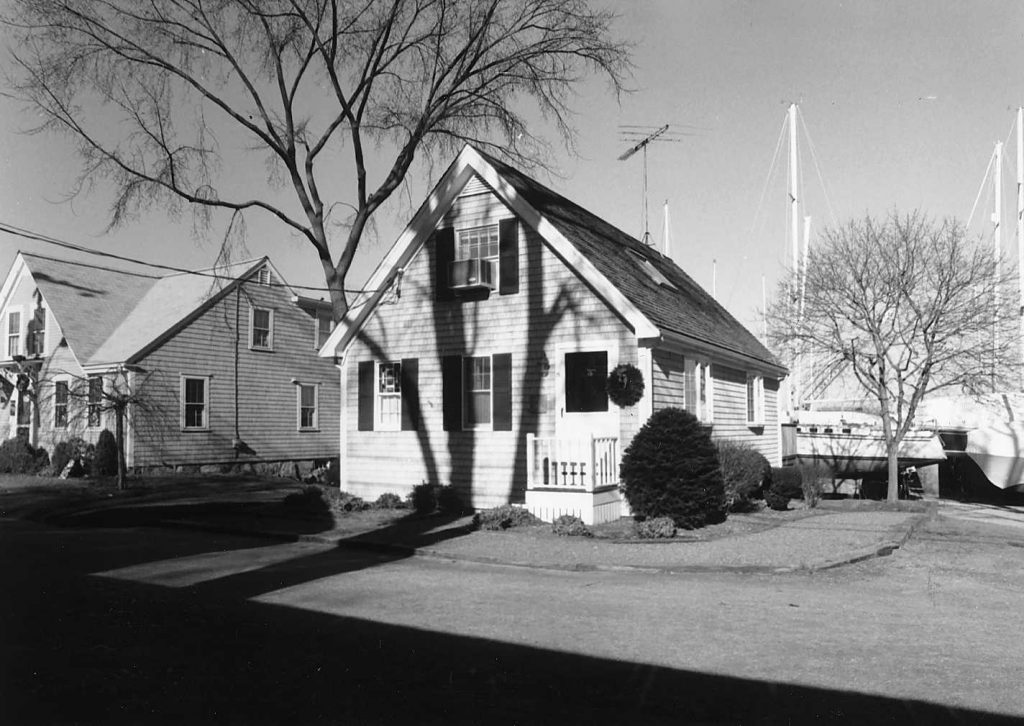
In 1998, the Sippican Historical Society commissioned an architectural survey of Marion’s historic homes and buildings. The survey was funded half by the Sippican Historical Society and half by the Massachusetts Historical Commission. Due to the limits of funding, not all of the historic buildings were surveyed, but over 100 were catalogued and photographed. The results of the survey are in digital form on the Massachusetts Historical Commission’s website and in four binders in the Sippican Historical Society’s office (and at the Marion Town Clerk’s office).

            Marion (Old Rochester) is one of the oldest towns in the United States, and the Sippican Historical Society maintains an extensive collection of documentation on its historic buildings. The Sippican Historical Society will preview one building a week so that the residents of Marion can understand more about its unique historical architecture.

            This installment features 15 Hiller Street.  The oldest structure on this thoroughfare may be the former blacksmith shop at 15 Hiller Street.  Adapted as a private residence c. 1910-1920, this wooden structure encompassed a stable as well as a blacksmith shop.  Rufus S. Briggs operated a blacksmith shop in this building as late as 1903. The current sign on this renovated structure reads “ice house,” referring to its usage during the 1930s and 1940s.

Fourteen Filings Heard in Record Time

            The agenda was nearly three and a half pages long as the Mattapoisett Conservation Commission gathered at Town Hall on October 28 to hear 14 filings. Many in attendance and a couple in the commission believed it would be a very long night indeed, with nearly every chair in the conference room filled and another half-dozen people waiting outside in the hallway for their turn. That would not be the case; everything was thoroughly reviewed and dispatched in 90 minutes.

            The filing that took the most time to review was a Notice of Intent for Nicholas Christy, 20 Howard Beach, for the construction of a single-family house on the barrier beach.

            Representing Christy was Richard Rheaume of Prime Engineering who explained that there had been a structure on a concrete pad as recently as 2012, but that the new design would impact 4,163 feet of barrier beach. He said that the new home would feature breakaway walls around the pillars that would support the elevated home and that all FEMA regulations would be followed. Rheaume said plans included bringing in beach sand to raise the elevation under the home by four feet and the planting of dune grass.

            Commission member Trevor Francis said, “I’m having a hard time seeing all that sand.”

            Chairman Mike King concurred, saying that storms would eventually flush the fill into the surrounding marshlands.

            Then there arose the question of whether or not the lot being discussed was considered a buildable lot by the Building Department.

            Laura Hartnett, 8 Island View Avenue, said that the Building Department told her that the property was not buildable. She questioned how a home would be serviced by freshwater given that a well would be needed on a barrier beach.

            Christy said he had also spoken to the Building Department before engaging in an understanding that he would purchase the property to ensure he could, in fact, build a home on the lot. He said he had also confirmed that with the Conservation Commission.

            King said to Hartnett, “I’m concerned you were given information from the Building Department that it was unbuildable.” 

            The issue of freshwater was discussed with Rheaume explaining how a freshwater system could be installed, one that would slowly elevate freshwater located below saltwater in a “sipping” fashion. 

            But King said he wanted a written opinion from the Building Department and town counsel before moving forward with the hearing.

            The hearing was continued until November 25.

            Another Notice of Intent filing generating discussion was one filed by Ronald and Cynthia Axelrod, 14 Shore Drive, for the upgrading of an existing septic system.

            Conservation Agent Elizabeth Leidhold noted in her review of the site the presence of hydraulic soils in a lot that otherwise contained 95-percent uplands, according to engineer David Davignon.

            Leidhold also commented that, in her estimation, a significant amount of invasive species had been removed from the property without overview by the commission.

            But King disagreed, saying that he found very little area of disturbance. King further supported the project because it would improve a septic system, thereby providing better protection to wetlands.

            Francis was reticent to condition the project, saying, “I haven’t had a chance to go there,” and thought wetlands flagging needed to be checked.

            King said, “The septic outweighs any movement of wetland flagging,” and said he was in favor of the project to get the new septic in place as soon as possible.

            After the vote, Francis’ ‘nay’ was overruled by three ‘ayes’.

            In other business, negative determinations of acceptability were granted to Ron Belida, 4 David Street, to repair an existing deck; Kenneth Ackerman, 4 Grove Avenue, for the construction of a new deck and enclosing of an existing deck space; Edward Van Keuren, 4 Fairhaven Road, to erect a hoop building; Elvira Sicilano, 40 Church Street, to allow Eversource to install a new gas line to an existing home; Arthur H. Alden, III, Aucoot Road, for the confirmation of a wetland delineation; and Matthew Matathia, 10 Ryan’s Way, to install a new septic system.

            A Notice of Intent filed by the Town of Mattapoisett for the construction of a new emergency egress drive from the existing police station out to Route 6 was approved.

            A Notice of Intent filed by Andrew Stackpole, Noyes Avenue, for the construction of a two-story single-family home was approved.

            Also receiving approval and order of conditions was Request for an Amended Order of Conditions filed by Monarch Trust for property located on Pine Street that granted a change in the footprint of a new home, driveway, and grading plan.

            Mark Kwatcher, 22 Fieldstone Drive, filed a Notice of Intent to extend an existing lawn within 25 feet of a bordering vegetated wetland that was represented by Jeff Youngquist of Outback Engineering.

            Liz Waring of 24 Fieldstone Drive came forward with concerns that grade changes at this location would further impact water draining onto her property. She said that drainage issues had long been problematic, especially in her backyard.

            Youngquist couldn’t answer why that would be the case, given drainage systems in the area of her home were intact. But he assured Waring that the lawn expansion would not contribute further to those issues and may, in fact, improve matters. He said he would make a site visit to Waring’s property to try and determine what might be occurring. The project for lawn expansion at 22 Fieldstone Drive was approved.

            Certificates of Compliance were issued to Tucker Aufranc, 27 Hollywoods Road, and Douglas McGee, 142 Fairhaven Road.

            The next meeting of the Mattapoisett Conservation Commission is scheduled for November 25 at 6:30 pm in the Mattapoisett Town Hall conference room.

Mattapoisett Conservation Commission

By Marilou Newell

Rochester Flu Clinic

The Rochester Senior Center and the Rochester Health Department are hosting a morning Adult Flu Clinic at the Senior Center on Tuesday, November 5from 9:00 am to 11:00 am.  Please bring your insurance card, and wear a short-sleeved shirt.

Tabor Fall Morning of Service

Tabor Academy will once again hold their “School Day Games” in conjunction with Special Olympics MA on November 6from 9:00 am to 12:00 pm with lunch following. Over 250 athletes from all over the South Coast, accompanied by their families and teachers, are joining Tabor Academy students for a day of unified sports. This is the fourth year for this event, which kicks off a year of effort by Tabor Academy student volunteers on behalf of Special Olympics MA.  

            The student Special Olympics Club helps to arrange all the logistics for this morning of service, which includes opening and closing ceremonies replete with a cheering gauntlet for the athletes to run through when they are done. In addition to the School Day Games event, the club also does a fundraising campaign culminating in their annual Polar Plunge at Silvershell Beach which will take place on December 15 this winter (all are welcome to join in support), a winter young athletes program on Sunday mornings from December through February, a basketball tournament, and completes the year’s effort with an awareness campaign to eliminate the use of the “R” word. “Our partnership with Special Olympics Massachusetts has been terrific. The students have created opportunities to engage in athletic competition with members of our local community, but better than that we’ve created meaningful relationships with so many of the athletes,” said Tim Cleary, Dean of Students and faculty advisor to the Special Olympics Club at Tabor.

            Kerry Saltonstall, Director of Communications said, “All are welcome to join the fun at the Polar Plunge on December 15at 11:15 am at Silvershell Beach in Marion. Save the date to plunge or just watch the action! The students are hoping to raise $12,000 this year in support of their friends at Special Olympics MA.”

Flag Football Under the Lights

MATTREC’s Flag Football Under the Lights Night is scheduled for Wednesday, November 13at 5:30 pm. Please arrive around 5:20 pm to get your belt on and meet your age group. Teams will have games then pizza will be served at 6:30 pm. This event date/time is contingent on the EEE curfew being lifted. At this point we are still waiting for two frosts – the Board of Health will notify us when the curfew has been lifted. We will send an email out by the 11th to let you know if we will be able to have the games. To get on the Mattapoisett Recreation email list, email: mattrec@mattapoisett.net.

ZBA Focuses On Relief, Not Neighborhood Dispute

            No one could argue that, of all the Snow’s Pond Road variance requests to ever come before the Rochester Zoning Board of Appeals, Jake Goyette’s has been the most controversial. But on October 24 with town counsel on hand, the ZBA granted Goyette his variance to build his single-family house on the unaccepted town road, despite a contentious but unrelated neighborhood dispute over access that remains unresolved.

            The board had Town Counsel Blair Bailey present to help it untangle the issues from the non-issues pertaining to Goyette’s application. Supportive neighbors and Goyette’s attorney argue that Goyette’s variance should be granted like all the other Snow’s Pond Road houses received over the years. After all, it was granted years ago, but then expired in 2012. Neighbors opposed to the variance, however, argue that until access to a right of way is restored, Goyette should be denied the variance.

            Goyette’s application, like the rest of his neighbors’ variance applications in the past, requests permission to build a house on property that lacks frontage on an accepted town road. The last time the board opened Goyette’s public hearing, ZBA members chose to continue until they could research prior Planning Board decisions where the Planning Board weighed-in on the adequacy of Snow’s Pond Road.

            Bailey said he found two such instances, one of them an Approval Not Required application from 1990 that the board granted. By signing that, Bailey said, “The Planning Board effectively weighed-in on the adequacy of the road up to the point when the split (in Snow’s Pond Road) was made.” Having said that, he continued Bailey, “I did speak with the chairman of the Planning Board and he agreed with that interpretation.”

            Although the ZBA ultimately granted Goyette the variance, it came after over an hour of discussion that often veered into the gate that Goyette’s direct abutters – his parents – erected to block all access to a contested right of way across their property.

            On behalf of Lisa Holden, a Snow’s Pond Road resident and seller of the property to Goyette, Attorney Marc Deshaies argued that granting a variance to Goyette would be “denigrating from the bylaw” that a house has to be on a public way or shown on a plan approved by the Planning Board.

            Deshaies was referring to the drive that Goyette’s parents have blocked with a gate. He said that he traced the right of way all the way back to 1811.

            Linda Rounseville, a resident of Snow’s Pond Road, opposed the variance because of the gate on Goyette’s parents’ property, as well as the three-panel stockade fence that sits in the middle of the way on Goyette’s property.

            Goyette’s mother, Bonnie Goyette, the owner of the gate blocking the access, clarified that the gate does not belong to Jake, and also pointed out that Lisa Holden, one of the principal opponents of Goyette’s variance, years ago received the very same variance Goyette now seeks. Holden’s and the others’ variances were all “granted within 10 minutes,” Bonnie Goyette said. She said 10 other houses all have zero feet of frontage on an accepted town road. “What is the difference between Jake’s application and Lisa’s application other than the name at the top of the application?”

            ZBA Chairman David Arancio said all sides have a right to speak at a public hearing, adding that he is “a process guy” and that he was also on the board when the original variance was granted.

            Lauren Francis said she performed the title examination and claimed that the contested right of way was originally named East Snow’s Pond Road and recorded in the past. She said the problem here today was the blocked access.

            “The issue that I have here is that’s not the problem here today,” said Bailey.

            The ZBA cannot decide someone’s property rights, he said, adding that although he understands the issue of the gate, “That’s not anywhere near this board… It’s not in front of this board. I sympathize and I understand, but there’s nothing this board can do to address this problem.”

            According to a letter submitted by Holden, Goyette’s parents put the gate up to block traffic because their grandchildren cross back and forth between the two Goyette family properties.

            “They have caused a detriment to their neighbors as well as a safety concern in that area,” wrote Holden. 

            Goyette’s attorney, however, rose to be one of the last to speak about the blocked access, as Arancio grew tired of the matter he now perceived as unrelated to the application. According to the attorney, Goyette was misled to believe that the original variance was still in effect when he signed the purchase and sale agreement with Holden. He said the variance was written into the deed and also the purchase and sale agreement, despite its expiration prior to the conveyance of the land.

            “That is fraudulent,” he stated. Furthermore, the gate is located on Goyette’s parents’ property, not his, and the stockade fence was put up because drivers would proceed down the right of way and then back up onto Goyette’s land to turn around once they approached the fence. The application is solely for relief of the frontage, he reminded the board, not for access rights.

            Once public comment was closed, ZBA member Richard Cutler read a statement he prepared on how he had voted for that original variance but did not support this latest application.

            “At the time there was no discussion about the rights of others to pass,” said Cutler. “Now [there] appears to be a controversy, indicating to me that there is some detriment to the public good.”

            “I don’t see that,” said ZBA member Don Spirlet. “To me, the detriment is the fence, the gate that they’re talking about,” which is on another’s property. “I have no problem issuing this [variance].”

            ZBA member Jeffrey Costa agreed, and chastised Goyette’s opposition, saying, “Figure stuff out, neighborhood, and let the poor kid build his house.”

            ZBA member Davis Sullivan agreed with Cutler. When he voted for the first variance, there was no detriment to the public, he said. “But at this point, there is.”

            “Just to be clear,” Bailey interjected, “the detriment to the public good has to be tied to the relief he’s asking for,” which is a lack of frontage.

            “Still,” said Cutler, “there’s a lot more controversy associated with this piece of property than we’ve ever had on any other piece of property over on Snow’s Pond Road.”

            “I don’t disagree,” said Bailey, “but what I’m saying is the question before the board is, does granting this relief do a detriment to the public good – that’s the question, and the relief is the frontage on Snow’s Pond Road.

            “I just don’t see how it… is detriment to the public good,” said Arancio. “I have not heard one person talk about this application and him building a house in a negative manner.”

            The vote was 4-1 with only Cutler opposing.

            Also during the meeting, the board granted two variances to Mary and Michael Fitzgerald, Hiller Road, one to allow an accessory structure to exceed 1,000 square feet, and one to allow the accessory structure to be located in the front of the property. The couple also received a Special Permit to allow the structure to exceed the height of the principal structure.

            The next meeting of the Rochester Zoning Board of Appeals is scheduled for November 14 at 7:15 pm at the Rochester Town Hall.

Rochester Zoning Board of Appeals

By Jean Perry