From the Files of the Rochester Historical Society

With all the stone walls in our area, I wonder how many people have asked themselves one or two questions concerning them. The first and easiest is the why. Our New England soil is known for being rocky and Rochester’s soil was no different and presented the early settlers with not just how to remove the rocks, but what to do with them.

            Since farm animals would be grazing in fields, there was a need to provide a barrier to their wandering off. A stone wall was the perfect solution. In the case of larger animals, like the ones imprisoned in a town pound, such as the one on Snipatuit Road, the pound walls would simply have been built higher.

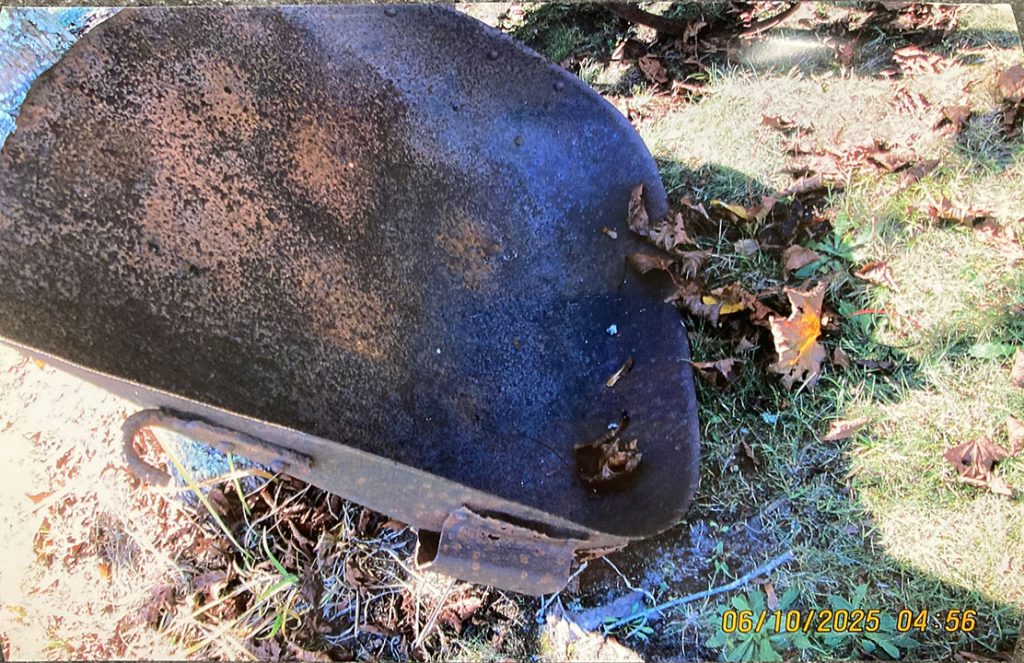
            It’s questions about how a farmer with his horse could move the large boulders that we see in some of our area walls that are answered by the “rock scoop” featured in our current exhibit. If you look closely at the picture, you may be able to see the hooks on the sides. There are also spaces for wooden handles. the farmer would hitch the scoop to his horse with the sharp edge facing front.

            When he and his horse approached a boulder, the sharp edge would be placed under the rock and a signal to his horse would have the horse move forward scooping it into the scoop. Then it would be dragged to where the wall was being built. This very old and rusty rock scoop was found in a stone wall at the back of a farm property.

By Connie Eshbach
Garage Hearing Continued Again

The Rochester Zoning Board of Appeals’ short October 9 meeting continued again its hearing into the variance application for a plan to build a three-car garage in excess of the permitted 1,000 square feet at 447 Neck Road.

            At the board’s September 25 meeting, applicants Chris and Molly Fournier filed the first continuance request for their hearing. The continuance request on October 9 clarified why. Chair Donald Spirlet reported the Fourniers have announced they’ve received a civil engineer’s site plan for their proposal. But that plan is “incorrect and missing pieces required by the town.” He added, “the wheels of engineering move slowly.”

            Spirlet agreed with that sentiment. “I’ll go along with that,” he said as he motioned to continue the hearing to October 23. Board administrator Andreia Lacerda reported the case will be heard on that date.

            In other business, Lacerda reported a new Zoning Board associate member, Keith Riquinha, has been appointed by the Select Board. Riquinha did not, however, attend the October 9 meeting. Town Clerk Marjorie Barrows has yet to officially swear him in.

            The next meeting of the Rochester Zoning Board of Appeals will be held on Thursday, October 23 at 7:00 pm at Town Hall, 1 Constitution Way.

Rochester Zoning Board of Appeals

By Michael J. DeCicco

New Exhibit Draws Nature Close

As I’ve often said, we are so very fortunate to have in our mists an art center that enriches our lives with theater, song and visual arts, from the one and only Marion Art Center.

            The Nor’Easta couldn’t stop us from traveling down Route 6 to take in the newest art installation that opened on October 13, featuring the creative pursuits of Nanci Worthington and Margaret Bruzelius.

            Both artists draw inspiration from the natural world and have presented visitors with examples of just how magnificent imagination and skill can be.

            Worthington has spent decades drawing butterflies as well as flora and fauna that surrounds her Berkshire home. She is a practitioner of nature journaling, a process by which one becomes an intentional observer of the natural world, from the minuscule seeds spread by animals to the towering white pines and oaks that are shade canopies, from the fungi to the insects and birds. Everything captured by the eye becomes a page in such journals.

            As an artist who has provided nature illustrations for Audubon publications, Worthington butterflies, now on exhibit, also demonstrate her amazing ability to capture not only the spirit of animals but bring them realistically to life, animals that could easily lift themselves from the page.

            I asked how she achieved such velvety quality to the butterfly wings created from pencil. She explained that many of the butterflies were intended to be painted in watercolor. Technical aspects of managing watercolors changed her mission to employing color pencils, applied meticulously, layer upon layer, until a near-3D quality emerges.

            After taking in Worthington’s art, for you really must, you may find yourself nature journaling in your own backyard.

            Margaret Bruzelius’ works employ a variety of skills. First and foremost, the inspiration and imagination needed to take woolen materials and through a labor-intensive process turn them into felt.

            Bruzelius said that by taking old woolen articles of clothing she “up-cycles” them. She cuts the soon-to-be-woven items into strips, washes and prepares the textiles for the next phase of their rebirth, as a hooked rug, or wall-hanging. Her use of one of nature’s most hard-working products, wool, connects this artist to a centuries old craft.

            Bruzelius previously worked in the fashion business as a designer for handknits for magazines such as Vogue Knitting and McCall’s Craft and Needlework.

            After shifting her career direction, Bruzelius earned a PhD in comparative literature from Yale University and proceeded to teach in literature programs at Harvard University and Smith College. For the last several years she has dedicated her time to the art of hooking.

            She claims to be retired, but methinks that is just another way of letting the world know she’s focusing on what brings her joy, taking a piece of woven fabric and turning it into a textural work of art.

            On Saturday, November 1, between 11:00 am and 1:00 pm, Worthington and Bruzelius will hold an Artist’s Presentation at the art center.

Marion Art Center

By Marilou Newell

Salty’s Silvery Moon Soiree

            Join us on Saturday October 25 from 5:30 pm to 7:30 pm for an evening of fun, family-friendly, fall activities. The soiree takes place at Dunseith Gardens park on the corner of Route 6 and North Street in Mattapoisett (aka Salty the Seahorse Park). We will have music by Jeff Dunn, storytelling by Karen Chace, a toasty bonfire, and plenty of s’mores making materials. Our latest Storywalk will also be posted at the park: “Owl Moon” by Jane Yolen

            Please park in the village and walk, do not drive, to the soiree; there will not be parking available at Dunseith. Bring a flashlight with you to find your way back to your car at the end of the night.

            You won’t want to miss this quintessential autumn evening. All are welcome.

Bulbs: Cinderellas of The Garden

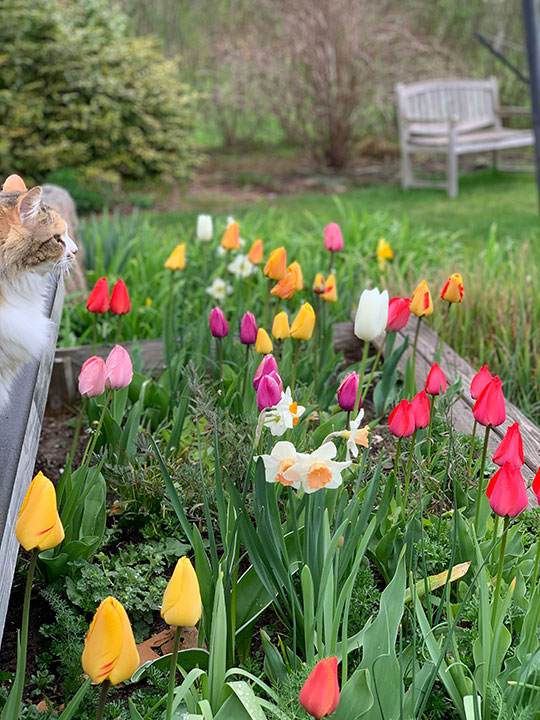
            Doff the crocs and don the wellies, I like to say. It’s nearly time to plant spring blooming bulbs. Ever the gardener, there’s no end to these labors. Even when the cold weather ensnares us, we can plan ahead, make revisions, troubleshoot, and dream.

            One thing you could find me doing over this soggy weekend was to be ogling the huge variety of bulbs from my go-to catalog, “Beauty from Bulbs” by John Scheepers. Their motto: “Never underestimate the power of planting” is one I can definitely relate to. The most enticing varieties of all kinds of bulbs revived my imaginative powers as to what parts of my established garden could use a little pick me up.

            The thing I like most about bulbs is that you sort of forget that you installed them and when they appear, it’s like discovering a hidden gem. You seal them into the ground and forget about them for six months. It’s fascinating how you literally do not see them until they bloom because you planted them as a plain bulb with the character of an onion. It’s pretty amazing how a plain thing can transform into absolute wonder. Let’s dub them the “Cinderellas of the garden.”

            This time of the year is when I like to order up my bulbs. Perhaps you’re thinking that is late, but I stubbornly hold off installing them so as to stave off rustlers – namely squirrels. I’ve had my share of past bulb burglaries, and my tactic is to simply wait until just before the ground hardens over. This ideology harkens back to when my daughter Olivia was born one late November day, and I had not yet planted my tulip bulbs. A week after the birth and following Thanksgiving, I finally got them in the ground and voila – they emerged perfectly in spring. “No bulbs for you,” I’d hinted at the thieving squirrels who by then had secured their food storage.

            I used to use a number of sources for bulbs, but I’ve narrowed it down to one company which is John Scheepers in Bantam, Connecticut. I love their descriptions and color photos and vast choices, added to the fact that I’ve had wonderful results. I sometimes purchase them at a local greenhouse as well when the desirable bulb appears.

            I was thinking of a spread of bulbs in my woodland garden that would, if timed right, bloom alongside wildflowers that grow in profusion – epimedium and bluebells and lily of the valley. I always try to think through how I’m going to map it out. Sometimes it works, sometimes it does not. A few years ago, I had the idea of installing leucojum (a diminutive bulb with a white bell flower) in a bed under my Elizabeth magnolia. But somehow, they look lost there; I think the addition of a companion might help. I will keep you posted on my upcoming plantings (I’m still reviewing the selections as well as where to plant what).

            For now, I have some basic advice for those of you who are new to gardening or need re-briefing. Here are 12 tips – on planting bulbs – that I hope will result in what you envision.

            1. Think three-dimensionally. Before placing them in the ground, sketch it out as it will look from a bird’s-eye view and/or ground view.

            2. With so many ways to use bulbs for a big impact, think of how you want to stage them. Will it be part of a formal bed or a naturalized effect in the border? Hyacinths and tulips are classic bedding bulbs for their strong sculptural form. Plant in blocks of color for a formal look.

            3. In mixed herbaceous and shrub borders, bulbs provide splashes of bright color, adding vitality to the permanent plantings. Grow some through low groundcover plants so that their blooms appear to float above the mat of foliage. For cottage borders, use species bulbs, which will look less ornate.

            4. Bulbs can add a fresh array of color beginning in late winter until the early summer. Try to envision the various stages of your garden. While the herbaceous perennials and deciduous plants are slowly coming back to life, think about masking the front of the border with colorful bulbs: small daffodils, snowdrops, reticulata irises, or clumps of winter aconites.

            5. Know your bulb’s soil and light requirements. Most bulbs will rot if they are in constantly damp soil or shade. Camassia and leucojum are exceptions as are certain daffodil species that will thrive in moist, partially shaded environments.

            6. Use a painterly eye when siting bulbs, considering size, shape and color, as well as time of bloom. Delicate bell-like flowers of fritillaria may show up better in small-scale plantings. Mixing white snowdrops amid a sea of crocuses will help accentuate the deeper color. Dwarf bulbs look attractive when planted in pockets of rock and away from direct contact with ground in an alpine garden – less mud winds up on the flower, and the petite size is more proportionate than a taller bulb species.

            7. Partner bulbs with trees that have lighter deciduous canopies. Ideal bulbs for this setting include anemones, crocuses, daffodils or scilla, according to The American Horticultural Society. For fall carpeting try hardy fall flowering cyclamen. Complement the tree by underplanting with flowers that reflect its habit or color. Goblet-shaped crocuses pair well with a magnolia’s floral form, as a pendulous flower will mimic a weeping tree.

            8. Daffodils are among the easiest bulbs to grow. If you live in deer territory, these are among the flowers deer don’t fancy. Snowdrops and leucojum are also critter proof, as they are poisonous. Also, many species will naturalize over time, giving you a return on your initial investment. “Daffs” will grow in almost any soil type, but prefer well-drained, moist, slightly alkaline conditions. They thrive in sun or lightly dappled shade. Daffodils come in a wide variety of shapes and forms and in shades ranging from the classic golden yellow to white, pink and orange, some with splashes of red or green.

            9. When digging a bed, bore a couple of inches deeper than the required depth for your bulb. Use a 2-inch layer of compost and humps mix to fill the extra space, creating a cozy environment for the bulbs to root in.

            10. Dust some fertilizer in the hole – one high in phosphorus, calcium and magnesium or bone meal. It’s not required, since most bulbs have food stored in them for the first season, but it will foster future growth and help them root faster. Alternately, when filling the hole, apply 9-9-6 NPK slow-release fertilizer such as Bulb Booster on top and water. You can add more in the spring when you see green growth emerging.

            11. Best not to plant bulbs in containers now but rather lift them from the ground later when they are about to bloom and transplant them into pots or window boxes. Scheepers warns against planting bulbs in outdoor containers: “Flower bulbs planted in outdoor containers will not thrive and flower… Bulbs in outdoor containers do not experience a true winter, suffering from wild temperature extremes that cause root-system destruction, damaged flower development and failure to thrive.”

            12. When your bulbs do finally bloom, take a photo to map their place. This will better help you chart where to dig future installations. If you don’t have photos to rely on, use a slender forked trowel to dig and feel your way through as when you go quahogging.

            “Live in each season as it passes; breathe the air, drink the drink, taste the fruit, and resign yourself to the influence of the earth.” – Henry David Thoreau, Walden

The Coastal Gardener

By Laura McLean

Runners Sweep at D-R

Old Rochester’s boys and girls cross country teams ran at Dighton-Rehoboth on October 7. The boys won 24-33, and the girls won 23-38. Connor Villafranca was named the runner of the meet for the boys, as he ran the 5k race in 19:51. Genevieve Herbert ran a 22:18, and was named the runner of the meet for the girls. Their next meet is scheduled on Thursday, October 16, against Somerset Berkley.

Field Hockey

            The Bulldogs defeat Apponequet 2-0 on October 7. Goals were scored by Mariana DeMelo and Addyson Spencer. Goalkeeper Reilly Patraiko had 4 saves. Sitting at 8-4, Old Rochester was scheduled to host New Bedford High School (3-8-1) on Tuesday.

Football

            Old Rochester played Somerset Berkley on October 10 and won 35-12. Brody Hiles was named the player of the game with 18 tackles. The Bulldogs will look to build on the win on Friday, October 17, at Greater New Bedford Voc-Tech (0-5).

Sports Roundup

By Aiden Comorosky

Mattapoisett Friends Meeting Yard Sale

Mattapoisett Friends Meeting will hold a Yard Sale Part II this Saturday, October 18 from 8:00 am to 12:00 pm. Items are priced to sell. Baked goods, coffee, and tea will be available as well. The address is 103 Marion Rd., (Route 6) in Mattapoisett.

Lissa “Lisa” A. (Sylvia) LaBelle

Lissa “Lisa” A. (Sylvia) LaBelle, aged 76 passed away on October 13, 2025 at the Royal Skilled Nursing Facility in Fairhaven, MA from Alzheimer’s. She was the daughter of the late Grace Hammond and Ernest Sylvia. Predeceased by her sister Donna Sylvia of Palm Harbor FL. She is survived by her sister Patricia “Patty” Dearth and her husband Lee of Palm Harbor FL. She leaves behind three children Billy “Shawn” LaBelle of Rochester MA, Daniel “Danny” LaBelle and his wife Maria of Mattapoisett MA, daughter Deborah “Debbie” Charette of Wareham MA. She was aunt to Samanth “Sam” Freeland of Oldsmar FL and Andrea “Andy” Davison of Tampa FL. Grandmother to Amber LaBelle, Christoper “Chris” LaBelle, and Ava Hardy.

Lisa’s early years were spent in Clearwater, FL, where she graduated from Dunedin High School and attended beauty school. She later moved to Southeastern Massachusetts and worked in retail. Lisa enjoyed dancing, swimming, Disney movies, trips to the zoo, and family holidays. She was happiest when playing on the floor with her grandchildren during their younger years.

Lisa was a gentle soul who always held a deep longing to return to her childhood hometown. At a future date, private services will be held, and her ashes will be returned to her hometown to be spread in the gulf.

Her children extend their heartfelt gratitude to the staff at Nemasket Healthcare, The Royal Healthcare of Fairhaven and Trinity Hospice Services for their dedication, compassion, and support throughout her final years.

Her services will be private.  Arrangements are with the Saunders-Dwyer Mattapoisett Home for Funerals, 50 County Rd. (Rt. 6), Mattapoisett. For online guestbook, visit www.saundersdwyer.com.

William “Doc” J. Doherty

William “Doc” J. Doherty passed away on Monday, October 6, 2025. He was 84 years old. Doc was born in Brockton, MA, on August 21, 1941, and was the cherished son of the late William J. and Claire (Burke) Doherty. He was a graduate of both Portsmouth (Priory) Abbey in Portsmouth, RI, and Georgetown University Business School, Class of 1964. Doc began his career as a commercial real estate broker with Charles Noyes & Co. in New York City. After the family relocated to Marion, MA, he spent several years with Codman & Co. in Boston before opening his own commercial real estate business. Doc enjoyed golf, was an avid reader, and was well known for some memorable one-liners. He especially got a kick out of his grandchildren, always telling them to “shake the envelope” before opening their birthday cards. Doc was predeceased by his devoted wife of 55 years, Mary Weldon Doherty, and his sister, Paula Lehan, of Brockton, MA. He is survived by his sons, William J. Doherty, Jr. of Fairhaven, MA, and Joseph Burke Doherty (Jaime) of Dedham, MA, and his grandchildren Will, Jake, and Madison Doherty. He also leaves behind his nieces, nephews, and many loving cousins. Calling hours will be held on Saturday, October 18th, from 11 a.m. – 1 p.m., at Saunders-Dwyer Mattapoisett Home for Funerals at 50 County Rd., Mattapoisett, MA. A private burial will immediately follow at the Evergreen Cemetery in Marion, MA. In lieu of flowers, donations may be made to Manomet Conservation or Gnome School of Surf.  For directions and guestbook, visit www.saundersdwyer.com.

Dora Kate (Vollgraff) Doubrava

Dora Kate (Vollgraff) Doubrava, 96 of Mattapoisett, MA, died peacefully at her home on August 25, 2025. A joint memorial service for Dora Kate and her late husband Joseph Doubrava will be held on Sunday, November 2, 2025 from 3:00 to 5:00pm at the Saunders-Dwyer Mattapoisett Home for Funerals at 50 County Road, Mattapoisett, MA 02739. For directions and guestbook, visit www.saundersdwyer.com.