Space Club Blasts Off!

Last Monday, Sippican School students participating in the afterschool space club, ‘Into Orbit’, had the opportunity to launch homemade bottle rockets thanks to engineers from Lockheed Martin.

            ‘Into Orbit’ Space Club is currently running for the second year in a row. Students in grades 5 and 6 spend 12 weeks learning about robotics and coding, using First Lego League curriculum and EV3 robots, as well as participating in space-themed STEM challenges. This club was started thanks to the generosity of Lockheed Martin, and is run by Lockheed Martin employee and Tri-STEM non-profit founder Allie Goodman, and Sippican School teachers Chelsey Lawrence (Enrichment) and Heather Sullivan (grade 4). Additionally, many Lockheed Martin employees volunteer their time and talents for the hour-and-a-half space club each week to coach the students including Emma Miller (Operations Engineer), Karissa Magnacca (Operations Engineer), Tony Yu (Mechanical Engineer), Charles Christian (Electrical Engineer), and long-time volunteer Caty Duncan (Electrical Engineer).

            The bottle rocket launch was a special opportunity for students thanks to Nate Fowler, Mechanical Engineer at Lockheed Martin. As part of this multi-week project, he taught students how bottle rockets work. Students got to design their own fins and nosecones, and pressurize them using bike pumps. The rockets were launched on homemade launch pads designed by the engineer.
Condo Association Must Produce Engineering Study

            On January 6, members of the Villages at Mattapoisett condominium association Board of Directors once again came before the Planning Board to request the return of a $50,000 surety the town holds. This is part of their Special Permit granted a number of years ago and listed as permit condition number 11.

            In the early days of the association and as part of the permitting process, the developer had been required to provide the town with a $50,000 cash surety against any damages that might occur from what was, at the time, a complex stormwater drainage system. The developer never followed through, leaving the condo owners with no choice but to ante-up the cash themselves. That was in 2004; now, the current board seeks the return of the money.

            Association Chairman Steven Pickup on behalf of the association had previously come before the Planning Board seeking the money’s return. At that time, the board members requested proof that drainage system maintenance and reporting as required by permits had taken place. On this night, Pickup was unable to do so.

            Pickup said that he had not found any evidence that reporting on the condition of the drainage system had taken place, but continued to assure the board members that annual maintenance had been completed. He said that a landscape contractor cut down weeds and other vegetation in a wet drainage pond and that there had been no evidence that the system, which also includes a four-bay detention system and associated trenches, was not functioning properly.

            Planning Board member Nathan Ketchell, a professional engineer, explained why that was insufficient.

            “So the infiltration trenches have to be inspected twice a year,” Ketchell said, referring to the written operation and maintenance agreement held with the town. Pickup said that the contractor did perform that service, but that no reports had been produced. “So, you don’t have a qualified drainage person checking on things?” Ketchell asked. Pickup responded, “We’ve never had a problem.”

            Neighbors from the adjacent Pepper Bush Lane area explained that for years their street and yards had been flooded by water from both the condominium property and that of a funeral home also nearby.

            Caty Fuerman, 7 Pepper Bush Lane, provided photographs that seemed to support her contention that stormwater was, in fact, coming from a defective drainage system. Ketchell pointed out that in one photo it looks like a bowl-shaped catch basin was filled with sediment. Looking at one of Fuerman’s photographs Ketchell pointed out, “That used to be a big bowl, but it’s building up with sediment.”

            Pickup became somewhat frustrated, saying, “We’re getting off the point… The money is for emergency repairs, not maintenance.” 

            But the point that maintenance was critical in the overall plan to keep the system from creating an emergency was not lost on the board members.

            Planning Board member Janice Robbins said, “My concern is that you are not aware of the operation and maintenance provision of your permit.”

            “I didn’t know, but maintenance has been done,” Pickup confirmed.

            “But it doesn’t sound like anyone is paying attention to these reports,” Robbins countered. She added, “I don’t have any problem giving the money back if the condo faithfully does the reporting… I’d like some assurance of inspections.”

            After more than an hour of discussion, the board voted unanimously that the condominium association would engage the services of a qualified engineer to review the current state of the drainage system, produce a report, and solicit the services of a qualified system contractor that will also provide associated reports.

            The hearing was continued until May 4 at 7:00 pm.

            In other business, Chairman Tom Tucker asked that the board members begin studying solar bylaws from surrounding towns with the goal of writing a new bylaw for Mattapoisett. He also said that the board had received two letters of interest from residents for the Master Plan Committee: one adult and one high school student. Tucker was encouraged that a student was interested in participating in the process and reiterated that he believed the committee should be comprised of community members versus members of boards and committees in the town. He expressed his concern that “special interests” might impact a final plan.

            “We need the feedback from the people who live here and pay taxes,” said Tucker.

            Anyone interested in being considered for the Master Plan Committee can contact Mary Crain, Planning Board administrator, at 508-758-4100 ext. 215, or by email at planning@mattapoisett.net.

            The next meeting of the Mattapoisett Planning Board is scheduled for February 10 at 7:00 pm in the Town Hall conference room.

Mattapoisett Planning Board

By Marilou Newell

Tri-Town to Receive Extra Road Work Funding

The Baker-Polito Administration is announcing that $20 million in additional funding will be provided to cities and towns in Fiscal Year 2020 (FY20) for road construction and transportation improvement projects. This funding was included in a supplemental budget signed by Governor Charlie Baker on Friday, December 13, bringing total funding for FY20 awarded through the Chapter 90 formula to $220 million. With this additional $20 million, the total funding to date provided through the Chapter 90 program during the Baker-Polito Administration is now $1.36 billion.

            “This funding represents our continued commitment to supporting communities as they address the maintenance and modernization of local infrastructure, which are a critical part of the Commonwealth’s transportation network,” said Governor Charlie Baker. “We are pleased to provide this additional transportation funding for local projects in cities and towns across the Commonwealth.”

            “Municipal officials count on Chapter 90 funding each year for essential projects, and we appreciate the Legislature adopting our proposal for additional funding in the supplemental budget,” said Lt. Governor Karyn Polito. “This support will allow community leaders to take action immediately so that projects are ‘shovel ready’ for the spring construction season.”

            “The Commonwealth is focused on improving the core transportation infrastructure in the state by advocating for Chapter 90 funding and with initiatives such as the Complete Streets Funding Program. The Chapter 90 funding program is one of several examples of the Administration working with municipal leaders to help meet capital needs that the communities identify as critical,” said Transportation Secretary and CEO Stephanie Pollack. “The Administration realizes local leaders often know best what capital improvements are needed at the local level.”

            Chapter 90 transportation funds support all 351 cities and towns throughout the Commonwealth. Funding for each municipality is predetermined by a formula that includes factors such as population, road miles, and employment.

            Marion will receive an extra $17,097 for a grand total of $188,072. Mattapoisett is slated for an extra $23,029 for a total of 253,319. Rochester is getting an additional $30,126 for a total of $332,378.

Elizabeth Taber Library Winter Children’s Programs

Winter Story Time for children between the ages of three and five began January 6 and runs through February 24. Children are invited to enjoy stories, finger-plays and crafts Monday mornings at 10:30 am.

            Winter Lapsit, for children birth through 23 months and their caregivers, began January 7 and runs through February 25. Each Tuesday morning program begins at 10:30 am and includes a 20-minute “story time” followed by 20 minutes of socializing. One child per “lap”, please!  

            Winter Tales for Twos, for children 24-36 months, began January 8 and runs through February 26. Children must be 2 years old by January 1, 2020 to attend and must be accompanied by enthusiastic adult companions. The half-hour of stories, finger-plays and crafts take place at 10:30 am on Wednesday mornings.

            Pre-registration is required for these programs; please sign up by stopping by the library, calling (508) 748-1252 or by e-mailing Ms. Grey, Children’s Librarian, at rgrey@sailsinc.org.

Ronald P. Noonan

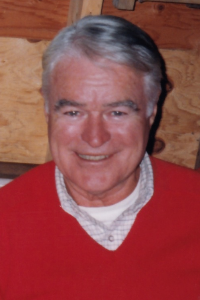
Ronald P. Noonan, 88, of Marion passed away Wednesday, January 8, 2020 with his family by his side after a brief period of declining health.

            Born in Somerville, MA, son of the late Arthur and Edna (Roma) Noonan, and predeceased by his brother Barry of Winsor, CT. Ron lived in Weston, MA for most of his life and later settled in Marion, MA, after his retirement.

            Ron was a graduate of Harvard University with a degree in physics. Ron played 4 yrs. as a defensive back for the Football team, and boxed his freshman year. Following his graduation, he enlisted in the U.S. Navy during the Korean War, and attended Officer Candidate School in Washington, D.C. He later became the CIC Officer of the U.S. Naval Destroyer Amin.

            Following his Naval service, Ron was employed by Honeywell, ECRM, and DEC. He later joined Francis Lee, a college friend, and assisted with the establishment of Lexicon Corp., eventually becoming the CEO. Under Ron’s tutelage, Lexicon became revolutionary in the music and movie industry with major advancements in reverb sound analytics which eventually won them an Emmy Award in 1985.

            Ron enjoyed skiing, and more so racing, and cruising his beloved Wildflower throughout New England and the Caribbean. He mostly enjoyed sharing his knowledge of sailing with anyone that had a desire to learn. He was the winner of many races including a 2-time overall winner of the Marion/Bermuda race, 5-time Rolex St. Thomas Regatta winner, multi-time Buzzards Bay Regatta winner, PHRF New England Champion, and multiple Figawi class winner. Ron was recognized for his consistent success in sailboat racing both regionally and internationally. Sailing was such a metaphor of his life. There’s competition, adventure, at sea, and more importantly social enrichment. His intellectual discipline at the helm of his beloved Wildflower mirrored his business skills, and accomplishments. His leadership involved a vast knowledge guided by experience, sound judgment, and strong communication skills. He had it all in spades.

            He had been an active member of his beloved Beverly Yacht Club since 1978 and member of The Harvard Club.

            Ron is survived by his wife, Ina Anderson; his son Richard Noonan and his wife Dorthe of Gloucester; his daughter Michelle Pope and her husband Jonathan of Mattapoisett; three grandchildren, Jonathan, Nancy, and Madeline Pope; his first wife, Michaline Flaherty of Annisquam, MA; his sister Carol Driscoll of Arlington, MA; and many nieces and nephews.

            His Funeral Mass will be held Saturday, January 25, 2020 at 11 am at St. Rita’s Church, 115 Front St., Marion, with everyone meeting directly after at the Beverly Yacht Club, 99 Water St., Marion.

            Visiting hours and burial are omitted. In lieu of flowers, donations in Ron’s memory may be made to Community Boating Center, 1641 Padanaram Ave., New Bedford, MA 02740. For online guestbook, visit www.saundersdwyer.com.


Shirley G. (Blasenak) Cronan

Shirley G. (Blasenak) Cronan, 81 of North Easton died January 9, 2020 peacefully at home.

            She was the wife of the late Paul H. Cronan.

            Born in Norwood, MA the daughter of the late Werner H. and Lillian M. (Garland) Blasenak, she lived in Walpole and Mattapoisett most of her life before moving to North Easton.

            She was a communicant of Holy Cross Church in South Easton.

            She enjoyed knitting, gardening and crafts.

            Survivors include her 2 sons, Michael Cronan of Bellgrade, MT and Daniel Cronan of Marion; and several cousins.

            Her Graveside Service will be held on Saturday, January 18th at 10 am at St. Anthony’s Cemetery in Mattapoisett. Visiting hours are omitted. Arrangements are with the Saunders-Dwyer Mattapoisett Home for Funerals, 50 County Rd., Route 6, Mattapoisett. For online guestbook, please visit www.saundersdwyer.com.

Board Considers Affordable Housing Bylaw Update

Looking at a possible uptick in affordable housing in Marion, Planning Board members are now examining the future of the town’s affordable housing bylaw.

            The current bylaw requires developers to add affordable housing into their plans when building in Marion. While the bylaw has been effective in bringing affordable housing to Marion, some citizens and board members are concerned that continuing to enforce the bylaw after Marion meets its minimum affordable housing requirements will cost the town valuable revenue.

            “Putting in affordable housing instead of regular-rate housing when we’re likely to go above the required amount of affordable housing and we don’t have a lot of land left – that worries me,” said resident Sherman Briggs during the January 6 Marion Planning Board meeting. “I don’t want this town to miss out on that revenue.”

            The Commonwealth of Massachusetts has mandated that at least 10 percent of all homes in each town within the Commonwealth be classified as “affordable.” Marion’s current affordable housing rate sits at 7.5 percent. However, a 40B housing development on Wareham Road has been proposed; the planned development includes 96 affordable housing units. Adding the proposed units would bring the total affordable housing percentage in Marion to 12.5 percent, if the development is approved and constructed.

            “At that point, it would take 470 additional regular-rate houses being constructed to push us back below 10 percent affordable housing,” said Planning Board member Chris Collings. “Is there even that much space left in Marion? Would we even need that bylaw any more if this development goes through?”

            Planning Board Chairman Will Saltonstall asked Marion Town Planner Gil Hilario if he had looked into what other towns had done with their bylaws after reaching the 10 percent requirement, and what Hilario thought might be the right course for Marion.

            “I’ve found that many of the towns are using the affordable housing bylaw as a ‘density bonus’,” Hilario explained. “The towns lower their maximum density of houses per acre and offer a waiver where developers can exceed that maximum if the units built are classed as affordable.”

            The problem in Marion, he said, is that Marion’s maximum density per acre (12 units) is so high that developers do not need to take advantage of a density bonus. Hilario suggested that the affordable housing bylaw be retained even if the town meets the 10 percent requirement, but that it should no longer be required.

            “This is my own personal opinion,” Hilario clarified. “But I think we should instead treat affordable housing as a density bonus. If we reach 10 percent affordable housing, we could no longer require that developers build affordable housing. Instead, we could lower the maximum density per acre in town and allow developers to exceed that maximum if they want to add affordable units.”

            Saltonstall noted that the discussion is still in its very earliest stages, and there is far more work to be done. He added that members of the Planning Board are still working to have a joint meeting with members of the Affordable Housing Trust, as well as other town government officials, to make sure everyone is on the same page regarding affordable housing in town.

            The next meeting of the Marion Planning Board will be on January 21, at 5:00 pm at the Marion Town House.

Marion Planning Board

By Andrea Ray

Local MRC Desperate for Citizen Volunteers

            Climate change-driven storms, floods, natural disasters, disease, terrorism, bioterrorism… Indeed, we are living during times of uncertainty. When disaster strikes, two things are certain: people will need help, and people will want to help.

            When we think of emergency response to disaster, we often think of some Hollywood depiction of rescuers pulling people to safety, medical professionals tending to the wounded, and police keeping order during potential chaos while we, the masses of civilians, run for our lives and look to those emergency responders for help. On the news, we see ubiquitous outside groups arrive seemingly from out of nowhere to hand out food and water in an orderly fashion with disaster victims finding shelter and warmth on the cots and in blankets made available to them. However, whether the magnitude of the emergency ranges in degree from winter storm with power outages to nuclear fallout, an organized and effective response will depend on the number of ordinary citizens that pledge to plant their boots on the ground when the you-know-what hits the proverbial fan.

            After September 11, 2001, President George W. Bush in his 2002 State of the Union Address asked all Americans to serve as volunteers in support of the country. Soon after, the Medical Response Corps (MRC) was established.

            Local MRC units operate at the community level with the purpose of recruiting and organizing citizen volunteers for reserve in the event of a disaster or emergency. Both medical and non-medical volunteers are essential, says Marion Public Health Nurse Kathleen Downey, one of the contact people for the Marion-Rochester unit of the Medical Reserve Corps.

            “[The MRC] really is a community that’s taking care of its own community, so we need a wide variety of skills,” said Downey. “We need people who know logistics, people to direct traffic, greeters – we need people who can just treat other human beings with respect and help calm a difficult situation.”

            When emergency shelters open up, the operation will need volunteers to provide child care, said Downey, “Because volunteers won’t come if they have to leave their children at home.”

            There is a role for anyone in an emergency. You don’t have to be a professional in any one field; however, there is a need for professionals in certain critical areas. The MRC needs practicing and retired health professionals like doctors, nurses, pharmacists, dentists, nursing assistants, veterinarians, and therapists of all kinds. Even students of medicine, nursing, and public health are essential to the functioning of the MRC. They also need health educators, epidemiologists, and other public health professionals.

            There are other areas needing volunteers, too, the keep records, help with crowd control…

            “It’s just a wide variety of needs,” said Downey.

            The MRC welcomes the help of chaplains, interpreters, administrative assistants, and others who can help in the many other areas like assisting in recruiting and training, or participating in disaster drills in the community. Everyone has a role to play.

            Volunteering is, of course, an act of generosity and selflessness, but there are indeed a number of personal benefits to signing up as an MRC volunteer. Say there is an outbreak of a deadly disease making its way across the region. As an MRC volunteer, you and your immediate family would be the first to receive a vaccine if there is one available. If someone in your family is injured, they will receive immediate attention. Furthermore, volunteers also receive opportunities for free training in CPR, basic first aid, incident command, risk communication, and some additional emergency preparedness courses are also available.

            Volunteers are matched to specific tasks according to their ability or skill and given an identification badge that will clearly ID them as a volunteer. When an emergency does eventually strike, there is a plan already in place and ready for execution. Everyone knows where they need to be and what they need to do.

            “If you can just think of a talent or a gift that you have that the community could benefit from, it’s highly likely that we need it,” said Downey. “Everybody’s got gifts to share.”

            Those in Marion interested in hearing more about volunteering on the Marion-Rochester Medical Reserve Corps may contact Public Health Nurse Kathleen Downey at 508-748-3530 or kdowney@marionma.gov. In Rochester, contact Marion-Rochester Regional Health Director Karen Walega at 508-763-5421 or kwalega@marionma.gov.

By Jean Perry

Mariner Youth Soccer Scholarships

The Mariner Youth Soccer Association, which has provided soccer instruction, skills clinics and both recreational and competitive soccer opportunities to children 4-18 in the communities of Fairhaven, Mattapoisett, Marion, Rochester and Acushnet for over 25 years, is pleased to announce that it will be offering a scholarship opportunity to Mariner Youth Soccer Alumni this Spring. Criteria at a minimum: the child must be a high school senior living in one of the above-listed communities and must have played for Mariner Youth Soccer for a minimum of four years. The scholarship deadline is April 11, 2020.

            Applications can be requested by emailing: marinerscholarship@gmail.com or on our website: www.marineryouthsoccer.com 

New Hours and Programs at the MNHM

The Marion Natural History Museum will be offering programs for adults and seniors starting in 2020! The museum will be open Wednesday mornings starting in 2020. Check our website and Facebook page for upcoming programs. Additionally, the museum’s virtual reality set is available during this time by appointment. 

            The museum is handicap accessible and has new more comfortable chairs for our programs courtesy of the Island Foundation. Program participants should contact us in advance so we know how many chairs to set up. The museum phone number is 508-748-2098 and our email is director@marionmuseum.org. 

            The museum will not be charging for these programs, however donations are always appreciated. The museum is located at 8 Spring Street, on the second floor of the building we share with the Elizabeth Taber Library.

            Our first program of 2020 will be February 26 at 10:30 am. The “Butterfly Man”, Yarmouth resident Joe Dwelly, will be visiting the Marion Natural History Museum to share what he knows about our local species. Mr. Dwelly will give advice about where they can be found and how community members can attract them to their own backyards. Not only will he teach attendees about particular habitat and migration patterns, but Dwelly will also profile plant and butterfly “pairings,” which can run the gamut. And for the southeastern Massachusetts area, he will highlight a handful of his favorites, including Monarchs and milkweed; the Spicebush Swallowtail and sassafras; and the Mourning Cloak and hackberry. “We are limited up north because of our particular climate,” Dwelly says. “But by becoming familiar with the exceptional grasslands and plant habitats, we can support a diverse range of unique butterflies.”