Finance Committee, Board of Selectmen Discuss FY21 Budget

            In advance of the August 17 Town Meeting, scheduled to begin at 6:00 pm under the big top at Old Rochester Regional High School track, both the Finance Committee and the Board of Selectmen met on July 28 to review slashed revenue expectations and conservative expenditures.

            At 3:00 pm the FinCom members in remote attendance heard from former town administrator Mike Gagne, who had drafted the original FY21 budget at the beginning of the year, and Mike Lorenco the current town administrator. Gagne said that revenue projections had been cut by $668,000. All revenue sources were evaluated and an overall 10-percent cut is planned for New Growth, $100,000; State Aid, $163,000; Overlay Surplus, $75,000; ORR Stability Fund, $85,000; Motor Vehicle Excise Tax, $124,000; and Penalties and Interest, $23,000.

            Year-end transfers were also discussed with the committee members approving $29,929 for legal fees, $15,400 for new computers, $1,133 for the Conservation Commission, $2,765 records management, $10,387 for town buildings, $61,121 street lighting, $33,635 solid-waste disposal, $7,654 public health nurse, $3,218 Veterans benefits, $10,954 parks, and $1,183 employee benefits, for a total of $176,240.

            In support of several line items, Gagne explained that reimbursement from the county for COVID-19-related expenses such as laptop computers for employees who need to work remotely would be applied for and that over the next two years the town would see a decrease in lighting expenses due to lighting upgrades. He did, however, toss a cautionary note into the mix, saying that solid waste disposal costs would continue to climb and that little relief is in sight given the lack of landfill space.

            Both Gagne and Lorenco reiterated the necessity to move forward in measured steps given that no one knows at the present time where revenues or state aid will eventually land. “The state is working off a one-twelfth budget,” Gagne said.

            Staying on the theme of fiscal austerity, Lorenco said that vacant town positions would remain vacant in the near term and that the Council of Aging and the library are not fully open and therefore do not require full staffing at this time.

            Chairman Pat Donoghue questioned a 6.5-percent salary increase for the town accountant. Gagne said that the increase was based on the employee meeting all performance goals and objectives, that the increase was negotiated last February and had been approved by the selectmen at that time.

            The committee members also discussed the Town Meeting Warrant but got stuck on Article One, Compensation of Elected Officials. Speaking up was member Gary Johnson, who questioned the wisdom of increasing some positions given the current economic conditions saying, “It might set a tone.” Gagne said a review of the increases would be done. The proposed increases are $5 for the town moderator, $112 for the chairman of the Board of Selectmen, $101 increase for selectmen, $101 increase for assessors, $1,800 for the town clerk, $15 for Board of Health members, $2,218 for the highway surveyor, $15 for Mattapoisett School Committee members, $15 each water and sewer commissioners, $170 for the tree warden, and $50 for the herring inspector.

            The overall FY 21 operating budget stands at $29,142,067, a $946,865 increase over FY20. Water Enterprise Fund FY21 operating budget is $2,631,250, a $247,100 increase, and the Sewer Enterprise Fund is $2,495,724, a $23,252 decrease from FY20. The Waterfront Enterprise Fund stands at $316,458, a $37,198 increase over FY20. The committee moved to approve the warrant with the exception of Article One, which will be reviewed.

            In the evening, the selectmen met with Lorenco during their regular meeting to discuss the earlier meeting and the warrant among other issues.

            Lorenco told the selectmen that he has been working with Eugene Jones, the facility manager for schools, and Superintendent of Schools Mike Nelson regarding Town Meeting and use of space at the ORR facility.

            He said that a large tent would be erected over the track with a capacity for 200 people distanced appropriately. Mosquito control will be used and portable bathroom facilities were planned, he said. Lorenco said that Police and Fire departments have been involved in planning as well.

            Lorenco also asked the selectmen for guidance regarding the number of requests his office has received for weddings and other outdoor events at Ned’s Point. “I’m concerned that the summer influx of people who use that area and then weddings is troubling,” he shared.

            The selectmen echoed his concerns. After some discussion, it was decided that Lorenco would come up with a set of guidelines and select an area at the lighthouse park where an area could be roped off for the exclusive use of special permitted events.

            The Acushnet Road bridge repair was another topic that Lorenco discussed. He said that massive delays brought on by issues related to COVID-19 had pushed the project into September. He said that Nelson would plan changes to school bus routes and that he had had been in contact with town’s legal counsel to determine if the town has financial recourses in the event the contractor fails performance requirements of the contract.

            Before adjourning, Collyer shared the sad news that longtime Finance Committee member Elisabeth “Betty” Pennington had passed away. He acknowledged her many years of service to the community. Pennington was Dr. Elisabeth Pennington. She graduated from Lawrence Memorial Hospital School of Nursing and received her BSN from Boston University, her M.Ed and Ed.D from Teachers College Columbia University. During her long career, Pennington worked in critical care nursing and as supervisor of emergency services at St. Luke’s Hospital in New York. She was an assistant professor at City College of New York and assistant dean for Undergraduate Nursing Education at the University of Michigan, Ann Arbor. At the University of Massachusetts – Dartmouth, Pennington was appointed dean and professor of the College of Nursing.


Mattapoisett Finance Committee & Board of Selectmen

By Marilou Newell

Mattapoisett Transfer Station

The new hours of operation for the Mattapoisett Transfer Station located at the end of Tinkham Hill Road are now Tuesday, Thursday, Saturday from 8:00 am to 2:45 pm until further notice. Town Administrator Mike Lorenco said the change was established to better service the community.

Marion Recreation Golf

The Marion Recreation Department and The Reservation Golf Club along with their pro, Brian Mattos are offering a four-day morning Junior Golf Clinic. The clinic is designed to inspire new golfers and further the development of beginner to intermediate level. Groups will be based on experience and age developing golf skills. The clinic will include instruction on fundamental skills of golf, rules, course play, and etiquette.

            This exciting new program is open to girls and boys ages 7 to 14. Players, please bring your own clubs. If you don’t have clubs, The Reservation Golf Club will lend you some. Please wear a collared shirt and golf shoes or sneakers. Location: Reservation Golf Course, 10 Reservation Road, Mattapoisett; Cost: $125 (per participant) This session will run from August 17 to 20, 10:00 am to 12:00 pm.

            To register, please call the Marion Recreation Department at 508-748-3537 or email Jdickerson@marionma.gov 

The last day to register is Thursday, August 13. Please mail payment to Marion Recreation 465 Mill Street Marion, MA 02738

Centurion Paul Brown Feted by Marines on His Big Day

            Retired Marine Sergeant Paul Brown held up for his 100th birthday party on a hot July 24 the way he has held up in life – with grace and dignity.

            “I’m getting older. I’m the only one left in my family,” said Mr. Brown in a visit to his Mattapoisett home on Saturday, the day after his outdoor celebration in the Saunders Funeral Home parking lot in Mattapoisett. 

            Brown resides nearby with his daughter Kathy Ecklund, who hosted the troops to cupcakes and refreshments after the ceremony.

            Mr. Brown joined the Marines at age 21 and was an electrician and a Sergeant gunner in the Marines. He also served on an airplane that took aerial photographs. He spent the majority of the time in the U.S., but was sent to Florida, Tennessee, and Texas, and did not ship out to the South Pacific until 1943 on a Navy battleship and spent time in the Solomon Islands as well as Beijing, China. There he helped defend against civil uprisings and helped get the airport runway built.

            Mr. Brown grew up as third youngest in a family of nine children on a farm in Halston, Ohio, during the Great Depression. The family did not own the land but were tenant farmers.

            Two of his older brothers, Bill and Cletus, served in the Army. Another older brother died of influenza in 1918. It was a rough upbringing that left Mr. Brown resolved to lead a sober lifestyle. “My family is my family. I take care of all of them,” he said. “I treat them all the same. They’re my family, they look after me and I look after them.”

            “He has always been kind to children and once in a while would have drink,” said Kathy. “Never drank, never smoked, which probably has a lot to do with why he’s here.”

            In civilian life, Mr. Brown worked as a machinist and repaired and maintained airplanes.

            He met his wife at National Cash Register in Dayton, Ohio, in 1950. He was a machinist, and she had a higher-paying job. They had a strategy of farming and canning vegetables, leading to a legacy of generosity toward neighbors and friends but also some serious fatigue. The couple had two children including Kathy with whom Mr. Brown now lives in Mattapoisett. Mrs. Brown passed away in 2015.

            A stroke in 2013 that was misdiagnosed for two and a half days has affected Mr. Brown’s ability to arrange his thoughts and memories, but he still has vivid emotions reliably connected to his experiences. “My daughter, she’s running the family now,” he said. “I live with Kathy; she keeps us together. I tell her, she’s the boss.”

            Kathy, who holds a master’s degree and is a teacher of dental hygiene, works for a company in the industry in Cambridge.

            Tim Ready, who helped arrange to bring in the New Bedford detachment of the Marine Corps League, was on hand to speak to the 100th birthday gathering outside Saunders.

            “He went through the South Pacific and he ended up in China. Sergeant Brown made a huge contribution to the American democracy that we enjoy these days,” said Ready, addressing the crowd. “I want everybody to take note of the Marines who showed up in uniform. We have the Marine Corps League, we have the Marines in uniform actively serving, the 25th Marines out of Fort Devens under Colonel Healy who sent his men down here to recognize the contributions of a real, true American.

            “And you, too, are here to honor him, and that’s a magnificent tribute to his service and to each one of you. God bless America, God bless Staff Sergeant Brown, and God bless each and every one of you!”

            Applause filled the large parking lot, all the while Mr. Brown repeated his thanks. As the Marines filed before him to wish a happy birthday and thank him for his service, one said, “Thank you for being part of the Greatest Generation.”

            Mr. Brown said, “You did the exact same thing. No difference.”

            Encouraged to take a seat, Brown said, “I don’t like to sit.”

            “He served his country during a time when his country needed him… so he’s a very highly decorated Marine from the greatest generation,” said Ready afterward. “I look at it like this… I look at the man, he’s 100 years old, and beneath that grizzled exterior beats the heart of a lion. And that’s true. He made it a long way, and God bless him.”

            It is expected that Brown will receive a letter of commemoration from General David H. Berger, the commandant of the Marine Corps.

By Mick Colageo

ConCom Using Continuances to Aid Hearing Process

            Mattapoisett’s Conservation Commission Chairman Mike King has honed the virtual meeting process to allow both petitioners and the public ample opportunity and time to review proposed projects subject to the jurisdiction of the Wetlands Protection Act.

            Before each meeting, King reads from prepared notes outlining not only the validity of remote meetings as granted by the Governor Baker’s emergency directives but also the processes deemed necessary for the smooth operation of remote meetings. To that end, King asks everyone who plans on speaking to confirm their attendance and to keep their comments to 10 minutes in duration to give everyone a fair shot at being heard. Rebuttal by the petitioner or their representatives is also granted.

            While less complex applications such as Requests For Determination Of Applicability are heard and deliberation taken during the same meeting, more highly complex filings such as Notices Of Intent are all currently being continued to give the public and interested parties plenty of time to study the project and associated documentation.

            Thusly, during the July 28 meeting only two RDA’s reached a consensus vote by the commission with seven others, one RDA and six NOI’s, continued.

            One NOI garnering the most attention by the public on this night was a filing by Alexander Bauer for property located at 7 Nashawena Road in the privately held Antassawamock Beach Association.

            Representing Bauer was N. Douglas Schneider, who said the project consisted of tearing down the existing structure and rebuilding a residence that would include a slab on grade, rear patio area that would allow the flow of stormwater towards “a natural low area in the rear of the lot.”

            A letter submitted by Robert Field of Field Engineering on behalf of abutter David Behenna of 31 Antassawamock Road questioned the drainage plan. Field’s comments included a request that roof runoff be collected through a drainage system that would send the water into an underground recharge system.

            Other abutters echoed concerns that grade change to the lot would allow stormwater to drain onto their property. Also sharing their drainage concerns were Joseph Cosgrove, 5 Nashawena Road, Bill Guss, 9 Mattakiset Road, and Bill Straus, 8 Nashawena Road. While the majority of comments centered around drainage issues, Cosgrove also asked if there was anything that could be done to ensure that the construction would be started and completed in a timely fashion versus, “dragging on for years.”           Behenna said there were other issues regarding zoning that would be taken up when the project applied for a Special Permit through the Zoning Board of Appeals. Guss said he believed that not all abutters had received notification of the public hearing and he, in fact, had not received such notification. And Straus questioned plans that seemed to grant the applicant the right to remove trees and remediate a private roadway that did not belong to Bauer.

            To each uttered concern, King said he was sure Schneider would fully address such matters and that he had “full confidence” in his willingness and ability to do so.

            Also on the call was Director of Inspectional Services Andy Bobola, who asked those with zoning questions contact his office directly. He said he was happy to work with the abutters. The hearing was continued until August 10 at 6:30 pm.

            An NOI filed by Bruce Rocha Sr., 13 Sea Marsh Way, for construction of a single-family home on pilings, received conditioning upon the reopening of the public hearing. King said any issues with the pilings planned for the elevated structure, “…are between you and the building department.”

            Earlier in the evening an RDA filed by Stephen and Paula Zevitas, 1 Indian Avenue, for changes to an existing deck and porch, received a negative determination of applicability, as did Tina Roberts, 12 Captain’s Way, for a screened porch in a FEMA Flood Zone. Dr. Dale Leavitt, Blue Stream Shellfish, LLC, NOI filings received a permit to cultivate marine bivalves and macroalgae, aka, seaweed on a 10-acre parcel in Nasketucket Bay.

            Continued until August 10 were: an RDA filed by George Payne, 55 Brandt Island Road, for a deck and above-ground pool; Craig Bovaird, 26R Pine Island Road, residential additional and in-ground pool; Brian and Patricia O’Neil, 11 Mechanic Street, for a garage and porch addition; and Jesse Davidson, 22 Pine Island Road, for modification to a plan of record.

            An extension for an Order of Conditions was granted to Gregor Huntoon, 0 Selha Road. The Town of Mattapoisett requested a change to the plan of record for improvements to Industrial Drive. The approved modification is a tractor-trailer turnaround area. A Certificate of Compliance was issued to Martin Lomp, 45 Mattapoisett Neck Road.

            The next meeting of the Mattapoisett Conservation Commission is scheduled for August 10 at 6:30 pm. Remote meeting details will be published at mattapoisett.net.

Mattapoisett Conservation Commission

By Marilou Newell

From the Files of the Rochester Historical Society

When you read about Rochester’s history, one thing that stands out is how many of its male residents felt the need to travel to faraway places. Many left town to go to sea, which is not surprising, because for many years Rochester was a town with two harbors; one that today belongs to Marion and the other to Mattapoisett.

            Most who went to sea became involved in whaling. Joseph Warren Church, an ancestor of the late George Church, was born in 1799 and went to sea at the age of 15. The ship he was on was captured by the British brig, Nimrod, that was prowling local waters during the War of 1812.  The entire crew was taken prisoner, loaded onto the Nimrod, and held for several months as the ship traveled from Bermuda to Halifax. Joseph was finally able to escape when the Nimrod stopped at Tarpaulin Cove on the island of Naushon.

            Another of George’s ancestors was Charles Howard Church who left Rochester to go west to California searching for gold. Alden Rounseville, Jr. also headed West to try his luck in the gold fields. He along with several others outfitted two ships and headed to California by sea, going around Cape Horn.

            Alden’s son Frank, born in 1860, tried his hand at whaling. At the museum, we have a collection of letters that his mother wrote to him while he was away at sea.

            Dexter Lane, the road that runs past the Police Station and the COA, is named after the Dexter family who are descended from one of the original proprietors. One of their noted members was Capt. John G. Dexter, born in Rochester in 1834. He went to sea, also at the age of 15. He was an avid collector of all he saw on his sailing voyages. His extensive collection was housed at Town Hall and then moved to the new library. It includes rocks, shells, crystals, specimens of sea creatures, and other oddities. The items were gathered from Maine as well as from the South Seas. Like many who left Rochester on far-ranging adventures, he returned to town when he retired from whaling. Once home, he married in 1859 and turned to farming on Dexter Lane. His home is still there today.

By Connie Eshbach

2020 Taste of Mattapoisett

The Mattapoisett Woman’s Club is holding the “Taste of Mattapoisett” differently this year. We are featuring one of our restaurants each week

            “2020 Taste” Week 3 – Tastebuds – Continuing Wednesday, July 29 through August 1  from 4:00 pm to 9:00 pm. They have takeout and are reservation-only with outdoor seating. Call 508-758-8524. 

            “2020 Taste” Week 4 – The Inn at Shipyard Park – Open daily. Sundays from 10:00 am to 10:00 pm; Monday to Saturday 12:00 to 10:00 pm. They have outdoor, indoor seating and take out. Site reservations are encouraged. 508-758-4922. Go and enjoy the delight of sitting outdoors with a view of the park and harbor. Go to Mattapoisettwomansclub.org for menus and more info.

Hurricane Isaias Warning

Marion Residents are being urged to monitor the track of Hurricane Isaias and make arrangements for shelter with family or friends should an evacuation be necessary.  A local emergency may be opened but due to COVID restrictions, residents may have to rely on a regional shelter if necessary.

Special attention to the residents of Planting Island and lower Point Rd- if the hurricane tracks toward Marion, Planting Island will be evacuated.  If storm surge breaches the Planting Island causeway, the island will be cut off from emergency services.  In addition, the Water Department will shut off the fresh water to Planting Island as a precaution to avoid possibly contaminating the water supply for the whole town.

Point Rd below the lower entrance to Delano Rd will also be evacuated.  In past storms, trees and downed wires blocked Point Rd for several hours before utility crews were able to remove downed wires.  This prevented emergency responders being able to access residents.

HOW YOU CAN PREPARE 

  • Know Your Evacuation Zone
    • Learn if you live or work in a hurricane evacuation zone:www.mass.gov/knowyourzone
    • Make an Emergency Plan
      • Develop a plan with the members of your household to prepare for what to do in a tropical cyclone including making an evacuation plan, planning for individuals with access and functional needs, and any extra considerations during COVID-19 pandemic including how you might evacuate and where you might evacuate to. If you are in a high risk population, the safest option may be to evacuate to a location without the general public such as a hotel, relatives’ home or other destination. https://www.mass.gov/info-details/make-a-family-emergency-plan
      • Build an Emergency Kit
        • Build an emergency kit containing items that will sustain you and your family in the event you are isolated for three to five days without power or unable to go to a store and customize for your family’s needs. During the COVID-19 pandemic, include face coverings, masks, hand sanitizer and other cleaning supplies that you may need. https://www.mass.gov/info-details/build-an-emergency-kit.
      • Stay Informed
        • Every family should have multiple methods for receiving emergency alerts. Learn more about different types of alerting and information tools including the Emergency Alert System, Wireless Emergency Alerts, NOAA Weather Radio, Social Media & Traditional Media, 2-1-1 Hotline, Local Notification Systems: https://www.mass.gov/info-details/be-informed-and-receive-emergency-alerts.
        • Sign up to receive Town of Marion Urgent Alerts here: https://www.marionma.gov/subscribe. Check “Urgent Alert”, enter your email, and can click “Subscribe Me” below

Cyclists, Drivers Need to Learn to Get Along

            A bicyclist is riding at an aggressive clip when he comes upon a jogger heading in the opposite direction but on the same side of the road. A car is nonetheless gaining on the bike and is poised and ready to pass when it becomes apparent his maneuver will coincide with the passing of the bike and the jogger.

            That’s three layers – what’s the move?

            Let’s start by hoping someone’s phone doesn’t ring.

            It wasn’t until November 25, 2019 that Massachusetts finally had a hands-free law for phones while driving, but the problems that bicyclists and drivers face with one another on area roads persist.

            Even on our rural roads, it’s getting more complicated each day with the addition of more drivers, more riders and more walker/joggers. The urgency to get from Point A to Point B because that’s what the window for the workout allows or the workout itself requires or it’s just the end of a long day and time to get home is turning the screw in multiple directions and causing stress even where activities are meant to better manage it.

            Rochester resident Colleen Campbell is an avid cyclist and is among many concerned for their safety.

            “What is the difference between a jogger on the side of the road and a cyclist on the side of the road? I feel like motorists give walkers and joggers a lot more (space),” she said.

            Campbell, 53, is a former athlete who admits her more pliable days are in the past and wants to take advantage of being forced to work from home by getting out and riding more. But confidence comes and goes.

            “Motorists seem to be angry,” she said. “Just some trucks the other day on Mary’s Pond Road in Rochester. Not a car on the road, and this pickup truck barely gives us the space, maybe moves over a foot or two, really close, then presses on the gas.”

            In a more positive recent instance, Campbell was taking a right past Cervelli Farm Stand on Rounseville Road, also in Rochester in the morning before the stand had opened so a chain was draped blocking the lot. Just before passing it, she extended her right hand to signal, took the right and – boom – a car was parked on the right, protruding well into the traffic lane.

            “Now I have a decision, stop or take the road,” she said. “The motorist thankfully stopped to let me take the road and pass safely.”

            To acknowledge that this is not an exact science is not tantamount to calling it a free-for-all; there are state laws based on rules of the road combined with the reasoning that put all three parties on the same side of the road.

            It all starts with the premise that cars in the United States drive in the right lane. Joggers and walkers, because of the absolutely necessity that they see oncoming traffic, travel in the opposite direction. Bicycles, at least on residential roads, establish a relative speed closer to vehicular traffic than pedestrians, and therefore are required when on the road (as opposed to a sidewalk) to keep the same rules that vehicles do.

            Therefore, when a cyclist comes to a stop sign at a four-way intersection, the bike must take the same lane a car would have and take its turn as the next car in the same position would.

            This is not chutzpah but keeping the law. As drivers might scratch their heads, much of the confusion stems from the surprisingly large number of the latter who do not know that bicycles are supposed to do what cars do and not what joggers/walkers do.

            Some cyclists flat-out disobey the rules and, therefore, create a bad reputation for those who do obey them, like those who fail to use hand signals or choose in groups to ride abreast rather than in single-file.

            “I’ve been in my truck driving and there will be cyclists, three of them, across the road,” said Campbell. “Maybe they don’t see me. And I’m waiting and waiting and they’re still chatting. Those are the types of riders who will make a bad impression. That’s something that can ruin it for other cyclists.”

            Would a better education solve all the problems? Absolutely – as in not.

            No matter how well people educate themselves on the subject, there is always a segment of society making a bad name for the majority through ignorant and sometimes spiteful actions. This is true behind the handlebars as well as behind the wheel.

            As one who also drives a pick-up truck, Campbell has found herself in uncomfortable situations behind the wheel. “I’ve been behind cyclists and said, ‘Woah, this is a dangerous situation… they’re all over the road.’ I understand at times from the motorist’s perspective it can be a dicey, dangerous situation,” she said.

            While many motorists apparently lack an understanding of what bike riders need to do to act in accordance with statewide regulations, some drivers outright consider bike riders to be intruders. Campbell realizes the advantage of their anonymity. “You’re in the power seat; you’re not vulnerable. The cyclist is vulnerable,” she said. “The thing about cycling – cycling is a fantastic way to exercise, without the pounding of the joints. As a mode of transportation, it’s great for the environment.”

            While some villages are more advanced in dedicating and marking off bike lanes the way cities are doing these days, country roads remain more prone to conflict in part because participants are not up to date on the law and the rules of the road.

            Just as awareness is essential on the road in any mode of movement, nervous anxiety is just as counterproductive. The answer lies in education to accurately interpret at least most of what others are doing on the road at the same time one is making his or her own decision.

            After that, it’s about finding friendly spaces and mutual respect.

            For more helpful information on the rights and responsibilities of bicyclists and drivers (based on Massachusetts General Law Chapter 89, Section 2 and Chapter 90, Section 14) especially where it concerns their interaction with one another on the road, visit massbike.org.

By Mick Colageo

Sippican Historical Society

Marion (Old Rochester) is one of the oldest towns in the United States, and the Sippican Historical Society maintains an extensive collection of documentation on its historic buildings. In 1998, the Sippican Historical Society commissioned an architectural survey of Marion’s historic homes and buildings. Over 100 were cataloged and photographed. SHS will feature one building a week so that the residents of Marion can understand more about its unique historical architecture.

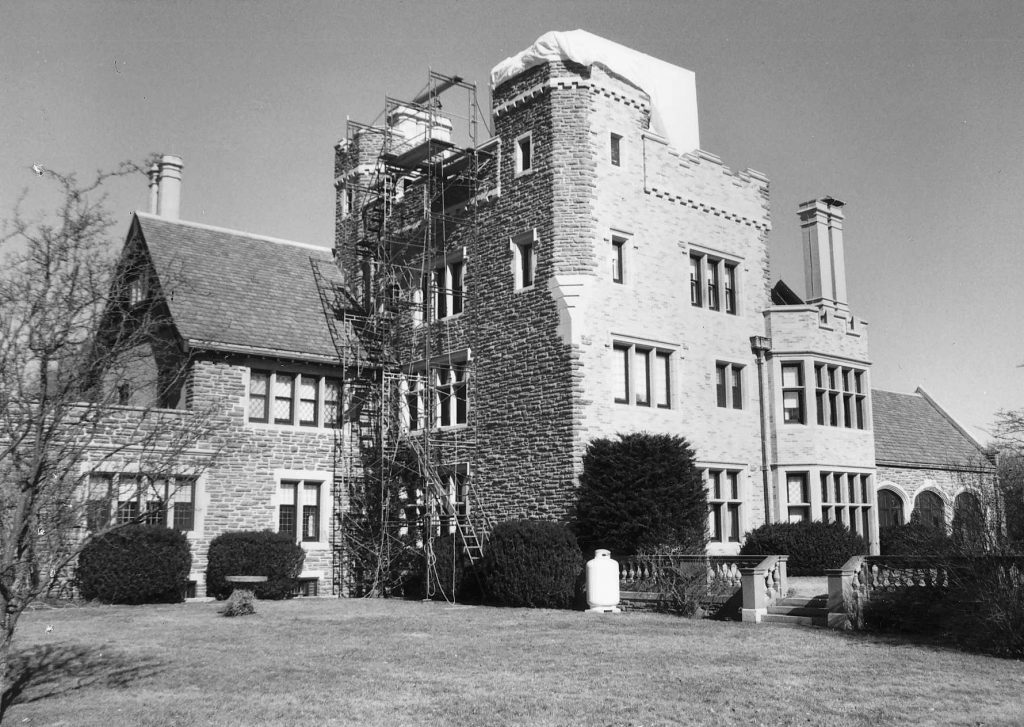
            This week we feature Great Hill. Great Hill, a peninsula consisting of 313 acres that jut out into the bay, was the site of Marion’s first summer hotel, the Marion House, which accommodated 300 guests. Today, this estate encompasses the largest main house and the most extensive collection of ancillary buildings in the town of Marion. Native Americans relied on Great Hill’s elevation as a strategic lookout to protect their families and crops. Great Hill also served as their sacred tribal meeting ground. In 1909, Galen Stone, a Boston investment banker, purchased the property. He demolished the hotel and hired architect Horace S. Fraser to design a rambling mansion built out of Hayden stone taken from the Philadelphia area. The family firm was called Haden Stone, and thus the use of that type of stone. The Tudor manor house was copied from an estate north of London called Compton Wyngates. By 1911, the Stones moved into the massive summer “castle” with 30 servants. Another 20 male employees lived in a building on the grounds for the staff. Reduced in size by approximately four-fifths today, the residence is still a substantial stone and brick building.