NBSO Presents “Celebrating Black Culture”

The NBSO is back with another fantastic virtual concert! Join us on March 20 from the comfort of your own home as we safely place 23 musicians, Music Director Yaniv Dinur, and guest pianist Joseph Joubert on stage at The Z for a virtual performance featuring four generations of leading African American composers. The concert also features a collaboration with the New Bedford Historical Society, who will share their extensive resources on the Nathan and Polly Johnson House and Frederick Douglass’ time in New Bedford.

            The orchestra opens with Jessie Montgomery’s Banner, a brilliant rendition of the national anthem interwoven with Lift Every Voice and Sing – often called the Black national anthem. Florence Price’s Andante Cantabile is derived from the second movement of her string quartet and will be performed here in a version for string orchestra. Next up is Coleridge-Taylor Perkinson’s Grass, an anti-war work for piano, strings, and percussion, featuring guest soloist Joseph Joubert. The piece is based on a poem by Carl Sandburg and refers to the grass growing on the tombs of soldiers. Mr. Joubert has accumulated a long list of accolades as an arranger, orchestrator, Broadway conductor, and music director, and as a pianist has received critical acclaim for his “uncommon tonal beauty.” Mr. Joubert was the first to record this piece. The finale brings Adolphus Hailstork’s Sonata da Chiesa (Church Sonata), a tribute to Baroque music and the composer’s fascination with cathedrals. It moves between exalting rhythms and reflective prayers, symbolizing the different stages of a religious service as well as of human life.

            To learn more about the concert music and the musicians, watch our “Three To Get Ready” video that will be posted the week of the concert on www.nbsymphony.org under the Events/Online Concerts tab.

            One listener from a past virtual concert expressed a popular sentiment this way: “The multiple cameras and clever editing with the views of individual musicians, with the stark background of the Zeiterion stage, made us feel like we were right at the concert.” Are virtual concerts the next best thing to being there, or better than being there? Watch and decide!

            Tickets are just $20 per household and are available at Zeiterion.org. Ticket purchasers will receive a link on 3/20 for access via YouTube.com. The concert will be available for viewing March 20 – April 19.

            The NBSO is a professional orchestra that annually presents a concert series of classical and pops music as well as an outstanding chamber music series. In addition, the NBSO’s innovative and nationally recognized educational programs reach thousands of students each year in local schools and through open access online. The NBSO is dedicated to building a community of music in the South Coast. Visit nbsymphony.org today!

            The New Bedford Historical Society seeks to establish a solid base of research and programs that will make the contributions of people of color a part of the life and history of the region as well as a part of the permanent public record. In the process, the history of the region in general will become fuller, deeper, and richer for everyone. Learn more at nbhistoricalsociety.org.
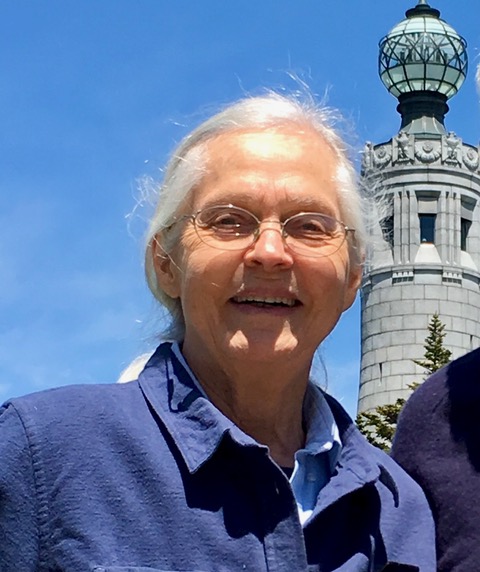

Emilie S. Piper

Emilie S. Piper passed away on Monday, February 15, after a period of declining health. A longtime resident of Pittsfield, MA, she spent her last months in comfort at the home of her son and daughter-in-law Geoff and Leslie Piper in Rochester, MA. Her passing, in the company of her children, was peaceful. She was 90 years old.

         The daughter of Ralph and Edna Starke, Emilie was born on June 28, 1930, in East Orange, NJ. The family later moved to Pittsfield, MA, where her father was a Sr. Vice President for Berkshire Life Ins. Co. She was an active participant in school activities and sports at Miss Hall’s School, and an excellent swimmer, skater, and sailor. She was honored to be elected the Pittsfield Winter Carnival Queen.

         She earned her B.A. at Connecticut College, where she sang in the college choir for all four years. After graduating, she made a train and bicycle tour of Europe with classmates. She completed her M.A. at Cornell the following year. Because she liked a challenge (and without making a big deal about it, the bragging rights), she swam across the twin Lakes in Salisbury, CT. 

         In 1953, she married Winthrop W. Piper, a college professor, and their first son Winthrop was born in 1954. They lived in Waterville, ME. and then Burlington, VT, where two more sons, Geoffrey and Andrew, were born before the family moved to Pittsfield. Their only daughter, Emilie, was born there.

         Starting in 1962, Emilie was the Music and Art Librarian at the Berkshire Athenaeum in Pittsfield, MA. As grade-schoolers, her children were proud that their Mom worked in the grand, circa-1876 stone building, right across the street from City Hall, and was one of the guardians of all it held.

         The family lived then across the street from the neighborhood school. Emilie was unfazed by the regular presence of many neighborhood children climbing to the treehouse, attempting various feats of daring, and being, as free-range, early-1960’s children generally were, a bit of a nuisance. On rainy days, when her own were underfoot, she swept them unceremoniously outdoors, saying, “You aren’t made out of brown sugar, you won’t melt”.

         When her marriage ended in 1967, she became the Librarian at Mt. Everett Regional School in Sheffield, MA, and in 1968, she married Richard Rutledge.  In 1972, she completed her M.L.S., commuting from Sheffield to Albany to attend evening class, and in 1973 was elected to the International Library Science Honor Society. The marriage to Mr. Rutledge ended in 1975.

         In 1977, Emilie joined a like-minded group to spend a week hiking in the Warner Wilderness in the Modoc National Forest in California.  Later, she fulfilled a long-time dream by paddling the length of the Allagash Wilderness waterway on a canoe-camping trip. A trip with her children to the infamous “knife-edge” on Mt. Katadhin made for a tale told wide-eyed.

         During her time in southern Berkshire County, she devoted many weekends to exploring the field and forest landscape in search of stone walls, abandoned roads, cellar holes, and orchards, and became an astute reader of the signs left behind hundreds of years earlier. This was history “en plein air”, and on foot, the outdoor counterpart to the research she was involved in as Curator of the Sheffield Historical Society.

         As ongoing sets of grandchildren came into the picture she found time to help their busy parents, forging important links in the family’s generational chain.

         Her interest in local history and her facility with historical sources and documents led to numerous publications, including “Americans of African Descent: An Annotated Bibliography of Berkshire County, Massachusetts,” published in 2006, and an account of the family of Agrippa Hull, an African-American patriot, born free in Northampton, MA, who served in the Revolutionary War and became the largest black landowner in Stockbridge, MA.

         She co-authored two books with anthropologist David Levinson, of Yale University’s Human Relations Area Files. “On the Other Side of Glory,” published in 2010, tells the story of African American men from Berkshire County and northwestern Connecticut who served in 54th Volunteer Infantry, the all Black “Glory” regiment, during the Civil War.

         “One Minute a Free Woman” tells the story of Elizabeth “Mumbet” Freeman of Sheffield, MA. Her lawsuit petitioning for her freedom led to the 1781 Massachusetts Supreme Court ruling in her favor that was the de facto end of slavery in the state. To create this account, Ms. Piper dug deep into local sources and records, eventually locating, among other things, Ms. Freeman’s handwritten last will and testament. Emilie served on the Founding Advisory Council of the Upper Housatonic Valley African American Heritage Trail. Her own family was included in Emilie’s research efforts: she traced their ancestry on both sides back to their arrivals from Europe in colonial times.

         Emilie’s long life was distinguished both by her determination to live life on her own terms, and by her many sacrifices for those she loved. Her moral compass pointed unerringly to fairness and justice. She passed on a rich appreciation for the natural world and a clear-eyed understanding of our part in it, as well as finding self-expression there. Included in those lessons was the knowledge that humans were made to be pretty sturdy, and that discomfort or even some hardship was part of living a full life. She was decades ahead of her time in teaching her sons that, when their turn came, contributing to family life would require more than bringing home a paycheck.

         Wherever she lived she planted a beautiful garden and kept it well-tended, right up to her last year, and always kept a home-grown bouquet on her kitchen table. She spent many happy seasons in her garden, enjoying both her work and the natural beauty of her surroundings, and passed her appreciation on to her children.

         True to her profession, she instilled in her children an abiding respect for reading, learning, and always striving to better understand the world and the people in it. She encouraged proficiency in every task and being engaged in both heart and mind.  Ponies, dogs, horses, cats, and even a fostered raccoon cub helped with the “heart” part, and there was no such thing as too much knowledge.

         While she never sought to be the center of attention, she reveled in being recognized for her many accomplishments. Though her research was often a solitary endeavor, her disposition was bright and funny she and loved good company and conversation. She will be sorely missed. In the words of a minister friend, “The world is never quite the same without your mother in it.”

         Emilie is survived by her four children and their spouses: Winthrop D. Piper II of Etna, NH, and his wife, Mundy; Geoffrey T. Piper of Rochester, MA, and his wife, Leslie; Andrew L. Piper of Pittsfield, MA, and his wife, Mimi; Emilie P. Shipman of Enfield, NH, and her husband, Phil. She has nine grandchildren and seven great-grandchildren. 


         A celebration of her life will take place at a summer date, to be announced. In lieu of flowers, memorial contributions may be made in her name to either the Local History department of the Berkshire Athenaeum in Pittsfield; or MA Audubon’s Pleasant Valley Wildlife Sanctuary in Lenox, in care of Dery Funeral Home, 54 Bradford St, Pittsfield, MA 01201.

Evelyn Midura

Evelyn Midura passed away peacefully surrounded by family and friends whom she loved, on February 13, 2021, following a nine-year battle with Ovarian cancer.

            Evelyn’s friend, Sandy Holmes, wrote, “Evelyn was a creative person who always thought of others more than of herself.  Evelyn belonged to several knitting groups and was a member of the Red Hats Society. Evelyn used her creative talents to beautify the world through her lovely garden and the plethora of hats, mittens, sweaters, and scarfs she made and donated to those in need.  Evelyn loved music. She sang in the St. Mary’s choir and played a variety of musical instruments. She made beautifully creative greeting cards which I shall always treasure. Evelyn took me places I’d never otherwise have seen. She was a good friend and generous beyond all measure. She will be sorely missed and gratefully remembered.”

            Evelyn grew up in New Bedford and earned her BS in accounting. She designed computer programs for several years before retiring. Evelyn is predeceased by her parents, John and Catherine Midura and her sister, Valerie Rollins. She is survived by her two sisters, Rosemary Pazer and Nancy Midura, her nephews, Peter (Lisa) Pazer and Jeffrey (Angela) Pazer, her niece, Jessica (Dan) Denisi and a grandniece, Eva Pazer and grandnephew, Alexander Pazer.

            Memorial contributions may be made to ovarian cancer research or charity of choice.

            A memorial service will be held at a later date.

            The family would like to thank Southcoast Hospice and all those who helped Evelyn.

Percy Browne House Faces Uncertain Future

            The house on the hill is at a crossroads, and it will apparently take a groundswell of public support to influence its salvation. The Percy Browne House was at the center of discussion when the Marion Historical Commission met on February 18 via Zoom.

            The commission wants to save the house at 192 Front Street, which belongs to Tabor Academy. In 2019, the prep school by the sea had filed a demolition order to demolish the building, also known as the Tenbrook House, but changed course with a November 6, 2019, announcement of a delay. The situation has been in limbo ever since.

            In order to do accomplish its goal, the commission needs to get the school, the town, and its people on the house’s side. Education on the matter will be at the center of the effort, and the Historical Commission hopes to host a Zoom meeting geared toward public awareness.

            Commission Chairperson Meg Steinberg suggested a broad audience for such an event, and commission member Will Tifft said he would make sure a Zoom meeting is promoted by the Sippican Historical Society, of which he is president.

            “When I sort of lit the fire the first time around this and posted things on Facebook … many responded,” said Tifft, characterizing over 50 responses along the lines of “‘This is a shame, tell me what I can do.’ Maybe they didn’t come to that meeting, but maybe they’re out there.”

            Designed by architect H.H. Richardson and built in 1881, the house was purchased by Tabor Academy in 2008. The building housed faculty, but its deteriorating condition prompted the school to plan its demolition in favor of campus expansion on the 3-acre parcel behind two of the school’s newer dormitories.

            Public outcry led former Headmaster John Quirk to announce a delay, albeit with the disclaimer that he remained doubtful in a viable option that could satisfy the school’s needs and be financially feasible. Tabor’s original plan to demolish the Percy Browne House and expand campus facilities had already entered the permitting process by October 2019, and the schedule called for completion in the early stages of the 2019-20 winter season.

            The coronavirus pandemic played a significant role in stalling any resumption of the plan in 2020, and commission member Bryan McSweeny told the February 18 meeting that Tabor has said it will not decide the fate of the house until it has a new headmaster. That appointment is anticipated for July 1. Julie Salit is the interim headmaster.

            While Sippican Historical Society is supportive of the effort to save the Percy Browne House, Tifft said its members have good relationships with Tabor. “Nobody will oppose it; everybody thinks it’s the right thing to do,” he said, suggesting a non-profit organization like Historic New England might be interested in taking the lead in promoting the effort to save the house.

            Alluding to a very long and intense meeting with commission members McSweeny and Tifft reviewing Phase 1 and 2 completion reports, Steinberg suggested the commission do more building surveys in its overall effort to identify historical buildings in Marion.

            The first phase of the Community Preservation Committee’s 2020 study, started on January 21, on Portuguese and Cape Verdian history in Marion, is expected to be completed by the end of February.

            The commission received an offer from Laura Derderian-O’Rourke, a semi-retired attorney and journalist, to write about the Historical Commission and submit an article to area newspapers. Steinberg suggested an optimum time for such an article would be in April “when we have projects for Town Meeting.”

            Steinberg reported that a Massachusetts Historical Commission intern evaluated all of the state’s 351 websites with historical commissions and ranked them low, medium, and high, based on multiple criteria, and Marion was rated among the highest of the high.

            The next meeting of the Marion Historical Commission is scheduled for Thursday, March 18, at 4:30 pm.

Marion Historical Commission

By Mick Colageo

Friends of Bike Path Talk Amenities

            On February 23, the Mattapoisett Board of Selectmen met with Liz DiCarlo of the Friends of the Mattapoisett Bike Path to discuss possible amenities for Phase 1b and the Industrial Drive section that will one day link Mattapoisett to Marion via a continuous bike path.

            DiCarlo said the group had been working alongside Selectman John DeCosta to consider such matters as benches, fresh water, signage, bike racks, wayfarer’s kiosks, sanitary facilities, and rubbish containers. She described signs as those that might inform recreators about historical points of interest or environmental features such as salt marshes.

            The FOBP also wants to approach Old Rochester Regional High School for a possible art contest whereby the students could submit their creative takes on a compass rose that might one day become the model for a permanent piece of art imbedded into the bridge at Goodspeed Island Road. Selectman Jordan Collyer suggested opening the competition up to Old Colony Regional Vocational Technical High School also, given their “great graphics department,” he said.

            But Selectman Paul Silva, while agreeing amenities were important, said, “We have to talk about the two most dangerous spots along the bike path, Brandt Island Road and Mattapoisett Neck Road.… Until we know that those are going to be done, I don’t want to spend any money.”

            Silva was referring to the long-held concern that the intersections along the aforementioned roadways where the bike path is located must be made safer for both the bicyclists and motorists. Collyer agreed, saying, “I’m not in favor of doing anything until safety issues are addressed.”

            When Town Administrator Mike Lorenco said that funds would be needed to design the intersection and survey the area, both Silva and Collyer responded that that work had already been done. DeCosta said that any documents regarding such had not been found at Town Hall. “We’ve talked about placement of lights and identified all that,” said Collyer, who suggested that retired Town Administrator Mike Gagne be contacted to help clarify the matter. Silva quipped, “I don’t know why we need that much equipment – just get the bikers off the bikes (at the intersections), problem solved.”

            Collyer also suggested the group explore the concept of having residents purchase commemorative benches. The board agreed that the FOBP should move forward pricing such items as benches, bike rakes, and signage and return once figures are secured. The selectmen also concurred it was necessary to fast-track safety improvements at the intersections discussed.

            Coming before the board with an overview of the Waterfront Enterprise FY22 budget was Harbormaster Jamie MacIntosh. He explained that retained earnings were low and shared, as he had with the Finance Committee, his belief that a 20 percent, across-the-board increase was necessary for the department’s financial viability.

            “Dartmouth charges $205 for a 30-foot vessel, Mattapoisett charges $120,” McIntosh stated. He said the Towns of Wareham and Marion both support their harborside operations in combination with fees collected. He said a survey of the south coast and Cape Cod found Mattapoisett waterfront fees low by comparison. A meeting with the Marine Advisory Board in the coming days is planned to discuss fees in greater detail, he told the board.

            Silva asked what his retained earnings were, and Lorenco said that figure was $36,000. Lorenco added that some waterfront funds had been used to balance out the budget. MacIntosh said projects had been done; however, more harborside work was needed but not currently funded. “We’ll have to find some unique ways to pay for projects,” he said.

            Regarding one line item in the budget, indirect costs, Silva expressed dismay at the $76,000 noted. Lorenco said part of why that figure was so large was due to pension funds for the harbormaster position. Collyer said, “Paul, I’m with you; I firmly believe indirect costs are not correct for this department.”

            Silva and Collyer were also not altogether on board with the amount of increase MacIntosh was suggesting. Silva noted there had been a substantial increase in 2017. Collyer said increases should be incremental year over year. “Things cost more every year,” he said. Silva also didn’t consider Mattapoisett and Dartmouth to be comparable. “Our harbor is not as protected,” he said.

            MacIntosh also briefed the board on upcoming Capital projects such as the repairs to Long Wharf, but when he brought up using a $120,000 grant secured from the Seaport Economic Council for a harbor management study, Collyer questioned its importance. MacIntosh said such a study could put the town in a good position for securing new grant funding for such things as a new harbormaster building, but Collyer said, “What is a harbor management plan going to tell us that we don’t already know?” He asked MacIntosh to drill down and bring to light the benefits of such a study.

            Mike Huguenin of the Mattapoisett Land Trust came before the board to discuss the organization’s plans to submit “an expression of interest” letter for a future Massachusetts Municipal Vulnerability Preparedness grant application in the amount of $30,000 and another $10,000 match from the community. The money would be earmarked for survey work needed on Old Slough Road, an old town road previously identified as critical for emergency travel to and from Angelica Point in times of natural disasters. Huguenin said of funds needed for the match that the area’s residents would willingly donate based on many expressing the need for the emergency exit.

            On the good-news front, Lorenco said that the town had received $60,000 for two analyses that the University of Massachusetts will perform. One study will evaluate local school consolidation feasibility and the other the transfer station operation.

            The Board of Selectmen will meet on Tuesday, March 2, at 6:30 pm to continue its budget review and again on March 9 for its regular meeting, also at 6:30 pm.

Mattapoisett Board of Selectmen

By Marilou Newell

MLT Blanche B. Perry Scholarship

The Mattapoisett Land Trust is seeking applicants for their $1,000 ‘”Blanche B. Perry Scholarship.” This award is available to a Mattapoisett resident interested in the field of environmental studies, science, technology, or a related field, and is a graduating senior from a secondary school by June 2021. The scholarship is made available through the Edith Glick Shoolman fund, a bequest left to provide support for children in the community. Offering this scholarship is consistent with the mission of “preserving land in order to enrich the quality of life for present and future generations of Mattapoisett residents and visitors.”

            Along with the application, the following additional information is required: 1. A personal statement about career goals as they relate to the mission of the MLT, past and present; 2. A signed community service form documenting a minimum of 20 hours of community service; 3. Professional letter of reference (teacher or guidance counselor); 4. A character letter of reference from an employer, scout, or community leader and or neighbor is required; 5. Official school transcript including credits and class rank.

            Applicants will be assessed according to academic achievement, personal statement, professional and personal references, community service, and financial need. Preference will be given to individuals who are members of the Mattapoisett Land Trust or whose parents or grandparents are members of the MLT.

            The participating schools are Old Rochester Regional High School, Bishop Stang High School, Old Colony Regional Vocational Technical High School, and Tabor Academy. The deadline for submitting the forms will be April 29.

            The recipient will be selected by May 20 and will be notified by mail. The recipient will be recognized at his or her school’s awards ceremony. The award will be disbursed after the student submits an official college transcript documenting a successful completion of his or her first semester in college to the President of the Mattapoisett Land Trust.

            The application forms will be found in the guidance offices at the local public and private schools and at the Mattapoisett Land Trust website at mattlandtrust.org/education/grants-and-scholarships.

Earle L. Sylvia

Earle L. Sylvia, 85, of Mattapoisett, passed away after a brief illness on Saturday, February 27, 2021.

He was the husband of Mary-Jane (Silveira) Sylvia.

Born in Wareham, son of the late Joseph and Margaret (Hawley) Sylvia, he lived in Mattapoisett most of his life. He attended Center School in Mattapoisett, graduated from Fairhaven High School, and earned his Bachelor’s degree from St. Anselm College in Manchester, NH.

Earle enjoyed racing cars at Lime Rock Park and Thompson Speedway Motorsports Park. He loved living near the water and working on his yard.

Survivors include his wife; his children, Paul Sylvia of New Bedford, and Michael J. Sylvia of Dartmouth; 3 grandchildren; and 4 great-grandchildren.

He is predeceased by his sister Eleanor Roche.

No services are scheduled at this time. Arrangements are by the Saunders-Dwyer Mattapoisett Home for Funerals, 50 County Road, Mattapoisett. For online guestbook please visit www.saundersdwyer.com

Funeral Home Looks for Parking Upgrade

            William Saunders’ good intentions at 50 County Road have not panned out as planned over the past quarter-century of operation, and to that end, a Notice of Intent was filed with the Mattapoisett Conservation Commission proposing the replacement of the Saunders-Dwyer Mattapoisett Funeral Home’s parking lot and a significant upgrade to the stormwater management system.

            There was no debate during the commission’s February 22 Zoom meeting over the project’s merits, laid out in a detailed presentation by representative Dave Davignon of Schneider, Davignon, and Leone Inc. The concern was brought to bear by southerly neighbors.

            Caty and David Fuerman, who live in the cul de sac at the northern end of Pepperbush Lane, don’t want to see the buffer between their back yard and the funeral home disappear completely.

            “We live south of there and so do our neighbors,” said Caty Fuerman. “Part of the construction was a barrier…. If there is something that could be done to protect the area south…”

            The arborvitaes originally planted overgrew and overtook the area, growing up to 25 and 35 feet high. They hid the pond, which was not maintained. The Fuermans are hoping their removal will not end there.

            The funeral home, located at 50 County Road, has been operating with the same parking lot since 1996. Not only the parking lot needs replacement, but the retention pond that was meant to catch stormwater needs to be rehabilitated.

            “The pond holds water most of the year…. It’s a mosquito magnet; we’re looking to correct that,” said Davignon, who indicated that existing stumps will be ground down to below grade but will not be excavated so as not to destabilize the banks. “The end product will be a nice looking pond that will function tremendously better than what it’s doing today.”

            The parking lot has 64 spaces, requiring a well-planned drainage system, and Davignon plans a deep sump catch basin with a forebay to recharge the groundwater as regulations require.

            The footprints of the parking lot and the pond will remain the same.

            ConCom Chairman Mike King praised the two-step system, calling it “excellent.” Another member of the commission complemented Davignon on his flagging for the site visit.

            Given the history of lack of maintenance, the Fuermans articulated concern that there is no mechanism whereby future maintenance can be ensured.

            “At some level, it’s out of our purview … but knowing the Saunders wanting to be good neighbors … I think that was the original intent of the arborvitaes,” said King.

            Davignon suggested that the commission has the ability to condition a certificate of compliance, so the owner is not required to continue filing permits just to do the right thing by providing scheduled maintenance to the area.

            “Great idea,” said King. “That will help address the concerns brought forth by the Fuermans.”

            ConCom voted to continue the public hearing to Monday, March 8.

            In another new case, Tim Dexter filed a Request for Determination of Applicability on behalf of the Massachusetts Department of Transportation for proposed work at the intersection of Fairhaven Road and River Road.

            David Goldstein, the environmental analyst at MassDOT, represented Dexter’s application. The timeline could see construction begin as early as spring 2022 and completion as early as fall 2023. “It will depend on how many crews we have available. It will require no closers or detours. The sidewalk area will be closed,” said Goldstein.

            The floor was opened for public comment, and Marilou Newell, chairman of the Mattapoisett Historical Commission, told ConCom that the Historical Commission has a plaque at the Herring Run, and at the base of the plaque are commemorative bricks. “So, we want to ensure that any work won’t involve that area. It doesn’t appear as though it will, but if it should, would they have to come back with any conditions?” Newell specified that she was speaking in the meeting only in her role as chairman of the Historical Commission (see editor’s note).

            King said the project, filed solely as an RDA, is exempt because MassDOT is a state agency and told the meeting, “We would anticipate because it’s an RDA, issuing a Negative 3 Determination with notice to the office prior to the commencement of the work.”

            Goldstein was not aware of the plaque or bricks, but he invited Newell to send him an email highlighting the concern, and he, in turn, would forward the email to his project manager. “Hopefully, that gets worked down the chain when the work begins.” Goldstein stopped short of a promise because his involvement will be limited when construction takes place.

            As King anticipated, ConCom unanimously voted a Negative 3 Determination with notice to the office prior to the work’s commencement.

            A Notice of Intent filed by Armand Cortellesso/Brandt Point Builders LLC proposing the construction of a single-family home on a slab within the 100-foot buffer to bordering vegetated wetlands was presented by Al Loomis of McKenzie Engineering and, per rules for new NOI hearings, voted for a continuance to March 8.

            The NOI filed by Matthew Considine and Alex Monreal for landscape improvement at 20 North Street, including removing trees inside the buffer zone, was presented by Davignon and continued to March 8.

            Three other continued public hearings and a request for a certificate of compliance were continued without discussion.

            Conservation Agent Liz Leidhold reported that ConCom should expect to see a revised plan from Randall Lane Solar.

            The next meeting of the Mattapoisett Conservation Commission is scheduled for Monday, March 8, at 6:30 pm.

            Editor’s Note: Marilou Newell is a regular contributor to The Wanderer.

Mattapoisett Conservation Commission

By Mick Colageo

ORR Stresses Significance of School Choice

            Old Rochester Regional Superintendent Michael Nelson recommended on February 17 that the Old Rochester Regional School Committee consider maintaining the number of school-choice slots currently offered at the junior high and high school.

            Nelson wasn’t seeking a vote that night, asking only for the committee to consider offering 103 out-of-district students a desk at ORR schools while keeping in mind the significant impact school choice has on the district’s operating budget.

            “There would be ramifications if the School Committee chose not to continue with school choice,” Nelson said. “Our budget is offset by projected revenue costs,” to the tune of $535,000. “If we chose to go in a different direction, the budget subcommittee would have to come back together for (lower) revenue projections …”

            Nelson asked the committee to approve 27 open school-choice slots for the 2021-22 school year during the school-choice public hearing scheduled for March 24. Twenty-four school-choice seniors will exit ORR in 2021 so Nelson asked to replenish those slots and maintain the other three school-choice slots that went unfilled.

            ORR High School Principal Mike Devoll has for years considered ORRHS “healthy north of 700 students,” and he reinforced that view during the February 17 meeting. However, he added, “We have the potential to dip below that in the coming years.”

            The class of 2021 is one of the largest graduating classes at 190 seniors, and the class of 2022 now stands at 199. But after that, the student population of those subsequent senior graduating classes is only in the 150s and 160s, Devoll said.

            “So, we are open for business,” said Devoll, advocating for current school-choice levels.

            ORR Junior High School Principal Silas Coellner said the junior high had witnessed a decline in school-choice students from 26 two school years ago to just 14 this year. “But our enrollment numbers are also on the decline,” he said. The student population of 480 just a couple of years ago has leveled off at 415 this year.

            Some committee members asked on behalf of their constituents, if enrollment at ORR is declining, why not eliminate school choice and reduce the scale of programming? Nelson said the administration understands the concerns about falling enrollment and acknowledges that it could eventually lead to inevitable “serious conversations in the future.” Indeed, he said, factors like the coronavirus pandemic have affected enrollment in unforeseen ways. Still, “We don’t have a crystal ball at this point,” Nelson said. And although there has been some degree of discussion internally about the topic, Nelson said, “Next year those conversations are going to have to intensify, and that (scaling down programming and school choice) may be part of the conversation.”

            Nonetheless, despite one’s personal opinion of school choice, Nelson said, school choice allows the ORR School District to keep academic offerings robust, even as committee members have historically bemoaned how the $5,000 per school-choice student set by the state has not increased over the years. Nelson said the revenue from school choice does support a more diverse program at ORR and maintains it as tri-town enrollment goes down. Furthermore, as School Committee member Heather Burke explained, it also adds diversity in other essential ways.

            “What we really desire these students for is their contributions to the schools in any shape or form,” said Burke. “We feel like they bring in diversity and a different perspective that students who have been raised in just the tri-town really benefit from, and we feel like they’ve enriched our schools in many ways. So, that extra revenue is just a benefit, except the fact that our budget really depends on it, which is very unfortunate because that is not why we want to welcome these children into our schools, historically.”

            Devoll pointed out that while ORRHS gains students through school choice, it also loses prospective students to vocational and private high schools. “And there’s a cost to that, as well,” Devoll said. Part of why ORR wants to keep its academic offerings robust is to attract students who might attend another school for something not otherwise offered at ORR.

            Before switching topics to the FY22 budget, Burke reminded the committee that several large-scale housing developments are coming to Rochester and Marion “that could just change our numbers dramatically.”

            Ahead of the March 2 FY22 budget hearing, Nelson wanted to present an overview of the nearly $300,000 decrease in its initial budget proposal from January 11. Now at $20,261,158, this draft FY22 budget excludes several of what the district had previously assessed as needs and stakeholder priorities, said Nelson, deeming this updated draft a “responsible” budget based on student needs, able to provide level but cost-effective programming and staffing.

            The details of the FY22 budget will be spelled out during the March 2 hearing. Factors such as a reduction in state aid, lower than anticipated transportation reimbursement, utility cost increases due to COVID-19, third-year-teacher contract increases, and the overall fiscal climate amidst the pandemic culminated in producing what Nelson called “obviously not the easiest” budget process.

            As for town assessments, Marion is looking at a 0.8 percent increase, Mattapoisett a 0.39 percent increase and Rochester a 1.19 percent decrease, with each town comprising 30.24 percent, 36.91 percent and 32.85 percent of the total ORR budget, respectively.

            “I think that our towns should be very thankful that we are coming forward with such a reasonable budget request,” said Burke. “I don’t think that this budget necessarily meets all of the needs of our district, but I think that it moves our district forward in the key places and maintains our district’s excellence to go forward.”

            Burke expressed frustration over the state’s response to the current financial needs of education in Massachusetts, which she said has led to funding gaps that individual towns must cover.

            “This idea of schools versus towns is really manufactured by the state’s gap in funding,” said Burke.

            The next meeting of the Old Rochester Regional School Committee, and the FY22 budget hearing, is scheduled for Tuesday, March 2, at 6:30 pm.

Old Rochester Regional School Committee

By Jean Perry

Academic Achievements

Sienna Wurl, of Mattapoisett, is among more than 500 students named to the Western New England University Fall 2020 President’s List. To qualify, students must earn a GPA of 3.80 or higher.

            Emily Newell was named to the University of Southern Maine Fall Semester Dean’s List. To be placed on the Dean’s List, full-time undergraduate students must complete 12 credit hours or more with a minimum of 12 letter-graded credits, with the exception of required, program-specific Pass/Fail credits, and receive a grade point average of 3.6 or above.

            The following Tri-Town residents made the Dean’s List at Rochester Institute of Technology for the 2020 Fall Semester: Daniel Bailey, of Rochester, who is in the business administration-finance program; Brianna Lynch, of Mattapoisett, who is in the ASL-English interpretation program; Meghan Johnson, of Rochester, who is in the software engineering program; Cecilia Prefontaine, of Rochester, who is in the ASL-English interpretation program; James DeMailly, of Mattapoisett, who is in the environmental sustainability, health, and safety program.

            Undergraduate students are eligible for Dean’s List if their GPA is greater than or equal to 3.4 for nine credit hours of traditionally graded coursework, they do not have any grades of “Incomplete,” NE, D, or F, and they have completed at least 12 credit hours.

            Students who achieved School Second Quarter Honor Roll status at Upper Cape Cod Regional Technical School include Grade 9 High Honors: Laney Cooper and Clifford Williams, of Marion; Grade 11 High Honors: Lucas Marcolini and Victoria Voye, of Marion; Grade 12 Honors: Bradford Arruda, of Marion.