From the Files of the Rochester Historical Society

When I started writing about Rochester history, I titled the articles from the “Files of the Rochester Historical Society” because one of the important things that we do within our museum is to collect and preserve pictures and all kinds of paper (ephemera and archival material) that are important to the understanding of Rochester as a town and also of its place in Massachusetts history. History after all is just a story of a time, a place, an event, a community or an individual.

            In addition to all that “ephemera” that is filed away, we also have many items donated by individuals who didn’t want to send their historic items to the landfill. Among these items is one of the earliest treadle sewing machines, a rare vocalion organ, a newly acquired flax wheel and the bench from Bettencourt’s front porch where workers from the Hartley Sawmill would sit to eat their lunches and occasionally, carve their names or initials into the wood.

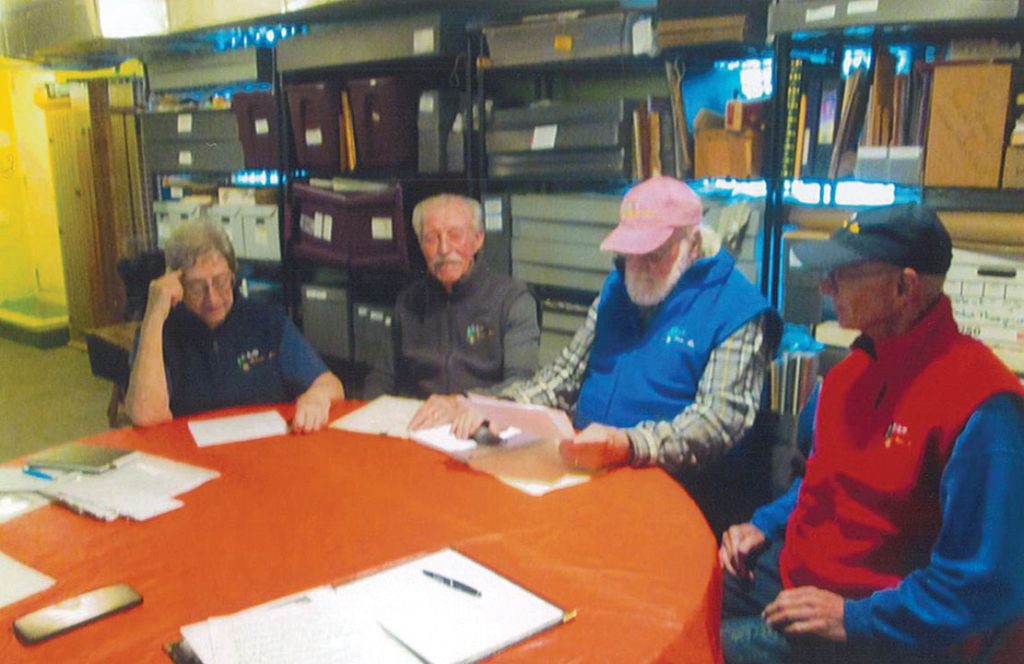
            If historical societies aren’t careful, they can simply become repositories of dry papers and dusty stuff. This can be particularly true of small, underfunded ones similar to ours. However, the Board of the Rochester Historical Society, pictured here at a meeting (with some incidentally wearing our newest Rochester item, a fleece vest with our embroidered logo which will be for sale at the library’s Dec. 13th sale) believe that history is a living thing that should be shared with its community. It shows us where we’ve been, so we know how we’ve gotten to where we are today.

            To bring Rochester history alive, we plan monthly programs and yearly exhibits (with the help of those who donate or loans their historic items). All of this takes work and planning from moving heavy cranberry sorters and awkward agricultural spreaders to creating programs that we hope people will find interesting.

            For a small, member-supported museum reliant on donations and Cultural Council grants, we definitely punch above our weight class (I think that’s a boxing term). A few years ago, when our exhibit centered on maps, it was listed on an international website for museums focused on maps. More recently, a local educator praised our exhibit on how people of Rochester entertained themselves for over 300 yrs. as one of the best social history exhibits he’d seen.

            We know an exhibit is a success when the people visiting identify with it. As people left this year’s exhibit of “The Tools and Industries That Made Rochester” there were comments that the exhibit “really took them back” or reminisces about working with some of the tools. I know I have a much greater appreciation of the 19th and early 20th century workers who hefted the heavy iron and wooden tools on display.

            Hopefully, our upcoming 2026 exhibit, “Rochester and the Revolution” will live up to its predecessors. We’ll be opening sometime late spring/early summer and would appreciate any Revolutionary or colonial memorabilia that could be loaned to the museum.

By Connie Eshbach
Further Conditions for Bike Path

The Marion Conservation Commission met on December 3 in the police station’s conference room and approved the South Coast Bikeway project’s path through Marion – provided that some conditions are met.

            Project engineer Jeremy Packard met with the commission on November 19. Commissioners did a site review in late November after that hearing. The conditions include that project maintenance does not use chemically treated ice-removal methods, informs the commission about any changes, and also provides an annual report about wetlands-replication work and how it has impacted native species or waters.

            Packard told the board that, since the November 19 meeting, it was discovered that one area of around 3,200 square feet slopes and could impact wetlands. He said the project proponents would raise the elevation to avoid wetland damage.

            As mentioned at the previous meeting, Conservation Commission members lauded the plans with Shaun Walsh calling it “the most comprehensive plan” the commission has seen in a long time.

            The 3.9-mile proposed path through Marion via Front Street will also offer parking at Washburn Park and Point Road, totaling around 15 spots, according to Packard.

            Packard, who has been working on the project for 10 years, noted that the Marion leg of the project width has been narrowed from 12 paved feet to 10 paved feet, maintaining the same elevation and making minimal impacts to wetlands and related buffer zones, according to rules detailed in Wetlands Protection Act.

            There will be swales on the shoulder of the path and three infiltration basins.

            Packard said that next year the project will procure all necessary permits and hope to begin construction in 2027 on this eastern portion of the path. Packard said he expects the path to be open to Marion residents by 2029.

            At the December 3 meeting, Packard said he does not anticipate any other changes but agreed to keep officials in the loop if any state agencies take issue with any of the new plans.

            The meeting had very little on the agenda, and within 30 minutes the commission heard Packard’s new update, closed the public hearing, and approved the project with the conditions.

            The next meeting of the Marion Conservation Commission is scheduled for Wednesday, December 17.

Marion Conservation Commission

By Jeffrey D. Wagner

David L. Pendergast

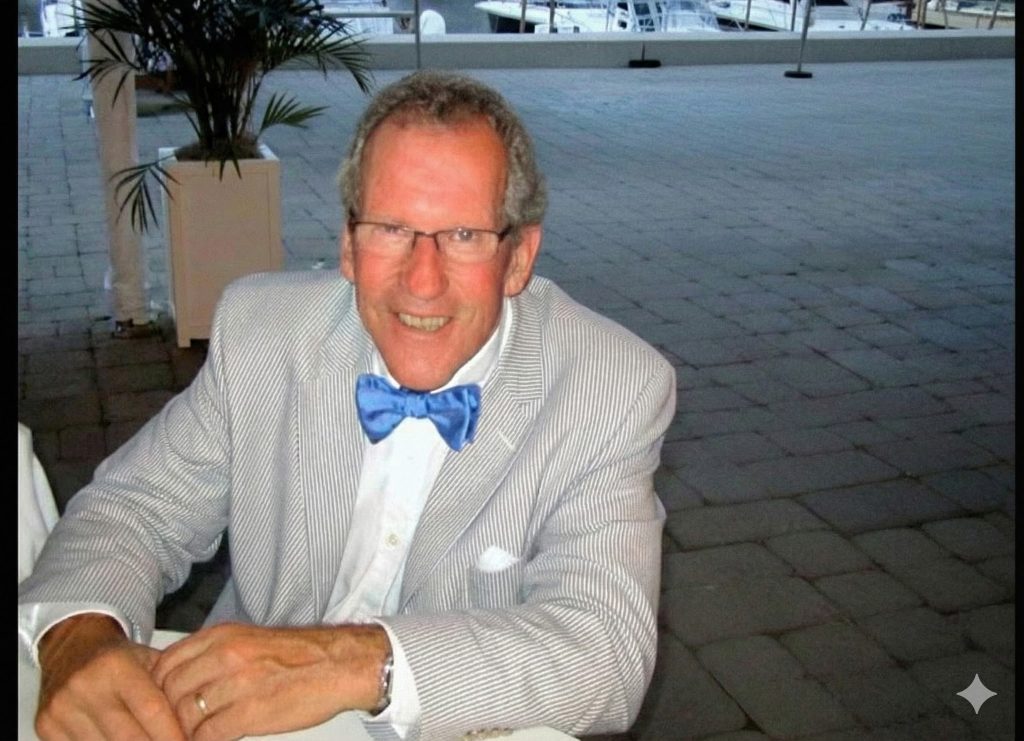
David L. Pendergast, 75, who divided his time between Boston and Mattapoisett, Massachusetts, and Naples, Florida, passed away peacefully, surrounded by family, on Friday, December 12, 2025. He was the beloved and devoted husband of Mary (Bevelock) Pendergast.

            Born in Boston, David was the son of the late William and Betty (McCarthy) Pendergast. He was raised in Dedham and Weston, Massachusetts, where he formed friendships that remained central to his life. He was a graduate of Ohio Wesleyan University and earned a Master of Public Administration from the Harvard Kennedy School, forming enduring friendships at both institutions that became lifelong bonds. He also earned a PhD in Counseling Psychology from Fordham University.

            David lived a life devoted to public service and advocacy, particularly in the field of mental health, a calling that reflected both his deep compassion and his belief in the dignity of every person. His career included roles as Director of Aftercare at the Erich Lindemann Mental Health Center and Chief Psychologist of the Inpatient Unit at Medfield State Hospital, as well as Director of Behavioral Health Services for Network Development at Harvard Community Health Plan. He was especially proud of his work as an expert witness in a class action lawsuit brought by the Disability Rights Center of the U.S. Virgin Islands. Following that case, he was appointed by the U.S. Federal Court as Commissioner of Mental Health in the U.S. Virgin Islands, where he represented consumers of mental health services and their families and made a lasting and meaningful difference in countless lives.

            David possessed an insatiable curiosity and a deep love of learning, paired with a quick wit and a gift for conversation. He had a remarkable ability to connect with people through humor, storytelling, and genuine interest, and his warmth and intellect drew others to him. This same charisma extended to the dance floor, where he delighted in twirling and swirling his partner through each step, confidently leading with style, joy, and unmistakable flair. His interests were wide-ranging, including sports, fitness, music, history, politics, and travel, but above all, he cherished his family and friends.

            A devoted New England sports fan, David followed the Boston Red Sox, New England Patriots, Boston Celtics, and all New England teams with passion, celebrating their triumphs and debating their shortcomings with equal enthusiasm. His own competitive nature was a defining part of his life and found expression through sport and fitness. He played rugby into his 30s, cycled countless miles, took up boxing in his 60s, and relished hard-fought battles on the tennis court, competing in tournaments until his diagnosis. Fitness was integral to his daily routine, including multiple rounds of 100 pushups.

            An avid student of history, David held a particular admiration for Winston Churchill, whose leadership and words he often quoted. He delighted in spirited political debate, thoughtful conversation, and sharing ideas late into the night.

            While he achieved many professional accomplishments, David’s greatest legacy is the extraordinary network of deep and enduring relationships he cultivated throughout his life. He was fiercely loyal to his friends, deeply devoted to his family, and unwaveringly devoted to his wife, Mary, with whom he shared a life of companionship, love, laughter, and mutual respect. He had a profound and lasting impact on all who knew him, especially his nieces and nephews, who adored him.

            David is survived by his wife, Mary; his siblings, Peter Pendergast; Beth Pendergast and her husband, Walter Arsenault; Julie Pendergast and her husband, George Vega; and Cindy Pendergast, the wife of his late brother, William. He is also survived by his mother-in-law, Patricia Bevelock; his father-in-law, James Bevelock; his sisters-in-law, Tricia and her husband, John O’Reilly; Ginny and her husband, Mike Morhardt; Laurie and her husband, Henry Ho; and his brother-in-law, Greg Bevelock and his wife, AnaMaria; as well as 17 nieces and nephews, 16 great-nieces and nephews, and many loving cousins.

            He was predeceased by his first wife, Linda Pendergast, and by his brother, William Pendergast.

            The family extends heartfelt thanks to the remarkable team of nurses from Nursing Liaisons for their compassion, professionalism, and exceptional care.

            Visiting hours will be held on Thursday, December 18, 2025, from 4:00 to 8:00 pm at Saunders-Dwyer Mattapoisett Home for Funerals, 50 County Road, Mattapoisett. A Funeral Mass will be celebrated on Friday, December 19, 2025, at 12:00 noon at St. Anthony’s Church, 26 Hammond Street, Mattapoisett, followed by burial in St. Anthony’s Cemetery. For online guestbook, please visit www.saundersdwyer.com

In lieu of flowers, the family requests memorial donations to the Pancreatic Cancer Action Network (www.pancan.org).

Barbara (Cochrane) Nicholson

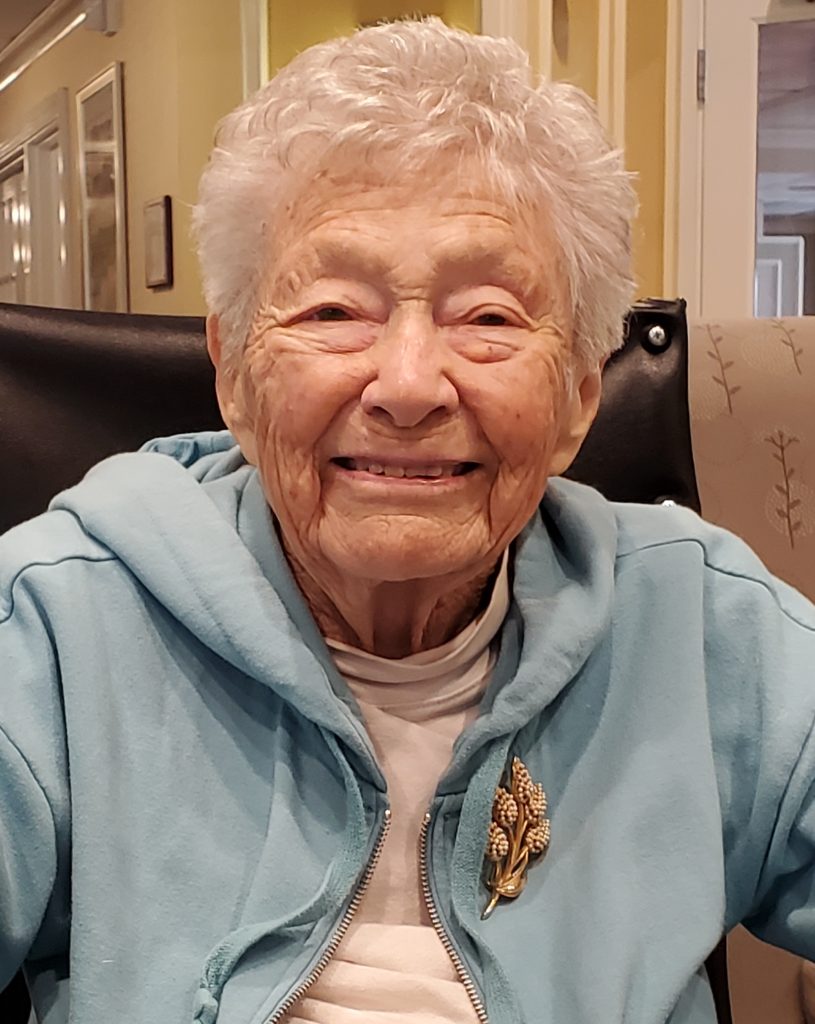
Barbara (Cochrane) Nicholson, 99 years old, passed away peacefully, at Alden Court in Fairhaven, MA after a period of declining health. She was the wife of the late William T. Nicholson, Sr. Born and raised in Fitchburg, MA daughter of the late Harold and Eleanor (Everett) Cochrane, even as a child, Barbara was adventurous, curious, and fiercely independent. Her father brought her up to believe that women could do anything that men could do and she never forgot that. At the age of 16, she wanted to take flying lessons and her father encouraged her to do so; her mother was not as enthusiastic. She would ride her bike to the Fitchburg Airport to take her lessons and was proud to complete her solo touch and go and received her pilot’s license before getting her driver’s license.

            Barbara graduated high school went on to study at Simmons College in Boston. She wanted to be an Engineer and at that time there was not a program for women at Simmons so although they encouraged her to take Medical Secretary courses, she insisted on the Chemistry courses. Upon graduating from Simmons, she went on to work as a chemist at a textile mill in Providence Rhode Island. That is where she met Bill. Once married, she and Bill lived in several states due to his career as a Power Engineer.

            They settled in North Kingstown Rhode Island and raised their son William (Nick) Nicholson, Jr. It was in North Kingstown that she embarked on a new career as a math teacher at North Kingstown Junior High School for 25 years.

            Barbara and Bill enjoyed many years sailing on Narragansett Bay, traveling to Block Island, Newport, Cuttyhunk, Martha’s Vineyard and Nantucket. They were members of the East Greenwich Yacht Club. She and Bill also enjoyed their condo on Marco Island. After losing Bill in 1982, Barbara retired from teaching. She attended the Leisure Learning Groups at the Council on Aging where she learned photography and computers. Her love of photography served her well on her many trips to Europe, British Isles, Scandinavia, Alaska, and the Galapagos Islands. She also enjoyed train travel across the United States and Canada.

            Prior to moving closer to her son and daughter-in-law in August of 2013, she was an active member of the Westminster Unitarian Church in East Greenwich, RI. She was proud of the fact that her maternal grandparents were Unitarian Ministers traveling and preaching where needed.

            Survivors include her son William “Nick” Nicholson, Jr. and his wife Gail (Bauer) Nicholson of Mattapoisett, a grandson, Daniel Gill of Providence RI, a sister-in-law Judith Cochrane of Fitchburg, and many nieces and nephews that she held close in her heart. She was predeceased by her brother Dr. Paul Cochrane of Fitchburg, MA.

            Her family would like to thank the staff of Alden Court Nursing and Rehabilitation Center in Fairhaven MA for the compassionate care they gave to Barbara during the 2 years that she resided there and also to the SouthCoast VNA Hospice team who treated her with loving care and helped to maintain her dignity. Each and every one of you are angels on earth and the family will never forget you.

            At this time, the family will plan a celebration of Barbara’s life at a later date. Arrangements are with the Saunders-Dwyer Mattapoisett Home for Funerals in Mattapoisett MA.

            Barbara was known by staff and residents at Alden Court for her smile and positive attitude. In her memory, please spread kindness and be the reason someone smiles.

George E. Foster

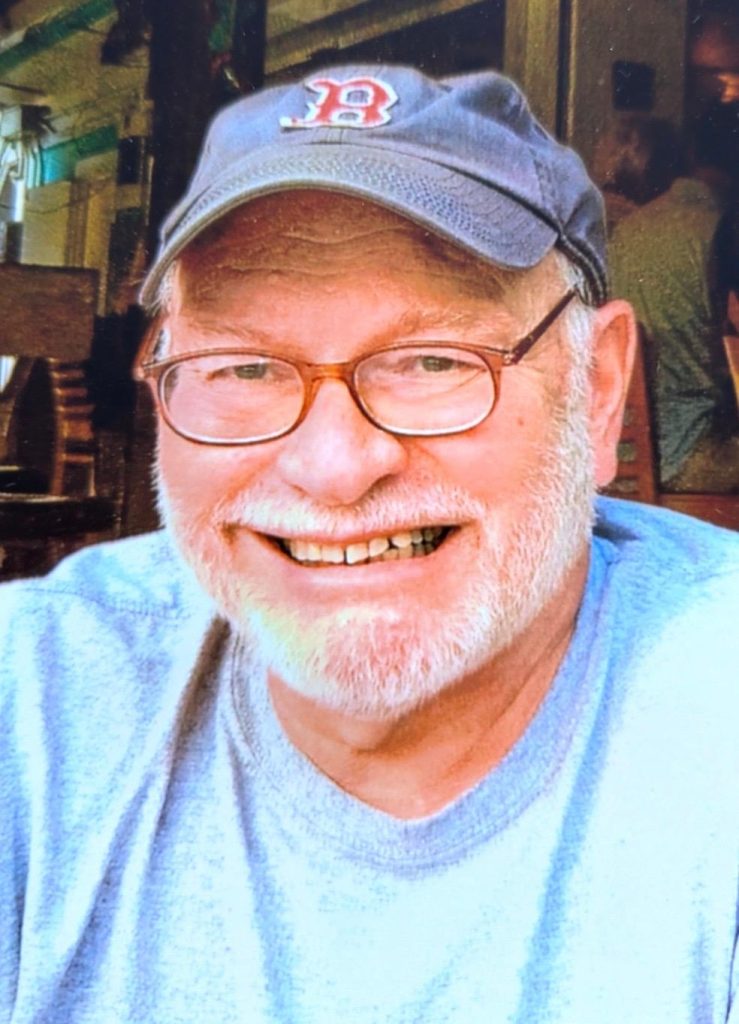
George E. Foster, 82, of Westport, passed away peacefully on Saturday morning, December 13, 2025 surrounded by loved ones after a long period of declining health. He was the husband of the late Susan J. (Drinkwater) Foster.

            Mr. Foster was born in Taunton, son of the late G. Edward and Helen (Randall White) Foster, of colonial heritage dating back to 1630, settling southeastern Massachusetts. He was an Eagle Scout in his youth, and later a graduate of Taunton High School and the University of Massachusetts Amherst. He was a longtime resident of Westport and had a long career in public service, banking, and finance. He retired after 25 years from the Town of Westport as the unopposed elected Town Treasurer. Prior to serving the Town of Westport, he worked for the U.S. Treasury, as Vice President of Fairhaven Savings Bank, as the Westport elected Diman RVTHS school committee member, and as Southern MA Health Group’s founding treasurer. He was a member of the Noquochoke Lodge A.F. & A.M., Westport. He loved traveling with his wife, Sue, especially going on cruises, and spending time with his children and grandchildren. He also loved dogs, the ocean, and watching the stock market.

            Survivors include his 6 children: Lisa D. Foster and her husband Amir Dabiri of Redington Shores, FL, Lori B. Scheffler and her husband Mike of Tiverton, RI, Randi L. Skeper and her husband Chris of Reading, MA, Kevin M. Porter of Mattapoisett, MA, Andrea Porter-Lopez and her husband Antonio of Portland, OR and Karen Gheesling and her husband Dominic of Portland, OR; his sister: Helen Sauer of Canonsburg, PA; 7 grandchildren: Ethan, Zachary, Benjamin, William, George, Emmett and Diego; along with many nieces and nephews. He was the brother of the late Eunice Wysong.

            Memorial visitation to which relatives and friends are invited will be Wednesday, December 17, 2025 at the Potter Funeral Home, 81 Reed Rd., Westport, MA 02790, from 5-7 pm. with a Masonic Service at 6:45 pm.

            Memorial service will be Thursday, December 18, 2025 at Westport United Congregational Church, 500 American legion Hwy., Westport, MA 02790 at 10:00 am.

            Interment will be private.

            In lieu of flowers, memorial donations may be made to Shriners Children’s at www.donate.shrinerschildrens.org

            For directions or to sign the online guestbook, please visit www.potterfuneralservice.com.

Local Teens Request Warm Weather Donations for Veterans

The Mattapoisett Free Public Library’s Teen Advisory Board (TAB) requests your help collecting NEW hats, gloves, and scarves through January 11.

            TAB recognizes that winter can be especially difficult for veterans, so our members have teamed up with The Veterans Transition House in New Bedford to help. Your donations of NEW hats, gloves, and scarves will offer much-needed warmth and comfort to those who’ve served our country. Please drop off your contributions in the boxes at the Mattapoisett Library, 7 Barstow Street, Mattapoisett by January 11.

            If you have any questions, please contact Amanda Lawrence, Adult Services Librarian, at ALawrence@sailsinc.org or call the library at 508-758-4171.

            Thank you for your support and compassion for our veterans. The Teen Advisory Board and The Veterans Transition House truly appreciate your kindness.

Mattapoisett Democratic Town Committee

The Mattapoisett Democratic Town Committee will hold its final meeting of 2025 on Tuesday December 16 at 6:30 pm in the downstairs public meeting room of the Mattapoisett Free Public Library. The featured speaker will be 10th Bristol State Representative Mark Sylvia, who will join local Democrats and attendees to review the past year and look ahead to 2026.

            Rep. Sylvia will offer a year-in-review update on key legislative actions on Beacon Hill, including issues affecting South Coast communities, while also discussing priorities for the upcoming session and 2026 elections.

            Matt Dems asks that attendees bring a Holiday Food Gift Card of any amount for local grocery stores to support local families in need during this holiday season. We are working jointly with the Mattapoisett Elementary School System to assist families who have lost their SNAP benefits so that no family goes without food.

            This meeting is open to anyone interested in getting involved in local and state politics and all newcomers are especially welcome. Come with a neighbor, family member or friend and bring any questions you might have or just listen in. For more information, please reach out to Nicki Demakis, Chair of Matt Dems at ndemakis@tidhlaw.com.

More Work on the Point Road Bike Path

            The Point Road Bike and Walking path still needs work, according to the Marion Open Space Acquisition Commission.

            The committee met on December 4 at the Police Station conference room and agreed that work needs to be done on the path, which will tie in with the larger South Coast Bike Path, an endeavor that seeks to create a continuous walking and bike path from the Greater Fall River area to Wareham.

            The gravel surface Point Road bike path was approved in 2019 and opened this year, relying on some donated gravel materials for use.

            OSAC members have been talking with members of the public and concluded that the gravel stones are too large, making it hard to push a baby carriage along the surface, as well as walking in general for those with mobility issues.

            Resident Sean Walsh, also a Conservation Commission member, said that a Joann Drive resident said that it is a difficult walk for those with mobility issues. OSAC member Tom Friedman said his dog will not walk along the stone and often will try to drag the leash into the wooded area. Walsh said most gravel walkways of this kind use smaller pea stones. He noted that the larger stones create gaps and make travel more difficult for pedestrians and cyclists.

            OSAC member Normal Hills, also a Select Board member, said that he observed some people veering off to the road versus walking the hard path. OSAC Chairman John Rockwell said he does not know what the solution should be – fill the voids or try to compact the stones. He recommended that OSAC members contact engineers for a solution.

            Hills, who is an engineer, spoke of a larger problem – open space and recreation projects not being completed with the initial design in mind. He said officials should do better work at specifying exactly what needs to be done for some of these projects so issues will not arise at a later time.

            The OSAC discussed maintenance issues of other town open spaces. Rockwell said he has been in contact with the Department of Public Works, which often will help maintain some of the grass and brush around these properties but the DPW’s time is often limited, especially during the winter season, when sanding and snow removal are more of a priority.

            Rockwell said a meeting has been proposed with the DPW, Select Board, Conservation Commission, and the OSAC to develop a plan and a line item for this type of work.

            Citing another conversation with the DPW, Rockwell said that there are materials around a dike at Grassi Bog, which will require more than in-house maintenance.

            That area around the dike should receive attention from a professional vendor and money for such work should come from Community Preservation Act funds.

            OSAC is scheduled to meet again next month, on January 8.

Marion Open Space Acquisition Commission

By Jeffrey D. Wagner

The Battle of Great Bridge

            This week in Revolutionary War history, let’s check up on what was going on 250 years ago in and around the colonial Province of Massachusetts Bay. Last week, General Washington received various anxieties originating from Boston by Lieutenant Colonel Loammi Baldwin. Baldwin stated there were large deliveries of ammunitions from Britain arriving in the harbor. He also expressed great concern over refugees fleeing the city, highlighting poor conditions and lack of food for the city’s populous, with some dying on the beach as they leave. Colonel Henry Knox is still on the way to Ticonderoga, but informed Washington of his convincing New York to send 12 additional cannons east. Finally, issues of pay and a lack of discipline had resulted in various mutinies for both the army and navy.

            On December 4, 1775, Colonel Henry Knox writes from Fort George, at Lake George. He reports of the dire conditions the area is in. “The garrison at Ticonderoga is so weak,” he says, while also referring to the terrible road conditions making it difficult to even approach. The “precarious” crossing of the lake is compounding by the muddy and “gullied” roads leading up to the fort. He says it will take him possibly ten days to make the short but grueling trek. He has received an inventory of the fort’s armaments, which he forwards to Washington: twelve 18-pounders, eleven 4-pounder brass field pieces, and twenty-five boxes of lead ammunition.

            On December 6, Washington sends an angered letter to James Otis Sr. of Barnstable. Otis is a prominent lawyer and lawmaker for Massachusetts, and Washington has recently received word that Massachusetts militia men are being paid more than those of other state’s regiments. That is all well and good, however, Washington fears jealousy and resentment. He says, “jealously, & discord – But sir, if the Gen[eral] Court of this Colony have resolved on the latter, you must give me leave to add, that it aims the most fatal stab to the peace of this army that ever was given; & that Lord North himself, could not have devised a more effectual blow to the recruiting service.” A precautionary measure, as the other states would struggle to up their pay to match and recruitment numbers are dwindling.

            On December 7, the Continental Congress commissioned 28-year-old John Paul Jones of Scotland as a First Lieutenant of the Continental Navy. Jones will soon become a dreaded privateer, made famous by numerous engagements across the Northern Atlantic.

            On December 9, Phillip Schuyler in Albany writes to request from the general 3,000 troops so Schuyler can head north and assist Arnold in Canada. He says he can get the men there by the middle of January. Even if Washington agreed, the middle of January would prove to be too late. That’s a story for the next few weeks though.

            That same day, the Battle of Great Bridge is fought in southern Virginia. Over 800 Virginia militia, led by Colonel William Woodford faced a little over 400 British infantry. Lord Dunmore tried to break out of their fortified positions in Norfolk and halt a build-up of local forces. By the end, one patriot was wounded, with anywhere between 62 and 102 British killed. Dunmore’s defeat was catastrophic for the British. He and the remainder of British forces would board ships and anchor off the coast for the following months. Norfolk, now captured, would soon be razed to the ground by patriots.

This Week in Revolutionary War History

By Sam Bishop

ORRHS Hosts Second Annual Community Service Learning Day

 Superintendent Michael S. Nelson and Principal Michael Devoll are pleased to share that Old Rochester Regional High School hosted its second annual Community Service Learning (CSL) Day on Wednesday, November 26.

            More than 600 ORRHS students and staff members spent the half-day before Thanksgiving break engaging in hands-on service projects benefiting local schools, nonprofit organizations, community groups, senior residents, Veterans and public spaces throughout Marion, Mattapoisett and Rochester.

            Designed to connect learning with civic engagement, CSL Day allows students to explore community needs, understand the importance of volunteerism, and develop a sense of stewardship for the place they call home.

            This year’s projects included campus beautification and gardening; environmental clean-ups at Silvershell Beach, the Mattapoisett Land Trust, and local disc golf areas; along with service at the Mattapoisett Museum and Library; classroom support and programming at Sippican School, Rochester Memorial School, Center School, and other early-childhood centers. Other CSL Day projects involved yard work for veterans; baking and crafting projects; mural work; letter-writing campaigns for Girls Love Mail; card-making for seniors and hospitalized children; CPR and Narcan education; and volunteer contributions to nonprofits like Friends of Jack, Marion Buoys of Hope; Gifts to Give, an organization that provides children’s items and presents to local kids in need.

            More than 70 faculty and staff members supervised and collaborated on these projects, guiding students in meaningful CSL experiences across dozens of locations throughout the Tri-Town area. Funding for transportation to the off-campus activities as part of CSL Day was provided by MassHire, the state’s workforce development network.

            “Our students’ buoy-painting for Marion Buoys of Hope was a beautiful reminder of what we can accomplish when creativity meets service,” said Assistant Principal Lauren Millette. “Our students showed that service is more than volunteering – it’s using your talents to lift others.”

            “This being my first year participating in CSL Day, I was truly inspired by our students as they gave back and worked together, reflecting the relationships that make the tri-town community so special,” said Director of Guidance Christina Cioffi. “Overseeing our Community Collection project as part of CSL Day, you could see students realize how even small individual contributions can add up to a major impact. Students were thoughtful, enthusiastic, and eager to help their neighbors. It was a privilege to guide them.”

            “Community Service Learning Day is becoming one of my favorite traditions at ORR because it shows the best of who our students are,” said Principal Michael Devoll. “Seeing hundreds of young people step forward to give back – through physical work, creativity, compassion, and collaboration – reminds us why service is such an important part of education. I’m incredibly proud of the effort our students and staff put into this day. We hope students walk away learning that service is not just a one-day activity, but a lifelong mindset of connection to the community.”

            “The entire Tri-Town community benefits when students learn the value of connection, contribution, and civic responsibility,” said Superintendent Michael S. Nelson. “We’re grateful to the nonprofit organizations, schools, and other local partners who welcomed our students, and to all of our faculty whose leadership made this day possible. CSL Day continues to grow as a signature example of what makes Old Rochester Regional such an awesome place to live and go to school.”