The Town of Marion will hold a Special Town Meeting on Monday, March 23 at 6:45 pm in the Sippican School Multipurpose Room. Copies of the Warrant will be mailed to voters, and it is currently available to view on the Town’s website at marionma.gov.
The Town of Marion will hold a Special Town Meeting on Monday, March 23 at 6:45 pm in the Sippican School Multipurpose Room. Copies of the Warrant will be mailed to voters, and it is currently available to view on the Town’s website at marionma.gov.
The long-awaited Wareham Road housing development reached its final stages at Monday’s Marion Planning Board meeting.
The meeting itself – held in the Police Station conference room – lasted for 10 minutes, but the project, which has been in the works for five years and changed developers, was approved, requiring some bond-language changes.
The quick meeting on the 48-unit, housing development stood in contrast to the twists the proposed project has taken over the last five years.
Initially, developers Matthew Zuker and Armando Petruzziello proposed cottages and townhouses for people ages 55 and over.
The developers were also successful in passing a zoning change at the Spring Town Meeting in 2022 to make it a possibility.
Around that time, former Town Planner Gilberto “Gil” Hilario expressed concern about an influx of housing coming into the town.
Earlier this year, the national developer Toll Brothers Inc. took over the project. Last July, Toll Brothers representatives amended the site plan after some concerns were raised by the board pertaining mostly to traffic patterns and potential safety.
Bruce Erman, an engineer for the project, said they wanted to improve the layout for vehicle traffic and pedestrians. Erman proposed single-family homes, in lieu of duplexes, and in an area where all residents there can access the Weweantic River. The layout also improved Fire Department access, according to Erman, eliminating a dead end and creating a loop for fire truck and ambulance access.
Erman said that they also arranged a “boulevard entry” from Route 6 so people know that cars would be leaving the development and would slow down as they are driving along Route 6. Last summer, the board members noted that the development is in a dangerous section of Route 6, with visibility blocked by a hill and the sun at certain times of the year.
The changes proposed by the developers were reviewed by the town’s legal counsel and engineers.
In other news, the board is taking applications for a Planning Board seat set to expire in May. The board also approved minutes from the February 2 meeting.
The next meeting of the Marion Planning Board will be held on Monday, March 16 at 7:00 pm in the Marion Police Station conference room.
Marion Planning Board
By Jeffrey D. Wagner
Margaret M. (Walsh) Bancroft, 86, formerly of Mattapoisett died peacefully March 6, 2026 at Sacred Heart Home after a period of declining health.
Born September 9, 1939 in New Bedford, the daughter of James J. and Agnes (McGrath) Walsh, she married David A. Bancroft, her high school sweetheart. They started their married life near Buttonwood Park in New Bedford’s West End. In 1974, they moved to Mattapoisett to raise their family. She was a communicant of St Anthony’s Church in Mattapoisett.
Margaret was proud of her parents Newfoundland heritage and enjoyed visiting the various Cape Shore communities they hailed from on the Avalon Peninsula.
She was a lover of “going to the beach”. She could be found almost every day in the summer either sitting in the sun or quahogging at Shining Tides Beach in Mattapoisett. Beach chairs, chowder and stuffed quahogs were a family summer staple.
Known as Maggie or Margie to some and Margo to others, she had a spitfire personality and a huge sense of humor. She enjoyed playing a practical joke as much as having one played on her. She found ways to ease the pressure in tense situations. She was an outgoing and approachable personality that made people feel relaxed, comfortable and at ease. She had a sensitivity to realizing someone in a group was not feeling comfortable and helping them navigate the landscape. Maggie was someone you could talk to in confidence and knew it wasn’t going any further. She had a knack for taking people under her wing and letting them know everything was going to be alright.
Maggie was an enormous lover of animals, especially her dogs. There was always a menagerie of different creatures that became a part of the family. Her husband always feared one day he might come home and find a horse taking up residence in the family room.
Maggie was a voracious reader and lover of books. Her passion for reading started at a young age. She organized, introduced the Dewey Decimal System and served as librarian at Holy Family Grammar School when her children were enrolled there. That passion continued into the library room she had built at her home in Mattapoisett.
Later in life she had the ability to travel to Switzerland and the alpine countries, Scandinavia, the Baltic region and Russia. She took herself on a transatlantic cruise. She always enjoyed spending time with her children in the Cayman Islands, the Bahamas, other Caribbean Islands and skiing in the White Mountains of New Hampshire.
Margaret instilled in her family the importance of education and striving to do your best in whatever endeavor you undertook. She also believed you should be proud of your accomplishments but never forget where you came from and never think you are better than someone else. She was quick to call you out if she thought you got “too big for your britches”.
Survivors include her son David J. Bancroft and husband John M. Nickulas of Kennebunkport, Maine; her daughter Robin L. Bancroft of Fairhaven, MA; a sister Joan M. Vlcek of Fairhaven, MA; her sisters-in-law Mary Ann Bancroft, and Irene Bancroft; her brother-in-law John Bancroft and his wife Carol Bancroft of Dartmouth, MA; and many nieces and nephews.
She is preceded in death by her husband David A. Bancroft who died in 2005 who she shared 43 years of marriage; her son Michael A. Bancroft who died in 1996 at the age of 26; her sisters Alice C. Walsh, Elizabeth Vera and Catherine Perkins; brother-and-sisters in-law Lawrence Vera, Joseph Vlcek, Arthur and Claire Bancroft; William and Jeanne Bancroft; Robert and June Bancroft; Paul Bancroft; Richard and Eleanor Bancroft; James and Connie Bancroft and Donald Bancroft.
Her children would like to extend tremendous thanks and gratitude to the staff at both the Residence at Cedar Dell and Sacred Heart Home who showed love and care for her these past years.
Visiting Hours will be held on Wednesday March 11th from 4-7 pm. Her Funeral will be held on Friday March 13th at 9 am from Saunders-Dwyer Home for Funerals, 495 Park Street, New Bedford, followed by her Funeral Mass at Holy Name of the Sacred Heart of Jesus Church, 121 Mt Pleasant Street, New Bedford, MA at 10 am. A private burial will follow at the family plot in Riverside Cemetery.
In lieu of flowers, remembrances can be made online or via check to the Louis T Graves Memorial Library, 18 Maine Street, PO Box 391, Kennebunkport, ME 04046, or the Pan-Mass Challenge – Jimmy Fund, 77 4th Avenue, Needham, MA 02494.

In loving memory of Vickie Carr, whose life was a testament to the power of words, compassion, and unwavering love, we announce her peaceful passing at home in Mattapoisett on March 6, 2026, after a courageous battle with a long illness. Born on July 7, 1956, in Quantico, Virginia, Vickie’s journey was one marked by remarkable achievements and profound connections.
Vickie’s early years were shaped by her insatiable love for literature. This passion led her to Syracuse University, where she earned a Bachelor’s degree in English and Journalism in 1978. Her pursuit of knowledge and creativity continued at Antioch University, where she attained a Master’s degree in Creative Writing in 1982. These academic achievements laid the foundation for a career that would touch countless lives.
As an award-winning journalist, Vickie’s voice resonated with truth and empathy. Her dedication to honest storytelling earned her the prestigious Edward R. Murrow award for her work with National Public Radio, along with a Best News Story award from the New England Press Association. Vickie’s commitment to raising awareness about critical issues was further recognized with the Sword of Hope award from the American Cancer Society in 1984. Her literary talents extended beyond journalism, as she published several short stories in acclaimed literary magazines, leaving a lasting mark on the world of literature.
Beyond her professional achievements, Vickie was known for her boundless kindness and generosity. She had an extraordinary ability to put others before herself, often offering a listening ear and a warm smile to those in need. Her love for reading enriched her life and inspired those around her to explore new worlds through literature.
Vickie is survived by her devoted husband of 46 years, Paul Bergstein, whose partnership and love were a constant source of strength and joy in her life. She is also lovingly remembered by her siblings, Cindy Fiedler, Terry Tomasello, Rob Bruno, and Richard Bruno. Vickie was predeceased by her beloved son, Nicholas Carr Bergstein, whose memory she cherished dearly.
A wake in memory of Vickie’s life will take place on Thursday, March 12, 2026 from 4-6 pm in the Saunders-Dwyer Mattapoisett Home for Funerals, 50 County Rd., Mattapoisett. Family, friends, and all whose lives were touched by Vickie are invited to gather in remembrance and gratitude for the legacy she leaves behind. Her burial in Cushing Cemetery will be held privately. For directions and guestbook, visit www.saundersdwyer.com.
The family wishes to extend their heartfelt gratitude to the staff and volunteers at Community Nurse of Fairhaven, MA for their unwavering support and compassionate care during Vickie’s illness. Your kindness and dedication brought comfort and peace to Vickie and her loved ones in her final days. In lieu of flowers, the family kindly requests donations be made to Community Nurse. Donations can be made online at https://www.communitynurse.com/support/donate/.
Vickie’s spirit will forever echo in the hearts of those who knew her, as we carry forward her legacy of kindness, love, and dedication to truth.
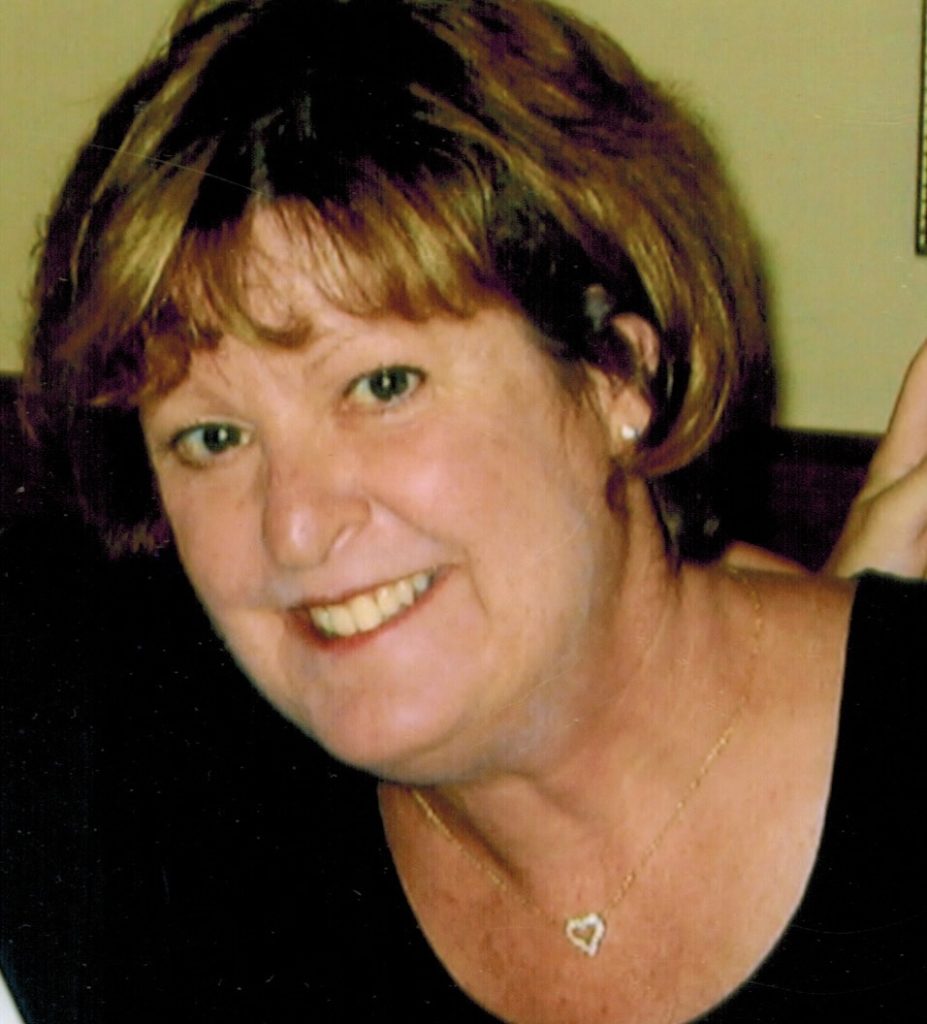
On April 20, Geoffrey Noonan from Marion, Massachusetts, is running to defy cancer as a member of the Dana-Farber Marathon Challenge team in the 130th Boston Marathon® presented by Bank of America, along with more than 500 Dana-Farber Marathon Challenge teammates from across the country and around the world, will run Massachusetts’ historic marathon route from Hopkinton to Boston to collectively raise more than $8.75 million for cancer research at Dana-Farber Cancer Institute.
This year marks the 37th annual running of the Dana-Farber Marathon Challenge (DFMC), the largest and longest-running charity team for the Boston Marathon. One hundred percent of the funds raised by the Dana-Farber Marathon Challenge team benefit Dana-Farber’s Claudia Adams Barr Program in Innovative Basic Cancer Research, which enables promising scientific research in its earliest stages. The Dana-Farber Marathon Challenge has raised more than $140 million for the program since 1990.
Runners include cancer survivors and patients, and family and friends of those who have been affected by cancer. Each team member must fulfill a basic fundraising commitment:
Invitational runners – runners who receive their entry from Dana-Farber have a minimum fundraising commitment of $12,000.
Own entry runners – runners who have joined the DFMC team after obtaining their own race entry have a fundraising commitment of $4,000.
Dana-Farber was among the first charity organizations to be recognized by the Boston Athletic Association (B.A.A), which organizes the Boston Marathon. The Dana-Farber Marathon Challenge team offers its members extensive fundraising support, team training runs, exclusive Dana-Farber events, and a post-race recovery zone. Celebrating his 50th anniversary of winning the 1976 Boston Marathon Men’s Open Division, Jack Fultz will serve as the team training advisor for the 37th time. Dana-Farber Marathon Challenge runners who are not time-qualified for the Boston Marathon receive an invitational entry into the race.
To contribute to the Dana-Farber Marathon Challenge, visit RunDFMC.org or contact the Dana-Farber Marathon Challenge staff at (617) 632-1970 or dfmc@dfci.harvard.edu. Follow DFMC on Facebook: www.facebook/marathonchallenge.
The Mariner Youth Soccer Club’s Annual Meeting will be held Tuesday, March 31 at 7:00 pm at the Fairhaven Council on Aging located at 229 Huttleston Avenue, Fairhaven, MA 02719. All members are welcome to attend.
The meeting will include elections for board positions and committee updates and appointments. Please address questions or interest to: info@marineryouthsoccer.onmicrosoft.com.
ORCTV will hold its Annual Meeting on Thursday, April 9 at the ORCTV studio. The meeting will begin at 5:00 pm and will include the election of officers to the Old Rochester Community Television Board of Directors. All current ORCTV station members are invited and encouraged to attend.
2026 Board of Director’s Nomination Slate
Marion Nominee – Phil Sanborn – 2 yr. term
Rochester Nominee – Nancy Sparklin – 2 yr. term
Mattapoisett Nominee – Chris Charyk – 2 yr. term
Membership Seat – Linda Mederios- 1 yr. term
Typically, this weekly article covers a Wednesday-to-Tuesday. However, this week we will cover a few more days in order to bump up the days as The Wanderer prints on Thursdays, and I feel it will make it more relevant to the reader, rather than reading things that happened the prior week. Therefore, this article covers more days to catch up, February 25 to March 7, 1776; the week after will cover March 8 to March 14, etc.
This week in Revolutionary War history, let’s check up on what was going on 250 years ago in and around the colonial Province of Massachusetts Bay. Last week, General George Washington convened with his officers and spoke with the Continental Congress regarding plans for the planned move on Boston. Cold weather, the same that decimated the forces that attacked Quebec, is helping here, with much of the Charles River and port area around the city frozen over, allowing more encirclement and a spread-out assault. Though they still struggle with powder and manpower, Washington is mobilizing the men and moving into position.
On February 25, 1776, plans for a capture of Boston are nearly finalized. Still struggling with supplies, Washington writes to Major General Philip Schuyler in New York, saying, “I have adopted every measure which my judgment directed for procuring arms in these governments for the army under my command, – I am under the disagreeable and melancholy necessity of informing you, that there is at this important crisis a very great deficiency, and that there is now a considerable number of men at these encampments without any in their hands, nor do I know that there is any prospect or probability of providing them.” He has asked this of Schuyler as well as confidants in New England. Time is ticking on Boston, and supplies must be gathered.
That same day, Washington and his officers have finalized a plan should they need to play their hand early. Major General Horatio Gates, Brigadier General Nathanial Greene, Major General Israel Putnam, and Brigadier General John Sullivan have presented General Washington with a rough plan should the British lash out early. For this, they laid out a system of signals to notify each other of British movements. For example, “Signal in case the Enemy begin to embark, a flag on Roxbury Meeting House; If they actually land at Dorchester two flags.” This is all while troops, and notably artillery pieces, move into position in Boston’s sightline.
He writes to John Hancock, President of the Continental Congress, the following day, saying, “We are making every necessary preparation for taking possession of Dorchester Heights as soon as possible, with a view of drawing the enemy out – How far our expectations may be answered, time can only determine.” He is confident of this movement of troops, as the encirclement of the city is becoming a reality, adding, “We shall be able to command a great part of the town, and almost the whole harbor.” Troops are on the verge of assault as Massachusetts militia are told to be ready to move in at a moment’s notice.
In an effort to keep a lid on his movements, Washington writes to Major General Artemas Ward on March 1, mentioning, “A gentleman or two from Maryland, having some business of importance to negotiate at the lines, have applied for, and been refused leave to attend personally.” Men are being turned away, for if they get too close, the troop movements could be revealed to the British in Boston.
On March 2, 1776, the grand plan has taken shape and begins to take motion. Under Colonel Henry Knox who had brought the artillery from Ticonderoga, American guns begin shelling the city from afar in the night, only to have British guns return fire. This exchange goes on for a few days, with little damage done on either side except the destruction of some of Boston’s homes and the killing of some unlucky British soldiers.
On March 3, Washington’s General Orders tell his men, “No officer, or soldier, under any pretense, is to be absent from his post,” without express permission from their superior. He adds, “The General flatters himself, that every officer, and soldier, will endeavor to give, such distinguished proofs of his conduct, and good behavior, as becomes men, fighting for every thing that is dear, and valuable to freemen; remembering at the same time what disgraceful punishment will attend a contrary behavior.” He also instructs men to be ready to push forward to advanced positions like Roxbury, though he still does not explicitly mention Dorchester.
Washington writes to Major General Ward that same day, and notes that his officers “thought it dangerous to delay taking post on Dorchester Hills.” He believes it will take about 800 men at night to secure the neck leading to Boston.
On March 5, Washington instructs around 2,500 men to secure Dorchester Heights, not knowing if the British will flee immediately to the sea or if the battle will drag on. Around 800 men are sent in to cover those, with a band of carriages and tools for entrenching positions following behind. Brigadier General Rufus Putnam, cousin of Israel Putnam, sets forth his plan for the use of felled timbers and bundles of sticks/brushwood to hastily erect fortifications overnight atop the hills, thus allowing artillery pieces to be run up and stationed in fortified positions. By 4:00 am, fortifications were erected and defended by small grapeshot cannons.
The British were so surprised by the speed of this encampment, that General William Howe is said to have remarked, “These rebels have done more work in one night than I could make my army do in three months.” The following morning, British soldiers would experience much heavier artillery fire than the prior nights, with their returning fire not even able to reach the tops of Dorchester Heights, leaving American positions unscathed.
Howe made plans for a march across to break these positions, preparing a detachment of around 2,400 men. Receiving word of this, Washington increased forces on the hills to around 6,000. Late in the day on March 5, a heavy snow would roll in, thus neutralizing the possibility of a British breakout. This heavy fire and bombardment from multiple directions would afflict the British positions and the city of Boston for the coming days.
This Week in Revolutionary War History
By Sam Bishop
Rochester’s Conservation Commission on Tuesday leaned heavily into two Notices of Intent for High Street Solar 1 and 2 at 0 High Street., which proposes work within the 100-foot wetlands buffer zone for a ground-mounted solar array to include a battery storage system, associated site work and utility construction. One notice is for lots four and five. A separate notice is for lots 6, 16, 17, 35, 21. 20, 22 and 35.
As abutters concerned about the impact of the plan on their neighborhood looked on, project representative Sarah Stern explained the northern section of the parcel is 63 acres; the southern portion is 23 acres and is an upland wooded area where much of the 43-acre solar array would go. These areas surround 94 acres that are being mandated as conservation restriction (CR) land. The developer, Ritter, LLC, is looking for some group to hold this CR. She noted Natural Heritage is examining the project because it includes box turtle habitat areas. She added that the developer has land where it will rebuild these habitats.
John Dvoski, a cranberry grower with nearby bogs, noted all his bog streams dry up during parts of the year. “We rely on them for our reservoir,” he said. He asked that the project’s water drainage be designed to go southerly and stay plentiful for his and fellow bog owners’ use, he said.
Other Mayflower Lane residents were also concerned about the effect on their water resources. Brad Carvel of 56 Mayflower said he was very concerned with how his water table will be affected. “There’s heavy wetlands back there,” he said. Mayflower Lane resident Doug Sims asked how the noise of the array’s power system will affect local box turtles. Stern answered that conservation protections are being taken very seriously in the planning stage.
Ultimately, the commission continued the NOI hearing to its April 7 meeting. This result came after Chair Christopher Gerrior requested scheduling a site walk as the next step, and he and Stern reasoned they needed more time to let the Planning Board’s hearing on the project happen on March 24.
The next Conservation Commission meeting will be Tuesday, March 17 at 7:00 pm in Town Hall, 1 Constitution Way.
Rochester Conservation Commission
By Michael J. DeCicco
Whether March comes in like a lamb or lion, two events presented by the Sippican Historical Society (SHS) this month will give you new historical perspectives.
On March 19, textile curator Madelyn Shaw connects war, wool and economics with what we wear today. With co-author Trish FitzSimons, Shaw wrote Fleeced, which ties the Australian, New Zealand, English and American wool economy over the past 150 years. This Speaker Series presentation is open to all and will occur at the Marion Music Hall on March 19 at 6:30 pm.
“One of our members attended Ms. Shaw’s talk in Rhode Island and found it fascinating,” said Executive Director Alanna Nelson. “The book really opened my eyes to connections I’d never considered. SHS will have copies of Fleeced to purchase after the talk.”
On March 24, SHS will host a watch party for the panel discussion “The Past Is Now.” Featuring four indigenous speakers of Wampanoag and Nipmuc tribes discussing King Philip’s War (1675-1676), the live event occurs at the Cambridge Public Library. Enjoy a social evening in a small group to learn about southeastern Massachusetts history. Seats are limited so RSVP now to info@sippicanhistoricalsociety.org for this event on March 24 at 5:30 pm at the SHS.
The Sippican Historical Society, located at 141 Front Street in Marion, is a 501(c)3 non-profit dedicated to documenting and celebrating the history of Marion, Massachusetts. Thanks to its members, these events are free and open to all. Donations are always welcome. For more information, go to www.sippicanhistoricalsociety.org.