Marian Braitmayer Howell

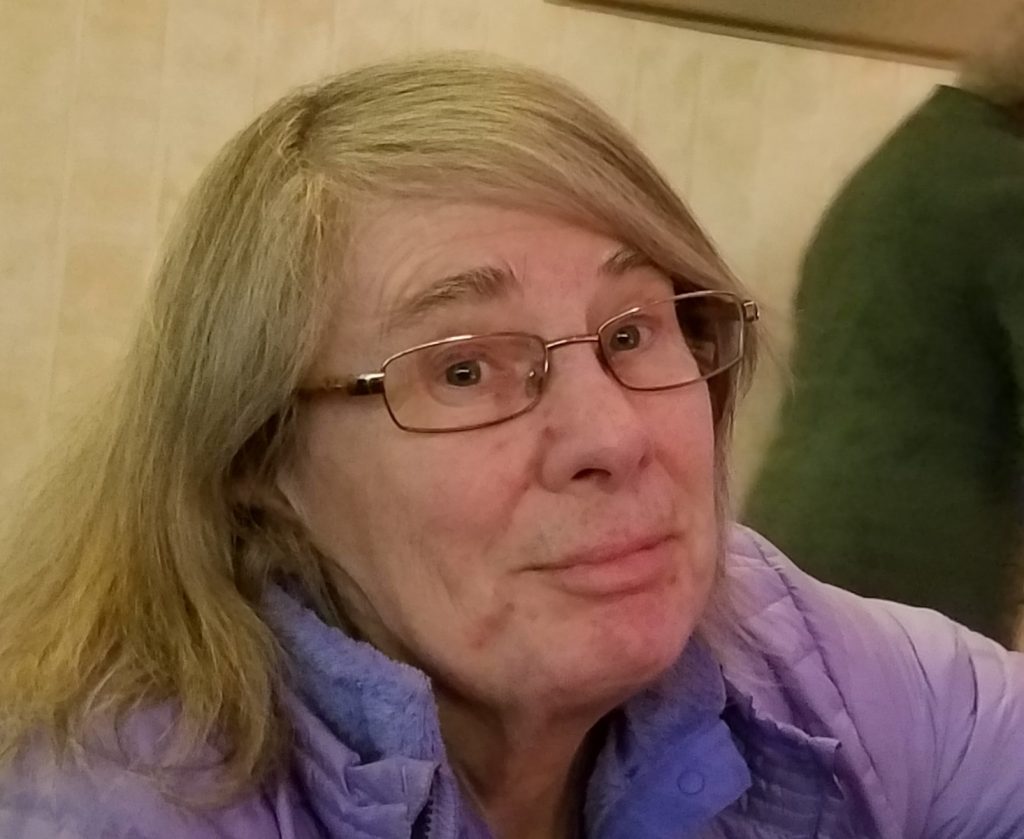
Marian Braitmayer Howell (she preferred “Marty” or “Tuna”), 75, of Marion died Thursday, August 15, 2024 unexpectedly at home.

            Marty was raised in Red Hook, New York, adopted daughter of the late William Henry Howell and the late Jane Braitmayer Howell. She resided in New York and various places in Massachusetts before moving to Marion full time in the early 1990s.

            She was a graduate of Emma Willard School and Vassar College.

            Marty was formerly employed as a broadcast audio producer for WCRB for many years until her retirement and was responsible for regular broadcasts of the Boston Symphony and the Boston Pops.

            She was a longtime supporter and former trustee of the Sippican Lands Trust and was a member of the Beverly Yacht Club.

            Marty loved photography and was an avid amateur landscape photographer who was inspired by the interplay of the natural light, color, and forms she saw in the local landscape. She was at her happiest tromping through a wetland or marsh capturing the fine detail of nature’s wonders through her camera lens.

            She is survived by her longtime partner, Paul McGalliard, her brother, David Howell, and various extended family members. She was predeceased by her dear sister Kath Howell.

            Arrangements were by the Saunders-Dwyer Mattapoisett Home for Funerals. No services are scheduled at this time. In lieu of flowers, donations in Marty’s memory may be made to the Sippican Lands Trust, P.O. Box 848, Marion, MA 02738.
Romantic Yarn Comes Full Circle

For Cecelia Hall, caring for her community has mainly come in the form of yarn. Operating out of her Chevy Silverado pick-up truck, she collects yarn and distributes yarn, the goal being 100% charity.

            On trips to and from Fairhaven, she recently had the back of her pick-up packed with yarn twice in the same week.

            “And then one of the families called me and said, ‘My aunt died in Rhode Island,’ and they brought me four SUV loads of black trash bags full of yarn. They were all one color – Country Blue – 96 skeins,” she said. “I get all this yarn, but I distribute it. I have people in Dartmouth, Freetown, New Bedford, Rochester, Wareham … they don’t have to donate it back to me, donate it wherever.”

            The sun barely sets on Hall’s empire of yarn, reaching over state lines. But her efforts emanate from her truck and begin at home.

            “People drop things off here, they drop things off at the Senior Center, (saying) ‘that’s for Celia,’” she said.

            Ending with successes like the $1,000 she raised at a Council on Aging craft sale, it’s been a steady flow of collection, creation and even recreation of clothing items and an ever-expanding network of likeminded collaborators. For this ongoing contribution for the betterment of her community, Cecelia Hall is being recognized with the 2024 Keel Award for the Town of Rochester.

            “People know that they can give her items they no longer use or need, and she will find a new home for them,” said Rochester COA member Pauline Munroe. “She had so many bins of items that she organized and managed a craft sale at the Rochester Council on Aging which raised over $1,000 for the Senior Center.”

            Hall’s activities in Rochester began modestly.

            Having belonged to three crochet groups in Rochester, Wareham and Acushnet when the COVID-19 pandemic hit the region, suddenly no groups of any kind were meeting out of an abundance of caution. But, when the Rochester group resumed, it drew attendees from Marion and Wareham.

            On her weekly trip to Acushnet-based Gifts to Give, Hall brought baby-related items but had yet to begin working there. She learned that the nonprofit was throwing out knitting hooks and crocheting needles because they had no outlet for the items.

            “So now they have an outlet for it: me,” said Hall, pointing to two bags in her living room given to her by a quilter that had to retired with failing vision. “Every week she comes to the COA and brings me two bags, so I have bags and bags of material.”

            Other items at Hall’s Rochester home are earmarked for Amy’s consignment shop in Westport. Hall also delivers items to Parting Ways Consignment Shop in Marion.

            “The money goes all to me, and then I buy clothes for the kids, whatever they needed,” she stated.

            When the Kids Echo in Freetown relayed that the business needed sizes 2 and 3, Hall spent $96 that she had collected on sales for that cause.

            Hall has conducted many yard sales at the Rochester Historical Society, and she’ll be back there next month for the Cranberry Festival where she will sell jewelry to “upcycle people,” artists who convert jewelry into other items. The money will buy oil for the Historical Society.

            Hall’s experience in the business world has helped her innovate and stay organized as her contacts multiply. Sometimes it’s about dolls, blankets or buntings for those dolls, sometimes summer dresses, and sometimes quilted lap robes for people in wheelchairs. Cecelia donates an afghan every year to the Rochester Memorial Day Boat Race.

            All the while Cecelia discussed the operation, her daughter Ann sat at her kitchen table knitting a large item.

            Hall organizes the weekly crafts group that meets at the Senior Center, and on Thursdays before heading off to Gifts to Gift in Acushnet, she will help serve breakfast. After learning that a lady who attends her church works in the Southeastern Massachusetts Educational Collaborative, SMEC regularly receives donations and so does a school in Rhode Island where that lady’s daughter teaches. Meanwhile, a colleague in Wareham fashions bags of different sizes to keep small toys.

            After it turned out that 2,000 facemasks that someone had fashioned from smooth-fabric football jerseys would not be needed toward the end of the pandemic, Hall reached out to a quilter who quickly figured out how to reshape the masks and instead manufacture bags.

            There seems to be no limit to the connections Hall is making, and yarn seems to be holding it all together.

            At the heart of it, Cecelia Hall is a caregiver from Rochester whose life has come full circle back to where it started and to a relationship she never expected.

            After spending 40 years of her life in Dayton, Ohio, Hall returned to Rochester 16 years ago. A community advocate in Ohio, Cecelia became a research advocate, the first in the United States. There, she lived in a 12-story building and volunteered at a thrift store. When the word got out, people in her residential building donated items.

            “I had one of those carts with the four wheels, it can hold a lot of stuff,” she said. “So when I got here, it was just a natural thing. I don’t know how I got into it, but it was natural.”

            Upon her return to Rochester 16 years ago, Cecelia crossed paths with someone she hadn’t laid eyes on in 60 years, longtime resident and one-time classmate Rick Hall. The two had attended Grades 1-5 together in the old schoolhouse now serving as Rochester’s Main Fire Station. Eleven months before they met, Rick’s wife passed away.

            Both understood the significance of the timing of their reunion. Cecelia the caregiver found the person she is meant to care for.

            “I walked in the Senior Center, and we’ve been together ever since,” she said.

Rochester Keel Award: Cecelia Hall

By Mick Colageo

Self-Storage Approved on County Road

Rochester’s Planning Board Tuesday approved the Site Plan Review draft decision for a four-building, self-storage facility off of County Road, one of which will be multistory.

            Board Chairman Arnold Johnson, however, was the lone negative vote, disagreeing that the draft decision should be endorsed so quickly.

            The meeting began with discussion of comments from the town’s consulting engineer, Ken Motta that requested manholes be part of the stormwater drainage system. Project engineer Phil Cordeiro disagreed, saying there will be a good, clean flow from the proposed drainage systems, with a 45-degree angle that will not impede water flow.

            Board members endorsed the project after agreeing with Cordeiro’s argument and reasoning this will be a private system; a clog or an overflow would not affect public groundwater.

            Johnson explained he was the lone dissenting vote simply because “I don’t like approving draft decisions without giving them time to be considered.”

            In other action, the board approved the Braley Hill North Solar amended draft decision, which will allow a one-year extension of the permit for a large-scale, photovoltaic installation in a Ground Water Protection District on a Scenic Highway (Route 105) on Braley Hill Road.

            The board continued until its September 10 meeting its hearing to amend and extend the special permits for a proposed solar-energy installation on 128 acres at 529, 523 and 0 Snipatuit Road and Featherbed Lane within the Mattapoisett River Valley Watershed and Groundwater Protection District.

            Johnson reported the board has received correspondence that the Zoning Board of Appeals has received a Use Variance petition for a plan to construct a multifamily unit on a lot barely more than an acre in size. Johnson proposed, and the board agreed, to send notice to the ZBA that the board opposes such a plan.

            Town Planner Nancy Durfee advised inviting Town Counsel to the board’s next meeting to discuss a state bylaw change and a proposed bylaw for the January 6, 2025, Special Town Meeting. The new stated law allows more accessory dwelling units. The town proposal is to eliminate use variances. Both items need Town Counsel’s input, Durfee said.

            The Rochester Planning Board’s next meeting will be held on Tuesday, September 10, at 7:00 pm at Town Hall, 1 Constitution Way.

Rochester Planning Board

By Michael J. DeCicco

Welcome Home

On Sunday, September 8 at 10 am, the Mattapoisett Congregational Church will hold its annual homecoming on the church lawn at 27 Church Street in Mattapoisett. Everyone in the Tri-Town area is invited to celebrate with us in worship with a Blessing of the Backpacks for students returning to school. The service will be followed by a BYO picnic lunch. Traditionally, representatives from the police and fire departments are recognized for their caring service to the people of Mattapoisett. Following worship at 10 am, there will be games for the children, registration for Sunday School plus ice cream. There will be fun and fellowship for all. We hope you’ll bring your lawn chair and join us at 10 am. Contact the church office with any questions at 508-758-2671 or mattcongchurch@gmail.com.

Mattapoisett Yacht Club

Racing Results for August 20 & 21

            Tuesday Night Ensign Fleet – Uncle Fester won their first race in the Ensign Fleet tonight. Congrats to Tim and his crew on a great race. The battle still goes on between Odyssey and Black Ice as they tied for the night, Odyssey winning in the tie breaker for first place for the night, Black Ice second and Uncle Fester third.

            Results 1st Race, 1. Uncle Fester, 2. Black Ice, 3. Odyssey, 4. Brass Monkey, 5. Brou Ha Ha, 6. Hamburglar

            Results 2nd Race, 1. Odyssey, 2. Black Ice, 3. Brou Ha Ha, 4. Uncle Fester, 5. Hamburglar, 6 Brass Monkey (for those that care, Rick beat Bob 3-1 in the BBB)

            Wednesday Night PHRF Results – No Quarter Given and Beck carry on their winning ways in their respective classes.

            Class A, 1. No Quarter Given, 2. Restless, 3 Coconuts

            Class B, 1 Beck, 2. Fir Na Tine, 3 Kinsail, 4. Lindisfarne, 5 Chickadee

            With one more week of racing to go there is a lot on the line, not only for the August Series but the overall trophies for each Class.

From the Files of the Rochester Historical Society

In these days of easy access to music of all types, it’s hard to imagine a time when if you wanted music, you had to make it yourself. In colonial times, choirs, singing bees and gathering to hear the few instruments that you and your neighbors possessed were the only sources of music.

            Like most things in colonial life, especially in the 1700s, the church was home to most public music. The Sabbath was celebrated by long sermons and prayers interspersed with the singing of a Psalm which was apparently a lengthy procedure.

            At a Sunday service, the Psalm, “turned into meter”, was lined off or “deaconed” by an appointed person. In the case that person was unavailable, there were always two or more who could take over. The style of singing in vogue at the time, slow tunes, took up quite a bit of time. The book from which most music was chosen was the “Bay Psalm Book” and in general, only a few church tunes were well known.

            Our colonial ancestors were nothing if not contentious, and it wasn’t long before a disagreement arose over whether it was more appropriate to have “singing by rote” or “singing by rule”. One of those in opposition to “singing by rule” wrote, “If they sing by rule they will also pray by rule and preach by rule, and then comes popery”.

            The “singing by rule” faction won out and with it came books of music, variations in the method of singing and The New England Singing School. Many of those who attended the school were gathered into choirs and “part singing” was introduced.

            Once church congregations stopped arguing over the singing, they turned their attention to the musical instruments allowed in the church. First, came the pitch pipe (to help with the singing), followed quickly by the bass viol, the violin and eventually other instruments.

            It was the bass viol that caused the most contention, though I’ve found no explanation of why. After much debate and discussion, a compromise was made in some churches as to how often the bass viol could be played. After that, things settled down and the pitch pipe, bass viol and violin were most commonly used, until the introduction of the melodeon and then in the mid-1800s the church organ.

            The popularity of organs rose and could be found not only in most churches, but also in the homes of the well to do. In fact, the organ in our museum (pictured here) was donated to the East Rochester Congregational Church from a private home. Though it looks like a small pipe organ, it is a rare “vocalion” organ of which we are very proud. It was once in the home of the Hathaways of Wareham and was given by a Mrs. Stone in 1932.

By Connie Eshbach

A Model Citizen Recognized

God must smile upon the six people who reportedly attended the 1954 funeral of Abraham Skidmore, who in life was a beacon of hope and positivity across six very challenging decades in the Town of Mattapoisett.

            It is long overdue that Skidmore, the son of slaves who, though born (1878) and reared in North Carolina, made his life in Mattapoisett, be recognized posthumously with the Keel Award.

            Skidmore’s story tells itself, but it was most recently and beautifully chronicled by Jessica DeCicco-Carey of the citizen’s group Tri Town Against Racism and published at mattapoisettmuseum.org.

            As told by DeCicco-Carey, the story of “Skid” is an amazing tale of perseverance against long odds, love for an adopted community that he would express in both small personal ways and in large demonstrations of leadership, and his enduring character.

            Racial segregation was a good day in the late 19th century, and a bad day was violence, even lynchings. Amidst that post-slavery turmoil, Skidmore discovered an opportunity to move his life to the north. His trek took him to New Jersey, then to New Bedford, where he would find his future in a newspaper advertisement about a barber shop for sale in Mattapoisett.

            In 1899, Skidmore was but 21 years of age when he took a train into Mattapoisett, the requisite training and licensing in hand for his budding career.

            Before operating at his legacy location on Church Street, Skidmore would begin cutting hair in Purrington Hall, where Shipyard Park now stands. There were two brief stopovers between the locations, but Skidmore was Mattapoisett’s signature and only barber for 55 years. He and his wife Anna lived on Pine Island Road.

            Famous for his affordability, Skidmore charged 15 cents for a haircut and a dime for a shave. “Most barbers charge a dollar, but I could never do that,” he was quoted to say.

            Building a business was a steadfast and modest endeavor, and Skidmore the barber endeared himself to the town. His personality came out, though, in the celebrations he arranged in the village streets, especially as a drummer providing the beat for marching parades.

            According to DeCicco-Carey’s article, Skidmore organized the Mattapoisett Cornet Band before World War I, and he organized The Hobo Band before World War II.

            During World War II, putting together an assembly of musicians was difficult, but that didn’t stop Skidmore from improvising and wearing a hat with an American Flag attached as he marched through the town drumming.

            On one occasion, he raised funds for a poor widow with no insurance and oftentimes drummed just to entertain children in the town. On one October 31, he was in costume and followed by 125 children participating in the first Mattapoisett Halloween Parade. Skidmore’s fund-raising efforts helped the town band, the American Legion and a kids’ baseball team.

            Skidmore didn’t have children, but the children of Mattapoisett were near and dear to him, whether they were in his barber shop taking shelter from weather or just reading a magazine while awaiting a delivery of newspapers for their routes.

            At 75, Skidmore was widowed but still working the crowds, providing an atmosphere of positivity and celebration whenever he could. When Skidmore passed away at age 76, his barber friend Albert Morgado took over the leading drummer’s role in the parade newly sponsored by the Lions Club.

            Dick Morgado, Albert’s son, made sure to preserve Skidmore’s barber pole at the Mattapoisett Museum. His statement reads: “My Father, cut hair for 30 years in the small shop on Church Street. This barber pole had belonged to Abraham Skidmore, who cut hair in the shop before my dad. When my dad sold the shop to Jodi Bauer, he kept the pole. I am pleased now to give it to the museum for all to see.”

            What Skidmore started, the Town of Mattapoisett has felt compelled to continue.

Mattapoisett Keel Award: Abraham Skidmore

By Mick Colageo

Brad Hathaway

To the Editor;

            If the uses of this world seem weary, flat, stale and unprofitable, and you could use a little inspiration, hie thee to Bowman Road on Saturday morning where you will encounter the irrepressible Brad Hathaway. This 92-year-old man, despite an affliction with Parkinson’s disease and thrice weekly dialysis treatments will be there, not to catalog his ills or lament his fate but to benefit others. At 10.30a.m. this unconquerable soul will grasp his walker and embark on the one-mile trek to his home on Aucoot Road, surrounded by family, neighbors and friends. That’s maybe twenty-five hundred paces, with each step requiring some effort. This is simply heroic. The walk is a fundraiser for the annual Priscilla Hathaway Art Scholarship, established by Brad and the Mattapoisett Land Trust to honor his late wife but it is really a celebration of the human spirit. So, if you feel as though you are walking in the midst of trouble come, be uplifted, and walk a mile in Brad’s shoes.

Don Cuddy, Mattapoisett

The views expressed in the “Letters to the Editor” column are not necessarily those of The Wanderer, its staff or advertisers. The Wanderer will gladly accept any and all correspondence relating to timely and pertinent issues in the great Marion, Mattapoisett and Rochester area, provided they include the author’s name, address and phone number for verification. We cannot publish anonymous, unsigned or unconfirmed submissions. The Wanderer reserves the right to edit, condense and otherwise alter submissions for purposes of clarity and/or spacing considerations. The Wanderer may choose to not run letters that thank businesses, and The Wanderer has the right to edit letters to omit business names. The Wanderer also reserves the right to deny publication of any submitted correspondence. All letters must be typed and submitted directly to: news@wanderer.com.

September is Library Card Sign-up Month

The Mattapoisett Free Public Library, 7 Barstow Street, celebrates Library Card Sign-up Month with a raffle for teens and adults who register for a new library card or use their existing card throughout September. The Children’s Department will also have a raffle. Current library patrons can earn one ticket per day by presenting their card, physically or digitally, at checkout. Staff will draw the winners from each pool of raffle tickets at the end of the month and notify the lucky patrons.

            Did you know your SAILS library card grants you access to more than just books and magazines? At the MFPL, you can borrow discounted museum passes, WiFi hotspots, musical instruments, various household items, and more. Your library card also allows access to eContent, such as Libby, Hoopla, Mango Languages, Niche Academy and GALE Databases. A library card has something to offer everyone in the family. Library card sign-up is easy and can be done online or in person. Ask a librarian for more information. Please call us at (508) 758-4171 or email us mfpl@sailsinc.org with any questions.

Coming in September at the Rochester Historical Society Museum

September is coming and so are two events at the Society’s museum at 355 County Rd. The first is our monthly meeting on September 18 at 7:00. David Schafer of the Sons of the American Revolution will speak on the research that it takes to locate the graves of Revolutionary War Patriots in order to install a memorial markers.

            This is a prelude to an event on October 26 at 11:00 in the Rochester Center Cemetery to honor Thomas Bassett of Rochester who was a soldier during the Revolutionary War.

            The second event will be our annual Cranberry Bake Sale on September 28 from 10-3. Along with delicious bake goods the day will include the reopening of our current exhibit, sales of our Rochester items, a chance to upcycle jewelry and buttons and much more. More info on that as we get closer to the date.