Marion Natural History Museum

Winter tree walk with DCR forester James Rassman will be held on February 5 from 10:30 am to 11:30 am. James will be leading our adult group on a walk to identify some of our trees in winter. We’ll be using bark, branching patterns and other methods to learn about how our trees look and survive through the winter months. We’ll be meeting at the museum but please dress for a walk in Holmes Woods. We will meet at the Marion Natural History Museum, 8 Spring Street, Marion, MA. Please RSVP on the museum’s website: www.marionmuseum.org.

            Birds of Panama: The Amazing Birds that Bridge the Americas held on February 28 from 10:30 am to 11:30 am. Throughout history, Panama has functioned as a land bridge connecting North and South America, facilitating the movement of diverse animal and bird species. It is also a central feature of bird migration because of its unique location and shape, which creates a funnel-like effect on bird migration. Take a break from the winter blues and discover some of Panama’s remarkable wildlife, including vibrant toucans, majestic hawks, slow moving sloths, and playful monkeys. The program will be given by Justin Barrett of the Manomet Bird Observatory. We will be meeting at the Marion Natural History Museum, 8 Spring Street, Marion, MA. Please RSVP on the Museum’s website: www.marionmuseum.org.
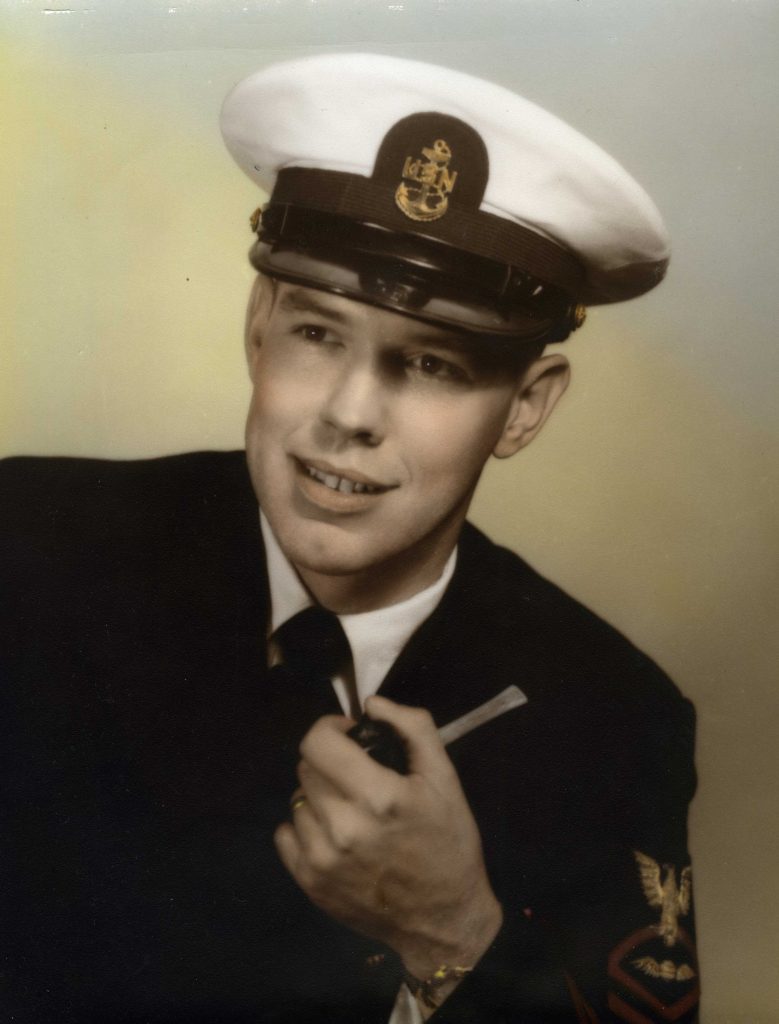
George Edward Mandeville Jr.

George Edward Mandeville Jr. “Mandy” 94 of Marion, MA passed away Tuesday, January 14, 2024, at Tobey Hospital in Wareham, surrounded by his wife and stepdaughter after a period of ill health.

            George was born in Putnam Connecticut to George Edward and Mabel (Cameron) Mandeville on March 19,1930. He graduated from Bridgewater High School in Bridgewater, MA in 1948. There he would letter in football as a tight end and was All County Center in basketball. Upon graduation, Mandy joined the Navy where he served during the Korean Conflict, completing 25 years of service and earning the rank of Chief Petty Officer.

            Upon discharge he was employed by Boeing (Litton Industries) working with Inertial Navigation Systems. This position would take him to Japan and Australia. He liked to teach people how to say thank you in Japanese.

            George enjoyed golf, fishing, RVing, sudoku puzzles, and traveling which took him cruising through the Panama Canal, Alaska, Hawaii more than once, cross country twice, Florida, and five times over the Golden Gate Bridge, with his “Catherine Alda” by his side, especially for their daily lunches and rides.

            George is survived by his beloved wife Catherine Mandeville of Marion. Two daughters Patricia Campbell of Colorado and her husband James. Gayle Yunker of Washington State and her husband Ralph. Two grandsons Mathew Yunker and his wife Ashley Moore and their daughter Isabel and Mitchell Yunker. A stepdaughter Cynthia Callow of Marion.

            Mandy will be missed for his happy outlook on life and his loving care of Catherine and others.

            At the family’s request, arrangements will be private through Chapman Funerals and Cremations, Wareham, MA.

Both ORR Boys and Girls Score Wins in Basketball

Boys Basketball

            The Old Rochester Regional high school boys’ basketball team played at Wareham (5-3) on January 8 and won 71-63. Both sophomores Hunter Horsey and Grady Oliveria stepped up. Horsey scored 18 points, and had 6 rebounds, as Oliveira also had 18 points and hit some clutch free throws down the stretch. The Bulldogs were down 25-11 at the end of the first quarter but scored 17 in the second and went on a 17-2 run in the third quarter. Old Rochester ended up outscoring Wareham 44-25 in the second half. They’re now 5-4 on the season, and will play at Bourne (6-1), on January 17.

Swimming

            The boys and girls swim team faced Bishop Stang on January 10, as the boys won 107-58, and the girls lost 78-65. There were many highlights of the Bulldogs second meet of the season. Senior Sam Raynor qualified for states in the 50-meter freestyle with a time of 23.58 seconds. Sophomore Lazaro Rosa set a new personal best in the 100 backstroke with a time of 1:05 seconds. Junior Elizabeth Chubb scored a personal best in the 500 freestyle with a time of 6:12 seconds. Their next meet will be at Durfee on January 14.

Girls Basketball

            The Bulldogs played at Greater New Bedford Voc/Tech (3-6) on January 10 and won 53-34. They moved to 4-3 on the season and have won three games in a row. Old Rochester will host Bourne (7-1), on January 17.

Sports Roundup

By Aiden Comorosky

Boulder Usage For Wetland Development

The Marion Conservation Commission Wednesday, January 8, whittled through an agenda of many routine projects within flood and wetland buffer zones. Commissioners mostly expressed concern about a project on Dexter Road seeking to reuse boulders and build an accessory garage.

            Commissioners also expressed concern about a project seeking to remove an old cottage and rebuild a shed because it is within a wetlands buffer zone with an unknown water pipe underneath. This latter matter is also before the Zoning Board of Appeals and the Conservation Commission will continue the hearing for the proposal at its January 28 meeting.

            The accessory garage, proposed by applicants Stephen and Jane McCarthy, will be two stories, including a loft, but will only be used for storage and not residential use, according to a project representative.

            Commissioners expressed concern about the reuse of large boulders within the property.

            “Why are we allowing them to have a rock wall in a (flood) velocity zone,” said Commissioner Shayne Walsh.

            Walsh suggested that the boulders should be hauled away but expressed understanding of the applicants’ desire to save money.

            “It’s exacerbating a condition. … I’m not trying to make things difficult for the property owners,” Walsh said. “While I appreciate them seeking permission to minimize their expense, it is what it is.”

            Walsh and commissioners agreed that boulders used for a border fence should be no greater than two feet in height and only three or four feet in any direction.

            Laura and Terrence Hartford pitched a proposal for an addition that would include an enclosed porch while also removing an old cottage and replacing it with a shed. The proposed shed is within 20 feet of wetlands.

            Applicant representative Robert Braman, of Braman associates, told commissioners that there is a state Department of Environmental Protection file on the case with no comments. He also said there is a neighboring shed nearby, which also borders wetlands.

            Commissioners asked Braman to follow-up with Commissioners after the applicant meets with the town’s Zoning Board of Appeals.

            They continued the hearing to 7:00 pm on January 28.

            Burr Brothers Boats Inc., on 366 Wareham Street, is looking to redevelop a boat storage facility.

            Commissioner Jeffrey Debrouva expressed concern about the amount of fill being brought to the property and asked for proper mitigation measures, as the area is within a coastal flood zone.

            All other matters were routine, including two applicants on West Drive looking to connect to the town’s sewer system.

            Another applicant sought to rebuild an in-ground pool but there are no plans to increase the size, drawing no concerns from Conservation Commissioners.

            Shane and Denise Whittaker, applicants at 6 Cole Road, plan to scrap an old cottage there and build a single-family home, which also drew no concerns from the Conservation Commission.

            The Conservation Commission is scheduled to meet again on January 28 at 7:00 pm.

Marion Conservation Commission

By Jeffrey D. Wagner

Alcohol: how Bad is it?

The news media have been filled with reactions to the U.S. Surgeon General’s recent pronouncement that alcohol was a major cancer risk, and that alcoholic beverages should carry a cancer warning label like that on cigarette packages. (Ireland currently requires such warning labels.)

            The World Health Organizations estimates that about 4% of cancers worldwide are alcohol-related.

            The long-touted heart protective effects of alcohol have been questioned.

            What should you believe?

            First, some definitions. A “standard” drink is defined as 5 ounces of wine, 12 of beer and 1.5 ounces of liquor.

            Women metabolize alcohol differently than men, and so have higher blood levels than men from the same amount consumed.

            Almost all studies of the effects of alcohol on health are flawed.

            First, they depend on self-reported consumption. Since many, if not most, people know that heavy drinking is not good, there is a strong tendency to under-report what you drink.

            Second, they are observational: groups are followed and their health outcomes studied. We know that this type of study is prone to bias. People who drink alcohol may have many other habits that non-drinkers do not share, such as smoking.

            Alcohol consumption has been linked to higher incidences of head and neck cancer, liver cancer, colorectal cancer, esophageal cancer and breast cancer.

            Even the most toxic of substances only cause harm at threshold doses, and for most toxins, the more, the worse. Consistent with this, the National Academy of Medicine estimated that 2 drinks/week would shorten your life by less than a week, 7 drinks/week would shorten your life by 2.5 months while 5 drinks/day would shorten it by over two years.

            A recent study from Spain shed fascinating light on wine and the heart. Rather than ask subjects how much they drank, they took urine samples and measured metabolites of wine to objectively estimate how much they drank. They found that light-to-moderate drinkers (from ½ to 1 glass/day) had 50% fewer cardiac events over 6 years of follow-up. This protective effect disappeared in those who drank more than 1 glass/day.

            My take-aways:

            If you do not drink, there is no reason to start. There are no net health benefits to drinking.

            If you drink heavily (more than 2 drinks/day for men, 1/day for women), please cut down. You are harming yourself.

            If you enjoy a glass of wine a few times a week, relax. The slight increased cancer risk is probably balanced by less heart disease.

            The Greeks had it right: all things in moderation.

            Edward Hoffer MD is Associate Professor of Medicine, part-time, at Harvard.

What Does The Doctor Say?

By Dr. Edward Hoffer

Mattapoisett Republican Town Committee

The Mattapoisett Republican Town Committee welcomes members, guests, and community members to join us on Thursday, January 23 from 6:00 pm to 8:00 pm to attend our monthly meeting. At 7:00 pm we are excited to welcome a local resident, Steve Miller, to present his personal slide show on three historical events from his travels to Washington D.C. The slideshow will feature November 2020 “Stop the Steal,” January 6 Election Certification Debacle, and January 20, 2025, Trump Inauguration. The location is at the Niemad Facility, 57 Fairhaven Road, Mattapoisett. You will not want to miss this unique opportunity to view snapshots unfolding the story of such momentous events. Come join us to celebrate.

There will be light snacks, a cash bar, and good conversation.

            If you have any questions, contact Paul Criscuolo, Chairperson PCMattyGOP@proton.me

MattapoisettGOP.com.

Academic Achievements

Several undergraduate students at Worcester Polytechnic Institute (WPI) completed research-driven, professional-level projects that apply science and technology to address an important societal need or issue including:

            David Strom from Marion, class of 2026, majoring in Mechanical Engineering, completed a project titled Funding and Communication Plan for Integracni Centrum Praha (Prague, CZ).

            Isabel Friedrichs from Rochester, class of 2026, majoring in Environmental Engineering, completed a project titled Water Conservation in Honolulu Community Gardens.

            Torsten Brickley of Mattapoisett and Trent Crook of Rochester have been named to the Dean’s List for the Fall 2024 semester at Clarkson University.

            Lucas Pothier of Rochester and Jacob Pothier of Rochester, students at Cedarville University have been named to the Dean’s List for the Fall 2024 semester. This recognition requires the student to obtain a 3.50 GPA or higher for the semester and carry a minimum of 12 credit hours.

            Cole D. Dube of Mattapoisett was named to the Dean’s List at Saint Michael’s College for the Fall 2024 semester. Students who complete at least 12 credits of classes and achieve a grade point average of at least 3.5 in a particular semester are cited on the Dean’s List for that semester.

            Western New England University (WNE) is proud to announce that Steven Morrison of Rochester has been named to the President’s List for the Fall 2024 semester. Morrison is one of over 640 students to achieve this mark of academic excellence. Students are named to the President’s List for achieving a semester grade point average of 3.80 or higher.

            Brielle Fernandes of Rochester, who studies Radiologic Technology has been named to the MassBay Community College Dean’s List, achieving this outstanding academic honor for the fall 2024 semester.

            Curry College congratulates Kathleen Gifford of Rochester and Haileigh Nye of Rochester, who were named to the Fall 2024 Dean’s List.

            Andrew Wronski of Rochester has been named to Southern New Hampshire University’s (SNHU) Fall 2024 President’s List.

            Victoria Eckstrom of Mattapoisett has been named to Southern New Hampshire University’s Fall 2024 Dean’s List.

Our Volatile Planet

            In what can only be described as a coincidence, a surprising coincidence, Rochester’s Plumb Library along with the Friends of the Library, hosted Matt Davis on January 11. Davis’ timely lecture was on the topic of coping with threats from natural disasters.

Davis brought his understanding of how humans cope with natural disasters in a lecture that was informative and insightful. After spending years researching the psychology behind rebuilding in disaster zones and coping with monumental losses, the former professor spoke to the challenges facing growing populations and the very human trait of wanting to remain on one’s home turf.

            His studies are a unique blend of geology and phycology which he admitted was not a well-known path. Yet given what we are perceiving as increases in natural disasters (let’s say it together – “global warming”), it’s a timely topic to consider.

            Davis told the audience that our planet is a restless ever-changing place to carve out a living. And it has always been this way.

            The researcher said that one example of environmental disaster has been documented over 200 times in ancient writings including the Bible, the great flood that features Noah as a central player. Davis said that early people considered volcanic eruptions as openings to hell, while floods and other climatic events were considered punishments. His point is that there have always been severe weather and global events and there always will be. It comes down to how we cope.

            Davis’ studies have taken him to far away places working with local agencies both before, during and after devasting events. What he found regarding human nature is fascinating. But the most striking take-way is this, we want to stay in places we call home in spite of future floods, wildfires, and the like.

            Take for instance Tornado Alley; also called Tornado Valley. The states of TexasLouisianaOklahomaKansasSouth DakotaIowa, and Nebraska produce and suffer from 80-percent of all tornadoes in the world, Davis stated. And yet, rather than moving, people stay, rebuild, bury the dead, and go on living. The same can be said for those living in and near the area known as the Ring of Fire. This vast area comprising Tonga, Indonesia, the Philippines, Japan, and the Aleutians sits on volcanoes that are active and ready for action.

            Modern devices are now employed to monitor seismic action, air currents, the presence of tsunamis, and weather predictions. We receive warnings via the internet, cell phones, TV and radio. We are told to seek shelter and often times have days to prepare securing water and other supplies. But do we pay attention.

            Davis cautioned, “If you are told to evacuate then evacuate.” Better safe than sorry.

            Davis pointed to the fact that people are inclined to rebuild in the same threatened locations after they have lost everything, including family and friends. “The California wildfires are not new. It’s a reoccurring patten of wet periods and dry periods. Los Angeles should never have been so big.” Today some 36-million people live in the Los Angeles area. Considering Los Angeles for a moment, Davis conjectured that amazing “views” are a primary reason people roll the dice and build in areas where earthquakes and other environmental dangers are ever-present. He noted the San Francisco Bay Area as another location where people have densely built on top of active earthquake fault lines.

            Today, developers and regulatory agencies are looking long and hard at hazard mitigation planning. It’s a topic often spoken at various board meetings around our home the Tri-Town area. But Davis said there are added costs associated with such considerations, different building materials, and longer construction periods.

            Denial, Davis said, factors into human perception of whether or not an area is reasonably safe to build on. We tend to evaluate risk in measured proportions, “…how likely will something bad happen (risk perception)? How likely, how soon, how seriously.”

            And even if advance warning technology is available and is employed, “…where would the people go?”

            Davis spoke to issues that arose during hurricane Katrina, an enormous storm that Louisiana has yet to fully recover from. “Disaster response was total chaos.” He said disaster relieve agencies weren’t synchronized in their messaging and challenged at every turn to provide victims with accurate information in order to receive assistance.

            On the topic of preparedness Davis believes everyday problems and needs outweigh those efforts, “There are new apartment complexes in the shadow of Mt. Vesuvius.” Vesuvius is still an active volcano. But there’s no place like home.

            Available now is Davis’ latest book At Home in the World, Reflections of a Travel Addict.

By Marilou Newell

Bike Path Maintenance – Who and How

In a continued informal discussion regarding possible erosion issues sustained near the footings of benches installed at the entrance of the bike path boardwalk on Good Speed Island, environmental agent Samantha Carew reported her findings. Carew said that the benches in question were not on the original plan of record and had not been permitted. She further commented that erosion was evident.

            Chairman Mike King said that the “town owns it” and as such was responsible for ongoing maintenance. But what department is charged with taking the lead in such matters? The Highway Department, King said. Carew noted that the Select Board did not place the benches where they are located but no one seemed to know who did.

            In a follow-up with DaSousa she said that the Friends of the Bike Path will, “…make a proposal to the Select Board,” to pursue permitting of the benches and possible maintenance into perpetuity.

            In other business, a new Notice of Intent filed by Thomas Levreault, 50 Aucoot Road, was conditioned for the razing of an existing residential structure and the construction of a new home. Engineering representative Rick Charon said that all work will be outside resource areas and flood zones. A letter will be sent to the applicant to cease and desist all activities in the boarding vegetated wetlands areas on the property.

            A new NOI filed by Alexandra Ablon represented by David Davignon of Schneider Davignon and Leone was continued as architectural drawings are completed. The project is planned to include an accessory garage with ADU compliance.

            An NOI filed by Jeffrey Dunn, Angelica lot #159 was conditioned for the construction of a new single-family dwelling.

            Three Certificates of Compliance were granted to property located at 5 Pine Street, 7 Holly Street, and 3 Pigwacket Lane.

            The next meeting of the Mattapoisett Conservation Committee is scheduled for January 27.

Mattapoisett Conservation Commission

By Marilou Newell

Hello from Plumb Library

If one of your New Year’s Resolutions is to try to read more, or read outside of your comfort zone, maybe joining a book club will help you accomplish that goal. Plumb Library has two book clubs for adults that run monthly and are open to anyone 18+. The COA Book Group meets the third Tuesday of the month at 1:00 pm at the Rochester Council on Aging. The January book is “False Witness” by Karen Slaughter on January 21. Books and Babble Book club meets the last Thursday of the month at 6:30 pm at the library. The January book is “Chocolat” by Joanne Harris on January 30. Both books are available for pick-up at the library, as well as the complete lists of titles for 2025.

            For those who can’t make it to a book club meeting, but are still looking for a reading activity, check out the Massachusetts Center for the Book Reading Challenge. Each month brings a new theme to keep you reading outside the box. The January theme is “a book published in or about the year you were born.” Stop by for more info or check out their website www.massbook.org/readingchallenge. If you’d like to log your reading with the MA Center for the Book, you will need to create an account. All readers are eligible to win raffle prizes during the Challenge.

            Join our Knitting Group on Mondays from 6:30 pm to 8:00 pm. All skill levels are welcome at this social gathering of handcrafters. Bring your knitting, crocheting, needlepoint, etc. No meeting on Monday, January 20.

            Where do writers get their ideas from? Maybe from a group just like this. The Writer’s Group meets the third Thursday of every month and is open to anyone 18+. Writing prompts are given, participants write for 10 minutes, then share their results. Refreshments are served. This meeting is held in the Downstairs Program Room. Next meeting January 16.

            The Friends of the Library need your help. If you love the programs, events, talks, and more that the library hosts throughout the year please consider becoming a member of the Friends. Individual membership starts at just $20. Volunteering with the Friends ensures that critical fundraising events like the semi-annual book sales, clothing drives, and holidays events can continue. The Friends of the Library play an integral part in keeping story times, book clubs, the summer program, author visits, and special topic presentations running at the library. Ask at the desk for a membership form or for more info.

            Please remember that the library will be closed on Monday, January 20 for Martin Luther King Jr. Day. However, e-books, e-audiobooks, music, movies, and more are available 24/7 on the Libby and Hoopla apps. All you need is a library card.