When Is A Farm Really A Farm?

With Mattapoisett now designated as a “Right to Farm” community, boards and commissions may see more property owners stepping forward to assert their right to use their land as a farm. And if so, members of such boards may have to take a quick course in agricultural zoning.

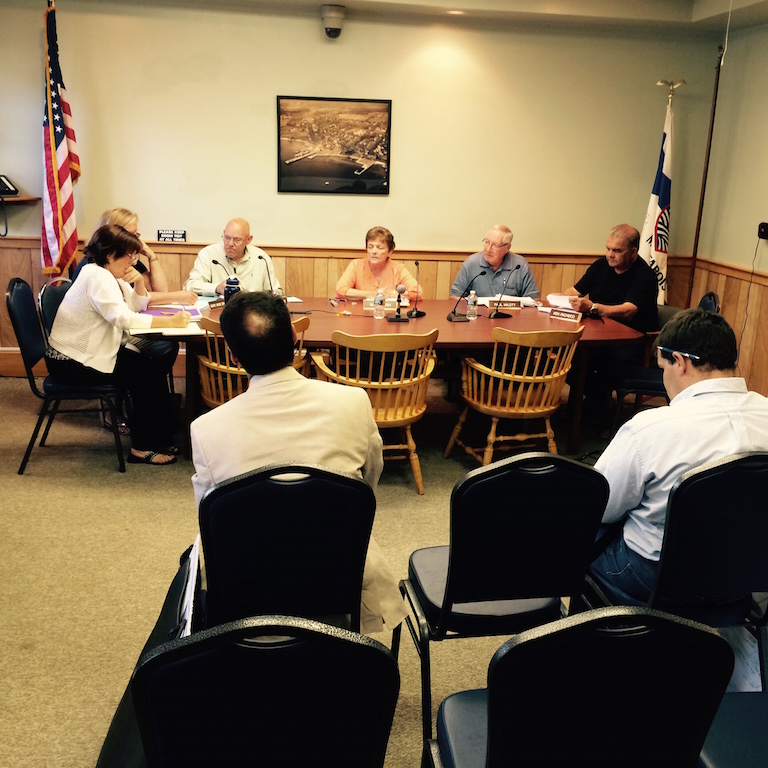
That was the case on June 18 when Veronica Brockwell, owner of Cedar Rock Farm at 13 Randall Lane, came before the Mattapoisett Zoning Board of Appeals requesting a Special Permit to construct a caretaker’s single-bedroom living space above the existing barn.

Represented by Attorney Michael Kehoe and Engineer Richard Charon, Brockwell’s operation was described as a farm producing livestock for sale. However, the request to build a separate living space above the barn for two farm workers was a first for the ZBA, generating a fair number of questions and concerns.

ZBA Chairman Susan Atkin asked Building Inspector Andrew Bobola, “Can we allow two families where none is allowed?”

The project as described by Kehoe and Charon is to create a one-bedroom living space in the loft area above a 13-foot tall barn. If approved, this would provide Brockwell’s farmhands a space to live on the premises.

“Farming is a 24-hour-a-day job,” said Kehoe, adding that it would give Brockwell greater flexibility in negotiating payment terms with potential employees.

Kehoe also pointed to several state laws that supersede local bylaws granting farmers the right to provide living quarters to employees.

“When did it become a farm?” asked board member Mary Anne Brogan. Brockwell said she has been raising and selling mini Juliana pigs, Nigerian dwarf milking goats, and Friesian horses on her 10-acre farm while passing out her business card. Kehoe said that profits from the sale of agricultural goods have been reported as required to the Building Department.

Bobola described for the ZBA the financial requirements imposed on property owners claiming to have a farming operation, such as income of a least $4,000 annually from the sales of agricultural products. Brockwell said that one pig or goat could fetch more than $1,200 alone. He also said the state had changed the acreage requirement from five acres to two, in an effort to increase the number of small farms in the state – an effort, he said, to help curtail the subdivision of large parcels into housing tracts.

Board members were concerned about what happens if and when Brockwell sells the property with a separate living space in an area zoned for single-family homes. Kehoe said conditions could be written into the Special Permit prohibiting such usage.

Defending Brockwell’s farming operation in terms of best practices was Amy Silvia, animal inspector for the Town, and Animal Control Officer Kathy Massey.

“I make unannounced inspections and this is the most immaculate [farm] this town has,” said Silvia. “The animals receive extremely good care…. They are more like her children than animals.”

Echoing those sentiments was Massey who said, “I have never received a complaint from the neighbors for noise or anything.”

Board member Kenneth Pacheco said, “I think it’s great…. I think the town needs more of this…. I want a pig!”

Brockwell received a Special Permit with the following conditions: use cannot be changed without a new application to the ZBA; new living space in the barn may not be used as a rental unit by Brockwell or subsequent owners; and no animals may be boarded without prior approval.

Other cases heard were Hillside Motel, Krishi Kishnan Corp., 92 Marion Road, approved for new signage; Special Permit granted to Michael Amaral, 0 Harbor Road, for the construction of a new single-family dwelling; and William Sweeney, 22 Centre Drive, received a Special Permit to construct an addition.

The next meeting of the Mattapoisett Zoning Board of Appeals will be announced for July 16 at 6:00 pm in the Mattapoisett Town Hall conference room if sufficient applications are received.

By Marilou Newell
MTzba_062515

A Great Year to be a Bulldog

What a year it was at Old Rochester Regional High School. From sports to seniors to Sweeney Todd, there were plenty of big events that defined the 2014-2015 school year. As the school year comes to a close with the last day of finals on Monday, June 22, let’s take a look back of some of the most important things that happened at ORR this year.

It was an incredible year for sports at ORR. Baseball, boys’ tennis, girls’ cross country, boys’ and girls’ track, and boys’ lacrosse were among the top performers, all making deep postseason runs. Many other sports teams had successful seasons, though none topped the boys’ basketball team.

The boys rolled through the playoffs, notching big wins over Wareham, Norton, and Pentucket, with that game taking place at the TD Garden in Boston. The championship win came on Saturday, March 14 at the DCU Center in Worcester over Hoosac Valley. The ‘Sixth Man,’ or ‘Dog Pound’ fan section, was with the Bulldogs every step of the way, and the fan section allowed students to develop a great sense of unity and school spirit. Seniors Will and Evan Santos, as well as junior Matt Valles, create a nice foundation for next year’s team.

Outside of sports, the drama club flourished with two well-received plays. The November rendition of It’s a Wonderful Life starred senior Ian MacLellan and junior Holly Frink, and was a unique spin on a classic. The spring play Sweeney Todd starred juniors Kyle Costa and Emily Faulkner, mixing a clever wit with the scares of the original play. Exactly 135 students participated in the Drama Club this year and, with many returning for next year led by Director Paul Sardinha, there are sure to be some entertaining plays in the club’s future.

Among the key retirements at ORR this year were guidance counselor Scott Griffith and anatomy teacher Mary Kay Cabral. Both well-respected colleagues and teachers at ORR, they were replaced by Lisa Shields and Jeremy Kennefick, respectively.

Junior Drew Robert revolutionized technology at ORR by fundraising to secure the school a 3D printer. It arrived at the school by early June, leading to increased excitement for the Technology Department. Classes like architecture, engineering, and computer science – taught by Thomas Norris – stand to gain the most from Robert’s contribution.

A few new policy changes affected students. A stricter cell phone policy basically restricted cell phone usage to the cafeteria and study halls. Also, more restrictions were put in place to keep students from wandering the hall and leaving lunches. A new policy instilled at the end of the year introduced tougher penalties on students possessing electronic cigarettes.

The Jazz Band also had a terrific year. Leading the way at FORM concerts, the group was seemingly everywhere this year, performing at a multitude of school events. The main players were sophomore Maxxon Wolski, and seniors Matthew Twaddle, Matthew Parisi, and Hannah Cormier.

Late May and early June were crowded with numerous events designed to celebrate the Class of 2015’s time at ORR. Alex Aruri took home the title of ‘Mr. ORR’ on a fun-filled night. Seniors danced the night away at the prom, which took place at the Villa in East Bridgewater, and enjoyed a class trip to Martha’s Vineyard. The seniors graduated on June 6, and by then it was clear that the Class of 2015, achievers of a great many academic and athletic achievements, had left an unmistakable mark on ORR.

School year 2014-2015 was a banner year at ORR, and the accomplishments of both students and staff were aplenty. Academics, athletics, and the arts all enjoyed great years. As terrific as this year was, the confidence and pride of ORR’s student body suggests 2015-2016 will be even better.

Patrick Briand

Bulldog_flag

Bubbles, Bubbles, Everywhere!

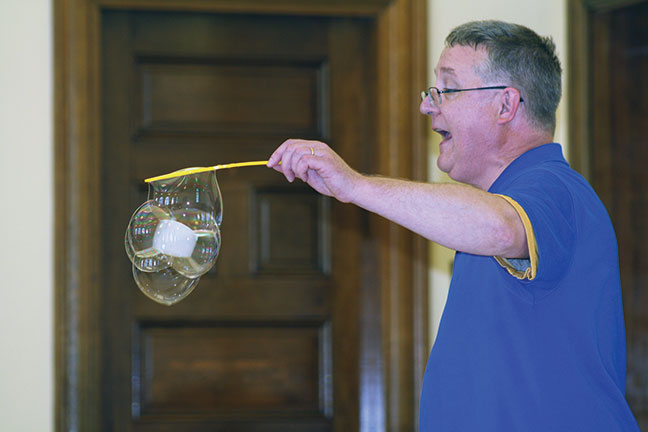
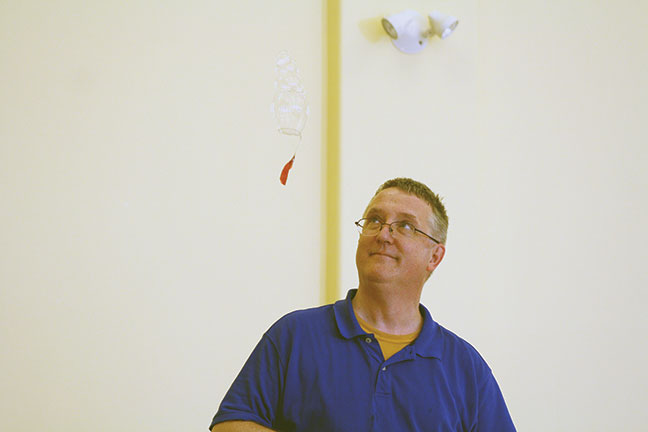
Bubbles, bubbles, everywhere! Kids were spellbound by Keith Johnson and his “Bubbleology” show at the Marion Music Hall on June 22, sponsored by the Elizabeth Taber Library. Ty Mackenzie, 9, was the lucky one who got to be swallowed up by a giant bubble. Photos by Jean Perry


Bubbles_5342 Bubbles_5348 Bubbles_5356 Bubbles_5370 Bubbles_5378 Bubbles_5382 Bubbles_5385 Bubbles_5386 Bubbles_5391 Bubbles_5394 Bubbles_5402 Bubbles_5411 Bubbles_5417 Bubbles_5421 Bubbles_5428

Eunice M. (Kenyon) Hayes

Eunice M. (Kenyon) Hayes, 88, of Rochester passed away Tuesday, June 23, 2015, at Tobey Hospital, in Wareham, after a period of declining health. She was the wife of the late John F. Hayes, Jr.

Born and raised in New Bedford, the daughter of the late William Kenyon and Edith (Watson) Kenyon Crompton, she settled in Rochester in 1956. She was a member of the Rochester Congregational Church.

Eunice was a home maker and very involved in her families activities as a Cub Scout Leader, as well as a Brownie and Girl Scout Leader. She enjoyed camping with the Wampanoag Group and bowling with the Mattapoisett Jolly Seniors League with her husband. Most recently she enjoyed BINGO at the Rochester Senior Center.

She is survived by a daughter, Nancy H. Mills and her husband Gary of Rochester; a son, John R. Hayes of Eugene, Oregon; a sister, Dorothy Garlington of New Bedford; five grandchildren, Emma Higley and her husband Scott of Oregon, Greg Mills and his wife Stasha of Marion, Shane Mills and his wife Sara of Fairhaven, Johnanne Eilertsen and her husband Brett of Rochester and Thomas Mills of Rochester; 10 great grandchildren, Carson, Shelby, Liberty, Colin, Cali, Brady, Chase, Vivian, John Haakon & Timothy; and several nieces and nephews. Mrs. Hayes was the sister of the late Walter Kenyon and Edith Kelly Barriteau.

In accordance with her wishes she will be cremated and a private service and interment will be at the Massachusetts National Cemetery in Bourne. Arrangements are by the Fairhaven Funeral Home, 117 Main Street, Fairhaven.

Memorial donations may be made in Eunice’s name to the Rochester Senior Center, 67 Dexter Ln., Rochester, MA 02770.

John B. Perriera, Jr.

John B. Perriera, Jr., 79, of Mattapoisett died June 22, 2015 peacefully at home.

Born in New Bedford, the son of the late John and Florence M. (Gonsalves) Perreira, he lived in Mattapoisett most of his life.

He was the proprietor of John Perriera Painting Company for 38 years.

He served in the U.S. Navy.

Survivors include his companion, Gertrude Caldwell of Mattapoisett; a son, John M. Perriera and his wife Virginia of Dartmouth; a sister, Karen Gonsalves of New Bedford; 4 grandchildren, Olivia and Emilia Perriera, both of Dartmouth, and Mason and Milan Caldwell and their father Mosadi Caldwell, all of New Bedford; and several nieces and nephews.

He was the brother of the late Maura Teixeira.

His private Funeral Service was held on Friday, June 25th with burial in the Massachusetts National Cemetery, Bourne. Arrangements are with the Saunders-Dwyer Mattapoisett Home For Funerals, 50 County Rd. (Rt. 6), Mattapoisett. For directions and guestbook, please www.saundersdwyer.com.

MRR: A View from the Road Part IV

When Charlie hits the last mile of the race, he is feeling great and looking forward to crossing the finish line. His personal goal is finishing in the Top 5 if possible. He has always finished in the Top 10 at least. Crossing the line produces such a feeling of satisfaction, especially when so many people line the sidewalks cheering. Once he grabs water, watermelon, and oranges, Charlie lets himself wind down. However, he never leaves until the last runner crosses the finish line. As far as he is concerned, every runner deserves to be cheered across the finish line, especially his “little sister,” Annie.

When Annie hits Oakland Street, she really wants to stop but she pushes herself forward. The last mile is tough because there so many turns (six total). It feels like the last mile goes on forever. Of course, not finishing is not an option for Annie. Charlie would never let her forget if she did. Besides, there are the runners she has gotten to know who are considerably older than she is and they will finish the race. As Karen told her, she wants her grandchildren to know that at 68 it is still possible to be healthy and active. With one turn left – the one on to Water Street – Annie realizes she still has a sprint left in her. Maybe it is the cheering or seeing the finish line that give her the extra kick. Mostly, however, it is knowing that big brother “Chuck” is there to cheer her across the finish line.

Once she crosses the finish line, Annie gets water and oranges and sits in the grass waiting for Charlie to find her. This is such a great opportunity to see old friends, neighbors, former coaches and teachers. She had a chance to talk to her former guidance counselor early in the morning and is waiting to see her AP English teacher who always runs the race. Eventually, she and Charlie will find their way to the Inn at Shipyard Park, but first it is important to hear the winners announced. It is fun to hear where the runners are from and who the local winners are. She and Charlie are always amazed by the distance some people will travel to run this race. This is a credit to the Road Race Committee and the work put into planning and preparing for this one day. There are people like Bob and Doris Gardner and Dan White who have been involved forever that make the race so successful. But the best part is knowing how many graduating seniors will receive scholarship assistance because of this race. Charlie and Annie were those seniors once upon a time, so this makes running the race very important to them.

Charlie and Annie hope they will see you in Mattapoisett Village on July 4th either running or cheering. Annie sends a special thanks to Karen, Kate, Laurie and Cecile for sharing their feelings about the race.

Mattapoisett Road Race Poster

Dublin has its doors; Newport has its mansions. And next month, Mattapoisett will have a “Road Race Shirt” poster. Through the generosity of Spherion of North Dartmouth, the Road Race Committee will be selling a limited number of posters featuring various Road Race shirts from 1991-Present. The poster includes three anniversary shirts and the infamous Dan White “Halloween” shirt. Shirts for the poster were supplied by runners, sponsors, and Race Committee members. Framed posters will be awarded to the first place male and female runners who are Mattapoisett residents. Remaining posters will be on sale for $15. Posters are 18” x 24” which is standard poster size and will come in a mailing tube. This poster makes the perfect gift for someone who no longer lives in Mattapoisett but may have run the race in the past.

In addition, the Road Race Committee will be selling Road Race baseball caps sponsored by Hawthorn Medical and “future runner” shirts sponsored by Hawthorn Medical Pediatrics. Hats are $15 and shirts are $10. The Race Committee can only accept cash or checks. Posters, hats and shirts will be available at pre-registration in Shipyard Park on July 3 from 4:30 – 7:00 pm and the morning of the race.

MTRR_poster

Marion Master Plan Forum

The Town of Marion is updating its Master Plan (MP), a document that will guide the Town’s evolution through the coming decade and beyond. Community input is essential for producing a valuable, constructive MP. All interested in having a “voice” should plan to attend the Public Forum on Saturday, August 1 at 9:00 am in the Marion Music Hall. The discussion will be on housing, economic development, and land use.

The MP addresses housing and business development, infrastructure needs, natural resource protection, and public service plans. Massachusetts requires that municipalities update their MP every 8-10 years and makes it is a prerequisite to obtain state funding for community development. Marion last updated its MP in 2006.

The Planning Board is leading the MP process, assisted by professionals from the Southeast Regional Planning and Economic Development District (SRPEDD) and a recently approved Town Planner. In addition, three advisory committees, composed of selected community members and representatives from town boards, will provide further insight on specific topics. Please mark your calendar today for this important Public Forum. Your engagement, input, and participation will ensure Marion’s MP will protect our Town’s special charm while meeting the future needs of our residents. For more information, visit www.srpedd.org/marion-master-plan.

Feasibility Study Still To Design New Town House

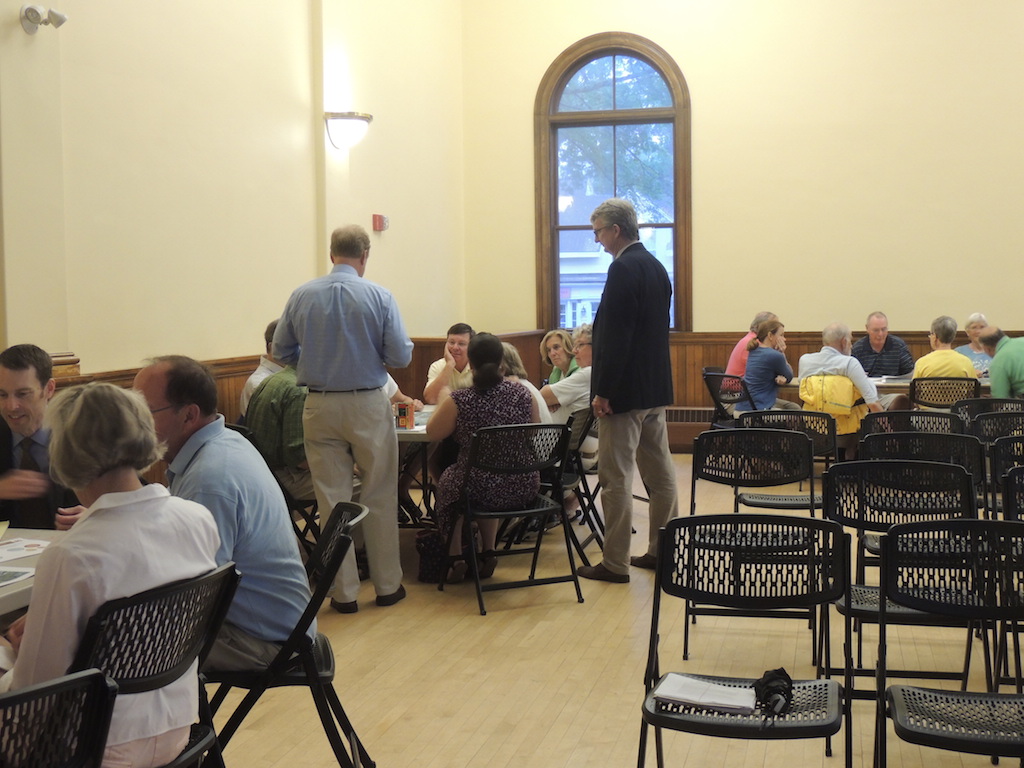
Roughly 60 Marion residents gathered in the town’s Music Hall on Tuesday, June 23 during the midst of a summer thunderstorm to view the plans for the Town House restoration project. By the end of the presentation, it was clear that while residents hungered for cost estimates, the feasibility study is just moving into the design stage.

Bob Raymond, Chairman of the Building Committee, began with a summation of the previous years’ work on the project. He reviewed the findings of the 2011 existing conditions report, which encompasses 13 areas of renovation and improvement.

“It turns out almost everything is wrong,” Raymond described the current facilities at the Town House.

“This was our opportunity to create a beautiful, fantastic Town House,” he continued.

At Town Meeting in 2014, Marion residents approved a $100,000 feasibility study, undertaken by Turowski 2 Architecture, which would result in four separate renovation plans and cost estimates.

“We’re in the middle of the feasibility study now,” Raymond said. “The most important part is feedback from the town.”

To that end, architect Peter Turowski reviewed the conditions of the Town House, showed his calculations for the project’s necessary square footage, and presented potential layouts on the existing property for each of the four options. He noted an increase in square footage from the current 11,300 to the estimated 13,500 (for the first three options) and 35,000 (for the fourth option). All told, Turowski estimated that the Town House should have 38 parking spaces and the Elizabeth Taber Library should have 12, which raises concerns about how the town should develop parking in downtown Marion.

Turowski and members of the Building Committee admitted that they held off from preparing design concept sketches until they could meet Marion residents at the public forum in order to learn which elements of the Town House are sacred and which are problematic. The most frequent question from residents, however, was how much each option would cost – numerical figures that are not currently known given that there are not any design plans drawn. Turowski’s team is drawing the design plans based on the Building Committee’s notes from the public forum and cost estimates will be ready for the Board of Selectmen to review before the favored plans go before residents at Fall Town Meeting. If Marion residents approve a plan at Fall Town Meeting, Turowski hedges that the construction will be complete by 2018.

The four options for the project are: a full renovation of the existing Town House, which would add square footage by reclaiming the basement and third floor; a partial renovation and addition to the existing Town House, which would remove the annex but add square footage by introducing an addition to the side of the original Town House; an entirely new building erected elsewhere in the town; and a community complex, which would be the result of a large addition connecting the Town House to the Elizabeth Taber Library that would also house the Council on Aging.

Residents questioned the inclusion of the third option, the construction of a new Town House on a different town property.

Raymond called the third option due diligence.

“Some say it would be cheaper; others say it would be more expensive,” he answered, “but at the end of this process, we’ll have comparison cost estimates to find out.”

The Marion residents in attendance were keen for the project to move forward into the design stage of the feasibility study. The town might not be able to afford to wait much longer.

“Deterioration [of the Town House] has accelerated while the feasibility study has been underway,” Raymond said, citing components of the building that were in good condition in 2011 but are now beyond repair.

By Anne Smith

MR_TownHouse_062515

The Tar and Feather Incident

James McDonald sat in the wagon with his hands and feet bound and his eyes blindfolded. He could hear the jeers of the 40 or 50 hooded men yelling, “Kill him!” and “Lynch him!” Moments earlier, he had been forced from the house in which he was boarding and stripped of his clothing while someone slathered him with tar and then dumped feathers on him. To an observer, it seemed to be an old-fashioned form of public humiliation that one had heard took place in Salem and Boston in the 1760s and 1770s but rarely in the early 20th century.

They were now in the darkness on the side of the road at the Marion-Mattapoisett border when McDonald felt a rope drop around his neck. Someone pulled him up and kicked him off the cart. He felt the rope suddenly grow tight around his neck. He gasped for air as he tried in vain to feel the ground with his feet. It was that moment Charles Potter, a man who took the most pleasure in witnessing the mob’s work, would later describe as “the best joke of the evening.”

McDonald came to Marion around 1901. At that time, Marion was known as “ultra exclusive” and a place that had “prided itself on its quiet refinement and culture.” It was a summer resort to famous notables such as writer Richard Harding Davis, actress Ethel Barrymore, and politicians such as President Grover Cleveland and Massachusetts Attorney General Hosea Knowlton.

James McDonald was considered attractive with an imperial beard and moustache, which gave him “a certain air of good breeding.” He was about 54 years old and from Scituate where he was the proprietor of the Scituate House, a summer resort he ran for eight years. He was married and had fathered five children, two of which were stillborn.

In September 1900, he left Scituate to become a watchman at the Castle Square Hotel in Boston. It isn’t known why he gave up his proprietorship and left town to work, leaving his family behind. He may have had issues with local authorities that led to his leaving. In 1887, McDonald was charged and found guilty in district court of “keeping a liquor nuisance.” He appealed the verdict, but it is not known what the outcome of his appeal was. In June 1900, he was listed in the census as a “hotel keeper,” still in Situate.

After a short stay in Boston, he came to Marion. It seemed a likely place to go, as at a summer resort he was sure to find work. He found employment at Joe Collins’ place in East Marion on Wareham Road selling lunch and beer. Before long, McDonald became familiar with the locals that dined at the Collins place. In July 1901, he came to know Charles Potter who was a regular at the Collins place. Potter often came in with his wife, Clara, who happened to draw McDonald’s attention.

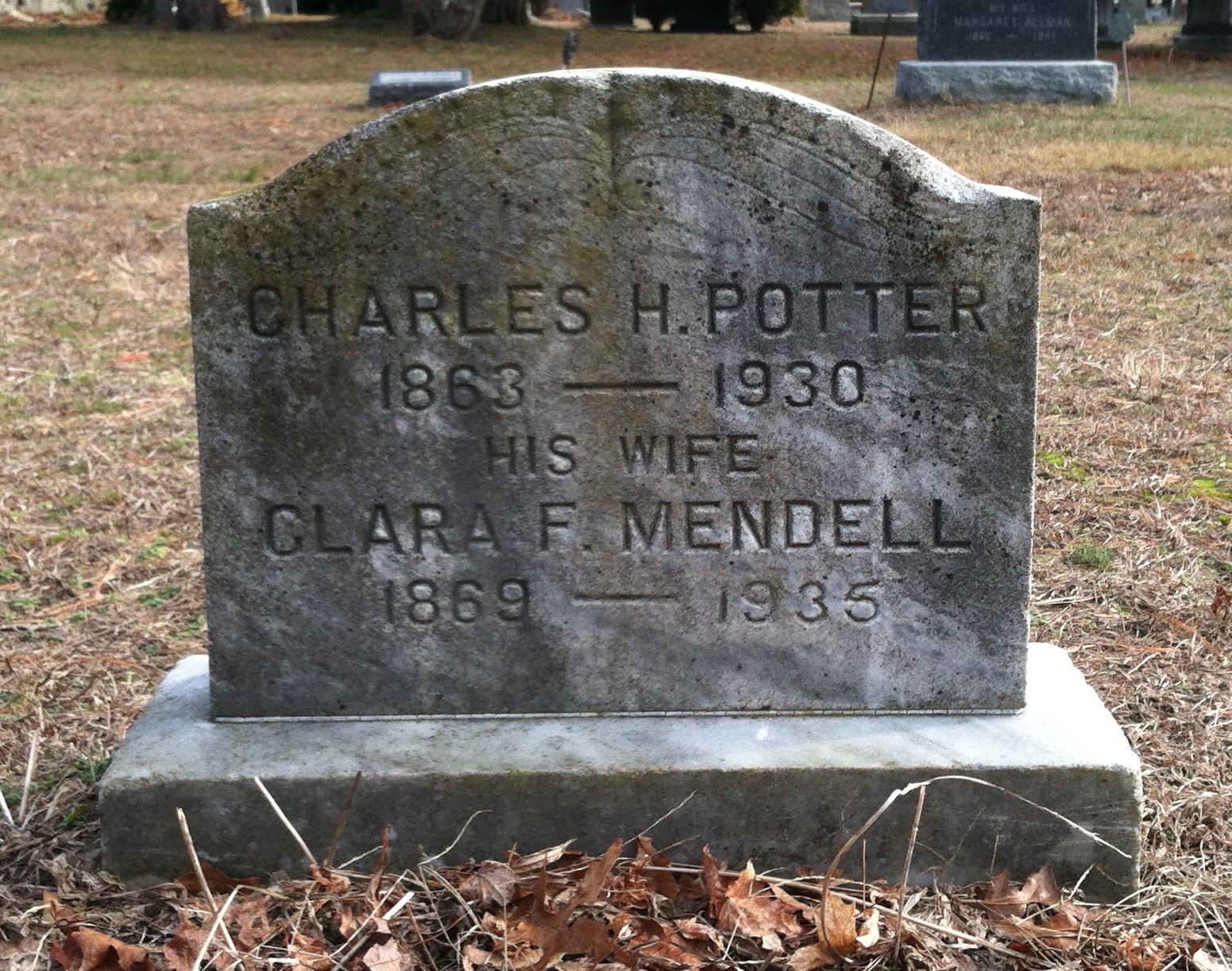
Clara Gilbert Chloe Fiske Mendel and Charles H. Potter married on December 19, 1886. By 1901, they had three children: Emma, Edith and Elmer ages 10, 8, and 4, respectively. Charles had been described as a “small” man who worked as a foreman of a section gang on the railroad. Clara, with her chestnut hair and dark eyes, was known locally for her beauty and who, according to one resident, “everybody in Marion has knowed … since she was a little girl.”

The Potters lived on Mill Street at the corner of present day Ryder Lane. The house was given to Clara and her sister by their grandmother. Clara would later convince her husband to buy out her sister’s share of the house and sign it over to her, making her the legal owner. She was often left home with the children when Charles was working at the Tremont Station in Wareham for periods of time. While Charles was away, Clara made visits to comfort her friend, Jennie McAllister, who lived next to the Collins place and had lost her 17-year-old daughter to suicide in February of 1902.

During these visits, Clara became friendly with James McDonald. Their familiarity grew and went beyond casual chats at the Collins place. Soon they were going to the theater together and McDonald took her for afternoon drives. In February 1902, McDonald left the Collins place after having “trouble” with Joe Collins. McDonald seems to have accepted an offer from Clara to rent out a room in her house.

Charles Potter did not seem to be aware of his wife’s relationship with McDonald, and he agreed with the idea of taking in a boarder, at first. McDonald, not having employment, offered to pay for his board as soon as he got a job. Once he got a job, McDonald said he promised to pay for his board and move out.

There weren’t many opportunities for employment over the winter, but as spring came, McDonald began to explore job options. He liked the idea of being a skipper of a yacht. But when he was offered a job as a yacht skipper, he turned it down, citing his lack of knowledge of the local coastline. He also thought he could rent a shack near Joe Collins’ place and run a “road barroom,” but decided against it. He had other job opportunities, but passed them up as well.

McDonald claimed he was only a boarder from February to July of 1902. After that, he and Clara entered into a partnership in running a boarding house in which they mostly had transients and no long-term boarders. Charles claimed his wife and McDonald were planning on opening an eatery, but questioned the type of customers they would attract noting “the people of Marion are not going to a lunchroom on the outskirts of the village.”

Charles and Clara’s relationship was strained. They got in arguments over McDonald living at the house and his lack of finding work. Charles ate dinner with the kids while Clara and McDonald ate alone together.

Rumors began to circulate that McDonald was selling liquor at the Potter house. Marion, at the time, was a “no license town.” Other rumors that circulated around town were that McDonald was often seen in the company of girls “not yet out of their teens” and being “unduly familiar” with the young ladies. Tensions were running high in town with some complaining to town officials, but selectmen claimed there was not much they could do. Clara was the legal owner of the house and there was no proof of the illegal selling of liquor out of the house.

In early August, Charles came home from work to find beer and booze in the house. He had enough. He told McDonald to get out. McDonald refused.

“Who’s running this place?” Charles demanded.

McDonald said he was. Charles’s wife sided with McDonald.

“I would have grappled with him then but he is a good deal larger than I….” Charles recalled. He let the matter drop for the moment.

Not long after his argument with McDonald, Charles came home from New Bedford late one evening and found a horse hitched at his house. He walked in the door to find several men in his home “carousing.” Charles announced that who ever owned the horse to get it out of the yard since it was awaking the neighbors. He then began arguing with McDonald and told him once again to leave. Charles decided size no longer mattered and began to “grapple” with McDonald. The fight didn’t last long. Clara opened the front door and McDonald threw him out.

For the next couple of nights, Charles and two of his children stayed across the street at the home of David and Mary Faunce while he pondered his next move. He decided that he would place the children in the care of Jennie McAllister while he stayed with George Gifford. He wasn’t sure what to do next. Charles felt he was overpowered and outnumbered in his own home.

He didn’t know that the next move was being planned on his behalf. On the night of August 7, Charles just sat down for dinner when there was a knock on the door. A man that Charles may or may not have known was there to inform him that a group of men were meeting at the town hall at 8:00 pm to run McDonald out of town. As Charles later explained it, “I went to see the fun.”

The story will be continued next week in the July 2 edition of The Wanderer. Kyle DeCicco-Carey is a librarian at Harvard University and an avid historian. He recently worked with the Rochester Historical Commission to help organize and preserve hundreds of documents that date back all the way to 1679. This article was compiled through dozens of historical records found during that period.

Charles and Clara Potter Headstone