Diabetic Boot Camp

Community Nurse Home Care and the Marion Council on Aging present Diabetic Boot Camp on Wednesdays, April 11 – May 2, at 1:00 pm at the Marion Music Hall, 164 Front Street. Whether you are a newly diagnosed diabetic or a seasoned pro looking for new tips, this series has something for everyone.

Guest speakers include Ronald Bogusky, MD; Jeanna Poloncheck, Ed.D.; Barbara Canuel, R.D.; and Erin Van der Veer, N.P. Series is complimentary but registration is required. Light refreshments served. For more information or to register, please call Community Nurse Home Care at 508-992-6278.


Rochester Historical Society Meeting

David and Raymond St. Jacques, owners of the Hayden Manufacturing Company in W. Wareham, will be the speakers at the April meeting on Wednesday, April 19, at 7:00 pm at our Church/Museum at 355 County Road in Rochester.

The Hayden Mfg. Co. has been supplying the cranberry industry since 1892. It has been family owned since 1927. The Hadyen separator was invented by Linthrop Hayden of South Carver, who established the company. This separator revolutionized the cranberry industry.

The grandsons (David and Raymond) of Linthrop now own the company and have expanded their cranberry equipment/welding services, etc. by establishing an antiques store at their Carver Road, W. Wareham building. Please come and learn about the history of this local industry and its long-lasting effect on the cranberry industry. All are welcome to attend.

Grant to Cover Acushnet Road Bridge Repairs

During a brief working meeting on April 11, Mattapoisett Selectmen Tyler Macallister and Paul Silva along with Highway Surveyor Barry Denham discussed the May 16 annual elections, the upcoming spring town meeting, and the continuation of repairs to village roadways.

Denham was congratulated on securing a Baker-Polito Administration Municipal Small Bridge Program grant. Denham said that with the assistance of Field Engineering, grant documents were prepared identifying a bridge on Acushnet Road in need of repairs.

The grant was established in September 2016. A press release published at that time quotes Massachusetts Department of Transportation secretary and CEO Stephanie Pollack as saying, “Seemingly small-scope projects such as small bridges can actually be critical for citizens’ ability to travel throughout their communities.” The $500,000 will allow the town to make necessary repairs and keep this vital rural artery open to traffic.

The selectmen voted to place a debt exclusion question on the annual election ballot for the purpose of continuing its Road Rehabilitation Projects Phase VII in the amount of $500,000.

            Regarding debt and the town’s ability to finance large-scale projects, Town Administrator Michael Gagne wrote, “Over the course of the project period (Phases 1-6 road improvements), a total of $281,535 of various town and school project principal and interest costs have been freed up. Over the course of the six phases of the road-improvement-borrowing-program, we have a total interest and principle yearly payment of $195,204 as of FY18. The remaining debt capacity without increasing our excluded debt capacity at present is $86,331.”

Silva said, “What that tells me is that we have $86,000 that we can reinvest.”

On April 12, the Board of Selectmen met with municipal department heads regarding the FY18 budget. Mattapoisett’s Annual Town Meeting will be held on May 8 at 6:30 pm in the auditorium of Old Rochester Regional High School.

By Marilou Newell


Literally, Holy Crap

We are in the throes of Autism Awareness Month, and as I sort through my autism information, experience, and anecdotes to share as a way of contributing my own spin on autism awareness, I think of all those times I tried this, that, and the other thing to try to ‘cure’ my son of his autism. To rescue, remedy, and reclaim him as the healthy, happy, typically developing child I envisioned.

Oh, the things I wasted my money on all those years ago before I realized that autism was here to stay and there was nothing to ‘cure,’ really.

People would ask, “Have you tried … (fill in the blank)?” Not yet, but I will once I’m done trying this … (fill in the blank). Things like zinc skin creams, Epsom salt baths, and mineral supplements to help his body eliminate toxins and free radicals from his body; vitamins A through Z – after all, my child was a kid with “a starving brain” according to one book I read and eventually threw away.

None of that stuff worked. But I was still not defeated. There were loads of other ‘cures’ still to try.

Then there was the gluten-free/casein-free diet, which actress Jenny McCarthy touted in her autobiographical book had ‘cured’ her son of his autism, that just made all the rest of us moms who tried it and didn’t ‘cure’ our kids’ autism feel like failures and secretly hate her.

The GFCF diet, the eliminating of all things dairy and gluten-based (breads and grains), was the latest thing in the early 2000s.

One article I read – probably around 2:00 am one sleepless night – where a mom’s son magically said “Mom” for the first time at age six one week into the diet was enough to send me to the health food-section of the store to slam down my credit card and pay $10 for a gluten-free loaf of bread, $6 for a box of GFCF crackers, and $8 for waffles.

Gastrointestinal issues such as acid reflux and constipation correlate with autism. I saw no change in my son’s GI issues after two months of the diet, and I saw none of the ‘behavioral’ changes some were reporting, such as a decrease in repetitive self-stimulating behaviors and an increase in verbal abilities.

I spent a fortune on food, ultimately tasted and immediately wasted by the 2-year-old who was spiraling into weight loss because none of the food I was making tasted good enough for him to suffer such constipation and acid reflux.

But there were other things still yet to try. There were digestive enzymes. Cod liver oil. Anti-fungals. 5-HTTP. Melatonin.

Some other parents tried chelation and recommended it for removing the heavy metals built up in the body, allegedly by vaccines. I didn’t go that route, but I did try a magnetic mud bath that claimed to pull any toxic metals out from the skin. All I know is that it caused a huge mess in the bathroom, clogged up the drain, and ruined a few bath towels.

It was all crap.

There were other suggestions on the list I never tried, having eventually reached the point where curing my son was less important than getting him the support he needed to reach his potential as the wonderful person that he is.

Still, there were health issues at hand and one tiny 3-year-old who was still wearing 18-month-old clothes. I needed to act to find a doctor who could really help us. Not one who would insist on further homeopathic ‘food sensitivity’ tests or push force feeding mineral oil. A real autism gastroenterology specialist.

Those in my now-antiquated Yahoo autism parent email group recommended this doctor at Mass General. When I called, the nurse told me that he wasn’t taking any new patients. I cried. I begged the nurse to get us in, afraid that if this doctor couldn’t help us, I would lose my son. After five minutes on hold, she told me he would see me the next week.

Dr. Buie, one of the leading researchers of autism-related GI disorders, got us a G-tube to fatten up the boy, nourish his body (and brain), and we saw somewhat of a leap in development shortly thereafter. We put him on a friendly pro-biotic strand saccharomyces boulardii, which the doctor said might help balance his digestive system, and it helped a little. And over the years the doctor followed my child, he developed and grew eventually to almost the size of his peers.

Every six months I would ask him, “So, what’s the latest in autism research?” Oh, there’s the broccoli thing being tested now, and there’s also a study in prenatal vitamins possibly containing too much folic acid, and occasionally something would pique my interest. But it was one treatment currently being tested that made me say, “Holy crap. I need to get some of that holy crap.

Disclaimer: I do not want to cure my son. I wouldn’t want to change a thing about him. Having said that, if I could find something that might alleviate his discomfort, make life easier for him, and make him feel better in any possible way, count us in. And this something might quite literally be some holy crap.

It’s called fecal transplantation, and studies are showing that by transferring some poop from a person with an intestinal microbiome balanced with the ‘right’ healthy bacteria into the gut of a person with autism, some really great things have been happening.

Studies have shown that people with autism and other related neurological disorders are lacking in certain beneficial bacteria in their guts, which allows the colonization of the unhealthy bacteria to flourish. When these particular strains of bacteria (not found in yogurt) are introduced, GI problems as well as some self-injurious behaviors start to diminish, speech improves, and sensory sensitivities lessen.

Cut the crap, right? Sounds icky and gross, transplanting the ‘fecal matter’ of a stranger into one’s self or one’s child – but it sure sounds a lot more promising than all that other crap we tried years ago.

Studies are linking all sorts of neurological disorders with gut bacteria, including schizophrenia, depression, and obsessive-compulsive disorder. Could relief really come in the form of … a little poop?

Who would have thought, after all that crap we paid for and tried, that years later (literally) crap would be the Holy Grail of autism treatment? Holy crap, I call it. And with a little luck, perhaps, I’ll get my hands on some of it. (Not literally).

By Jean Perry


Circumnavigator Visits Tabor

As the “School By The Sea,” Tabor is well known for attracting a talented batch of sailors to its student body and faculty. With a nationally ranked competitive sailing program and the 92-foot schooner SSV Tabor Boy, the school is no stranger to top-notch sailing. On April 10, the Tabor community was introduced to a different breed of sailor when two-time solo circumnavigator Donna Lange visited campus.

Lange spent most of Monday on campus, first speaking to the students and faculty during the regularly scheduled “Chapel” program. In Hoyt Hall, Lange described her journeys around the world and the experiences and lessons she learned while onboard her sailboat. Standing on stage, Lange used a range of photos and videos from her voyages to show the student body and faculty both difficulties and the amazing moments of the trips.

During the evening of April 10, Lange spoke to a large audience in Lyndon South Auditorium, an event which was free and open to the public. The event was part of Tabor’s ongoing “Science at Work Lecture Series,” which has brought a range of national and local scientists and explorers to Tabor to tell their stories and share their research with the Tabor and local communities.

Lange made her voyages circumnavigating the globe in 2007 and 2015. In 2007, Lange took two stops along the way, starting and finishing in Bristol, Rhode Island. The second time was notable not only because she completed the trip without stopping, but she did so without GPS technology using only celestial navigation. While celestial navigation is not as common in the modern era with the widespread use of GPS, her use of it struck a chord with a number of Tabor students who had learned to use it as an advanced offering of the nautical science curriculum.

In both talks, Lange told of how she spent her time throughout the voyages. Amid boat repairs – of which there were many and all done by hand by herself – she wrote songs and books (some that are still in the editing process) and documented her experiences online, in photographs, and in videos. Being in countless bodies of water along her voyage, Lange conducted scientific tests including mammal surveys, birding surveys, and water sampling. Additionally, Lange used this opportunity to allow emerging technologies for marine survival, such as an emergency deployable flotation system and an emergency kite, to be tested on board.

For students, faculty, and local community members, having Donna Lange on campus to share her experiences was a unique opportunity to not only learn about someone who has an amazing story and amazing accomplishments, but also learn about the immense value of taking on such great challenges such as circumnavigating the globe by sail. While most people in the audience will not be trying such a herculean task, the importance of perseverance and finding one’s true self amid challenges resonated to all in attendance.

By Jack Gordon


Need a Bible?

The Mattapoisett Congregational Church has several Bibles that are no longer being used and is giving them away to new homes. If you’d like a Bible, please drop by the church during office hours, 8:30 am to noon, Monday through Friday. You may call ahead to 508-758-2671 to reserve a copy if you wish.

Most of these Bibles are in the Revised Standard Version. They are all clean, complete, and in very good shape.

Dixie Diehards Go to War Concert

On Saturday May 6 at 7:30 pm, the Marion Art Center will feature the Dixie Diehards Jazz Band in a Dixie Diehards Go to War concert. The event will mark the 10th anniversary of the talented group performing at the Marion Art Center. In honor of the centennial of the United States’ entry into World War I, the Diehards will perform music from the era leading up to and just after the conflict. Not only was it a politically tumultuous time, but music was also undergoing a revolution. Ragtime (then the current rage) was giving way to jazz. A new sensation, the Original Dixieland Jass Band, recorded their first disk in 1917. Young men who marched off to war came home to strut their stuff to hot new music!

The Dixie Diehards will first take you back to the ragtime era, and then move through the war years, when music was helping to sell an unpopular war to a skeptical public. Included in this program are World War I patriotic numbers, marches that morphed into Dixieland jazz, and a selection of early jazz dance tunes that formed the basis for the ‘Roaring Twenties’ era. This concert will feature a number of well-known New Orleans style jazz tunes for audience singalongs and handclapping fun.

As always, this concert is expected to sell out quickly. As a benefit of membership, current members of the Marion Art Center will have an early opportunity to purchase tickets during a presale event that will run from Tuesday, April 11 through Friday, April 14. On Saturday, April 15, tickets will become available to the general public. Though reservations and holds cannot be accommodated, tickets may be purchased either in person at the MAC or by calling the MAC at 508-748-1266 during regular gallery hours (Tuesday – Friday from 1:00 to 5:00 pm and Saturday from 10:00 am to 2:00 pm). Cabaret tables will be available for parties of 4 on a first come, first served basis, and general seating will also be available for this performance. Tickets cost $15 for MAC members and $18 for non-members.

Special Meeting to Deny Driveway

Michael Popitz’s Notification of Intent to construct a new driveway within the buffer zone of the wetlands was denied during a special meeting of the Marion Conservation Commission early morning on Saturday, April 8.

The commission held the meeting before scheduled site visits in order to meet the 21-day deadline for issuing a decision once the public hearing was closed back in March.

The commission refrained from issuing a decision until town counsel could assist the members in drafting one, and that morning a few other minor changes were made to satisfy the commission.

The commission cited the reason for the denial, saying that an alternative construction of a second driveway was available that would not create a significant impact to the wetlands and would also provide Popitz with the access drive that he sought to provide for a rear lot also owned by Popitz.

Popitz’s original construction plan was also designed to accommodate the maneuvering of his boat trailer, which Conservation Commission members back in March did not consider was a significant enough reason to allow construction in the wetland.

In a letter to the editor Popitz submitted to The Wanderer featured in the April 6 edition, Popitz alleged “favoritism,” as commission member Norm Hills said he perceived it. Popitz wrote, “I personally see that certain people in this very town get different considerations, depending on who they are. Some folks can fill in wetlands. Some can cut down trees in the wetlands. Some can build homes or even garages in or on the border of wetlands. Some can’t.”

Popitz, a member of the Marion Planning Board, also referenced a case from Falmouth in which he claimed residents “recently sue[d] their lovely town for … a million dollars, as their ConCom withheld permission to develop their lot.”

After the Conservation Commission’s denial, Popitz is allowed to appeal the decision to the Massachusetts Department of Environmental Protection.

By Jean Perry


Ready, set, go!

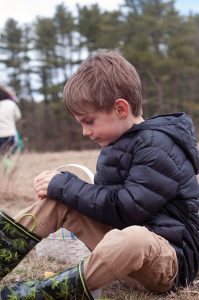
On April 8, Plumb Corner hosted its annual Easter egg hunt, which included other fun activities such as cookie decorating, hay rides, and crafts. Photos by Felix Perez


Charles H. Collins

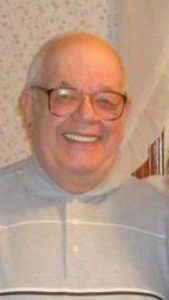
Charles H. Collins, age 85, of Fairhaven, formerly of New Bedford, passed away, Monday, April 10, 2017 in the Sippican Health Center in Marion. He was the husband of Alice L. (Jones) Collins to whom he had been married for 67 years.

Born in New Bedford, the son of the late John S. and Marjorie (Knowles) Collins, he spent most of his life residing in Fairhaven, where he was a 1949 graduate of Fairhaven High School. Mr. Collins was employed as an Inspector in the golf ball division at Titleist in Fairhaven for many years. He was an avid reader and Patriots fan, and he enjoyed spending time with his family especially his grandchildren and great-grandchildren.

Mr. Collins’s family would like to thank the staff at Sippican Healthcare, for the compassion they have showed Charles over the past few years.

Surviving in addition to his wife, are six children, David E. Collins and his wife Cathy of Jeffersonton, VA, Deborah Lima-Gonsalves of New Bedford, Steven D. Collins and his late wife Alda of Winooski, VT, Thomas H. Collins and his wife Marianne of Blackstone, VA, Betsy Botelho and her husband Eugene of New Bedford and Barbara Chambers and her husband Brent of Chandler, AZ; a sister Karin Roscow of Brockton; 18 grandchildren, many great-grandchildren and great great-grandchildren and several nieces and nephews.

His Funeral Service will be held on Wednesday, April 19, 2017 at 12pm in the Rock Funeral Home 1285 Ashley Blvd., New Bedford. Visiting hours will be Wednesday from 9am to 12pm in the funeral home. Burial will take place in Beech Grove Cemetery in Westport. For online registration or directions please visit: www.rock-funeralhome.com