Mattapoisett Annual Town Meeting & Election Information

The Annual Town Meeting in Mattapoisett is scheduled for Monday, May 11, at 6:30 pm at the Old Rochester Regional High School Auditorium. The Annual Town Election will be held on Tuesday, May 19 at Old Hammondtown School. Polls will be open from 8:00 am until 8:00 pm. Vote by mail ballots can be requested and will be available for mailing soon. Check the town website at www.mattapoisett.gov for more information. Please call the Town Clerk’s Office at 508-758-4100 x2 or email the town clerk at townclerk@mattapoisett.gov with any questions regarding these two important events.
Art Center to Be Expanded, Refurbished

            The Marion Zoning Board of Appeals met on Thursday, April 23 to hear two cases, one pertaining to the Peters of South Street and one involving the Marion Art Center.

            Chair Cindy Callow began the first Public Hearing, originally submitted by Jessica and John Peters of 20 South Street, for a Special Permit for the renovation and expansion of the existing residence. Will Saltonstall and Joe DiPaolo of Saltonstall Architects, Inc. of Marion, spoke on behalf of the applicants. Saltonstall explained he has worked with the applicants for the last few years on this project, that will include two side-yard setback issues.

            On the proposed work, much of the front house and facade would be preserved as well as the gables. Porches would be brought forward and enlarged with the main addition being added to the back of the home. The property’s shed would also be expanded. The architects did not have the exact square-foot measurements of the expansion.

            Abutter Chris Chicoy was present to support the project, saying, “I’m confident that we have worked well together in the past and will continue to do so.” Other abutters, Sandria Parsons on one side and the Shield family on the other, were not present but were said to have been supportive of the project.

            The hearing was closed, and the ZBA voted to approve the project as presented with a unanimous vote of approval.

            Next was a Public Hearing from the applicant, the Marion Art Center at 80 Pleasant Street. Before the hearing began, Chair Callow and ZBA members Danielle Engwert, Margie Baldwin and Will Tifft all noted they were Marion Art Center members. The hearing was for a Variance of the Zoning Bylaw and a Special Permit to allow for various renovations and additions of the existing building to exceed 40% of the ground-area coverage.

            Will Saltonstall of Saltonstall Architects, Inc. was also representative for this project. He noted over the last few years, they have performed “an intensive feasibility study” to determine the needs of the building, including making the MAC handicap accessible/ADA compliant. Proposed improvements include an elevator, an additional level, an accessible ramp entrance, a covered entryway onto Main Street, and a new gallery space.

            The hearing was closed, and both the Special Permit and the Variance were granted with unanimous votes of approval.

            The next meeting of the Marion Zoning Board of Appeals was not scheduled at adjournment.

Marion Zoning Board of Appeals

By Sam Bishop

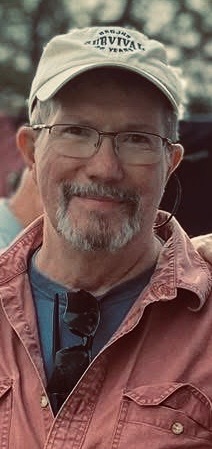
Rory Michael McFee

Rory Michael McFee, 78, of Mattapoisett, passed away peacefully at home with his family by his side on Saturday, May 2, 2026. He was the husband of Christine (Reardon) McFee.

            Born in Chicago, IL, son of the late Robert and Virginia (Pugil) McFee, he lived in Mattapoisett most of his life.

            Rory bravely lived with Congestive Heart Failure for almost 25 years but he never let it stop him from living and enjoying life.

            He attended high school at the Divine Word Seminary, Perrysburg, OH and the Divine Word College in Epworth, IA studying to be a missionary. He earned his master’s degree in Special Education with certifications in history, guidance counseling, and rehabilitation counseling at Bridgewater State.

            In his early career he helped start an abstinence program in New Bedford, MA for recovering addicts. He worked at Paul Dever State School as a job placement and rehab counselor. Rory helped to start the Collaborative Learning Center (a part of Project Orient, now SMEC), where they worked with expelled students to help them achieve their potential, and he was also a founding board member of Harbor Inc.

            Rory was very proud of his career as a teacher and coach at ORRJHS where he worked alongside many stellar educators who he called friends. He was first hired to teach Special Education where he was able to bring his love of sports to the students by coaching them in the Special Olympics for eight years. For the remainder of his career there he taught seventh grade social studies and was very involved with the Survival Program and coaching. His involvement in Survival spanned forty years, ten years as the director, thirty years running the campfire portion, a number of years as base camp director, and always helping in any way he could.

            His coaching consisted of not just intramural sports at the junior high but also coaching at the high school where he coached Freshmen Football, Varsity Ice Hockey, JV Boys Soccer, and Varsity Girls Soccer. It was with that last team that he had a lot of success; the 1996 team was inducted into the ORRHS Athletic Hall of Fame, and he was named Boston Globe Girls Soccer D-2 Coach of the Year in 1997. He was inducted into the ORRHS Hall of Fame in 2024 as a Coach and Contributor.

            Being so involved in the community, from sports to teaching to Survival, as well as being part of the team that spearheaded the fundraising and construction of the Chuck Michaud Memorial Rink, he was honored as Mattapoisett Man of the Year in 2009.

            Rory was an avid boater, always having either a sailboat or power boat since he moved to the area. He also loved playing and watching hockey, playing until he was 50, and watching his Bruins religiously.

            Rory is survived by his loving wife Christine (Reardon) McFee, his daughter Carly and her husband Michael Elson, his sons Ryan McFee, and Sean McFee and his wife Kristine, his beloved grandchildren, Alexandra and Andrew Elson, and his sweet cat Sarah and his faithful dog Charlie.

            He also leaves behind his sisters Candace (David) Coffey, and Carol (Dan) McCormick, and many brother and sister in-laws, nieces, and nephews who he adored.

            Rory’s Funeral Service will be held Friday May 8, 2026 at 11 am in the Mattapoisett Congregational Church, 27 Church St., Mattapoisett, followed by his burial in Cushing Cemetery. Friends are invited to meet directly at Church. Visiting hours will be Thursday from 4-7 pm in the Saunders-Dwyer Mattapoisett Home for Funerals, 50 County Road., Mattaposiett.             In lieu of flowers, please make a donation to the Special Olympics, or to ORRJHS Survival Program Checks made out to:

AHES, Inc

C/O Bobby Dumas

6 Kelly Dr.

East Freetown MA

02717

Spring Time’s Early Risers

The Marion Natural History Museum’s Afterschool Program Spring Time’s Early Risers will be held on May 6, from 3:30 pm to 4:30 pm. Different types of flowers, and the butterflies who rely on them, wake up at different times of the year. Let’s take a look at some of spring time’s earliest risers with entomologist Blake Dinius.

            To register please go to the museum’s website: www.marionmuseum.org.

Rochester Memorial School Talent Show

Students took the stage for the annual Rochester Memorial School Talent Show on Thursday, April 16, showcasing a variety of skills, including dancing, singing and playing instruments.

            Family members and friends applauded as students showcased their talents during a night of entertainment, which was also held for a good cause. Guests were asked to bring a $1 donation or a canned food item, with all proceeds used the support the RMS Alumni Scholarship Fund and local families in need.

            “The annual Rochester Memorial School Talent Show is a much-anticipated event that students eagerly look forward to each year,” said Principal Heidi Letendre. “It provides a wonderful opportunity for students to showcase their talents and share them with the school community.”

            The annual event is put on with the help of a team of student ambassadors under the guidance of school social workers Sharon Cruz and Jamie Pacheco.

            “Throughout the event, student ambassadors take on important leadership roles, introducing each act and offering positive, encouraging commentary, helping to create a supportive and celebratory atmosphere for their peers,” said Principal Letendre. “Congratulations to all of our student ambassadors and to all of our contestants.”

            “Rochester Memorial School had an amazing night of entertainment that highlighted our young student talent,” said Superintendent Michael S. Nelson. “This is an event that everyone looks forward to each year. Thank you to everyone who helped make this event possible.”

Nature is Powerful Medicine

            People who garden are people that like to engage with the outdoor world. For many it’s task-related with an end goal of having a lovely garden landscape. But nature can give more than just beautiful gardens – it can in fact improve your well-being.

            This column was inspired by a pamphlet I kept from a visit to Hampton Court Palace in London, which boasts many wonderful and assorted gardens with different purposes. At the palace you will find two circular paths around the gardens to help you explore mindful walking in nature. The emphasis is to make a connection for mental and emotional wellbeing using step-by-step directions with suggested sensory and grounding exercises. This lends insights into the benefits of nature.

            Spending time in green space or bringing nature into your everyday life can benefit your mental health. It can benefit your physical wellbeing too. There are ways you can connect with nature. Doing things like growing food or flowers, exercising outdoors or being around animals can have lots of positive effects. It can:

            Improve your mood, reduce stress, help with anxiety, depression and seasonal affective disorder (SAD), help you take time out and feel more relaxed, improve your physical health, improve your confidence and self-esteem, help you be more active, help you meet new people and reduce loneliness, connect you to your local community, help you feel more connected to nature, and provide peer support.

            Take the opportunity to slow down, connect with the present moment, and gently tune into the natural world. Think of it as yoga without all the contortions! So, what is mindful walking? “Mindfulness is a widely practiced approach to supporting mental health and wellbeing, bringing attention to the present moment,” states the pamphlet. It helps to ground us in our bodies and surroundings and can be incorporated into everyday life. Maybe you are already doing it without labelling it. If so, you know how much better you feel afterwards. Here’s why:

            Mindful time in nature can help lower cortisol levels, reduce blood pressure and steady the heart rate – making it a powerful way to relieve stress and support a balanced lifestyle. Although these instructions are for walking in nature, I think it could be transferable to other outdoor activities. The guide offers suggestions rather than rules. There is no right or wrong way to mindful walk, “do what feels right to you.” The key principles of mindful walking are:

            1. Give yourself permission. Taking time out just for you is essential. See this walk as an act of self-care.

            2. Remove distractions. Silence or switch off your phone if you can. A little digital detox allows you to be less interrupted and more connected to the environment around you.

            3. Slow down. How often do you walk quickly, always on the move? Let this walk be different – slow your pace and notice what you see and feel. This is about connection, not completion.

            4. Connect with your senses. Your senses connect you to the present moment. Listen, look, smell, hear: sound of birdsong, scent of herbs, texture of leaves. Let your senses guide you.

            5. Be curious. Let yourself explore, look closer at patterns, textures or tiny movements. There is so much to discover.

            The guidebook dispenses advice and fun facts that I will extract here: During a 20-40-minute walk through the rose garden and the tiltyard (a historical enclosed area designed for jousting – common to Tudor era castles and palaces), and kitchen garden it suggests pausing before beginning – noticing your breath, your body and how you’re feeling. Notice the transition into the peaceful green space. Stand still and let your feet feel rooted. Let your eyes scan the space: colors, textures, and movement. Notice the scents in the air and the sounds near or far.

            It suggests wandering slowly through the tiltyard observing the shapes of the leaves and textures of the bark and how their branches stretch or twist “If a particular tree draws your attention, pause beside it. You don’t need to know its name – just enjoy its form and imagine its journey of growth.” Much the same applies to the kitchen garden where scents of aromatic herbs and the vibrant earth shout out. A fun fact: soil contains a natural microbe (Mycobacterium Vaccae) that boosts serotonin levels. Simply breathing in while walking, gardening or sitting outdoors can lift your mood. Nature is powerful medicine.

            Finishing the tour, it suggests getting up close to observe the detailed patterns of leaves, flowers, and stems. Yes, stems. Take a seat on one of the benches and absorb the richness of the garden. Having a seat within your home garden is essential for this reason. Upon the return to the rose garden, you’ll notice the palace rising in the distance, states the guidebook. “These gardens have long been a place for people to pause, reflect and find peace.” Reflection is part of the reward: Reflect on the footsteps that came before you and, on your journey, comparing how you felt at the finish to when you began.

            There is an additional nature walk of 60-90 minutes covering the wilderness, yew trees, fountain garden and the long water at Hampton, with lots of great suggestions such as pausing at the water’s edge and “let its vast expanse create a sense of stillness and perspective.” Did you know that trees release phytoncides, a natural compound that supports your immune system. Breathing in while among trees can boost your wellbeing. Another footnote noted in the guide state that natural settings offer ‘soft fascination’ – effortless attention that restores clarity, concentration, and mental energy.

            These are good take-aways for us to apply here whether walking through a woodland path or along the shore or in your own private space. Take nature in and disconnect. Try it now!

            “The lover of nature is he whose inward and outward senses are still truly adjusted to each other; who has retained the spirit of infancy even into the era of manhood.” – Ralph Waldo Emerson.

The Seaside Gardener

By Laura McLean

Support From Abroad

            This week in Revolutionary War history, let’s check up on what was going on 250 years ago in New England and the northern Thirteen Colonies. Last week, General George Washington recognized one year since the Battles of Lexington and Concord. Though there were no events to commemorate it, as fighting continues and fortifications around New York require the full focus of the army as Washington is generally disappointed in the current state of the city. To the south, Charlestown, South Carolina presets arguments against the King and calls for a new government.

            On April 26, 1776, Washington writes to John Hancock, President of the Continental Congress in Philadelphia. There has been pressures to send men and munitions to Canada, and the general writes, “I could wish indeed that the army in Canada should be more powerfully reinforced. At the same time I am conscious, that the trusting this important post (which is now become the Grand Magazine of America) to the handful of men remaining here is running too great a risk – the securing this post & Hudsons River, is to us also, of so great importance, that I cannot at present advise the sending any more troops from hence.”

            Though he states the city has become a hub of troops and arms, he adds, “our strength at present is, in reality, on paper only.” Men are untrained, undisciplined, and still under-armed for what will likely be a vengeful counter-attack from the British.

            Speaking of undisciplined troops, the next day, in his General Orders, Washington condemns “The riotous behavior of some soldiers of the Continental Army.” The day prior, soldiers staged a riot near Washington’s headquarters at 1 Broadway. In response to this, he writes, “the authors will be brought to the severest punishment if taken, or treated as a common enemy, if they dare to resist.”

            The same day, the general receives a letter from Captain Henry Miller in New Utrecht, a small town today a part of Brooklyn on Long Island. Miller writes, “this morning a small sloop came down the river the sentry on Staten Island hailed her as also those on our side but she would not come too each of the sentries fired several guns at her which she disregarded & passed under a smart breeze to the Asia Man of War.” Worrying reports that if true, showing a ship left New York and met with the British ship the Asia, signify British surveying or espionage.

            On April 28, Washington writes to Rhode Island Governor Nicholas Cooke, who had written to ask for supplies and personnel for the defense of Narragansett Bay. He says, “we have no engineer that can possibly be spared from hence, indeed we are very deficient in that department, & the state of this place is such, that had we many more than we have, there would be full employment for them.”

            This day would also be important in a different sense, as April 28, 1776 is the 18th birthday of James Monroe, the man who would eventually become the 5th President in 1817. Though he had taken up arms in Williamsburg, Virginia the year prior, he maintained his attendance at school up until the time around his 18th birthday, when he dropped out of school and joined the Continental Army.

            Though Washington is urging focus on New York, on April 29, a delegation arrives in Montreal. Benjamin Franklin and other delegates from the Continental Congress meet with General Bennedict Arnold in the city to assess the status of the northern campaign. Though the delegates received a warm welcome from the general and the troops, it ultimately pushed congress to oppose Canadian campaigns. Franklin would leave a little under two weeks later, remarking “it would have been easier if the Americans had tried to buy Canada than invade it.”

            May 2, 1776 may be one of the most consequential days of the Revolutionary War. 22-year-old King Louis XVI of France secretly agrees to provide funds and arms to the American revolutionaries. The material would be discretely given to America through the French company Rodrigue Hortalez et Compagnie. That same day, King Charles III of Spain also vowed to secretly support the rebels.

This Week in Revolutionary War History

By Sam Bishop

New Language Clarifies Parcel Swaps

            The Rochester Planning Board on Tuesday adopted new bylaw language for swapping conservation, recreation, or open-space parcels within a subdivision.

            In essence, this addition to town zoning regulations sets the necessary steps that had not previously been specified when a subdivision permit is reopened for the purpose of swapping one open-space parcel for another within that project.

            In the public hearing that preceded the vote, board member Ben Bailey, who recommended the change, said other town officials agree it is worth doing. His only suggestion before the approval was that the parcel being swapped should be located as close as possible to the subdivision requesting the move.

            Chair Arnold Johnson explained that in prior years the panel held that a Conservation Restriction land such as this cannot be privately owned. However, the board has encountered more than one request from subdivision developers for such a swap of one open-space parcel for another within their projects. Thus, the board decided to create a way to make such a move possible with the necessary steps. Bailey emphasized that this change is not due to one project but inspired by several.

            Next, the board met with John Alfonso of Townhome Development, Rochester Crossroads, to scold him about beginning foundation construction work on new homes without a preconstruction meeting first or other notifications. Johnson said he was disappointed with project’s main engineering consultant. “He knows our rules,” Johnson said. Alfonso apologized and promised not to repeat the oversight.

            In other action, the board continued to May 12 its Site Plan Review and Special Permit hearings for High Street Solar 1 and 2 at 0 High Street.

            The board also continued to May 12 its Site Plan Review hearing on a proposal to clear and regrade land behind Town Hall for an 8,220-square foot parking lot.

            The board continued to June 23 its hearing into a proposed land-swap modification of the Definitive Subdivision permit for the previously approved Snipatuit Pond Estates at Gerrish and Bishop roads, and the panel extended the project’s decision deadline to July 14, 2026.

            The board appointed Town Planner Michaela Shoemaker as its representative on the SRPEDD Commission board for 2026-27.

            The board scheduled two site visits for May 20: Connet Woods at 6:00 pm and High Street Solar at 7:00 pm.

            The Rochester Planning Board’s next meeting will be Tuesday, May 12 at 7:00 pm at Town Hall, 1 Constitution Way.

Rochester Planning Board

By Michael J. DeCicco

America 250 Author Talk: Patriots of the South Coast

Plumb Library and the Rochester Historical Society are excited to be hosting local author Robert Barboza on Saturday, May 9 at noon to talk about his latest book: Patriots of the South Coast. He will be talking about South Coast soldiers, sailors, and ship builders who played important roles in the American Revolution, including two senior officers in the American Revolution who were from Rochester. Copies of the book will be available for purchase at the event, and refreshments will be provided courtesy of the Rochester Historical Society. This event is free – please save your seat by registering on the library’s online Events Calendar today.

            Retired journalist and local history researcher Robert Barboza has published a second book about South Coast soldiers, sailors, and ship builders who played important roles in the American Revolution (1775 – 1783), Patriots of the South Coast.

            The 140-page book is a collection of newspaper articles on Revolutionary War history printed over the years in area publications, revised and expanded with new research materials. The new book is a follow-up to his first book on local history in the War for Independence from Great Britain, Patriots of Old Dartmouth: Local Heroes of the Revolutionary War, published in 2014 to help celebrate the 350th anniversary of the town’s incorporation.

            For the past two decades, Mr. Barboza has often lectured locally about the region’s Patriot heroes such as Continental Marine Captain Stephen Earl of Westport; Fairhaven militia captain Nathaniel Pope, who led a 1775 raid to capture the Royal Navy sloop Falcon in Dartmouth waters; and Captain Job Tripp of Dartmouth, wounded and cast ashore far from home after his merchant vessel was battered by cannon fire from a British warship.

            The new volume was assembled and published in time to coincide with the ongoing nationwide celebration of the 250th anniversary of the American Revolution, starting in 2025. His goal was to ensure that these little-known local stories were collected and preserved for posterity as part of the permanent historical record of the South Coast.

            Mr. Barboza is the former editor of Dartmouth’s weekly newspaper, The Chronicle, and served as a correspondent for many other South Coast newspapers over the years. He has been a student of local history for 20 years, and authored dozens of articles on local history during his long journalism career. Two of those articles won awards from the New England Press Association for historical reporting.

            He currently serves on the board of directors for the Dartmouth Historical & Arts Society, and formerly served on the board of directors for the Dartmouth Heritage Preservation Trust, which helped subsidize the publication of his first book on local history.

North Rochester Congregational Church

The North Rochester Congregational Church, 247 North Avenue, Rochester, has services at 10:00 am on Sundays. The services are conducted by Reverend Merrily Harris, guest ministers, as well as members of the congregation. Communion is on the first Sunday of each month. Paul Sardinha is the longtime organist. Food and fellowship follows. Everyone is welcome.