Storm Plunges Tri-Town Into Darkness

Ask around and people in our area will likely say they’ve never seen anything like it around here – branches lying in piles across the roads, trees barricading streets, telephone poles snapped in half and dangling from above, flaccid wires drooping along the majority of roadsides, and indoor basement swimming pools in just about every home. Orange plastic cones, the flashing red and blue lights of emergency response vehicles, and the yellow flashes coming from utility trucks were the only splashes of color amid the grayness of the sky, rain, and road.

This March 2 storm of high wind gusts and ample rain turned into a days-long disaster of power loss, flooding, cleanup, and school closings – not to mention the stress residents have encountered, often using up precious battery energy to take to social media to air grievances on the slow response by utility companies to make repairs to downed wires.

March of 2018 came in like a lion all right – a lion on the proverbial steroids.

On Friday, the three towns’ police scanners were a constant back and forth between officers and dispatchers, with calls mounting quickly about downed trees and wires blocking roads, and reports of live wires sparking and even catching fire.

By Friday afternoon, a tree had fallen on a house on Parkway Lane in Marion, and trees were blocking main routes and preventing school busses from driving children to their regular stops.

Power was reported out in the center of Rochester, Front Street in Marion, the east side of Marion, sections of Mattapoisett including Mattapoisett Neck Road, and even Route 6 was shut down to traffic. One after the other, residents took to Facebook to report their road’s power outage.

By Friday night, 91% of Rochester and 42% of Mattapoisett were without electricity, and 100% of Marion was in the dark, prompting the Saturday morning opening of Marion’s emergency shelter at Sippican School to provide a warm space for residents to grab a cup of coffee and charge their electronic devices.

By Saturday morning, 91% of Rochester was still without power, with no progress still in Mattapoisett and Marion. A collapsed telephone pole with wire and tree debris had shut down Delano Road in Marion for over 24 hours at that point. The wind was still whipping down the narrow village streets of Marion, which were deserted compared to any typical Saturday when the village is usually bustling with cars and pedestrians – both two- and four-legged.

Anyone who visited the emergency shelter was greeted at the rear entrance of the school by a white donation box lying on its side and the roaring of the emergency generator. Marion Police Chief John Garcia stood by the door to greet residents after a long night of little sleep on a cot inside the police station.

Friday through Friday night and into Saturday was a real ‘you-know-what’ show, said Chief Garcia. To sum the storm up in one word, Garcia called it “devastating.”

The police station lost Internet service for some time, limiting its ability to track the storm and stay on top of storm developments until Comcast was able to set the station up with an Internet generator.

Garcia increased staff on Friday night from one dispatcher at the desk to two and from two officers to seven. Garcia said he and Lieutenant Nighelli even responded to calls themselves. By Saturday at noon, things were finally starting to slow down.

A lot of the time cruisers had to be stationed at various locations just to block off roadways to protect drivers from downed live wires. It wasn’t until later that Eversource was able to provide enough of their own cars to block off dangerous roadways and free up the cruisers for calls reporting trees falling on top of several houses and on cars. The chief said there were no storm-related injuries to report.

“The damage of the trees,” said Garcia, “it was like a full hurricane. The only thing we were spared of was coastal flooding.” Although, he said, in the aftermath of the storm the Fire Department was going door to door assisting with the pumping out of flooded basements, many with a foot or more of water.

According to Marion Fire Chief Brian Jackvony, Marion Fire responded to over an entire two months’ worth of calls between March 2-5 – 213 storm-related calls in total. At one point on Friday, he said, “It was just too dangerous for us to be out there,” and he called off fire department presence at areas such as Point Road and Delano Road out of safety concerns for employees. The Town’s new ambulance was damaged when the doors opened and “were taken by the wind.”

Interim DPW Superintendent Jon Henry said the three departments he oversees – sewer, water, and highway – were affected when a generator would not start up, which also affected communication between the DPW, fire, and police for a spell. The communications system, once it lost its repeaters without power, had to bypass the repeaters in order to maintain communication.

The Highway Department, said Henry, used up 1,000 gallons of diesel with all the vehicle travel involved and had to call for a special delivery by its Plymouth vendor, which took quite some time to respond with more fuel.

In Rochester, according to the Fire Department, firefighters responded to well over 100 calls for service between noon and midnight on Friday. One storm-related non-life-threatening injury was reported on Friday in Rochester. To those who had access, the Rochester Police took to its Facebook page cautioning residents that it could take a while to get the power back on – “[So] settle in with a good book, board games, or whatever people used to do before Netflix,” they suggested.

On Sunday, many were still without power, so with 45% of Marion residents, 41% of Rochester residents, and a number of Eversource customers in Mattapoisett still without power on Monday, Tri-Town schools were canceled for the day.

As of press time on Tuesday, 8% of Rochester was still without electricity, and less than 1% in both Marion and Mattapoisett.

By Jean Perry

 

“Found Objects” at the MAC

The Marion Art Center announces that it will host an exhibition entitled “Found Objects” from Friday, March 2 through Saturday, April 14. The exhibition, which will showcase repurposed and upcycled materials made into art, features seven artists including Bo Burbank, John deMelim, David Allen Edgar, Angela Fiori, Teale Haley, Joan Hausrath, and John Nadeau. Both the Cecil Clarke Davis Gallery and the Patsy Francis Gallery will display a selection of sculptures, furniture, mixed media and collage artwork.

Maureen (Albernaz) Kennedy

Maureen (Albernaz) Kennedy, 68, of Rochester, passed away Saturday, February 24, 2018, at St. Anne’s Hospital, in Fall River, after a long courageous battle with Machado Joseph Disease. She was the wife of 43 years, of Daniel J. Kennedy.

Born and raised in Fall River, daughter of the late Louis and Rita (Pelletier) Albernaz, she lived in New Bedford prior to settling in Rochester, in 1997. She was a graduate of the Dominican Academy, in Fall River, and was Valedictorian of her class at BCC. She and her husband were the proprietors of Dan Kennedy General Contracting.

Maureen was very talented with her hands and made numerous needlepoint, paintings, dolls, clothing and quilted items.

She is survived by her husband; a son, Sean Kennedy and his companion Barbara Moco and their daughter Zoey of Fairhaven; a daughter, Sarah Kennedy and her husband Jesse Cannon and their daughter Sadie of Bristol, RI; a sister, Lorraine Camara of Fall River; three brothers, Louis Albernaz, Jr. and his wife Elizabeth of Fall River, Raymond Albernaz and his wife Lori of Tiverton, RI and Norman Albernaz and his wife Elizabeth of Somerset; and several nieces and nephews.

In accordance with her wishes she was cremated and a celebration of Maureen’s life will be held at a later date.

Arrangements are by the Donaghy Funeral Home, 465 County St., New Bedford, MA 02740.


Selectmen Set for Spring Agenda

Town department budgets are being built and the Annual Town Meeting is in sight.

On February 26, the Rochester Board of Selectmen were briefed on the Town’s status heading into spring as Town Administrator Suzanne Szyndlar brought the board up to speed on late winter progress.

Szyndlar has been working closely with the Finance Committee and met again with department heads last Thursday, February 22, in preparation for a joint meeting of the Board of Selectmen and the Finance Committee next Monday evening.

Szyndlar said she is eyeing May 20 for the 2018 Annual Town Meeting, pending availability of Rochester Memorial School’s cafetorium that night, as well as the town moderator’s availability.

Szyndlar said the potential deadline for town meeting warrant articles should be March 16.

In other town matters, selectmen will be interviewing a candidate for police chief to replace retiring Police Chief Paul Magee. Rochester Police’s Sergeant Robert Small is the one in-house candidate up for the position. The selectmen decided months ago to begin the chief selection process with in-house candidates before seeking candidates outside the force.

The public is invited to attend the public interview on March 3, but no public input or participation will be allowed.

Also during the meeting, the board approved the dates for two events coming up: the Tour de Crème on May 20 and the Patriot Half Triathlon on June 16.

An abatement request for Comstar was tabled until the next meeting in order for the selectmen to gather further information before approval.

The selectmen, under the advisement of the Conservation Commission, signed off on its Right of First Refusal for the Gayoski property on Alley Road up for sale that is slated for removal from Chapter 61A.

The board also approved an amendment to its Remote Participation Policy adopted on February 12 to make the policy effective February 12 as opposed to July 1 as it originally stated.

Also, Selectman and Town Clerk Naida Parker announced that the ballot for the April 11 Annual Election is official and off for printing at this time. Absentee ballots should be available at the Town Clerk’s Office in two weeks.

The next meeting of the Rochester Board of Selectmen is scheduled for March 5 at 7:00 pm at the Rochester Town Hall.

Rochester Board of Selectmen

By Jean Perry


Tri-County Symphonic Band

The Tri-County Symphonic Band, under the direction of Philip Sanborn, continues its concert season with an exciting blend of music for a program called “March Mania” with featured soloists The Resurgam Saxophone Quartet. The concert is at 3:00 pm on Sunday, March 18 at the Fireman Performing Arts Center on the campus of Tabor Academy, 235 Front Street, Marion. Tickets are priced at $15 (students $5, children 12 and under are free) and may be purchased at The Bookstall in Marion, The Symphony Music Shop in North Dartmouth, and online through brownpapertickets.com. Any remaining tickets will be sold at the door the day of the concert. For more detailed information, visit http://tricountysymphonicband.org.

Sippican Historical Society

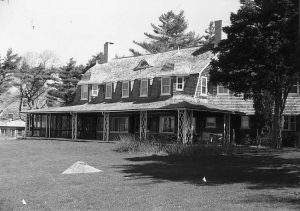
In 1998, the Sippican Historical Society commissioned an architectural survey of Marion’s historic homes and buildings. The survey was funded one-half by the Sippican Historical Society and one-half by the Massachusetts Historical Commission. Because of the limits of funding, not all of the historic buildings were surveyed, but over 100 were catalogued and photographed. The results of the survey are in digital form on the Massachusetts Historical Commission’s website and in four binders in the Sippican Historical Society’s office (and at the Marion Town Clerk’s office). Marion (Old Rochester) is one of the oldest towns in the United States, and the Sippican Historical Society maintains an extensive collection of documentation on its historic buildings. The Sippican Historical Society will preview one building a week so that the residents of Marion can understand more about its unique historical architecture. This installment features Stonycroft at 14 West Drive.

Stonycroft at 14 West Drive exemplifies the shingle style at its most picturesque. It was designed by the architectural firm of Coolidge and Carlson and built in 1895 for Brookline resident A.W. Bliss, whose leather business was located in the heart of Boston’s leather district. Its landscaping complements an architectural design that delicately balances rustic and formal qualities. Exterior and interior photographs of the Bliss House appeared in the October 29, 1919 edition of the American Architect, showing Craftsman style furniture within. It also showed rustic interiors with low ceilings, exposed timbers, and both stone and brick fireplaces.

Bufflehead Sea Ducks

This diminutive black and white diving duck – the bufflehead sea duck – spends most of the winter bobbing up and down along the icy edges of Little Bay. It is named for a large white puffy head in proportion to a black tiny body as the similar profile of a buffalo. A buoyant and elusive bird on the water, they avoid being spotted by abruptly diving to vanish out of sight and much later resurface in another location. They also are able to take vertical flight directly up from the surface unlike other diving ducks that require a long running start to become airborne. This makes them unpredictable to follow for bird watching, rapidly relocating in movement from one place to another.

The pink legs and feet used to swim and dive are visible in flight against a white body patch that wraps around the back of the head toward the body and also crosses the entire inner wing, as illustrated. If within hearing distance, they can be identified by a chattering and squeaky growling call. They easily spend half their lives underwater, made possible by prominent nasal passages on the bill to actively discharge an outflow of the buildup of a high sodium underwater salt content.

For safety, they submerge in groups and leave lookouts on the surface to warn of the approach of predators such as the local peregrine falcon that in this area is a frequent flyer patrolling the coastlines to suddenly swoop at high speeds while they are busy feeding below.

Buffleheads dine on aquatic insects, larvae, snails, small fish, and shrimp.

During courtship the males, in typical macho fashion, try to impress females with exotic behavior, swimming ahead of them while bobbing their heads perhaps to promise a positive productive potential to their mating.

They breed along forested shorelines where conifers mix with hardwoods and, like the wood duck, will nest in the hole of a tree. The bufflehead, however, is small enough to frequently move into an unoccupied northern flicker nest.

Like the wood duck, the bufflehead ducklings leave the nest within one to two days of hatching, jumping down one by one in rapid succession as far as 20 feet while furtively flapping un-feathered wings to bounce harmlessly off the ground and waddle off towards the water.

Now in the last days of winter, their migration northward is just over the horizon toward arctic-bordered shorelines above the Hudson Bay for reproduction. At the first dawn of spring, the curtain of winter season seabird entertainment from the front row seats of our living room windows will have already come down. The star performers will have quietly and unceremoniously eloped without permission or even saying good-bye.

By George B. Emmons

BOH Weeds Through Pot Regulation Options

With a marijuana moratorium in place, the Marion Board of Health finds itself at its leisure when it comes to drafting up local regulations for adult non-medical marijuana use establishments. Unlike some Massachusetts municipalities crafting ‘placeholder’ draft regulations in time for April 1 when the Massachusetts Cannabis Control Commission (CCC) starts accepting marijuana establishment applications, Marion has until the end of this year to implement theirs. Still, Board of Health members are eager to get a glimpse of what their options are pertaining to regulation and enforcement of the sale of marijuana.

Cheryl Sbarra, senior staff attorney and director of the Tobacco Cessation and Prevention Program and Chronic Disease Prevention Program for the Massachusetts Association of Health Boards, once again assisted the board on February 27 by introducing a tentative regulation placeholder template some municipalities without a moratorium are looking at. The placeholder was drafted by a working group in which Sbarra is a member.

Sbarra said what she presented to the board that day is somewhat of a checklist “menu” that boards of health could pick from, and included in that “menu” are some regulations similar to those of tobacco already in place.

Some of these options are expected as standard: food code enforcement for edible marijuana products; a section for calculating a fee structure along with permitting costs; the restriction of smoking or ‘vaping’ marijuana on establishments that sell marijuana; and banning vending machines, coupons, and free samples.

Some of the options that could be considered ‘unreasonable,’ difficult to enforce, or that exceed the state’s own regulations, however, were marked with an asterisk pending a determination of legality.

One such asterisked policy option, for example, is “No person shall cultivate marijuana without first obtaining a Home Cultivation Permit from the … Board of Health.”

“[We’re] not sure at this point whether boards of health would have the legal authority to do this … or the means to enforce it,” Sbarra said. That option could ultimately be deemed off the table once the state releases its regulations, as well as other marked options like increasing the minimum legal sales age from 21 to 25 and banning flavored combustible or ‘vaped’ marijuana products, similar to the board’s agenda with flavored nicotine products.

“Anything deemed unlawful can just be taken out,” said Sbarra. A “severability clause” was included in the template for just that purpose. “Normally [a municipality] can be stricter (than the state), but with this specific law … locals are preempted from doing other things.”

The Board of Health would likely maintain the authority to set the hours of operation, which Sbarra recommended involving the Police Department when discussing such aspects of the regulation.

Enforcement of the regulations, Sbarra told the board, is critical. “You have lots of discretion in ways you can enforce it,” which, she added, would be similar to tobacco and nicotine enforcement, with perhaps more substantial penalties for violations. A violation for selling tobacco to a minor, for example, could cost a retailer $100. “And I just think that’s not proper for marijuana establishments,” said Sbarra. “To me, [one hundred dollars] is not enough of a penalty.”

The board could consider hearings to suspend licenses, revoking licenses, and steeper fines that could even be as high as $1,000.

“I think that’s really an important piece to this,” said Sbarra. Much thought should go into structuring fines, she added.

Again, Sbarra emphasized, “This is a placeholder because we don’t know all the answers. This is new to us, but this can always be amended.”

Sbarra said Marion was the first town to review this placeholder, apart from the towns and cities involved with Sbarra in the working group drafting it.

The CCC is expected to approve and release its final regulations on adult-use non-medical marijuana on March 15, but Marion is under no pressure to produce its local zoning and public health bylaws in time for the April 1 date.

“This will be our Number One priority and goal,” Board of Health Chairman John Howard stated.

Planning Board Chairman Eileen Marum was also present, and she told the Board of Health that she would be presenting town counsel with a preliminary draft of the Planning Board’s zoning bylaw the next day.

“…And maybe we can get this zoning bylaw passed in May (Town Meeting),” said Marum. “I don’t know, it’s gonna be tight; it’s gonna be close.”

The next meeting of the Marion Board of Health is scheduled for March 13 at 4:30 pm at the Marion Town House.

Marion Board of Health

By Jean Perry


120 Front Street Still an Open Question

At the previous Marion Zoning Board of Appeals meeting on January 18, applicant Christian Loranger had been asked by the board to provide it with a timeline of his ownership of and activities relating to his property at 120 Front Street. The purpose of the timeline was to provide information to help the ZBA establish whether the non-conforming use of the property, a two-family house, had been lost due to either abandonment or non-use, which is the current ruling of Zoning Enforcement Officer Scott Shippey. On February 22, Loranger arrived at the Town House with a thick packet of emails and a summary of his correspondence with the Town, his engineers, realtors, neighbors, and architects.

“In the interest of time,” Loranger began, “You know how I feel about the bylaws…” and therefore, he wanted to skip straight to the timeline.

The timeline was divided into two sections – a summary of dates, which were backed up by emails, and then the emails themselves. Loranger painstakingly reviewed the dates since he acquired the property in 2013, including his Conservation Commission hearings, his purchase of the parcel of land located on Pitcher Street, among others.

Loranger contends that he visited the Conservation Commission office in March 2014 and was told by “a woman running the office that he didn’t need to worry about wetlands.” He went on to say that he pursued and eventually purchased land behind his property located on Pitcher Street, a process that took over two years.

He highlighted the ConCom’s denial of his Notice of Intent application in July of 2016, which he then appealed to the DEP, which also denied his permit. Loranger finally received his Order of Conditions (OOC) in September 2017. During this time, Loranger was apparently also in discussions with then Fire Chief Thomas Joyce about using the house for fire training exercises. Eventually, the idea was scrapped, which Shippey thought was due to the house being in close proximity to other structures and an inability to safely contain the fire.

ZBA Chairman Marc Leblanc asked Loranger about his architects. “In 2014, you hired a new architect to design a home – was it a two-family?” to which Loranger replied that it was a two-family structure.

Conservation Commission Chairman Cynthia Callow, present at the meeting, said, “It has been a long process with Mr. Loranger on 120 Front Street. We did deny [Notice of Intent] at first, and the DEP affirmed our decision. The second plan, we approved.” Callow could not remember why the first NOI was denied, but suggested it had to do with a retaining wall too close to the wetlands. She added that Loranger does not hold a superseding OOC from the DEP, as was mistakenly claimed, saying that Loranger has not paid the DEP for the appeal process. She also noted that the commission would be visiting the site due to a report of dumping in the wetlands on the property.

Norman Hills, selectman and ex-Conservation Commission member, took issue with the report that the commission had told Loranger “not to touch a blade of grass or stick on that property,” implying that the commission had somehow contributed to delaying his project. In his written statement, Hills defended the commission, writing that at no time did the ConCom tell Loranger not to cut his grass, etc., adding, “Nothing has prevented him from doing routine maintenance of the property.… I would note during that postulated time … Mr. Loranger somehow managed to cut down every tree on the property.” Hills concluded, saying that Loranger owned the property for three years prior to applying for an NOI.

Loranger clarified that he believed it was the DEP who had told him not to touch a blade of grass on his property.

Looking over Loranger’s data, ZBA member Kate Mahoney underscored the dilemma before the board, saying, “[We are] grappling with the concept of abandonment – if something is being done, what looks like to be at a lagging pace, is that use?”

At this point, Town Counsel Barbara Huggins Carboni weighed in. “The board looks at the whole period of time, asking has there been any abandonment or non-use? If you see activities relating to constructing a new home – that is part of your consideration.”

Carboni pointed out that action or non-action, coupled with “intent not to abandon” and with “activities not to abandon,” were factors the board took into consideration. Carboni underscored that, with the idea of abandonment, intent was important.

Shippey clarified that the property was used as a two-family prior to a fire in 2010, before Loranger’s ownership, but since the fire Shippey had performed one inspection at the house, an insulation inspection on January 3, 2012. There was no Certificate of Occupancy issued since that time. The permits pulled after the fire weren’t completed, and no work had been performed.

In November 2013, Loranger asked that the previous owner’s building permit be extended. A discussion ensued about the validity of the construction permits held by the previous owner. Leblanc argued that because there were open permits when Loranger bought the property, that indicates it is still being used as a two-family.

When ownership changes, the permit becomes null and void, Shippey stated. The clock starts with the new ownership; therefore, according to Shippey, the permit held by the previous owner as a two-family structure has no bearing on the new permit. The last permit pulled by the previous owner was in January 2012.

Leblanc and alternate member Tad Wollenhaupt followed the timeline for the previous owner’s permit (January 2012) to the first contact by Loranger (February 2013) to the closing on the parcel (November 2013) to Loranger contacting the building office for a new building permit application (January 2014). This timeline, Leblanc suggested, showed good faith in the owners moving forward on the home being a two-family structure. However, Carboni pointed out again, the question is about whether use continued or not – not about good faith.

“Just because the purchaser thought in good faith that [it is a two-family structure] doesn’t decide it is in use as a two-family.” The state of mind of an owner or purchaser, Carboni added, does not control or decide continued use.

Loranger said he submitted a construction permit to Shippey on January 14, 2014, and that the permit was returned to him on January 22. Neither he nor Shippey have a written record of the permit application. Shippey couldn’t recall returning the permit to Loranger, but he was quick to clarify it was not a denial.

“I would have written him a denial so that he could appeal – that is his due process,” Shippey said. If Shippey had returned the permit, it may have been because of a lack of information.

Mahoney had trouble understanding Loranger’s response to the return of his permit, saying, “You go through all this work and it is returned to you and then there’s no activity. Doesn’t look like there is any urgency after the denial.”

Loranger said he looked at the bylaws and decided that “…My property was grandfathered and I don’t need to go down this road – I had attorneys that agreed with me.”

Loranger said he had documentation of this, but felt like this path was beating a dead horse.

“All that I’ve been asked about, I’ve shown [the board. You’re] handpicking what you don’t think I’m telling the truth about.”

Mahoney replied that she was not handpicking but would have expected more of a response to the returned permit. ZBA member Betsy Dunn put the issue to bed with a curt “He says the building permit was returned to him, so he did.”

This brought the board to the crux of the issue: the determination of either abandonment or non-use for two years. The zoning bylaw says abandonment or non-use of a two-family for two years or more shall lose its protected status. In her memo to the board dated January 18, Carboni noted that the two concepts are not interchangeable and that the board may find a nonconforming use to be “extinguished by either abandonment or by non-use, or by both.”

Hills defended Shippey’s denial of the permit based on his conclusion of the loss of the non-conforming use, saying the Town relies on Shippey’s knowledge. “Scott knows the building code. He’s the expert.”

Wollenhaupt said he didn’t see abandonment of the use at all, adding “But I possibly see non-use.”

Leblanc asked if non-use is applicable if the structure is uninhabitable.

Carboni responded, “I think you’ve hit the hard part of the case – the issue of non-use is difficult. The court has said that the mere vacancy of a dwelling does not in and of itself determine non-use…. This does give the board some room because the concept of non-use is not well defined.”

If the board suggests the dwelling was uninhabitable, it can take that into consideration.

With a bit of exasperation, Leblanc asked the board what they were looking for, saying, “We are bouncing the ball back and forth – we are looking to overturn or uphold…” the decision.

Mahoney suggested the board continue the hearing so that they may “think.”

The board has 90 days after closing the hearing to issue a decision.

At one point, a neighbor rose to speak in favor of closing the public hearing and a positive vote for Loranger. Sandria Parsons, 24 South Street, urged the board to take some time this evening to deliberate and assess the information. “It’s only 8:40 pm. Can you take twenty minutes to look over your notes to make a decision for this man to build his home? I’m eager for a home for the Loranger family.… It’s hard for me to believe there’s more to say. I kinda think this man has given you all you asked for in the last three meetings.”

Parsons argued that Loranger wants to build a home with a mother-in-law apartment, “…Not a second apartment to rent.” Shippey said Loranger can, by right, build a single-family home on the lot and apply for an accessory apartment for family members.

Mahoney reiterated that the board should continue the hearing, seeing no disadvantage of continuing since they were not going to decide the issue this evening. The public hearing for 120 Front Street was continued to March 15. Leblanc said the board should put it to bed at that meeting.

            The next meeting of the Marion Zoning Board of Appeals is scheduled for March 15 at 7:30 pm at the Marion Town House.

Marion Zoning Board of Appeals

By Sarah French Storer


Golden Lane: An Afternoon of Irish Traditional Music

Just in time for St. Patrick’s Day! Come to the Mattapoisett Free Public Library on Sunday, March 11 from 2:00 – 3:00 pm for a free performance by the Irish music group Golden Lane. The group is based in southeast MA and features lively Irish traditional dance music (jigs, reels, etc.) as well as songs in English and Gaelic. The group encourages questions from the audience. Performers play on the fiddle, uilleann pipes, bodhrán (drum), whistle, and banjo.

Please register for this event (reservations appreciated but walk-ins welcome) by calling 508-758-4171 or emailing rsmith@sailsinc.org and provide the number of people attending and contact information. The Library is located at 7 Barstow Street and is handicapped accessible.