Capital Project Faces Potential $1 Million Shortfall

The Marion Board of Selectmen on January 15 endured the grunt work of preparing the numbers for a slew of proposed large-scale capital improvement projects to bring before the Capital Improvement Planning Committee on Thursday night ahead of Town Meeting.

Representatives from CDM Smith, the Town’s engineering firm that holds the contract for designing and overseeing all of these items pertaining to road infrastructure and wastewater treatment, guided the board through the minutia of projected and revised details and cost totals, all while the board contemplated breaking down some of the phases of work into smaller “bite-sized” jobs – in other words, work the Town could prioritize and still afford to fund.

We have a lot of these projects pending,” said Selectman Jon Waterman. “As we talk about dollar amounts, we also have to discuss ways of paying for them,” whether it be through an override, included in the budget, or some other financing plan.

Topping the agenda for the special phone conference call were Phase 1b and Phase 4 of the Village Capital Improvement Plan, which includes drainage, sidewalk repairs, and roadwork.

Chapter 90 funds from the state totaling $1 million will fund the $65,000 Pavement Improvement Plan and the $200,000-$300,000 Creek Road reconstruction, allocations that won’t require Town Meeting approval, but that money is expected to dwindle faster than it can be restored.

Waterman remained true to his desire to somehow move Phase 4 ahead in the schedule, but now instead of putting it before Phase 1b, Waterman wonders if some aspects of the two phases can run simultaneously in order to take advantage of the Commonwealth’s $400,000 Complete Street grant to help cover the cost of aspects of Phase 4, an opportunity that only allows one year for completion.

“That is something that we don’t want to lose,” Waterman said. But what concerns him, he said, is the state of the village sidewalks in comparison to the sidewalks on Spring Street, pitting Phase 1b against Phase 4, respectively.

“Simultaneous might be too much for us to take on and too much disruption in the village,” said Waterman. And with a price tag of $5 million, “That’s probably not gonna happen,” Selectmen Chairman Norm Hills told him.

But as Finance Director Judy Mooney pointed out, the cost of the $5 million projects should be broken up.

“Because you’ve got sewer in it, you’ve got roads in it, and possibly water,” said Mooney. “You can’t lump it all into a $5 million project because some of it’s going to affect the sewer rates; some of them are going to affect the tax rates …

“You need to delve into the numbers because when we first started talking about this,” Mooney continued, “some of it came out of … [grants], but then we also had to separate it out,” putting expenses into their proper departments – sewer, water, and the balance that would come out of tax revenue.

But, clearly, as Mooney pointed out, a debt exclusion will be likely, which requires Town Meeting approval and a subsequent ballot question vote.

“How hard is this to re-look at it … and see if we can juggle some of the parts of this project?” asked Hills.

“If the priority is just that (sidewalk) section of Front Street from Main to the Music Hall, then you could potentially pull that out,” said CDM’s Mike Guidice, just before Hills conceded that the group likely would not solve the entire equation during the phone call. Still, as Hills put it, the “driving force” behind the phone conference is the Thursday meeting during which Dawson will present the request to the Capital Improvement Planning Committee.

The board considered that the Town wouldn’t have to complete all the projects in Phase 1b, but instead add certain parts to Phase 4. “Meanwhile,” Hills wondered, “how do we make these bite-sized?”

“Phase 4 is but a name,” Dawson said. “What’s going to be important is how you’re going to take it to Town Meeting.”

But that is a matter for next year, as the board won’t have to ask Town Meeting for millions of dollars until next year when construction would begin. This year, Town Meeting will be asked to fund the remaining engineering, like the $457,000 design engineering for Phase 4.

As for the wastewater treatment plant upgrades and lining of lagoon 1, CDM presented the board with some significant shortfalls in the financing of the project to the tune of $1,135,000.

According to CDM Smith, the lagoon lining contract is out for bid, but the engineering firm is concerned about changes in budget estimates, including those for the miscellaneous treatment plant upgrades slated for this year and already approved by Town Meeting. Once bids close on January 31, the board should have a better understanding of the ultimate cost of the project.

CDM Smith also estimates another $80,000 for support and litigation, as the Town is still the defendant in an ongoing lawsuit launched by the Buzzards Bay Coalition related to groundwater pollution from the wastewater treatment plant.

In conclusion, the board understands that next year Town Meeting voters will likely be asked to approve roughly $3 million for the aforementioned phases of the infrastructure plan.

“We don’t want to go to the voters at Town Meeting looking for $3 million all at once,” said Dawson, who is retiring in two months. There must be a way to make those numbers seem less daunting, he suggested to CDM Smith.

The next regular meeting of the Marion Board of Selectmen is scheduled for January 22 at 7:00 pm at the Marion Town House.

Marion Board of Selectmen

By Jean Perry

Treasures Troves of Trash: The Quirky Side of SEMASS

When you’re in the business of trash, there are certain things you can expect to encounter on a daily basis – a steady, almost constant stream of incoming rubbish, the ubiquitous stench of garbage, rats, an ample supply of earplugs, and the formidable ambience of millions of mechanical parts enclosed in metal that are designed to haul, grind, shred, and incinerate. At least it is so when you’re working at your SEMASS, Covanta’s solid waste to energy plant in Rochester.

Over at SEMASS, 3,000 tons of waste from Cape Cod, the southeastern part of the state, and greater Boston are processed daily and burned to generate 25 percent of the renewable electricity in Massachusetts and enough to power 75,000 homes. It’s where your trash is a renewable treasure – energy. But sometimes that trash yields a treasure of an entirely different kind.

If it has been brought into our existence, eventually you and I will throw it away. After that, we won’t think much about it anymore, unless of course that thing you threw away was a diamond ring and you didn’t throw it away on purpose.

It happens, says SEMASS Community Outreach Manager Patti Howard, but often the item is considered lost forever. Except that one time she can recall when someone called SEMASS to report the missing ring. With a location of origin and a description of the trash bag, that ring was miraculously found.

“That ring was the needle and this place was literally the haystack, but they found it,” said Howard.

SEMASS is crammed with quirky, seemingly unimportant trivia. And although it won’t reduce carbon emissions, some might argue that this stuff is just as interesting as waste-to-energy production.

As trash is taken in at SEMASS, it travels through a number of different levels of sorting – blowers separate the paper from the plastic, and magnets grab a hold of all metals and pull them out.

All sorts of metallic bits and bobs are processed and removed from the waste stream. SEMASS even has an eclectic collection of mixed items on display in its main administrative building, which immediately grabbed our attention during a recent tour of the facility back in December.

Medallions, buttons, fancy-shmancy hair pins, chains, keys, lockets, trinkets, religious and non-religious bric-a-brac, police badges, thimbles, jewelry, and coins.

Yes, coins – as in money – both American and foreign, lots and lots of coins.

According to Howard, during the first few years at SEMASS the facility was collecting close to $500 a day in coins that people have thrown in the trash. Money that people literally have thrown away. These days the facility still collects anywhere from $100-$200 in coins every day. (Which is more than I collect from my job every day.) Howard said Covanta has, in the past, donated the money and is looking to establish other ways to use the surplus windfall of sorts, such as scholarships or other funds.

Walking around the massive 95-acre site is a humbling experience. One is filled with the awe of humankind’s ingenuity and at the same time frightened by its foreboding nature – the deafening clatter of long conveyer belts echoing from inside tunnels of metal and steel, the thunderous perpetual boom of generators, trucks approaching, backing up, and appearing to head straight in your direction…

It’s an inhospitable environment for a vulnerable human with only a hard hat and a pair of earplugs to mitigate the racket. But behind its merciless outer layer, SEMASS and the surrounding land appears almost as if many a world depends on its existence – worlds other than our own civilized world that craves more renewable energy. Let’s take rats, for instance.

Yes, where there is trash, there are rats. And although I personally only spotted one that day, it was apparent that SEMASS had taken on an entirely new role once it started processing all of our solid waste.

The trash feeds the rats, the rats feed the hawks, hi-ho the derry-o, the rats feed the hawks. Hordes of hawks hovering in the sky overhead, and even a couple bald eagles soaring in circles above, a welcoming sight amidst the throngs of seagulls surfing on the backs of trash trucks that enter and exit and chasing after any litter that is blown across the pavement.

Ah, nature. The only other municipal waste facility in the Tri-Town that could rival the natural wildlife found at SEMASS is the Marion wastewater treatment plant lagoons.

Facilities like SEMASS are magnificent marvels of invention, but that story I’ll save for another slow news week. For today, I leave you to ponder a few of the wonderful ways SEMASS transforms our waste for our benefit, not to mention our entertainment. But in the meantime, might we suggest ceasing the practice of throwing money into the trash?

Fancy a tour of SEMASS? Patti Howard can be contacted at PHoward@covanta.com.

By Jean Perry

Academic Achievements

Ava Ciffolillo, Class of 2022, from Mattapoisett, was named to the dean’s list at Bucknell University during the fall semester of the 2018-19 academic year. A student must earn a grade point average of 3.5 or higher on a scale of 4.0 to receive dean’s list recognition.

Gabrielle Poitras, of Marion, has been named to the dean’s list at Becker Collegefor the fall semester. Poitras is pursuing a BA in Psychology, Mental Health Counseling Concentration.

Dean Collegeis pleased to announce that Robert Tetreault of Mattapoisett has earned a place on the Dean’s List for the Fall 2018 semester.

Ainslee Bangs of Rochester and Julianne Mariner of Marion have been named to the University of Vermontdean’s list for the Fall 2018 semester. To be named to the dean’s list, students must have a grade-point average of 3.0 or better and rank in the top 20 percent of their class in their respective college or school.

Nicholas Ferreira of Rochester, Celeste Hartley of Rochester, Emily Kiehl of Marion, and Mya Lunn of Marion have been named to the Fall 2018 Dean’s List at Roger Williams University in Bristol, R.I. Full-time students who complete 12 or more credits per semester and earn a GPA of 3.4 or higher are placed on the Dean’s List that semester.

Johnson & Wales Universitystudent, Haleydawn Amato of Rochester, in the College of Business, has been named to the dean’s list for the fall 2018 term. To receive dean’s list commendation, students must earn a grade point average of 3.4 or above. Amato, a first-year student, is the daughter of Michael and Kim Amato and a 2018 graduate of Old Rochester Regional High School.

SLT & NBC Lead Duck Waddle

Join the Sippican Lands Trust and the Nasketucket Bird Club for a trip around Marion to view winter ducks and other avian visitors on Sunday, January 20at 1 pm starting at the Silvershell Beach parking area. This trip will be led by Justin Barrett, President of the Nasketucket Bird Club, and Carol Molander, a Nasketucket Bird Club member. The group will carpool/caravan to overlooks and some Sippican Lands Trust properties around Marion to view winter ducks and other birds.

The Duck Waddle is free, and no registration is required. Some of the sites may require a short walk (1/4 mile) to get water views. Please bring water, a pair of binoculars (if you have them) and dress appropriately for the day’s weather. If the Duck Waddle is canceled due to inclement weather, then information will be posted to SLT’s website and Facebook page. For directions or further information visit sippicanlandstrust.org or call Sippican Lands Trust at 508-748-3080.

John E. “Jack” Boeing

John E. “Jack” Boeing, 98, of Marion, MA, on January 14, 2019. Predeceased by his wife, Jeanne, Jack leaves three sons and a daughter and their families – Peter Boeing and his wife Patricia of Concord, MA, and their children Carl and wife Brenda, Jill, and Paul and wife Megan; Mark Boeing and his wife Lisa of Wolfeboro, NH, and their children Gregory and wife Haley, Jenna, and Parker; Chris Boeing and his wife Lynne of Pepperell, MA, and their children Carrie, Meaghan, and Emily; Joanna Boeing Bratton and her husband Roxie of Marion, MA, and their children Hanna and Parker; and several great grandchildren. Also “father” to Ivar Hegstad who joined the Boeings as an AFS exchange student from Norway as a high school senior and has remained a part of the family.

Jack was born in Dorchester, MA, son of the late L. Marie Terletzky (Cooke) and Eugene Boeing. He graduated from Mount Hermon School in 1939, and then served in the Army Air Corps, flying planes for the lend-lease program with the then Soviet Union, and then as a flight instructor in Blytheville, Arkansas. Jack sang throughout his life both professionally and whenever the occasion permitted.

In 1953, he started The John E. Boeing Company, JEBCO, in Lexington, MA as a manufacturers’ representative in the emerging electronic component business and the firm continues to be an icon in the industry. Jack and Jeanne then retired to Marion, MA and enjoyed much golf, singing, entertaining, rum raisin ice cream, and winters in Florida.

Memorial Service at St. Gabriel’s Church, 124 Front Street, Marion, MA at 11 a.m. on Saturday, January 26, 2019. Memorial donations may be made to the Francis Ouimet Scholarship Fund or the First Tee of Massachusetts, 300 Arnold Palmer Blvd., Norton, MA 02766 and/or any charitable organizations for veterans, especially Eric’s Earthbound Vets, 311 East Main St. #1, East Brookfield, MA 01515 (www.earthboundvets.org) and Homes for Our Troops, 6 Main St., Taunton, MA 02780 (www.hfotusa.org). Private burial to follow later in the year at the family plot in Hill, NH. Arrangements are with the Saunders-Dwyer Mattapoisett Home for Funerals, 50 County Rd., Rt. 6, Mattapoisett. For online guestbook, visit www.saundersdwyer.com.

Board Discusses Alcohol Citation, Schedules Town Meeting

A Rochester business was recently cited for selling alcohol to a person under 21, Rochester Town Administrator Suzanne Szyndlar informed the Board of Selectmen on January 7.

Szyndlar told the selectmen – the governing authority that issues licenses to sell alcohol in town – that she received a letter from the Police Department disclosing that, during the department’s annual alcohol compliance checks, one of the few businesses authorized to sell alcohol in Rochester was found in violation.

“Unfortunately, one employee at Lloyd’s Market did not request identification from an underage purchaser, so there was a violation,” Szyndlar said.

Szyndlar recommended the board to take the issue under advisement to allow her to discuss it with Rochester’s town counsel as far as the process the Town has taken in the past.

“And if we have a written policy, we’ll follow what that policy is,” said Board of Selectmen Chairman Greenwood “Woody” Hartley.

Hartley said the board would likely hold a public hearing in the near future on the matter.

Also during the meeting, at Szyndlar’s recommendation, the board set the 2019 Annual Town Meeting date for the third Monday of May, May 20, at Rochester Memorial School.

“It might be a pretty good-sized warrant,” Szyndlar said, so she will be looking into also reserving Tuesday, May 21, as a spillover date.

The board voted to open the warrant that evening, and set March 15 at 4:00 pm as the deadline for article submissions.

In other matters, the continued dog nuisance public hearing for Liberal Teixeira will be held on January 14 when the board will render its final decision on the matter. Teixeira has allegedly been operating an unpermitted dog breeding business at his North Avenue home in violation of a prior Town order to cease from all kennel operations after years of noise complaints from neighbors.

Monetary donations totaling $2,750 from the Annie Maxim House were accepted that evening, with the Police Department receiving $1,000, Fire $500, Ambulance $500, Highway Department $500, and $250 for the Council on Aging.

Selectmen signed a volunteer citation thanking Laurene Gerrior as she resigns from the Conservation Commission after many years of service. There is now an opening on the commission, and the board has received two applications, which it will review when all three selectmen are present at a future meeting.

The board also accepted the resignation of Lisa Fuller from the Rochester Cultural Council.

The next meeting of the Rochester Board of Selectmen is scheduled for January 14 at 7:00 pm at the Rochester Town Hall.

Rochester Board of Selectmen

By Jean Perry

Liz Wiley Appointed Executive Director of the Marion Institute

The Marion Institute (MI) Board of Directors and staff welcome their new Executive Director, Liz Wiley, to the organization. Wiley will lead MI, which celebrated its 25th year in 2018, as it evolves its mission to focus primarily on holistic healthcare and fostering healthy, engaged individuals and communities.

“We’re so pleased to welcome Liz back to the Marion Institute,” said Michael Baldwin, Co-Founder and President of the Board of Directors. “She was with us 5 years ago and left an indelible mark on the organization. Her skills, accomplishments, and core values mirror the mission of the Marion Institute and we are looking forward to her shepherding MI into a new era.”

Most recently, Wiley was the Climate Resilience and Food Security Lead at Spherical Analytics (S|A), a Context Labs Company based in Cambridge, MA.

“It is with great excitement that I return to the Marion Institute as Executive Director. The MI’s mission has always been close to my heart and aligns with my personal and professional philosophy,” said Wiley. “Our goal of promoting healthy living and vibrant communities through food access, resilient environments, and holistic healthcare is a fundamental part of my world view. I can’t wait to work with the incredible MI team to implement and expand this pioneering vision.”

Originally trained as a biologist, Wiley has a diverse background focused on environmental and social issues for more than 20 years. In 2007, she began working for Bristol Community College (BCC) where she developed the highly successful WISE Women program, implemented multiple grant initiatives focused on workforce development, and helped launch eHealth, an innovative private/public partnership that brought online health-oriented programs to the college.

Later, as the Director of the college’s Green Center, Wiley developed workforce training programs in support of the green economy. Under Wiley’s direction, the Center grew into a major force for developing the green economy in the Southcoast region. She has taught courses at Boston University and BCC and is a certified yoga teacher. Wiley and her family reside in Wareham.

The Marion Institute is a 501(c)(3) nonprofit organization and the organizational hub for programs focused on innovative approaches to healthcare, community-building, and sustainability: the BioMed Programs (BioMed Network and the Bioregulatory Medicine Institute) and Grow Education. The Marion Institute also acts as a fiscal sponsor for a range of smaller organizations which are working toward their charitable certification and are in need of administrative support and guidance.

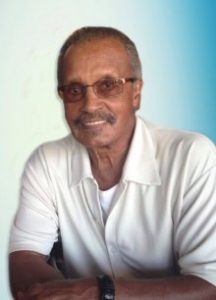
Felix P. Gomes

Felix P. Gomes, 84, of Marion, entered into eternal glory on Thursday, January 10, 2019 at Charlton Memorial Hospital in Fall River.

Born in Bourne, he was the son of the late Julio P. and Antonia O. (Gonsalves) Gomes. He graduated from Bourne High School, Class of 1952. Mr. Gomes was a residential group home manager for the Commonwealth of Massachusetts and previously worked at the former Paul A. Dever State School in Taunton.

He served in the U.S. Army from 1957 to 1960 where he honed his love for photography. After his service, he worked at Stewart Color Lab from 1960 until he left New York, creating images and producing print work that hung in subways and mega size billboards throughout New York City. During his career, some of his personal photos were submitted to Time Magazine.

A championship powerlifter, Mr. Gomes started weightlifting and bodybuilding during his time in the Army. At the Flatbush branch YMCA in Brooklyn, New York, he developed a program for weightlifting and sponsored weightlifting and powerlifting meets. He was a competitive member of the Staten Island Weightlifting Club. From 1971 to 1974, he was a New York Metropolitan Powerlifting Chairman and helped organize powerlifting meets in New York and New Jersey. He was also a national powerlifting referee.

Among his many accomplishments, Mr. Gomes was the top-rated powerlifter in 1969 both nationally and worldwide. He was both junior and senior national record holder in the dead lift, the United States record holder in the dead lift from 1966 to 1968, 1969 “Outstanding Powerlifter” in the New York Metropolitan Association, “Powerlifter of the Month” by the Powerlifting National Magazine, represented the United States in the first national team competition against England, and also represented the United States in three world powerlifting championships.

He is survived by his children, Felicia Gomes-Gregory of Brooklyn, NY, Kelcey Robertson of New Bedford, Kendra Gomes of Marion, and Keeland Gomes of Marion; his siblings, Robert Gomes of Falmouth, Joseph Gomes of New Bedford, Cipriana Gomes and Pedro Gomes both of Waterbury, CT, and Maria Santos of Quincy.  Also surviving are his grandchildren, Danielle Gregory, Gabrielle Gregory and Kelcey Robertson, Jr., and many loved nieces and nephews. He was predeceased by his siblings, the late Julio Gomes, David Gomes, Christina Gomes, and Margaret Gomes.

Relatives and friends are invited to visit at the Chapman, Cole & Gleason Funeral Home, 2599 Cranberry Hwy. (Rt. 28), Wareham on Thurs., Jan. 17, 2019 from 9 to 10:30 am. A funeral Mass will follow at St. Mary’s Church, Onset Ave., Onset at 11 am. Interment will be in St. Patrick’s Cemetery, Wareham.

Marion Designated as Green Community

Town Administrator Paul Dawson and the Marion Board of Selectmen are pleased to announce that the Town of Marion was designated as a Green Community by the state late last month.

“With so much conversation being made lately about the environment and our impact on it, this designation as a Green Community comes at just the right time,” Town Administrator Dawson said. “I think it all starts at home with everyone being mindful of the ways we can do a better job of protecting our environment and I am proud that the town has been recognized by the state for taking its own steps in doing just that.”

In a letter sent by the Massachusetts Department of Energy Resources (DOER), Selectman Chair Norman Hills was notified of the new designation for the town on Thursday, December 27.

The DOER Green Communities Division provides technical assistance and financial support for municipal initiatives to improve energy efficiency and increase the use of renewable energy in public buildings, facilities, and schools.

There are five criteria to be a Green Community. Meeting those criteria qualifies communities for state funding to increase their efforts. The criteria are:

-Provide as-of-right siting in designated locations for renewable/alternative energy generation, research and development, or manufacturing facilities.

-Adopt an expedited application and permit process for as-of-right energy facilities.

-Establish an energy use baseline for municipal buildings and facilities, and develop a plan to reduce energy use by twenty percent after five years

-Purchase fuel-efficient vehicles when available and practicable

-Minimize life-cycle energy costs for new construction homes and buildings; one way to meet these requirements is to adopt the new Board of Building Regulations and Standards (BBRS) Stretch Code

“Meeting these criteria is proof of Marion’s position as an energy leader in Massachusetts, poised to reduce its energy costs, improve the local environment and implement energy efficiency and renewable energy projects with funding through the Green Communities Designation and Grant Program,” Nicholas Connors Director of the Green Communities Division wrote in his letter to Selectman Hills.

Marion’s Energy Management Committee (EMC) has led the town’s effort to gain Green Community status since 2013 and 2014 when it promoted the Solar Bylaw and began to investigate the Stretch Code. More than 100 solar projects have been installed in town since that time.

With the help of the EMC, the town has also executed a power purchase agreement with Future Generation Wind to net meter electric power to town buildings and facilities at savings in excess of $90,000 per year.

In addition, the town was able to lease four electric vehicles for the use of town departments with help from the Massachusetts Department of Environmental Protection.

Currently EMC has proposed and overseen the replacement of all of the town’s cobra-head streetlights with more efficient LED fixtures for additional energy savings.

With the new Green Community designation, the town has been awarded a grant of $132,672 to cover the cost of additional energy-saving projects. A list of the proposed projects is presently being developed for submission to the Green Communities Division.


Selectmen Ready to Talk T.U.R.F.

Marion Town Administrator Paul Dawson advised the Board of Selectmen on January 8 to plan on attending the upcoming Old Rochester Regional School Committee meeting next week when the committee will discuss the ORR High School athletic complex renovation project proposal it will support advancing into the new year.

“I think it’s important that we be well represented … to at least present the municipal side of this and what that all means and how that might play out,” said Dawson.

Dawson encouraged all three selectmen to join him for the meeting, saying that selectmen, the town administrators, and some Finance Committee members from Marion, Mattapoisett, and Rochester will all be attending to discuss the implications of the proposal, “… Whatever their proposal may be,” Dawson.

“I think there is a movement to move it to the spring Town Meeting,” suggested Dawson.

The ORR School Committee meeting is scheduled for January 16 at 6:30 pm in the ORR Junior High School media room.

In other matters, Dawson gave the selectmen an update on the building of the Town’s fiscal year 2019 budget, saying the process is well underway after a meeting last week with department heads to discuss operating budgets and capital requests. There are a number of subsequent meetings for this and next week scheduled already to prepare a balanced budget to present to the Finance Committee.

“We hope to be able to have a budget ready to send off to the Finance Committee as soon as possible,” said Dawson. “I hope that we’ll be able to have some recommendations for the board at its next meeting … unless we run into anything unpredictable at this point.”

The board tabled the discussion of the citizen petition to ban adult-use recreational cannabis in Marion. According to Dawson, he still needs to review the article language with the petitioner in order to get the article into the proper format.

The next meeting of the Marion Board of Selectmen is scheduled for January 22 at 7:00 pm at the Marion Town House.

Marion Board of Selectmen

By Jean Perry