Sippican Historical Society

In 1998, the Sippican Historical Society commissioned an architectural survey of Marion’s historic homes and buildings. The survey was funded one-half by the Sippican Historical Society and one-half by the Massachusetts Historical Commission. Due to the limits of funding, not all of the historic buildings were surveyed, but over 100 were catalogued and photographed. The results of the survey are in digital form on the Massachusetts Historical Commission’s website and in four binders in the Sippican Historical Society’s office (and at the Marion Town Clerk’s office).

Marion (Old Rochester) is one of the oldest towns in the United States, and the Sippican Historical Society maintains an extensive collection of documentation on its historic buildings. The Sippican Historical Society will preview one building a week so that the residents of Marion can understand more about its unique historical architecture.

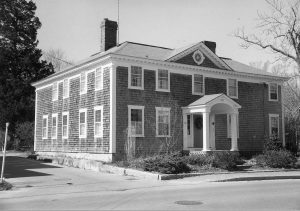
This installment features 296 Front Street. Built in 1797, 296 Front Street is a late Georgian- and Federal-style house built for Ward Parker Delano, the leading merchant in Old Landing during the first half of the 19th century. His store was located directly across the street on the site of what is now Burr’s Boat Yard. For many years, the Pythagorean Lodge was housed above his general store. During the late 19th century, his store was operated by Charles Henry Delano, who supplied the neighborhood with necessities and had the mail delivered there once a day from the lower village. In 1879, Ann Delano owned this house, while the W.P. Delano estate owned it by 1903.
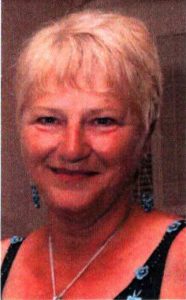
Mrs. Joanne Elaine “Jo” Cote (Cathcart)

Mrs. Joanne Elaine “Jo” Cote (Cathcart) died peacefully at St. Luke’s Hospital in New Bedford, on April 8th, 2018, at the age of 74.

Joanne is survived by her loving husband of 45 years Richard T. Cote, son Richard Jr. and Ermalinda of San Diego CA, and daughter Nicole of San Diego CA. She is also survived by sisters Fay Rodrigues, Ferne and Hank Castro, and brother Wayne and Jorun Cathcart, many nieces and nephews, granddaughter Dylan, and grandson Samuel. Joanne is preceded in death by her parents Samuel Cathcart and Amy Small.

Joanne was born on July 29, 1943 in New Bedford, MA. and graduated from Fairhaven H.S. in 1961.  She married Richard on February 16, 1973. Joanne waitressed at local family restaurant “Barbero’s” and also Mike’s Restaurant in Farihaven, where she made many lifelong friends.

Joanne was a loving wife and mother who adored her family and friends. She enjoyed many pastimes including knitting, reading, ceramics, and occasional trips to the casino. She also enjoyed her frequent trips to California to spend time with her family.

A service is scheduled for 10:00 am, July 28th at the Seamen’s Bethel in New Bedford, with a reception to follow at The Century House in Acushnet. All are welcome to attend and celebrate Joanne’s life. In lieu of flowers donations in memory of Joanne can be made to the Explosive Ordnance Disposal Wounded Warrior Foundation at http://www.eodwarriorfoundation.org/donate. The family would like to thank the nursing staff at St. Luke’s Hospital, Rock Funeral Home, and Seamen’s Bethel for their efforts, care, and dedication.


Bylaw Interpretation Favors Front Street Condo

For over three hours on July 12, members of the Marion Zoning Board of Appeals struggled to wrap their heads around the 324 Front Street appeal filed by abutter Peter Douglas as he sought to have the building inspector’s zoning enforcement denial overturned.

The meeting started out seeming expedient as the ZBA moved down the list of points to address as explained in a memorandum from Town Counsel Barbara Carboni – yes, Christian Loranger’s multi-family use of the property is lawfully non-conforming; and yes, the condominium development could be built under the bylaw which, at the time, allowed for reconstruction after demolition regardless of whether it was demolished via natural disaster, catastrophe, or by choice.

But when it came to interpreting the language of the bylaw pertaining to area and volume, and whether the razed house ever had a rear basement that would validate Loranger’s use of said basement as usable volume, the discussion was a broken record that kept spinning and skipping over the same scratches forming a bad loop that played on until nearly 11:00 pm.

Some residents, including the appellant himself, Douglas, left well before the meeting was even over as the tune grew tiresome.

One repeated verse of that tune was Section 230-6.1 of the bylaw, which says a reconstructed non-conforming house can only be rebuilt “to an extent only as great in volume or area as the original nonconforming structure unless a larger volume or area or different footprint is authorized by special permit.” The question stemming from Loranger’s argument emphasizing the “or” between “volume” and “area” and whether it means one must abide by both volume andarea or either one of them.

ZBA members were clearly frustrated as they pondered the meaning of “or,” until they decided to skip over it to address the other skip in the record – is the new structure within the same footprint as the original house?

            The board referred back to Carboni’s memo on occasion when talks were at their bleakest: “[The board should] use its best judgment and common sense of it,” was the refrain as ZBA member Kate Mahoney’s read the memo. “You are the fact finder. … Common sense and local precedent should guide interpretation.”

Eventually the board was unanimous, agreeing that the footprint was the same, more or less, give and take an external staircase or two.

“I can forego that,” said ZBA member Betsy Dunn.

The minutia was thick and convoluted as ZBA members with opposing viewpoints argued over “or” again, and whether Loranger simply had to keep with either the prior house’s area or volume, or both area and volume.

“It’s one or the other to me,” said ZBA member Michelle Smith via telephone remotely from Hawaii. “Up to the same area or up to the same volume as the original structure.”

But wait, what is volume and area, again? Mahoney was getting confused.

“Volume is cubic; area is footprint,” said ZBA member Tad Wollenhaupt.

The discussion took a dubious turn when the board began questioning which of the several – and very different – volume calculations by different surveyors to go by, fixating more on calculating volume than the actual task at hand: can Loranger stay within the prior structure’s area and go bigger in his volume, or must he stay within the prior house’s volume and area?

Here, at the two-hour point, the board referred again to Carboni’s memo and then reverted back to the discussion of which surveyor calculations to use.

“In my world, we take the medium – or the average,” said ZBA Chairman Marc LeBlanc.

Mahoney had a hard time believing Loranger’s surveyor, purveyor of three different sets of calculations for the original house, each of them larger in scale.

“There was a motive for them to perhaps … increase the numbers,” said Mahoney.

“That’s a strong statement,” LeBlanc said.

“That’s a very strong statement,” Loranger said from the audience, eliciting shushes from the board with the public comment period over.

As talk went on, the viewing public became increasingly visibly frustrated, and even Douglas was cautioned that he would be removed for expressing his own perplexity in a reflexive remark. The board was all on edge as well and paused for some comic relief to laugh amongst themselves about texts LeBlanc said his sister was sending him that moment. The public sat and waited.

Still engrossed with which calculations to believe, Wollenhaupt eventually remarked on how he doesn’t feel there is enough information to determine a bylaw-abiding volume, since the old building is now long gone.

The meeting dragged on, and even Loranger himself during a “weak moment,” as he put it ironically, pondered aloud if tearing down the building would be less painful than that meeting.

Then the board turned to Building Commissioner Scott Shippey and asked him the magic question: when you interpret the bylaw while issuing a permit, does “or” mean eitheror both?

            “It’s ‘or,’ said Shippey. “It’s either or. It says it plain as day. The word ‘or’ is clear.”

And then immediately the board went back to which calculations to use. Dunn advocated for the first set of calculations, which Douglas’ and Loranger’s surveyors both said were inaccurate, “Because that’s what it was built to,” said Dunn.

Then, again, it was back to “or,” courtesy of Mahoney this time, asking if the board accepts a literal interpretation of “or” or if they see it as meaning “both.”

The vote was 4-1, Dunn dissenting, but this vote and the prior votes that night were simply used as scaffolding to support a final vote to either uphold or overturn Shippey’s denial of Douglas’ zoning enforcement request, which would need a supermajority vote of 4-1 to overturn in Douglas’ favor.

“No matter what happens,” LeBlanc said, “if we don’t agree, it fails.”

The discussion went around again a couple more times until – suddenly –

another vote: does the project comply with the bylaw (same footprint, not greater in volume “or” area …)? Yes, 3-2, with Dunn and Mahoney opposed, which contradicted Mahoney’s prior vote deeming Loranger’s structure was within the original footprint, and her vote to accept “or” as meaning ‘either.’

Still with us?

A 3-2 vote to uphold Shippey’s decision ensued. Loranger left with a “thank you,” and Douglas was already home by then.

In a follow-up email to The Wanderer, Douglas wrote, “A number of uninvolved observers present at the ZBA meeting remarked on the apparently obvious bias of the [three] ZBA members who are real estate brokers or developers. I can’t comment on that other than to say that I am 100% certain that a judicial decision on appeal will result in a complete reversal of those [three] members’ votes.”

The next meeting of the Marion Zoning Board of Appeals is scheduled for July 26 at 7:30 pm at the Marion Town House.

Marion Zoning Board of Appeals

By Jean Perry


Art In Plain Sight

Just up the road in New Bedford is a treasure trove of visual arts: watercolors, carvings, oil paintings, and photographs, primarily depicting a place and time when the city of New Bedford was the whaling capital of the world – the 19th century.

On July 11 in the 21st century at the Mattapoisett Free Public Library, the New Bedford Free Public Library curator of art, Janice Hodson, pulled back the veil of time and shared her library’s art wonders for all to see.

Public libraries have long been seen as a place for ‘the people’ to go and learn, share information, and expand their interior horizons. Hodson believes that free libraries can also fill a special role in communities where fee-based museums hold works of art. At the public library, viewing art is free.

Beginning in late 1800s, when the New Bedford Library was subscription-based and did not have a permanent home, through 1910, when New Bedford’s Free Public Library finally had a secure location, the directors were on a mission to give the average person, in addition to books to read, the opportunity to view art freely.

From Hodson’s viewpoint, it was the second director of the library, George Tripp, who had the vision of a New Bedford library as a place for art in need of recognition. Tripp’s nearly four-decade tenure gave him plenty of time to collect important pieces and to inspire philanthropy through developing important relationships with the well-heeled of the area.

Hodson said, in the library’s recent past, there was a 10-year period when it was unable to display many of the pieces in its collection. The position of curator was not filled. It is Hodson’s joy to be filling that role and sharing the art collection with the people, free of charge.

And what a collection it is.

Between June and October, the library has on display John J. Audubon’s groundbreaking massive book Birds of America. This grand work of art is the seminal study of wild birds that set the tone for all future ornithological depictions.

The library’s copy was donated in 1866 by whaling merchant James Arnold. The library’s press release on the exhibit describes it as “four volumes of John James Audubon’s first edition double elephant folio of the Birds of America.”

Published in 1827, the over 400 pages of engravings showing birds in a naturalized environment became a top seller – in spite of the pages being an astounding 39 by 26 inches, known as “elephant paper.” Hodson said of Audubon, “He wanted to show the birds life size.”

Audubon’s artistic styling was the first time birds were shown by a scientist in dynamic settings: feeding, nesting, flying, and fighting.

“He generates emotions in many prints,” Hodson said.

As Hodson displayed Audubon’s rendition of the Carolina parrot, the only parrot native to North America, she smiled and told the audience, “You can hear the noise!”

Before Audubon, scientific drawings of birds were flat – one-dimensional and academic. Audubon believed that to fully understand the birds, one had to have a narrative and that narrative could be captured in the image. While he included text that described the subjects in terms other ornithologists would appreciate, the engravings were something the layperson could understand.

The Birds of America made Audubon rich by the standards of the day, Hodson confirmed. Each edition sold for $1,000. A princely sum indeed, and there must have been some princes of industry and commerce in New Bedford, as forty subscriptions were sold in this city alone.

Throughout the New Bedford Free Public Library, displayed high upon its aging walls, are pieces done by artists who lived in and around New Bedford throughout the 19th and 20th centuries, many of whom were students or teachers at the former Swain School of Design now part of the University of Massachusetts at Dartmouth. Nearly all lived in and around New Bedford.

Hodson’s presentation in Mattapoisett included images of paintings by William Allen Wall’s 1853 “Birth of Whaling,” which shows a whaling boat being launched as well as Clifford Ashley’s 1905 Sunbeam Series, which was used in his pieces published in Harper’s Weekly. These works showed the savagery and horror of working and living on a whaling ship infested with rats and roaches. And there is Clement Swift’s “The Spar from 1879,” which was shown in the Paris Salon and was purchased by the library for $750 in 1910.

And there they were, in New Bedford on July 12, the day after Hodson’s presentation – works of art resting along walls where library patrons sat below working at computers seemingly unaware that overhead a masterpiece longed to be acknowledged.

While many of the paintings have themes reminiscent of whaling activities and waterfront scenes, there are others from the Hudson River School that show the grandeur of mountains and rolling splendor of open fields.

Especially charmingis the expressionistic piece titled “The Dancing Lesson,” a large vertical canvas painted in 1915 by one of only a handful of female artists whose works grace the library’s collection, Margaret Serena Peirce. It is a piece that has strong, classically executed lines that students of the Boston School are known for using. Peirce was a student there and with her clever use of soft tones has achieved a balance between impressionistic brushwork and more traditional painting techniques.

And then there are the arts and crafts.

Turn the corner on the library’s second floor and there you’ll find an enormous solid piece of wood with a three-dimensional carving done by Leander Plummer in 1908 titled “Bluefish.” The fish is the central theme of the piece. Articulated to give movement to its posture, the fish seems as real as any swimming in Buzzards Bay today.

During her talk, Hodson gave a brief nod to what she described as a “small but impressive Japanese collection.” She said there was work still to be done on discovering how these pieces were acquired and from where. Such is the life of a curator of art.

To learn more about the New Bedford Free Public Library art collection and current exhibit visit www.newbedford-ma.gov/library or you may call Janice Hodson at 508-979-1787 to ask about the gallery’s hours.

By Marilou Newell


July Programs at Plumb Library

On Monday, July 23at 6:30 pm, local author Michelle Cusolito will be talking about her new book “Flying Deep: Climb Inside Deep-Sea Submersible ALVIN.” Copies of the book will be for sale the night of the event and can be reserved ahead of time by calling the library at 508-763-8600. The cost of the book is $14 for members of the Friends of Plumb Library and $16 for non-members. The program benefits the Friends. Registration is required. Register on the Events Calendar on the Plumb Library’s website, www.plumblibrary.com.

On Thursday, July 26from 6:45 pm – 7:45 pm, The Unlikely Strummers will be performing in the gazebo at the Plumb Library, 17 Constitution Way, Rochester. The Unlikely Strummers is a ukulele group based at An Unlikely Story bookstore, in Plainville, featuring strummers from various towns around southeastern MA. They play family-friendly popular music, and you’ll be invited to sing along to songs ranging from classics like “When You’re Smiling,” “Rockin’ Robin,” and “King of the Road” to more recent tunes made popular by the Beatles, Herman’s Hermits, the Temptations, Blondie, the Bangles, and Bruno Mars. The Unlikely Strummers have been featured at farmers’ markets, fundraisers, and community events around the area. They are also slated to play the National Anthem for the PawSox this season, and recently made their first festival appearance at the Cape Cod Uke Fest. This is a free family-friendly outdoor show held at the plumb library gazebo. Bring chairs, blankets, bug spray, and snacks! Be ready to sing and dance. Registration is kindly requested.

Mrs. Williamson, RMS instrumental teacher, will be here on Saturday, July 28 from 2:15 pm – 3:00 pm to teach us all about bucket drums! Everyone will be given the opportunity to play a bucket drum and learn some techniques and rhythms. At the end of this session, we will beat out a tune as a group. This presentation is loud and is only for kids aged 8 and up. (Parents are welcome to participate as well, but this is not a program for younger children.) Weather permitting, all drumming will be outside at our gazebo. Otherwise, we will move the program inside as the library will be closed to the public.

On Monday, July 30at 4:30 pm, Animal Instincts LIVE will present “Animal Songs” for children of all ages at the Plumb Library. Learn about animal songs and sounds while seeing live animals. Pre-registration is requested.

“Seascape” To Open At MAC

Edward Albee’s “Seascape,” winner of the 1975 Pulitzer Prize, will open at the Marion Art Center on Thursday, August 9with subsequent performances on Friday, August 10; Saturday, August 11; Thursday, August 16; Friday, August 17; and Saturday, August 18. All performances will start at 7:30 pm.

This two-act drama (dramedy) is about a retired couple enjoying a day at the beach when they meet a “sea creature” couple. Director Kate Fishman has cast Camerin Bennett as Sarah; Scott Fishman as Charlie; Tristan McCann as Leslie; and Susan Sullivan as Nancy. “This is a strong cast,” says director Fishman, “and I predict a lively and engaging production.”

Tickets are $18 for MAC members; $20 for nonmembers. General seating and cabaret tables for 4 are available. Purchase tickets in person at the MAC or by calling during gallery hours: Tuesday – Friday: 1 pm – 5 pm and Saturday: 10 am – 2 pm. The Marion Art Center is located at 80 Pleasant St, Marion, MA and can be reached at 508-748-1266.

Friends’ Cross-Country Bike Ride Concludes in Rochester

Colleen Oakes and Renee Buteyne were only 12 when they met in junior high at Old Rochester Regional. The two girls spoke for the first time after Buteyne (formerly Bussenger) watched as a girl at school asked to borrow Oakes’ lip gloss “and she intentionally jammed her finger in it and ruined it,” said Oakes, now 29 and living in Aspen, Colorado. The girls looked at each other in disbelief, laughed it off, and bonded over the adolescent act of unkindness.

Years passed since that encounter with the mean girl who launched the two on their journey in life as friends. Sometime that journey was a figurative one – two friends, both at UMass Amherst sharing a dorm room, their dreams, their plans … More recently, though, their journey as friends became a literal excursion as the two set out together from Portland, Oregon, and made their way home to Tri-Town peddling 3,624 miles on their bicycles during a two-month, two-week-long trip across the country.

It was something Buteyne wanted to do since she was around 20, she said. And now in 2018, suddenly Buteyne was about to turn 30.

“I think I realized that a decade had gone by and I hadn’t done it,” said Buteyne. I better get that done, she figured, “Otherwise, that dream is going to get further and further away.

“Something kind of clicked,” she said.

Buteyne was never really a biker, she admits. She had never done any long tours or overnights or anything longer than a daytrip. It was just one of those things Buteyne had always wanted to do, said Oakes, “And some day she was going to do it.” Buteyne decided that time would be this year and asked Oakes to join her.

“I wasn’t sure,” Oakes admitted. “I was out in Colorado: I wasn’t sure if the timing was right.” But then, just like that, it was suddenly the right time when the Tesla store she worked at closed down and, suddenly, Oakes was a free woman.

The two women, both facing another new decade of life together, chose the cross-country bike trip as their way to say goodbye to their twenties while pedaling into their thirties. After all, Oakes said, “My dad did it back in the 70s and he still has the stories.”

Oakes’ father is Jeff Oakes of Marion, an active advocate for the Marion Bike Path and a member of the Open Space Acquisition Commission.

The trip began on May 2, leading the two friends across the map, stopping along the way to visit friends and family in various states and checking off bucket list destinations along the way, like Yellowstone National Park, for example.

“We would sort of hit these hubs that were important to us … then try to get there by a certain time,” said Oakes.

But it wasn’t so much the places that left the impression on the two women along the way; it was the people they met and the acts of kindness they encountered from strangers all over the country.

“People are just way kinder to you than you can imagine,” said Buteyne. “When you show up on a bike like that it’s sort of like a red flag that you’re in need of something … and people want to give that so openly.”

Some people would simply leave money on the counter to buy the women’s meals, others would offer hot showers or a place to sleep. Some had simply experienced travelling on a bike long-distance or had kids who did and just wanted to pay it forward, so-to-speak.

“Real generosity from strangers, which I feel like is always a surprise,” said Buteyne.

People along the way made a lasting impact of them, said Oakes, recalling a funny outcome to a rather unpleasant experience.

“One night we ended up sleeping in a tent behind someone’s trailer in a really, really small town in Wyoming,” Oakes recalled. “It was, hands down, the worst dinner we had ever had in our entire lives.” Uncooked meat served by angry waitresses, said Oakes – “And you knew that nothing was clean in there, but it was the only place open so we knew we had to.”

Then a nice man with no teeth offered up a spot for their tent for a night that Oakes said ended up being one of the most memorable, fun nights of the trip.

“It’s some tough living in some of these places out west, but they’re the most generous people we met,” Oakes said.

Clearly, this part of the two friends’ journey was a lifetime away from that moment a mean girl and her finger globbed with Oakes’ new lip-gloss brought them together. And a trip like this one requires a companion with a good sense of humor and the ability to laugh it off, just like they did when they were 12, because the two had their moments in between Portland and Rochester, Buteyne recalled.

“Renee was the one who would push us through, and if I saw Renee struggling, I’d push her,” said Oakes.

“I don’t think I could’ve done it without her and her strength and also her humor,” said Buteyne. “You have to have someone to laugh about and Colleen was the perfect companion throughout the whole thing. It just sealed the deal on how much I love her.

“You see how strong somebody is,” Buteyne continued. “If my cup was empty she just had a little more to fill mine and hers.”

All she had to do was look at Buteyne and know what she was thinking by the end of the trip, said Oakes, like that time they climbed 3,000 feet in elevation in one day as they crossed the Continental Divide. Buteyne’s family had sent them off with some homemade brownies and at one point Oakes looked to Buteyne who was clearly stressed and said, “Here. Eat this entire brownie right now.

“Slowly she came back to life and we were just laughing on a chocolate high,” said Oakes. “It’s just those little things. We can read each other and turn it around.”

The two are certain the trip has changed them for the better. After all, they did what they said they were going to do, said Buteyne, “And I just think that our words are strong and if you want to do something or you say you’re going to do it, you should do it.

“At the end of the day, that’s the stuff that makes you, being true to your word,” said Buteyne.

For Oakes, “There was never a moment when either one of us didn’t want to keep going. It wasn’t an option for us. We can pretty much get through anything and we’re a lot stronger and more capable than we probably thought.”

There’s more than just one takeaway from this journey for the two women. But as Oakes summed it up, “There’s more kind out there than there is bad, especially for two girls – people worried about us, the warnings, the cautionary tales,” said Oakes. “It’s a great country and people are really, really nice. It’s actually not so bad out there.”

Buteyne turned 30 on July 10 during her trip. The two made their way across Massachusetts, down High Street, and onto Stevens Road on Monday, July 16, where family and friends greeted them with confetti, balloons, a homemade finish line, and lots of hugs.

“I’m excited for them and so proud,” said Lisa Bussenger, Buteyne’s mother. “They’re such good people. When they say they’re going to do something, they do it.”

By Jean Perry

‘Accepted, But Not Subdivided…’

The Rochester Zoning Board of Appeals was almost ready to approved a Variance for Nicholas Araujo to allow a single-family house on an unaccepted way, Schoolhouse Road, but opted to continue it one last time.

The public hearing was continued from June 28 to allow the applicant to present enough data to convince the board that Araujo has legal access to his 15-acre property on Old Schoolhouse Road via an easement.

On July 12, engineer Rick Charon gave the history of Old Schoolhouse Road dating back to 1974 when the ZBA granted a Variance for one property to build along that road, and in 1875 it issued another for another lot “without proper frontage,” Charon stated.

An opinion from then town counsel, Charon said, demonstrated that the road existed before the current bylaw was adopted, and one deed referenced the road as a “highway.”

The packet Charon submitted supported the idea that Old Schoolhouse Road was indeed a legitimate road, albeit ‘unaccepted’ by the Town of Rochester and not maintained by the Town, as some roads still are not today.

In 1991, Charon continued, the Planning Board approved three additional lots on the road, saying it had sufficient width and grade for emergency access.

“That decision is kind of inherent in the acceptance by the Planning Board,” said Charon.

Then, in 1993, Charon explained, the largest of those three approved lots was approved by the Planning Board for further subdivision into four lots for a total of six lots on the south side of the road. The board’s decision back then, Charon said, stated that Old Schoolhouse Road was an “ancient way” providing access to the several lots deemed buildable because of that access.

“It’s a way, its open to the public … it’s not privately owned … but it’s not an accepted road,” Charon said. The Planning Board noted in that decision that the Town had no obligation to maintain or provide services to the road.

The fact that the Planning Board has accepted all of this roadway right down to the last house on the right hand side, to me, I think established the fact that you have an unaccepted street,” Charon said.

Residents on that road continued to express concern over potholes and an exacerbation of road conditions should development proceed, which was outside the ZBA’s purview in the end, yet considered.

“As far as I’m concerned … I don’t see anything moving forward from this point, in my opinion, [that should] prevent a residential structure on this parcel,” said ZBA member Kirby Gilmore. “However, I don’t think it should be subdivided anymore.”

ZBA member Richard Cutler agreed, saying he would approve the Variance to accept the property – “Accepted, but not subdivided …”

The board said it could add that no further subdividing, among other things, could be added to its decision if approved.

The only thing the board still wanted was a certified plan that clearly shows the frontage of the parcel, which was not included in its packet that night, and preferred town counsel weigh in on the decision as well.

“My feeling is this is a so-called ancient way,” Cutler said. “It’s a road that’s been used for a long time.”

ZBA member David Arancio supported continuing the hearing until the plan is presented and added, “Obviously it’s an issue, otherwise they wouldn’t be in here looking for a variance in the first place. … I want to get this right for everybody in this room.”

“Plus, it’s protection for the property owner,” said Cutler. “You don’t want any issues coming at you later on.”

At that, the hearing was continued until July 26.

In other matters, the board granted William Watling, Jr. of 360 Cushman Road Variance to allow a garage closer than 40 feet from the side setback, and a garage greater than 1,000 square feet in size to be used for storage. Conditions on the Variance prohibit the use of the garage for any commercial use or residential occupancy. The total square-footage is not to exceed 2,500 square feet, and the setback from the property line cannot be less than 16 feet.

The next meeting of the Rochester Zoning Board of Appeals is scheduled for July 26 at 7:00 pm at the Rochester Town Hall.

Rochester Zoning Board of Appeals

By Jean Perry


MassDEP: 2018 Public Water System Awards

The Mattapoisett River Valley Water District (MRVWD) is one of the 58 public water systems to be awarded a Beyond Compliance Award by the Massachusetts Department of Environmental Protection (MassDEP) for 2017. The MRVWD received the award in the Consecutive System category. As stated by MassDEP:

“The 58 systems in the four different categories of NTNC, small community, consecutive, and medium/large community systems all have excellent compliance with state and federal drinking water regulations. Not only do they have complete compliance with regulations for calendar year 2017, they have had no violations in the past 5 years. They have gone beyond compliance by testing for secondary contaminants and by having adequate capacity. This shows exemplary efforts to attain such an excellent record.”

Mr. David Pierce, chairman of the MRVWD said, “Congratulations to Superintendent Henri Renauld and his staff. It is an honor to be recognized by MassDEP for the excellent service provided to our member towns by the water treatment plant. We are all so pleased with the high quality of service the operations staff has delivered to our communities.” The MRVWD WTF is operated by Mr. Henri Renauld, superintendent of the Mattapoisett Water and Sewer Department and his staff.

The MRVWD was formed in 2004 to construct and operate the 6 million gallon per day (mgd) Mattapoisett River Valley Water Treatment Facility (MRVWTF). The District is comprised of the Towns of Fairhaven, Marion, Mattapoisett, and Rochester. The MRVWTF, located in Mattapoisett, began operations in 2008 and treats raw water from eight municipal water supply wells owned and operated by the District Towns.

St. Philip’s Episcopal Church

St. Philip’s Episcopal Church, next to the Town Beach in Mattapoisett, continues their 134 year tradition of visiting clergy from Massachusetts and beyond.

Services using the 1928 Book of Common Prayer are conducted at 8:00 am and 10:00 am each Sunday through Labor Day weekend.

The Reverend Marc Eames, Rector, The Church of the Advent, Medfield, MA will officiate the services on July 22.

Come visit our historic chapel by the sea in Mattapoisett! All are welcome.