ConCom Says, Yes, Dogs Allowed at Sprague’s Cove

            Now that the Marion Conservation Commission has jurisdiction over the maintenance of Sprague’s Cove, the commission’s administrative assistant, Lissa Magauran, told the ConCom on July 24 that she has had some visitors in the office inquiring about whether or not dogs are permitted there, given its proximity to Silvershell Beach where dogs are not allowed during the summer months.

            Since benches have been placed in the area presumably to provide elderly dog walkers with a place to rest, the question has come up about whether dogs are even allowed at Sprague’s Cove. One resident, said Magauran, reported that she had informed one person that dogs were not allowed.

            “She didn’t know what the rule was, and I just said I would ask ConCom if they were okay with dogs in the winter (same time span as beach),” Magauran said. “Her fear was that if dogs are in there pooping and whatever, it may somehow go into those little ponds and when they empty out, if the bacteria count is high, then the beach would be closed.”

            Doubrava pointed out that the commission manages the maintenance of the wetlands, including the eradication of invasive phragmites, but the overall management of Sprague’s Cove fell under the authority of the Board of Selectmen. He suggested asking the selectmen for clarification.

            Commission member Shaun Walsh, however, thought differently.

            “Of course dogs are allowed in that area year round,” said Walsh. “I guarantee there are not that many dogs defecating in that area and, that washing into those ponds – that is a stormwater treatment system. … It’s not pristine water to begin with.”

            Having said that, though, he continued, dog owners must be responsible for picking up after their dogs.

            According to Walsh, the main reasons for restricting dogs from Silvershell Beach is due to the public’s own enjoyment of the beach, and also the shorebirds feed and nest there and are vulnerable to being chased by dogs.

            “That doesn’t apply to that grassy area around that stormwater structure,” said Walsh. “I would personally say, yes, dogs are allowed in that area year-round.”

            Speaking of Sprague’s Cove, Doubrava mentioned that the commission needed to get moving on the invasive species treatment plan. The Notice of Intent for that is slated for the August 28 agenda to give enough time for approval before eradication begins in late September, the ideal time to treat phragmites.

            In other matters, the commission granted a Negative 2 determination for the Request for Determination of Applicability filed by Philip Stevenson, 50 Point Road, to remove rosa rugosa and other invasive vegetation between his lawn area and a seawall and other walls. Stevenson will plant grass in place of the vegetation he removes.

            Beginning in the fall, the commission will hold its regular meetings in the selectmen’s office at the Town House as it has recently become available as a meeting space, Doubrava said, mainly because it is air conditioned so relocating summer meetings to the Marion Music Hall would no longer be necessary. Furthermore, the space is handicap accessible and has a projector the commission could use for renderings during meetings.

            “That would stop us from having to move back and forth,” said Doubrava.

            The next meeting of the Marion Conservation Commission is scheduled for August 14 at 7:00 pm at the Marion Music Hall.

Marion Conservation Commission

By Jean Perry
All I Really Need to Know I Learned in the Coffee Shop

            Back in the day – my day that is – the most important thing about summer was getting a summer job. 

            My parents were the children of subsistence fishermen, day laborers, shop owners, foragers; that is to say, people who worked hard to scrape together enough resources to survive. A work ethic deeply engrained by example and expectation.

            The summer of 1966 I was fifteen years old – old enough to secure a work permit. I was seeing dollar signs. Now a card-carrying member of our great capitalist society, I sought and secured employment at the bakery-coffee shop on the corner of Pleasant Avenue in Onset earning $17 per week.

            I had been hanging around the backdoor of this seasonal pastry shop for a couple of years. The owner’s children were my age and many afternoons found me in the company of Tom and Karen after the shop had closed for the day. These kids were conscripted at an early age to clear away dirty coffee mugs and pastry plates, but there was always at least one hired girl to help out during the morning rush.

            The lady of the establishment was the boss, her husband the baker. I’ve long since forgotten her name, but it was exotic compared to the names of the neighborhood ladies – Edith, Mary, or Edna. The bakery lady wore a bit of make-up, which also separated her from the women whose roots ran deep in the village. Every week, she would visit the local beauty salon for a wash and set. She was a modern working woman.  I loved her.

            To say the bakery lady was all business is not an understatement. After hiring me, she told me how she expected me to dress, wear my long hair, and comport myself with the customers. I took in every requirement like an assignment. 

            After purchasing two rayon waitress uniforms, one white and one pink, and matching aprons from the 5 and Dime Store a couple doors down from the bakery, I went home where I spent the rest of the day hemming the uniforms and thinking about my hair. A hairnet was mandatory, but how to wear one with style, now that was the burning question.

            My mother was fully against any make-up worn before the age of 18 and certainly didn’t approve of the short skirts that were all the rage. But when she saw me kitted out with my hair pulled back in a tight chignon with a beaded hairnet holding it together, she smiled and said, “You look nice.”

            The next morning, I got up at 5:30, dressed, and quietly left the house as my father was just getting up. He came to the door and said, “Good girl.” I was ready for the start of my real life.

            The bakery lady was already putting hot donuts on cooling racks. Like a drill instructor she told me to check the napkin holder, salt and pepper shakers, wipe down the counters, and clean the glass display cases. I was loving her a bit less.

            The doors would open each day at 6:45 am and it was not unlike the curtain rising above a stage – we would dance through the morning singing out orders for the short order cook, and cleaning up crumbs and coffee drips in synchronized motion. That first day I was exhausted when I returned home at 2 pm. But my apron was full of small change and my hair was still in place.

            Everything relating to food preparation and delivery came rather naturally to me having worked in my mother’s kitchen for years. I knew how to clean up spills, pour coffee, and set a plate of food on a table. But I would learn the importance of customer service.

            One customer, an older gentleman and local business owner said to me, “Smile! You look so angry.” So I smiled and said I was sorry. I wasn’t angry; I was just taking my job seriously. But the customers wanted more than just their order of eggs over easy with a Danish roll and coffee. I learned the customer wanted to be recognized and appreciated. So I began to smile and say good morning, told the customers to have a good day and asked if everything was to their satisfaction. Over time my nickel and dime tips turned into quarters.

            Another important lesson was to keep busy at all times when someone is paying for your labor. Intuitively, I found myself cleaning, sweeping floors, and filling condiment bottles. But on those occasions when I was found standing still behind the counter the bakery lady would bark, “Clean the glass girl!”

            She had taught me how to wash the glass cases inside and out with straight ammonia and old newspapers. Cleaning the outside of the case wasn’t so bad, but cleaning the inside was murder. One had to contort the body, nearly climbing inside the display case to get all the corners cleaned. On hot summer days the effort and the fumes from the ammonia would almost knock me out. I learned that sometimes the boss was really bossy, maybe even mean-spirited, but I was getting paid so I grinned and bore it as well as a teenager could.

            I also learned a great deal about people.

            There were people who would appear down on their luck, maybe order just a cup of coffee and nothing more. I’d greet them with my smile and make sure their cup remained full as long as they sat there. These people never ceased to surprise me by leaving me a quarter or two, sharing with me what meager funds they had. Years later when their obituaries were printed in the daily newspaper, I’d remember their generosity – a lasting memory of kindness. Conversely, there were people who everyone knew as money-bags, but who bore the heart of a cheapskate leaving only pennies behind on the counter for my efforts to please them.

            I learned that the bakery kids, the children of the owners, were really entitled brats. And even though they too had to work in the bakery, once I was hired I was no longer their friend. They would order me about and try to make me look bad in front of their mother and the customers. I didn’t grasp what had changed other than my being an employee. I became so sad over this change of status that when that summer ended I never returned to the bakery to work nor to buy pastry. The bakery kids never spoke to me again.

            It didn’t matter, I had moved on to better opportunities than being asphyxiated by ammonia fumes. I landed year-round, part-time employment at the Copper Kettle, a full-service restaurant, where I honed my customer service skills and continued my education in human nature.

By Marilou Newell

SharkCam at the MNHM

Join Research Engineer Amy Kukulya and learn about the use of underwater robotic vehicles to study shark behavior with Woods Hole Oceanographic Institution SharkCam on Thursday, August 8at 7:00 pm at the Marion Natural History Museum(MNHM). Suggested donation to the Marion Natural History Museum: $10.00 members, $12.00 nonmembers, $15.00 for families with children.

            SharkCam research vehicle has been featured multiple times on the Discovery Channel’s annual Shark Week. The REMUS AUV SharkCam, originally developed for coastal mapping and monitoring, is outfitted with water current profilers, salinity, and temperature probes as well as six HD video cameras to give scientist a broad range of data on the animal’s position in the water, as well as its habitat and behavior. During operation a harpoon is used to tag the shark’s dorsal fin with a transponder, while Kukulya and her colleagues quickly launch the REMUS SharkCam. The tag’s transponder communicates with the AUV, allowing it to track the animal up to depths of roughly 100 meters. When the mission is complete, the team sends an acoustic command to the shark tag’s release trigger, which then mechanically releases the tag from the animal, allowing it to float to the surface for retrieval. Let’s learn more about this fascinating research technique.

Partial funding for this event has been provided by the Marion Cultural Council.

Sippican Historical Society

In 1998, the Sippican Historical Society commissioned an architectural survey of Marion’s historic homes and buildings. The survey was funded one-half by the Sippican Historical Society and one-half by the Massachusetts Historical Commission. Due to the limits of funding, not all of the historic buildings were surveyed, but over 100 were catalogued and photographed. The results of the survey are in digital form on the Massachusetts Historical Commission’s website and in four binders in the Sippican Historical Society’s office (and at the Marion Town Clerk’s office).

            Marion (Old Rochester) is one of the oldest towns in the United States, and the Sippican Historical Society maintains an extensive collection of documentation on its historic buildings. The Sippican Historical Society will preview one building a week so that the residents of Marion can understand more about its unique historical architecture.

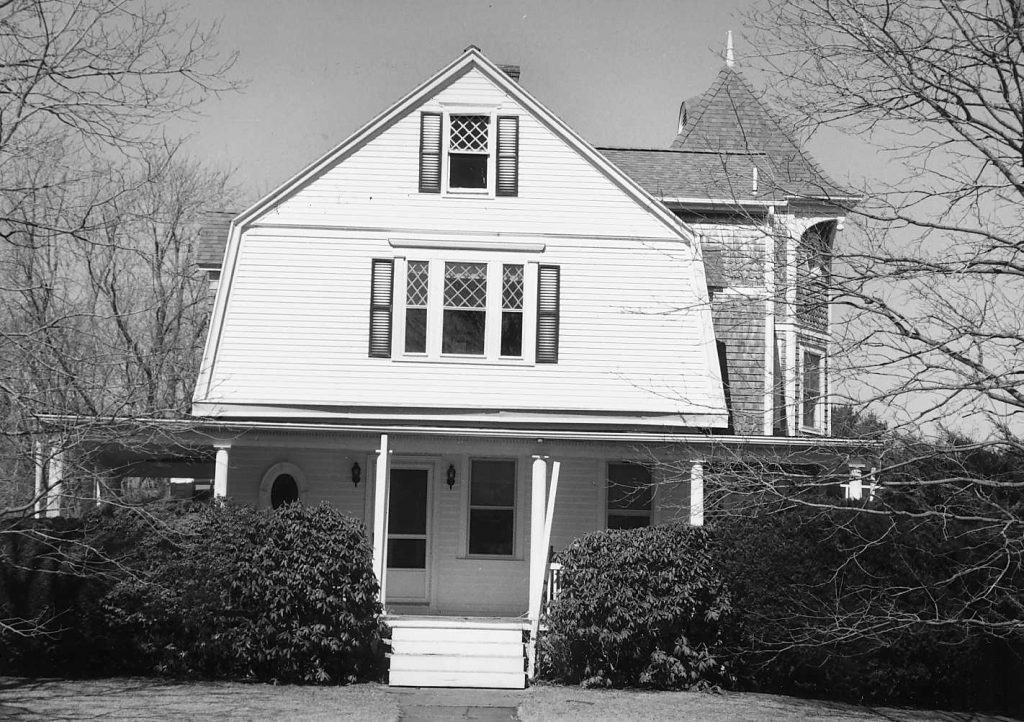
            This installment features 29 Cottage Street. The clapboard- and wooden shingle-clad William Kelly House at 29 Cottage Street is an example of a towered Queen Anne house from c. 1890s. It also incorporates the Shingle (gambrel profiles), Colonial Revival (porch elements), and Palladian (attic window) styles. Capt. William Kelley lived here until c. 1905.

Spring Street Intersection Discussed at Bike Path Hearing

On July 30 the Massachusetts Department of Transportation (D.O.T.) held a hearing at which time the public was asked to give comment on the 25-percent design for a bike path that could one day link Marion to Mattapoisett and Wareham. Phase One, which was the topic of this hearing, would travel from the town line near Mattapoisett’s Industrial Drive to Point Road, a 3.8 mile segment.

            Mass D.O.T. Highway Administrator Jonathan Gulliver and Patricia Leavenworth, Chief Engineer, made brief opening statements intended to advise the public not only how the meeting process would work, but also how the entire project would flow.

            Presenting the preliminary design was Jeremey Packard of Foth-CLE Engineering. His presentation outlined the steps that have so far been taken by the design team as well as the funding pieces. Packard said that this hearing was a chance for the public to comment on the design, allow opportunity for discussion, and attempt to see any emerging issues. He shared that in June of 2016 the project kicked off and in September of 2017 three concepts for the Spring Street – Route 105 intersection were developed, and that now, July of 2019, the project had achieved 25-percent design.

            Of the three intersection design options, Packard said that one was being advanced as the most effective for traffic flow and pedestrian safety. Regarding the intersection design, traffic traveling south on Route 105 and making a right turn on Spring Street, as well as traffic veering to the left at the split and continuing on Front Street, would see very little impact, Packard explained. However, the design called for one way traffic only on Spring Street from the split to Route 6. There would be some push back from this viewpoint once the public was invited to speak.

            Another area inciting some to question the state’s representatives was when the funding would be released for the project. Gulliver said that funding for Marion’s project was slated to be included in federal monies from the Transportation Improvement Program, T.I.P., in 2023. But first the process had to be followed.

            Part of the process and another issue that caused some stirring in the assembled was the issue of easements. Gulliver said that Marion would have to reach agreements on 9 permanent easements and 6 temporary easements for the 3.8 mile shared used pathway.

            Packard also pointed out that the permitting process included not only local agencies, but also Massachusetts Environmental Policy Act, M.E.P.A., an agency that studies potential environmental impacts for projects involving a state agency, the Wetlands Protection Act, Army Corps of Engineers, and the Federal Highway Administration.

            Before opening the hearing to public comment, Packard said that the design could achieve 75-percent completion by the end of 2020 and 100-percent by the end of 2012. But with money not slated to reach the local level until 2023, some in attendance were flummox.

            Coming forward as the first of about ten people wishing to share their viewpoint on the project was Selectman John Waterman who said, “I’m surprised how long it takes to just get the design.” He questioned if the project would be “slow walked” given funding wasn’t until 2023.

            Selectman Norm Hills questioned the status of the rights-of-way and easements asking, “Do we have any of them yet?”

            Leavenworth responded, “No you don’t.” She went on to say that the selectmen would first have to vote to approve them, followed by town meeting voting in the affirmative. 

            John Rockwell, Chairman of the Pathway Committee, spoke to the fact that for years he and others had wished to acquire lands for recreational use and asked several times when dialog with property owners could begin. Leavenworth said those discussions could start now, but cautioned that it was a long process and that the town could not negotiate terms. She suggested waiting until design had reached 75-percent completion.

            The intersection plan created the most concern with several residents and business owners questioning the wisdom of one-way traffic southbound on Spring Street to Route 6. One person suggested covered bridges to ensure children weren’t put in harms way when crossing Route 105.

            Jennifer Francis, a member of the Energy Committee, liked the one-way concept, but also wanted the bike path to bring more people into the village by … “connecting North Marion with the village.” 

            Jen Stewart, 428 Front Street, expressed serious concerns regarding the intersection. She said she wanted traffic study data and asserted that in the mornings and at the end of the workday, traffic would be backed up creating other problems. “I’m not against the bike path,” but, according to her, drivers were thoughtless. “I can’t even get my mail; people don’t look.”

            Sherman Briggs complained that years ago he had given a piece of land to the town to ease the intersection crossing problem. However, it could not be used due to state turning radius requirements.

            Bonne DeSousa of Mattapoisett, and prime mover with the Southcoast Bikeway Alliance on hand in support of the project, said that regulations change so another look might be in order.

            Waterman rose to speak again saying one message was coming through, “whatever we do, we have to study all three intersections.”

            Leavenworth urged the community to, “work with the consultants to finish the design.”

            Briggs added that it was pointless to worry about the intersection if the easements weren’t resolved. 

            At the close of the hearing, the public was asked to submit their comments within ten days from the date of the hearing to Patricia Leavenworth, P.E., Chief Engineer, MASSDOT – Highway Division, 10 Park Plaza, Boston, MA, 02116-3973 and to reference Project File No. 607979.

By Marilou Newell

Pickles, Facing Criminal Charges, Returns to Court

            Former executive director of the Carver, Marion, Wareham Regional Refuse Disposal District (CMWRRDD), Ray Pickles, will appear in Superior Court in Brockton on August 7 for a pre-trial conference.

            Pickles, 85, is charged with six counts of Larceny over $250, a felony offense, and accused of stealing over $610,000 in public funds over a period of six years. He was arraigned on April 12, 2019, during which he pleaded ‘not guilty’ to all charges.

            Pickles was fired from his position in January of 2018 when the board discovered a number of suspicious financial transactions that could not be explained or supported by any documentation.

            The CMWRRDD’s board filed a civil case against Pickles, his now defunct consulting corporation known as Moss Hollow Management, Pickles’ wife Diane Bondi-Pickles, and former Carver health agent Robert Tinkham, Jr.

            Tinkham, 57, also faces two criminal counts of Larceny over $250 and one count for Presentation of False Claims, accused of receiving unauthorized payments totaling $35,000.

            On June 14, Attorney Christopher Markey appeared at the Plymouth County Superior Court on behalf of Pickles and assented to a motion to stay, which on July 12 was granted by Judge Mark A. Hallal, and assented to by all the parties, including the CMWRRDD board.

            The civil case will remain open, however, as the criminal charges filed by the District Attorney on behalf of the state unfold.

            The criminal case against Pickles is slated for ‘Track C’, which could mean up to three years before a trial commences.

            Pickles was the executive secretary for Marion for nearly 30 years until he retired in 2001. He also served as the Town’s zoning enforcement officer some years back, and was also an elected member of the Board of Assessors until 2018 when he lost his re-election attempt amidst the controversy.

            The Marion Board of Selectmen on April 2, 2019, sent Pickles a letter asking him to resign as town clerk, to which Pickles gave no reply and did not offer his resignation. His term expires in 2020.It was passed at Town Meeting in May to defund the fiscal year 2020 salary line item for the town clerk, essentially ending reimbursement for that role effective July 1, 2019.

By Jean Perry

Chad Matthew Rusinoski

Chad Matthew Rusinoski, 38, of Rochester died Saturday, July 27, 2019 at Tobey Hospital in Wareham form injuries sustained in an ATV accident. He was the husband of Rebecca (Schroth) Rusinoski.

            Born March 23, 1981 in Wareham, he was the son of Debra M. (Florindo) and Chester O. Rusinoski of West Wareham. A graduate of Wareham High School, Class of 1999, Chad went on to Motorcycle Mechanic Institute (MMI) in Florida and Phoenix, AZ. He lived in Australia for three years and worked as a mechanic for Yoshimura Suzuki Factory Racing.

            Chad returned to Massachusetts and continued his education and received his master plumber’s license and has worked alongside his father at Chet’s Plumbing and Heating.

            Chad loved his family and will be missed dearly.

            Besides his wife and parents, Chad leaves behind his children, Abigail and Scarlet Rusinoski along with an unborn child on the way, and his sister, Lisa M. Rusinoski of Sharon.

            Relatives and friends are invited to visit on Monday, August 5, 2019 at the Chapman, Cole & Gleason Funeral Home, 2599 Cranberry Hwy. (Rt. 28), Wareham from 4 – 7 pm. Burial will be private.

            In lieu of flowers, please make contributions for the benefit of his children to the Chad M. Rusinoski Family Memorial Trust c/o Eastern Bank, P.O. Box 517, Marion, MA 02738 or visit any Eastern Bank branch.

St. Philip’s Episcopal Church

For 135 years, St. Philip’s Episcopal Church in Mattapoisett has held summer only services for parishioners.

            Each Sunday through Labor Day, visiting clergy from Massachusetts and beyond conduct services, using the 1928 Book of Common Prayer, at 8:00 am and 10:00 am.

            On Sunday, August 4,the Rev. Robert Malm, Rector, Grace Church, Alexandria, VA will be officiating.

            All are welcome at our historic church next to the Town Beach in Mattapoisett.

Academic Achievements

Mikayla Demanche of Rochester received the Alumni Memorial Award during the Academic Awards ceremony at American International College(AIC) this spring. The Alumni Memorial Award is presented to an AIC student-athlete for scholarship and achievement. Demanche, a business major, is a member of the women’s soccer and lacrosse teams.

Search for New TA is Underway

            Retiring Town Administrator Michael Gagne joined the Town Administrator Search Committee on July 25 to discuss methods and processes associated with hiring his replacement. The Search Committee includes John DeCosta, Pat Donoghue, Don Carlstom, Jim Turse, Bonne DeSousa, and Gagne.

            While their discussion included how to develop protocols and systems for evaluating 25 candidates, it was clear that establishing the strengths of each prospect in areas of finance and human resources was at the top of the list.

             The methods for scoring candidate responses to questions and topics topped the discussion, with no one quite able to offer a methodology. However, they did agree that coming up with a list of questions and topics for the candidates could be developed from suggestions received from town department heads and others.

            The committee discussed the desired areas of strength in a candidate, finding it necessary for a town administrator to understand the critical role fresh water plays, given the source for four towns was a single aquifer. Another strength is employee engagement and development, especially in the finance department, and an understanding of the aging population with its increasing service needs. A town administrator would also need the ability to evaluate the need for two elementary schools, moving town hall offices, and the disposition on the town hall building. Also of high noteworthy attention was the town’s waterfront, the committee believed.

            Donoghue said that all these areas fall under the category of project management. Gagne commented it would be important to point out what a new administrator could and could not accomplish.

            Gagne suggested the creation of a single-page document with topics and questions the candidates would be asked to answer during their presentations. He also said it was important to have them speak to their “flagship” accomplishments versus their future plans.

            “They could have graduated from Wharton but never done anything,” said Gagne with a chuckle. He said in this way they could be evaluated on their accomplishments versus desires.

            The committee then went into executive session to whittle down the 25 prospective candidates.

            The next meeting of the Search Committee will be announced soon.

Mattapoisett TA Search Committee

By Marilou Newell