|
|

Brownie Girl Scout Troop 389 viewsBrownie Girl Scout Troop 67047 hiked the Sippican Land Trust Osprey walk in Marion on Sunday. Ms. Jerline used her Nature Anatomy book to help the girls identify plants. Ms. Liz and Ms. Alda helped the girls carry a tune as they learned three new songs for their Girl Scout Way badge. Ms. Tia helped remind them to maintain their 6 feet of distance with her yardstick and keep their masks on— they did so well! We welcomed a new girl from Acushnet.
|
|

Brownie Girl Scout Troop 367 viewsBrownie Girl Scout Troop 67047 hiked the Sippican Land Trust Osprey walk in Marion on Sunday. Ms. Jerline used her Nature Anatomy book to help the girls identify plants. Ms. Liz and Ms. Alda helped the girls carry a tune as they learned three new songs for their Girl Scout Way badge. Ms. Tia helped remind them to maintain their 6 feet of distance with her yardstick and keep their masks on— they did so well! We welcomed a new girl from Acushnet.
|
|

Brownie Girl Scout Troop 417 viewsBrownie Girl Scout Troop 67047 hiked the Sippican Land Trust Osprey walk in Marion on Sunday. Ms. Jerline used her Nature Anatomy book to help the girls identify plants. Ms. Liz and Ms. Alda helped the girls carry a tune as they learned three new songs for their Girl Scout Way badge. Ms. Tia helped remind them to maintain their 6 feet of distance with her yardstick and keep their masks on— they did so well! We welcomed a new girl from Acushnet.
|
|

Brownie Girl Scout Troop 406 viewsBrownie Girl Scout Troop 67047 hiked the Sippican Land Trust Osprey walk in Marion on Sunday. Ms. Jerline used her Nature Anatomy book to help the girls identify plants. Ms. Liz and Ms. Alda helped the girls carry a tune as they learned three new songs for their Girl Scout Way badge. Ms. Tia helped remind them to maintain their 6 feet of distance with her yardstick and keep their masks on— they did so well! We welcomed a new girl from Acushnet.
|
|
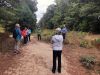
Marion natural History Museum429 viewsThe Museum hosted a very popular program for adults who wanted to learn a little about slowing down and becoming more aware of the health benefits of the forest. Professional forest bathing guide and author Nadine Mazzola led our group through some simple and restful exercises such as "the pleasures of presence" and noticing "what's in motion", to slow down and allow the forest to help us relax and feel more joyful.
|
|

CARES Act 458 viewsFrom left, Marion Finance Director Judy Mooney, Town Administrator Jay McGrail, Board of Selectman Chairperson Randy Parker, Plymouth County Treasurer Thomas O’Brien, County Commissioner Sandra Wright, and County Commissioner Greg Hanley were at the steps of Taber Library on Friday for the presentation of the first CARES Act reimbursement check and a framed map of Marion. Photos by Mick Colageo
|
|

Sippican Lands Trust549 viewsSippican Lands Trust held its Grab ‘n Go Oyster ‘n More Fest fundraiser at the Marion Council on Aging. Photo by Shawn Sweet
|
|

Marion Town House454 viewsThe front entrance to the Marion Town House was well under repair on Tuesday, amidst a makeover made possible when the Sippican Historical Society donated a restoration project that could cost up to $250,000. Photo by Mick Colageo
|
|

Stylish Hydrant459 viewsHanna Milhench sent in this picture of a stylishly decorated fire hydrant on Point Road in Marion.
|
|

Foundation Prep481 viewsFoundation work has been moving along at Marion’s Bicentennial Park in preparation for the installation of the Elizabeth Taber memorial statue. Photo by Marilou Newell
|
|

Good People499 viewsThe Marion Art Center produced the play “Good People” last weekend to an outdoor audience at Bicentennial Park in Marion. Photos by Mick Colageo
|
|

Good People461 viewsThe Marion Art Center produced the play “Good People” last weekend to an outdoor audience at Bicentennial Park in Marion. Photos by Mick Colageo
|
|
| 7833 files on 653 page(s) |
 |
|
|
|
|
169 | |
|
|
|
|