|
|

Fill-A-Cruiser Toy Drive440 viewsSunday’s Fill-A-Cruiser toy drive at Sippican Elementary School was a success! Volunteers representing the Marion Police Department, Police Brotherhood, and Sippican School (VASE) welcomed a parade of vehicles of families dropping off a variety of Christmas gifts for cookies and cupcakes. Marion Police Chief John Garcia donned the Santa suit and took pictures with kids in school resource officer Matt McGraw’s 1924 Ford Model-T. Photos by Mick Colageo
|
|
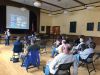
Marion Natural History Museum472 viewsOn October 24, the Marion Natural History Museum held a “Marion Archaeology Day” at the Marion Music Hall. We welcomed Dianna Doucette and Erin Flynn of Public Archaeology Labs (PALS), who had conducted a survey of the museum’s artifacts in 1998. Dianna and Erin helped us understand some of the history of the area over the past 10,000 years, from the Wampanoag people through the colonists and beyond. They explained how their company might become involved in the investigation of these sites, usually through
|
|

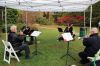
Elizabeth Taber Statue515 viewsFrom left, Bill Kingsland of Fairhaven on the trumpet, Phil Sanborn of Marion on the trombone, Liz MacKenzie of Wareham on trombone, and Toby Monte of Somerset on trumpet made up the Academy Brass Quartet that provided an entertaining musical backdrop for Saturday’s celebration of the Elizabeth Taber statue in Bicentennial Park. Photo by Mick Colageo
|
|
Elizabeth Taber Statue537 viewsA murky morning gave way to a sun-drenched celebration of Elizabeth Taber as the bronze statue of “Marion’s Fairy Godmother” was officially unveiled on October 17 in Bicentennial Park. Representatives from the Celebrate Elizabeth Taber Committee, Town of Marion officials, and sculptor Erik Durant addressed a large gathering of citizens who collected stickers and enjoyed music by the Academy Brass Quartet along with cupcakes. See story by Marilou Newell. Photo by Ryan Feeney
|
|

Elizabeth Taber Statue427 viewsA murky morning gave way to a sun-drenched celebration of Elizabeth Taber as the bronze statue of “Marion’s Fairy Godmother” was officially unveiled on October 17 in Bicentennial Park. Representatives from the Celebrate Elizabeth Taber Committee, Town of Marion officials, and sculptor Erik Durant addressed a large gathering of citizens who collected stickers and enjoyed music by the Academy Brass Quartet along with cupcakes. See story by Marilou Newell. Photo by Ryan Feeney
|
|

Elizabeth Taber Statue475 viewsA murky morning gave way to a sun-drenched celebration of Elizabeth Taber as the bronze statue of “Marion’s Fairy Godmother” was officially unveiled on October 17 in Bicentennial Park. Representatives from the Celebrate Elizabeth Taber Committee, Town of Marion officials, and sculptor Erik Durant addressed a large gathering of citizens who collected stickers and enjoyed music by the Academy Brass Quartet along with cupcakes. See story by Marilou Newell. Photo by Ryan Feeney
|
|
Elizabeth Taber Statue470 viewsA murky morning gave way to a sun-drenched celebration of Elizabeth Taber as the bronze statue of “Marion’s Fairy Godmother” was officially unveiled on October 17 in Bicentennial Park. Representatives from the Celebrate Elizabeth Taber Committee, Town of Marion officials, and sculptor Erik Durant addressed a large gathering of citizens who collected stickers and enjoyed music by the Academy Brass Quartet along with cupcakes. See story by Marilou Newell. Photo by Ryan Feeney
|
|

Elizabeth Taber456 viewsThe site for the installation of the Elizabeth Taber statue is adorned in fall colors as it awaits the statue’s installation and unveiling planned for Saturday, October 17, at 11:00 am in Bicentennial Park at the corner of Spring and Pleasant Streets in Marion. Photo by Marilou Newell
|
|

Marion Flu Clinic496 viewsThe Town of Marion held a flu-shot clinic for residents on October 8 at the Benjamin D. Cushing Community Center. The event was organized by Public Health Nurse Lori Desmarais, Marion Police Lieutenant Richard Nighelli and the town’s Board of Health, along with the assistance of many volunteers from within and outside Marion. Photos by Mick Colageo
|
|

Marion Flu Clinic456 viewsThe Town of Marion held a flu-shot clinic for residents on October 8 at the Benjamin D. Cushing Community Center. The event was organized by Public Health Nurse Lori Desmarais, Marion Police Lieutenant Richard Nighelli and the town’s Board of Health, along with the assistance of many volunteers from within and outside Marion. Photos by Mick Colageo
|
|

Marion Natural History Museum461 viewsThe Marion Natural History Museum hosted a Nature Journaling program on October 3 with artist Tricia Cassidy. We enjoyed beautiful weather while hearing about a variety of strategies to allow everyone, even the most insecure participants, to be able to express the beauty of the natural environment on paper. We enjoyed several loosening-up exercises by playing with time constraints, not looking at the paper while drawing the subject, and framing our subject so as not to get too confused with the big picture.
|
|

Marion Natural History Museum464 viewsThe Marion Natural History Museum hosted a Nature Journaling program on October 3 with artist Tricia Cassidy. We enjoyed beautiful weather while hearing about a variety of strategies to allow everyone, even the most insecure participants, to be able to express the beauty of the natural environment on paper. We enjoyed several loosening-up exercises by playing with time constraints, not looking at the paper while drawing the subject, and framing our subject so as not to get too confused with the big picture.
|
|
| 7833 files on 653 page(s) |
 |
|
|
|
|
167 | |
|
|
|
|