Tackling Water-Sewer Problems

            The Town of Marion held its second quarterly meeting of the Water/Sewer Commissioners on January 28. The commissioners are made up of the Board of Selectmen: Randy Parker, Norm Hills, and John Waterman.

            Considering the staggering costs the town is facing to repair, replace, upgrade, and update its antiquated water and sewer facilities and infrastructure and the massive implications of the work on the town’s financial standing and future, Waterman proposed that the commissioners have a quarterly platform to focus on these matters.

            To that end, the commissioners were joined on a January 28 Zoom meeting by several town officials, including Department of Public Works Director David Willett, DPW Engineer Meghan Davis, DPW Office Manager Becky Tilden, Town Administrator Jay McGrail, Assistant Town Administrator Judy Mooney, and Town Planner Gil Hilario.

            “We anticipate getting three new wells online this year. I think that’s a real good thing for the town,” said Willett, delegating to Davis, who reported on five ongoing water-related programs.

            Engineering firm Tata & Howard is designing a $50,000 capital project to replace all of Marion’s fire hydrants now and in upcoming years. The project is set to go out to bid in early March, with construction to begin mid-April. The first three on the list are at 17 Dexter Road, 361 Front Street, and 639 Front Street. The contractor will supply the hydrants.

            The Mill Street water main replacement project is complete. In April, the town will mill and overlay the roadway. The new hydrants are installed and online. The contractor has to remove the existing hydrants. The main trench is in the eastbound lane, so that lane will be milled and overlaid entirely. There are other spots to be repaired on the westbound lane, but that side will not receive a full mill and overlay.

            Marion contracted with Tata & Howard to produce a concise reference document noting operating procedures for the Water Department that includes day-to-day operations, reporting, and regulatory compliance. This would come in handy in the event town employees are out, and the town needs to contract out work. This is in the beginning stages, and Davis said the DPW expects an agreement with Tata & Howard in the next week.

            In her update on the Mary’s Pond well field rehabilitation, Davis reported having requested on the day of the meeting a “project scheduled to complete.” The contractor is presently rehabbing the existing structure, working on the interior last week and the exterior this week.

            Three new wells have been installed; the existing well field of 25, 2-inch wells has been replaced by three 10 by 16-inch wells that reach down 40 to 50 feet. Mary’s Pond well field is permitted for 280,000 gallons per day. “They’ll be able to meet that capacity,” said Davis.

            The new chemical-feed building serving East and West wells is at the 75-percent point in the design phase with the plan to put construction out to bid in April, aiming toward starting construction in May and completion in November. When complete, the new chemical-feed building will treat water from the East and West wells and the Mary’s Pond well field.

            Davis indicated that the chemical-feed facility located at the East and West wells that also treats the water from Mary’s Pond would have a backup generator. She further stated that if the power went down, Marion would have adequate water supply without Mary’s Pond well as a source.

            Willett told Parker that he believes the backup generator at the Wolf Island pump facility is permanent as opposed to portable. He added that all pumps should have backup generators and that Perry Hill is on the list. Parker suggested a portable backup generator that could be toted around on a trailer in the event any location went down due to power failure. Willett noted that the wastewater side at Wolf Island has two portable generators.

            According to Davis, the three wells at Mary’s Pond and the two wells at East and West will combine to produce 790,000 gallons per day. The building has been on Marion’s capital funding project list for a few years, according to McGrail.

            The commissioners also discussed where the Mattapoisett River Valley Water District fits in once Marion brings online its own water production potential.

            Davis is coming up on a year as treasurer for the MRV, which is working with Tata & Howard on a plan to upgrade the filter system on its water treatment plant. A decision is expected on how to proceed by mid-February.

            The MRV, which has Marion, Mattapoisett, Rochester, and Fairhaven as members, bonds its projects independently. The new filter project would be financed by extending an existing loan the MRV has out on its facility for two more years. As Davis explained, every five years, the percentage of MRV-produced water that the towns are allocated is reevaluated based on flow and operating costs. Marion, she estimated, was at 28 percent of allocation.

            Waterman suggested that, once the Wolf Island plant is up and running, Marion won’t need to be a participant in the MRV Water District. Still, Parker, McGrail, and Willett reinforced the MRV’s importance as a backup source.

            “I just think we have to think about these things and be smart about them,” said Waterman. “If Wolf Island turns out to be extraneous once we get all these wells up and operating— I don’t think it will be, but it sounds like a lot of the time at least— in the offseason, we wouldn’t need it, that’s all.”

            Waterman and Willett agreed that the town should be opportunistic should another town need Marion’s water.

            Mooney reported Marion to be at 11 percent in MRV-related operations and capital but with a flow base at 14 percent. “That number will improve, no question, but we still need to put water into that tower at Benson Brook,” said Parker, noting that the tower behind the town landfill is where MRV water is received.

            The sewer report began with an update on the Creek Road station that will benefit from $4 million in funding with the state’s Coastal Resilience Grant program. Davis said the town is working on a design with Weston and Samson. The design project must conclude by June 2021, when the grant season ends. The state’s Office of Coastal Zone Management (CZM) supports local projects to address storm surge, flooding, erosion, and sea-level rise.

            “We’re going to go hard at construction grant money because we have no way we can afford it through debt,” said McGrail.

            An Infiltration/Inflow program, including installation of pipe lining, is scheduled for completion by the end of February. The contractor, Canton-based National Watermain Cleaning Company, main-line cleaned and inspected Cottage, Main, Front, Pitcher, and School Streets. The current work, estimated to be approximately 6,200 linear feet of water mains at an FY21 cost of $190,000, is to be completed by the end of February, putting Marion into Year 3 of the contract.

            Waterman pointed to the proposed Heron Cove residential development, saying, “If it goes ahead, there’s going to be a big push to reduce I/I on that. [Weston and Samson] ought to start thinking about where the low-hanging fruit is to spend that money to maximize the I/I reduction…. We’re talking over a million dollars, so that would be equal to five years of I/I reduction … that we’d be able to do right away.”

            McGrail said that Weston and Samson came up with a proposal for developer Ken Steen to consider as an I/I project.

            The subject of wastewater infiltration and inflow once again became a talking point because it costs the town $13.80 per gallon to remove it, then it recovers 60 cents per gallon in fees. “When we do come up with a number that we know is way too low, we need to be all over it,” said Waterman.

            Tilden said the commissioners could change the fees anytime they want. McGrail recommended a vote on what was presented, edited, and updated with a stipulation that the Board of Selectmen would review the rate structure. That way, it wouldn’t wait for another quarterly sewer meeting.

            “The basis for the change for not permitting separate meters for irrigation was based on us interpreting the rules and regulations the way we did on Main Street and then realizing that it created a pretty massive problem for us,” said McGrail. “We’re here tonight to fix that. In hindsight, we would have handled it differently.”

            Willett proposed three minor additions for the vote. One was to update the permit language from “disturbing the surface” to “street opening.” A second update recognizes that Marion is using the American Darling hydrant. The third update changes the DPW superintendent to DPW director.

            The motion carried.

            Davis said that the Sewer Department is also looking at establishing a document for procedures. Weston and Samson has completed its site visits to collect data and, at the time of the meeting, was analyzing the data. Davis said the DPW anticipates a draft document from the firm in early February.

            Willett discussed the need to establish Standard Operation Procedures (SOP) documents for both water and sewer, noting that small groups run the plant and manage information. “I think it’s crucial to have this sort of high-level outline to operate both of the facilities and the distribution system,” he said. Waterman and Hills agreed on the necessity of documentation and procedures, not only for backup “but to make sure we’re doing it right ourselves,” said Hills.

            The Wastewater Management Plan will include a Citizens Advisory Committee that Willett said he and Tilden are targeting February and March for setup.

            Willett brought to the commissioners’ attention a newly installed fire hydrant on Route 6 that is out of the prescribed specification on its height due to the use of parts available in the DPW shop because the contract only provided for the labor. The result is the barrel section is roughly close to 10 inches above the maximum specified height and would be vulnerable, for instance, to a truck veering off the road.

            The land, located at Mill Street off Route 6 on the other side of the sidewalk, abuts a wetland and slopes away from the road, so it would not be conducive to adding more landfill. “We shouldn’t set a bad precedent,” said Parker, who recommended the hydrant be installed “the right way.” Hills and Waterman agreed.

            The commissioners voted to enter executive session to discuss strategy with respect to collective bargaining and litigation. The commissioners did not return to open session.

            The next quarterly meeting of the Water and Sewer Commission was not scheduled as of yet.

Marion Water/Sewer Commissioners

By Mick Colageo
Ketchel Reports on Neck Resiliency Study

            During the February 1 meeting of the Mattapoisett Planning Board, board member Nathan Ketchel reported on the Mattapoisett Neck Road Resiliency Project. This study program is being funded by a grant the town received from the state’s Coastal Zone Management division of the Executive Office of Energy and Environmental Affairs. The town received $74,981 in grant monies with a 25 percent match.

            Ketchel said the environmental engineering firm Fuss and O’Neil, along with consultants from the Woods Hole Group, convened a meeting on January 27 and included Highway Surveyor Barry Denham. Selectman Jordan Collyer and Town Administrator Mike Lorenco were also in attendance.

            The environmental team detailed the scope of their work, which already has included a study of the effectiveness of the existing culverts along Mattapoisett Neck Road to flush in and out of tidal streams and marshlands that abut the roadway in critical low-lying areas. The study will also model sea-level rise created by ice-sheet melting and associated flooding events as far out as a “100-year flood,” Ketchel said. Another aspect of the program will be modeling improvements to the roadway, including but not limited to short raised spans.

            In a follow-up, Collyer said, “It’s a multi-faceted project that will study tidal activity and the ability of both culverts to handle the flow.” He said that the culvert at Molly’s Cove was especially problematic, showing serious signs of aging. “That’s part of the reason the CZM grant was awarded,” he said, while also noting that the roadway serving the residential community needs to be protected.

            Ketchel reported that data collection will be ongoing and that the next meeting of this environmental study group is scheduled for March 24, with public hearings following in April.

            Lorenco said that more grants will be needed to fund any roadway improvements and culvert repairs but that these first steps were critical in understanding the full scope of issues facing Mattapoisett Neck. He also noted that there are other areas in town that need similar in-depth evaluation, adding, “By the Neck going first, the new modeling protocol can be applied to other areas in town.… Mattapoisett has 16 miles of shoreline.”

            The Planning Board also gave the green light to a solar bylaw draft primarily prepared by Planning Board member Janice Robbins. She commented that in July 2021, changes made to the state regulations put a great deal of undeveloped land out of the running for large commercial solar arrays. “It’s disqualified the buying-out of conservation restrictions and using agricultural lands under Chapter 61A,” she said. In a follow-up, Robbins further explained that the Massachusetts Department of Energy Resources issues the guidelines on the types of land that may be developed for solar arrays under a “land siting” statute. She went on to say that the solar arrays that have come before the Planning Board more recently were all grandfathered applications. “Those locations wouldn’t meet the current regulations.”

            During her report to the board, Robbins also said that the governor had changed the requirement from a two-thirds majority to a simple majority when bylaw changes or additions come before voters in town meetings.

            Those comments prompted engineer Douglas Schneider to say that if one looked at the latest state maps, one would find very little land suitable for any kind of development. Robbins concurred with that assessment. Schneider also questioned using the state regulations and mapping to write a local bylaw. “When you’re tying yourself to state maps, you’ve got to be specific [as to] what maps,” he said. Robbins confirmed that, as state maps change, so, too, would local bylaws that utilize that mapping. She also reminded all that the town currently only has site-plan review for solar-array construction.

            The board members were pleased with the draft and targeted April 5 to schedule a public hearing on the bylaw. If sentiment is positive, the next step would be including the solar bylaw in the Annual Spring Town Meeting Warrant.

            Planning Board Chairman Tom Tucker reminded the board that the Master Plan Committee’s next meeting would be on February 3.

            Planning Board member Karen Field reported on her attendance at the Community Preservation Committee meeting on January 22. At that time, the CPC members agreed in principle with a grant filed by the Christian Church and Mattapoisett Museum for renovations to the front door and entranceway. The committee sought and received a legal interpretation that would allow the group to consider the application, absent consideration of any religious affiliation. The church leases the building space to the museum in an agreement that gives the museum use of the former Baptist Church structure for nearly 100 years. The legal opinion noted that, given the primary use of the structure as a museum, there was no conflict with the separation of church and state.

            All other matters before the Planning Board were continued at the request of the applicants, and several also received filing extensions. Those cases were: Randall Lane, LLC for a large commercial solar array planned off Randall Lane, continued until March 1 with an April 5 extension date; Park Lane subdivision Form C, Andre Rieksts, Scott Atkinson, Margo Atkinson, continued until March 1 with an April 5 extension date; Eric Medeiros, Modification to Form C Definitive Subdivision, Selha Way, continued to March 1; 18 Crystal Springs Road, Raymond Hanks, Form A not Required, continued to March 1; and 3 Crystal Springs Road, Ryan Correia, Form A not required, continued to March 15.

            The next meeting of the Mattapoisett Planning Board is scheduled for Monday, March 1, at 7:00 pm.

Mattapoisett Planning Board

By Marilou Newell

Marion Town Election Nomination Papers

Nomination papers are available and may be obtained by contacting the Marion Town Clerk’s office at 508-748-3502, magauran@marionma.gov, or by making an appointment. The deadline to submit the signed nomination papers will be Monday March 22, by 5:00 pm. With the new restrictions and difficulties arising as a result of the COVID-19 pandemic, we have outlined some guidelines and suggestions below to help candidates navigate the collection of signatures. Please contact our office if you have any questions.

            Open Positions for the May 14, 2021 Election: Board of Assessors (one seat); Marion School Committee (two seats); Board of Health (one seat); Open Space Acquisition Commission (one seat); Board of Selectmen (one seat); Planning Board (two seats).

            Suggestions for Obtaining Signatures:

            •Candidates may mail/email individual nomination papers to people and ask them to print and sign them and mail them back. Each signer may have their own nomination paper form.

            •Candidates may set up a table at a post office (or other public place) and include fresh pens, gloves, and sanitizer.

            •Some candidates are announcing the locations of supporters who have covered porches and letting people drop by to sign. Candidates may set specific hours to sign, so their nomination papers don’t stay unsupervised for long hours.

            •Candidates may advertise designated signing areas/times through social media or mail.

            •All signatures must be in ink; there are no electronic signatures allowed.

            •There are no extended deadlines approved by the Massachusetts State Elections Division for the obtaining of nomination signatures.

            •The number of signatures required remains the same (20 VERIFIED registered voter signatures).

ArtStart Registration Opens in February

The Marion Art Center is pleased to announce the return of ArtStart in 2021. ArtStart is the MAC’s summer art program for children aged 4 ½ to 9 years, offered in late June through July. ArtStart teachers are specialists in music, dance, theater, and art, and most teach throughout the year and are professionals in their fields. Activities include arts and crafts, theater, music, games, and storytelling. The MAC is working hard to reimagine its summer camp this year to align with state-recommended safety guidelines, with lots of new fun activities. Camp runs weekly, Monday through Friday, from 9:00 am ‒ 12:30 pm daily. MAC members (at Family level or above) have access to early registration and receive a significant discount on ArtStart tuition. Cost per weekly session is $215 for MAC members and $240 for nonmembers.

            The 2021 ArtStart schedule is as follows: Session 1: June 28 – July 2; Session 2: July 5 – 9; Session 3: July 12 – 16; Session 4: July 19 – 23; Session 5: July 26 – 30. Registration opens for MAC members (in person and by phone or email only) on Friday, February 5. Registration for nonmembers will open on Friday, February 26. Online registration will go live on February 26. Due to very limited capacity, ArtStart fees are nonrefundable unless camp is cancelled. Visit us online to find out more information about ArtStart 2021 at marionartcenter.org/artstart.

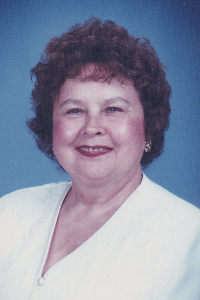
Leola N. Medina

On Saturday, January 30, 2021, Leola N. Medina, loving wife, and mother of four children and grandmother to five grandchildren, passed away peacefully at the age of 86.

            Leola was born in Baker Brook, New Brunswick, Canada to Adelard and Emma (Baker) Nadeau. She came to Massachusetts to pursue her education. Education was very important to her. She graduated from Wareham High School in 1952 and then St. Luke’s Hospital School of Nursing in 1956. She went on to receive a B.A. in Nursing from Boston University in 1960 and became a member of the prestigious Sigma Theta Tau International Society of Nursing. She was a registered nurse until her retirement.

            On December 22, 1956 she married Frederico R. Medina Jr. They raised three sons Frederico lll, Darryl, and Karl, and a daughter, Shari in their home in Marion, MA.

            She cherished her family most of all and enjoyed many birthdays, holidays, and graduations. She loved to visit the ocean and farms near her home. Over the years, she and Fred enjoyed traveling to Canada, California, Hawaii, Florida, and many other locations.

            Leola had a passion for art and music. She also enjoyed bird watching and was known for her kind and compassionate spirit. She was an active docent with the New Bedford Whaling Museum and supported numerous charities.

            She is survived by her husband Fred, and their four children, Frederico Medina Ill and his wife, Marina, Darryl Medina and his wife Sara Dickson, Shari Jankowski and her husband, James, Karl Medina as well as five grandchildren who called her “Nana”; Andrew Jankowski, Caroline Jankowski, Kendra Medina, Allison Medina, Max Medina, two brothers, a sister, and many nieces, nephews, relatives, and friends.

            “The world changes from year to year, our lives from day to day, but the love and memory of you, shall never pass away.”

            A memorial service will be held at a later date. Arrangements are by the Saunders-Dwyer Mattapoisett Home for Funerals, 50 County Rd., Mattapoisett. In lieu of flowers, memorial donations may be given to the South Coast Visiting Nurse Association, 200 Mill Road, Fairhaven, MA 02719. For online condolence book, please visit www.saundersdwyer.com.

Marion Vaccination Enters Phase 2, Age 85+ First in Line

            The state has approved the Town of Marion to receive 100 doses of the Moderna COVID-19 vaccination for those eligible through Phase 2 of the state’s vaccination distribution plan, according to the Town’s latest press release.

            “The big problem,” said Marion Board of Health Chairman Dr. Edward Hoffer on February 2, “is there simply is not enough of the vaccine available.”

            The BOH’s solution was to begin distributing vaccines to its oldest citizens first.

            These 100 doses have explicitly been allotted only for those 75-years-old and older, who became eligible on Monday, February 1, through Phase 2 of the state’s vaccination distribution plan. However, the BOH is prioritizing residents by age and has been working down a list provided by the state based on census data of residents from oldest to youngest in the 85-years-old and older category.

            BOH member Dot Brown said she spent hours on the phone over the past few days with Marion residents, beginning with age 85+ and then starting to call residents who are 84 years old. So far, 86 of those 100 doses are spoken for. The seniors who have signed up for their first dose will receive them on Friday, February 5.

            “We’re hoping that going forward, we’ll be able to use an email … mass mailing … and we’ll be able to use the emails to give people the link to be able to sign up,” said Brown.

            According to the press release, residents 85-years-old and older who want to make sure they are on the list can contact the Town of Marion through a newly established hotline at 508-748-3509 to leave a message with their contact information. The Town of Marion is seeking additional vaccination allotments and will notify the community promptly if the state provides more vaccines for future weekly clinics.

            Dr. Hoffer said that the Town continues to sign up each week for eligibility to provide vaccines to its citizens for the following week.

            “We know many residents who become eligible on Monday have had a hard time obtaining an appointment, and we are so thankful to have been given these vaccines to provide to our residents,” Town Administrator Jay McGrail said in the press release. “However, this is a very limited number of doses, and so we’re prioritizing residents by age at this time. I’d also like to thank our Board of Health for their hard work in making this clinic possible.”

            The press release urges residents eligible through Phase 1 and those who became eligible for the vaccination on February 1 through the state’s distribution plan to make an appointment by going to mass.gov/COVIDvaccine to find their phase and priority group. To find a vaccine clinic nearby, visit mass.gov/COVIDvaccineMap.

            If a resident is having difficulty navigating the website to schedule a COVID-19 vaccine appointment, call the Town of Marion at 508-748-3509 for support.

            Although the state is creating more mass vaccination sites, vaccination depends on availability, and the Commonwealth of Massachusetts, at this time, is prepared to distribute more vaccinations than it has.

            “The state has not yet announced when individuals 65-years-old and older and those with two or more comorbidities will be able to receive the vaccine,” the press release states. “This will be announced when more information is available about additional doses of the vaccine to be provided to the state by the federal government.”

            The vaccine will not be available to the general public until April.

            Dr. Hoffer announced during the meeting that the Town has added supplemental funding to the Board of Health’s fiscal year 2022 budget to cover the cost of additional nursing hours to assist later in the year when the Town will be providing the vaccine to Marion residents of the general population. He also stated that residents at Little Neck Village had received their first dose of the vaccine through the same state pharmacy program that provided vaccines to staff and residents at Sippican Healthcare Center, which freed up more of the 100 vaccines allotted to Marion seniors.

            All the staff and residents at Sippican Healthcare Center have already received their second dose of the Pfizer vaccine. There are, however, four confirmed positives cases currently at the nursing home.

            According to Public Health Nurse Lori Desmarais, Marion currently has 39 active COVID-19 cases for a total of 332 confirmed cases since the start of the pandemic.

            At Sippican School, there are zero quarantines, zero in isolation, and there have been 28 confirmed cases since the pandemic began.

            Old Rochester Regional Junior High School reports seven people in quarantine and four in isolation, with a total of 28 cases. ORR High School presently has nine in quarantine and two in isolation, and a total of 68 cases so far.

            Tabor Academy has welcomed back its students over the past weekend after a two-week pre-arrival quarantine. Testing was performed on staff and students upon arrival, with zero positive results.

            “They did awesome,” said Desmarais. “The testing all came back negative, so that is a good thing.”

            Tabor Academy will continue to perform routine COVID-19 testing over the coming weeks.

            The next meeting of the Marion Board of Health will be held on Tuesday, February 16, at 4:00 pm.

Marion Board of Health

By Jean Perry

DECA a Game Changer for ORR Students

            Raegan Rapoza was a sophomore at Old Rochester Regional High School when she was walking to basketball practice and spotted Eddie Gonet and Ryu Huynh-Aoyama in the library with “a bunch of food and a bunch of people.” Rapoza decided to sit down and listen.

            “It was enticing,” she said, hearing the co-founders of ORR’s DECA chapter talk about travel opportunities and potential scholarships. “It definitely did help me choose my major for college. Last year, I was thinking about elementary education until I competed in DECA. It introduced me to the whole business concept.”

            On January 29, ORR’s growing DECA chapter met in the school cafeteria for a socially distanced assembly honoring award recipients from the recent regional competition. As a school, ORR finished fourth among 12 region schools, albeit without a business curriculum. A total of 34 students qualified to compete at the state level, up from 17 for the 2019-20 academic year.

            “A big difference between last year and this year is we extended it to the junior high. They have Drama Club and sports…. We wanted to give them not only an opportunity to join the club but an easier transition to the high school,” explained Gonet, a junior who serves as co-president with sophomore Teddy Carroll.

            Four of the 12 junior high students made it to the state competition, “Which we were over the moon about,” said Gonet. “They’re very talented. It was great news to see that. They’ll be even more prepared for next year, which is great. Now they could have six years of experiencing the program…. We all wish we could have more time with it.”

            Two years ago, Gonet was a freshman when he co-founded ORR’s DECA chapter with Huynh-Aoyama, a 2020 ORR graduate now studying at the UMass Isenberg School of Management. Founded in 1946 as the Distributive Education Clubs of America, the international organization DECA is now a major extracurricular at ORR with 61 students, up from 45 a year ago.

            As Gonet explained, each point of the DECA diamond logo represents the organization’s four core categories: Management, Hospitality, Finance, and Marketing, and its four core values of Competence, Integrity, Teamwork, and Innovation. The competitions consist of hypothetical, real-world-type problem solving, and Huynh-Aoyama called DECA “a business lesson to itself.”

            “I’ve always been interested in business and economics, and how the economy works, the driving factors…. [DECA] also seemed like a fun opportunity at the time,” said Carroll, a sophomore from Fairhaven who’s going on 16.

            Carroll competed in a Hotel and Lodging Management series event, taking a test based on categories related to the subject such as hospitality, general business questions, hotel-related questions, desk complaints, etc.

            In the competition’s role-play segment, Carroll’s challenge was to address a hypothetical guest requesting to leave a sign on their door. “We had to come up with our own rules” and how to go about making a policy. “The three hours, that was probably the hardest challenge…. DECA, you have to think on your feet. You’re preparing your answer right after seeing the problem for the first time. The three hours went by really, really fast.”

            DECA takes up time, especially for the co-presidents, but Carroll is an organized young man who typically runs cross-country and winter and spring track. He also joined the Debate Club, making it three extracurricular activities. He expects to pursue a future in engineering. “I’ve always enjoyed that, and maybe a minor in economics,” he said. “If you could combine an engineering mindset with a business mindset…”

            DECA competition opened a portal to a new world for Rapoza, who found the experience to be at once nerve-wracking and energizing. “It really did; I never thought it would have done that. It definitely changed my life,” she said. “I was competing, my heart was pounding, but it was so thrilling it just opened my eyes up. DECA helped me with my public-speaking skills…. I was so shy. Going to Boston last year, I got to talk to so many people with similar interests.”

            On the ground floor, Rapoza is an 18-year-old senior now, using the DECA experience to shape her future. The Marion native competed most recently with fellow senior Meghan Horan as partners in the Sports and Entertainment Team Decision category.

            As COVID-19 has affected education altogether, it changed DECA for the 2020-21 school year as the competition was held entirely online. Rather than 10 minutes to be presented a business challenge with 10 minutes to huddle and 10 minutes to present, students were given three hours, including one hour of preparation and an hour to upload a video presentation to the competition’s YouTube channel.

            Rapoza and Horan were managers of a miniature golf rewards program and used a phone app program with different levels of investment, along with social media and advertising. But they were also creative in showing the wherewithal to cycle back to old methods to bridge the gaps that a video interview typically cannot close. They made scrap-paper graphs and visuals for judges to see and hold to the camera on Zoom.

            “When doing these role plays, you have to add your own little taste to it just to make sure you stand out,” said Rapoza. “It’s definitely a big surprise when you get the results back.”

            ORR’s DECA chapter has several vice presidents, and Rapoza serves as V.P. of Career Development. A key role is coaching up students for their role play and testing. Through a family-friend connection, she enlisted the guidance of UMass Isenberg School of Management graduate Austin Blair. “He gave us some really good tips,” said Rapoza, who also wants to bring in ORR English teacher Mike Beson to help students better understand how to prepare their resumes and sharpen their interview skills. “Last year, he devoted a whole lesson to it, and it was very helpful.”

            Friday’s awards event saw 93 trophies and medals collected, and students were greeted as they entered the cafeteria by pianist Mason Tucker, the ultra-talented ORR senior.

            In his introductory remarks, Gonet publicly thanked the Tri-Town Education Foundation for its assistance, a $2,000 grant that drastically reduced the membership fee for the school year from $60 to $25. Next year there are plans to compete on Cape Cod, twice to Boston and as far away as Georgia, with Disney World on the radar for 2023. DECA was supposed to visit Disneyland in the 2020 spring semester, but that trip was canceled by the coronavirus pandemic.

            “Most schools are doing an awards ceremony over Zoom. We were fortunate to do it in person. We don’t get to see half the kids,” said Gonet, noting the cohort system of hybrid school attendance made Friday’s meeting extra special. “We’re actually the first kids at ORR to stay after school in person.”

Awards included:

– Theo Jacobsen of Mattapoisett, 2024 Principles of Business Management and Administration Event 1st Place Cluster Exam, 1st Place Role Play

– Andrew Porter of Mattapoisett, 2024 Principles of Business Management and Administration Event 2nd Place Cluster Exam/2nd Place Role Play

– Emerson Gonet of Fairhaven, 2025 Principles of Business Management and Administration Event 3rd Place Cluster Exam

– Caitlin Collier of Mattapoisett, 2023 Personal Financial Literacy 2nd Place Role Play

– Brooke Hammond of Acushnet, 2022 Sports and Entertainment Marketing Series Event 3rd Place Cluster Exam

– Brendan Burke of Marion, 2022 Sports and Entertainment Marketing Series Event 3rd Place Role Play

– Rachael Fantoni of Marion, 2021 Sports and Entertainment Marketing Series Event 2nd Place Cluster Exam

– Meghan Horan of Mattapoisett, 2021 Sports and Entertainment Marketing Team Decision Making Event 2nd Place Role Play

– Raegan Rapoza of Marion, 2021 Sports and Entertainment Marketing Team Decision Making Event 2nd Place Role Play

– Jack Pepin of Marion, 2022 Marketing Management Team Decision Making Event 2nd Place Role Place

– Tyler Trudeau of Carver, 2022 Marketing Management Team Decision Making Event 2nd Place Role Play

– Edward Gonet of Fairhaven , 2022 Human Resources MAnagement Series Event 1st Place Cluster Exam

– Mack Wilson of Mattapoisett , 2022 Hospitality Services and Team Decision Making Event 2nd Place Role Play

– David Ditata of Rochester, 2022 Hospitality Services and Team Decision Making Event 2nd Place Role Play

– Theodore Carroll of Fairhaven, 2023 Hotel and Lodging Management Series Event 1st Place Role Play

– Emily DellaCioppa of Mattapoisett, 2022 Integrated Marketing Campaign Event 1st Place Cluster Exam

– Kinsley Trout of Rochester, 2022 Integrated Marketing Campaign Event 2nd Place Cluster Exam

– Tiago Duarte of Rochester, 2022 Integrated Marketing Campaign Event 3rd Place Cluster Exam

– Sarah Wyman of Marion, 2023 Business Services Marketing Series Event 1st Place Cluer Exam/ 2nd Place Role Play

– Samuel Harris of Marion , 2022 Entrepreneurship Team Decision Making Event 2nd Place Cluster Exam

– Sean Lund of Rochester, 2022 Entrepreneurship Team Decision Making Event 2nd Place Role Play

– Colin Carroll of Marion, 2023 Automotive Services Marketing Series Event 2nd Place Cluster Exam / 2nd Place Role Play

– John Kassabian of Mattapoisett , 2022 Buying and Merchandising Team Decision Making Exent 2nd Place Role Play/3rd Place Cluster Exam

– Marc Pothier of Mattapoisett, 2022 Buying and Merchandising Team Decision Making Exent 2nd Place Role Play

– Top 7 Scorers Moving Onto States!

– Hannah Furtado of Rochester, 2022 Innovation Plan 1st Place

– Taylor Green of Rochester, 2022 Innovation Plan 1st Place

– Caitlin Collier of Mattapoisett, 2023 Personal Financial Literacy 3rd Place

– Rachael Fantoni of Marion, 2021 Sports and Entertainment Marketing Series 3rd Place

– Brooke Hammond of Acushnet , 2022 Sports and Entertainment Marketing Series 5th Place

– Meghan Horan of Mattapoisett, 2021 Sports and Entertainment TDME 3rd Place

– Raegan Rapoza of Marion, 2021 Sports and Entertainment TDME 3rd Place

– Tessa Winslow of Rochester, 2025 Sports and Entertainment TDME 5th Place

– Jocelyn Pires of Rochester, 2025 Sports and Entertainment TDME 5th Place

– Aidan Harrington of Mattapoisett, 2022 Restaurant and Food Service Management Event 7th Place

– Jack Pepin of Marion, 2022 Marketing Management TDME 2nd Place

– Tyler Trudeau Carver, 2022 Marketing and Management TDME 2nd Place

– Edward Gonet of Fairhaven, 2022 Human Resources and Management Series Even 2nd Place

– David Ditata of Rochester, 2022 Hospitality Services TDME 5th Place

– Mackenzie Wilson of Mattapoisett, 2022 Hospitality Services TDME 5th Place

– Isabella Hunter of Rochester, 2022 Hospitality Series TDME 6th Place

– Theodore Jacobsen of Mattapoisett Hospitality Services TDME 6th Place

– Theodore Carroll of Fairhaven, 2023 Hotel and Lodging 4th Place

– Delaney Chase of Rochester, 2025 Principle of Hospitality and Tourism 4th Place

– Emily DellaCioppa of Mattapoisett, 2022 Integrated Marketing Campaign 1st Place

– Tiago Duarte of Rochester, 2022 Integrated Marketing Campaign 1st Place

– Kinsley Trout of Rochester, 2022 Integrated Marketing Campaign 1st Place

– Samuel Harris of Marion, 2022 Entrepreneurship TDME 3rd Place

– Sean Lund of Rochester, 2022 Entrepreneurship TDME 3rd Place

– Drew Mastovsky of Marion, 2022 Entrepreneurship TDME 4th Place

– Lukas Michaelis of Rochester, 2022 Entrepreneurship TDME 4th Place

– Colin Carroll of Marion, 2023 Automotive Services Marketing Series 2nd Place

– John Kassabian of Mattapoisett, 2022 Buying and Merchandising TDME 2nd Place

– Marc Pothier of Mattapoisett, 2022 Buying and Merchandising TDME 2nd Place

– Kira Sakarati of Marion, 2023 Apparel and Accessories Marketing Series 3rd Place

– Theo Jacobson of Mattapoisett, 2024 Principles of Business Management and Administration Event 1st Place

– Andrew Porter of Mattapoisett, 2024 Principles of Business Management and Administration Event 2nd Place

– Jackson Veugen , 2024 Principles of Business Management and Administration Event 4th Place

– Emerson Gonet of Fairhaven, 2025 Principles of Business Management and Administration Event 6th Place

*TDME: Team Decision Making Event

Regional Wastewater Solution

To the Editor;

            The Buzzards Bay Coalition (BBC) continues to promote the idea of a regional wastewater solution centered at the Wareham plant on the Agawam River that would treat waste from Bourne, Wareham, Plymouth, Marion, and Mass Maritime Academy. Conceptually, it’s a good idea as waste treatment plants have high fixed costs and are increasingly required to make large capital investments to meet new environmental regulations. Scale is important. The large plants treat more waste and are able to spread the high fixed costs over more ratepayers, lowering the average cost per rate payer.

            It is an unfortunate characteristic of Marion’s relationship with BBC that whenever we tell them we can’t afford something, they interpret it as Marion not wanting to do it. BBC may not want to hear that towns such as Marion have serious financial constraints and face a huge backlog of deferred infrastructure projects. Yes, BBC has helped us with the studies over the years. But we don’t need more studies. We desperately need help paying for our large capital projects, such as lining lagoon 1 at our wastewater treatment plant (WWTP).

            BBC reportedly has spent over $700,000 on feasibility studies related to regionalizing waste treatment in Wareham. None of us would spend thousands of dollars designing a house we couldn’t afford. We would give the architect a budget and probably have one or more financing sources identified, if not committed in advance.

            It is time for BBC to put the brakes on studying and promoting the idea of regionalization, and to do some serious financial analysis. They need to answer the question: Is regionalization a pipe dream or anchored in financial reality?

            Based on the information developed to date, they should be able to determine the rough order of magnitude costs (1) for installing a pipe to transport waste from Marion to Wareham, (2) for expanding the Wareham plant, and (3) for building a new outfall from the Wareham plant to a location on the Cape Cod Canal. One of their funded studies has already estimated the cost of a pipe to transport waste from Marion to Wareham at $20 million.

            Once all estimates are available, they need to earnestly look for sources of federal, state, and other money to help participating towns pay for a project of this magnitude. Simply saying the state loves the project is insufficient, more so in today’s environment. The towns will have to fund design, construction, and permitting over a period a years before the expanded facility is constructed, operational, and producing income. Paying for construction, as it is completed, will be above and beyond whatever funds towns currently are expending for waste treatment.

            More than once, we questioned the affordability with BBC. Their response was: When the time comes, Marion will have to decide whether it wants to participate or not. That’s not good enough. Marion will need significant financial help to participate in regionalization. If Marion does not participate, the cost of expanding the Wareham plant and of building the new outfall to the canal will drop very little. So, if Marion opts out, the cost to Bourne, Wareham, Plymouth, and Mass Maritime will go up.

            The Wareham plant sits on the Agawam River. We have expressed our concern to BBC, on several occasions, about its exposure to sea level rise and storm surge flooding. Towns choosing to participate in regionalization don’t want to be saddled with the additional cost of reconstructing or moving the Wareham plant to protect it based on 50-year projections for sea level rise. BBC has yet to address the threat of sea level rise for us.

            In a recent article, a BBC official was quoted as saying that Wareham “out-treats” every other sewer system in the region. That is simply not true. In 2020, Marion’s WWTP average discharge nitrogen concentration was 2.8 mg/l (milligrams per liter) and Wareham’s WWTP average discharge nitrogen concentration was worse at 3.6 mg/l.  Marion is out-treating Wareham. The standard of treatment, thus, is not a justification for Marion to hook into Wareham.

            The question we all need to ask: Is BBC designing a beautiful new house that we can’t afford and in a location that will be exposed to storm surge and sea level rise?

John P. Waterman, Marion Selectman

The views expressed in the “Letters to the Editor” column are not necessarily those of The Wanderer, its staff or advertisers. The Wanderer will gladly accept any and all correspondence relating to timely and pertinent issues in the great Marion, Mattapoisett and Rochester area, provided they include the author’s name, address and phone number for verification. We cannot publish anonymous, unsigned or unconfirmed submissions. The Wanderer reserves the right to edit, condense and otherwise alter submissions for purposes of clarity and/or spacing considerations. The Wanderer may choose to not run letters that thank businesses, and The Wanderer has the right to edit letters to omit business names. The Wanderer also reserves the right to deny publication of any submitted correspondence.

Sippican Historical Society

Marion (Old Rochester) is one of the oldest towns in the United States, and the Sippican Historical Society maintains an extensive collection of documentation on its historic buildings. In 1998, the Sippican Historical Society commissioned an architectural survey of Marion’s historic homes and buildings. Over 100 were cataloged and photographed. SHS will feature one building a week so that the residents of Marion can understand more about its unique historical architecture.

            The home at 304 Front Street, in the Old Landing area of Marion, was built in 1859 for shipbuilder David Hathaway. It ranks among the town’s most substantial Greek Revival residences and illustrates not only Marion’s mid-19th-century maritime prosperity, but also the Old Landing’s status as the home of sea captains. Hathaway built coastal schooners at his wharf, and these schooners were an important part of Marion’s economy. The coastal schooners carried salt to towns between Nova Scotia and the Carolinas. In fact, the operators of Marion’s coastal schooners named the town after Revolutionary War hero Francis Marion (known by the nickname “Swamp Fox”) of South Carolina, whose exploits in that area became well known to Marion mariners.

FinCom Expands Planning Process

            Even household budgets require data to be effective in managing expenses and how those expenses will be funded. Now consider the monumental task of building a budget for a town, any town, with its various cost centers, revenue streams, and, of course, contingency for the unexpected. Data is king in drilling down and in projecting future financial needs.

            On January 28, the Mattapoisett Finance Committee, chaired by Pat Donoghue, came together remotely for its first in a long series of meetings, which will find the committee using new and or updated data provided by Town Administrator Mike Lorenco. With his background in finance, budget processes are in his wheelhouse.

            After providing an overview and introduction of new members Tom Kelly and former Selectman Tyler Macallister, Lorenco detailed his planning strategy for FY22, saying of the Capital Planning process: “The updated spreadsheet helps to explain how we are spending money in a more detailed fashion.”

            Donoghue responded, saying, “We want to be better prepared than we have been in the past.… I’m happy to see this.” One area that was briefly discussed was any cost savings from insurance carriers due to COVID-19. “I’m on the lookout for any temporary reductions.… Maybe sock those savings away,” she said.

            Another topic near and dear to Donoghue’s financial planning heart are school budgets. “The way we’ve been balancing the budget is based on lower enrollments and dropping teachers based on decreasing enrollment.… If they don’t reduce a teacher, we can’t meet contractual agreements, not at 2.5 percent.” She said that the per-pupil cost for grades K-6 was “off the charts.”

            Lorenco said one area to look at that might help to improve the ORR District’s School Choice program would be to invite the town of Acushnet to use a negotiated rate. He said a rate of $9,000 per year per student still does not cover the real costs associated with educating that child, but it’s better than the $5,000 the state now allows, he said.

            In a follow-up, Lorenco said that schools represent more than 50 percent of the overall town budget. To better understand the impact that funding schools has on the community, he has provided both the School and the Finance Committees with data covering enrollment trends for the past 15 years and per-pupil expenses. He offered website links that provide better insight into relevant school data located at mass.gov/municipal-databank-data-analytics-including-cherry-sheets, as well as profiles.doe.mass.edu/state_report/.

            For the town’s many departments, Lorenco said he has provided departmental comparisons, actuals, and trends, including those reported by other cities and towns, to help the Finance Committee through the analysis process. He also said he has advised department heads that level-funding, except for employment contracts, will be necessary for FY22.

            Another analysis and projection tool Lorenco has modified is the 10-year Capital Planning spreadsheet. He said that added to that analytic tool is not only the addition of building maintenance needs, roadway culvert design, and engineering and other heretofore-missing expense pieces, but also a column that directs how each line item will be funded, either by free cash, through debt, or grants.

            And let’s not forget new revenue sources. Lorenco shared his screen, which showed how much new revenue the town could have collected with a meals tax. Between 2012 and 2020, the town missed out on an estimated $800,000 in revenue. He believes that by establishing a 75-cent tax per $100 spent, the town could bring in new and much-needed money. “It spreads the cost of the town’s expenses over a larger group, not just the residents,” he explained. He said that 243 of the Commonwealth’s 351 communities now have a local meals tax.

            Other potential revenue sources Lorenco brought to light include a short-term rental tax of 3 percent, a local room tax of up to 6 percent for hotels, motels, and bed-and-breakfasts, and the current agreement being drawn up for a solar array at the town landfill. Of the array, Lorenco said that this project would “bring in multiple revenue sources, including a PILOT program.” Of the total package of revenue for this project alone, he said, “Annually, it could be a seven-figure sum; it’s much needed.”

            The Wanderer reached out to Capital Planning Chairman Chuck McCullough for his takeaways regarding the new format and process for capturing and funding capital needs.

            “Things are more detailed, more informative, more disciplined,” McCullough began. “We’ll include how each item will be funded, what revenue source.” He explained that in the past, free cash, enterprise funds, or grants were not specified for expenses at the front end and that having that information at the beginning of project evaluation “will make things a lot cleaner.” McCullough also said that Lorenco is providing department heads with much-needed data, giving those cost centers a more detailed approach to capital requests and budgets. He used the example of the new fire station, saying that for at least 15 years, the project was carried on the Capital Plan spreadsheet at $5 million, a construction project he says is now at $10 million.

            The next meeting of the Mattapoisett Finance Committee is scheduled for Thursday, February 4, at 4:00 pm.

Mattapoisett Finance Committee

By Marilou Newell