BOS Laments Vaccine Accessibility

            Members of the Rochester Board of Selectmen on February 16 expressed disappointment and frustration over the commonwealth’s dissemination of seemingly constantly changing COVID-19 information and the lack of vaccine availability to municipalities.

            Selectboard Chairman Paul Ciaburri said the Emergency Management’s COVID-19 team has had to return to a weekly meeting schedule because, he said, “Things change on a daily basis — sometimes twice a day. It’s maddening, and it’s so hard to plan anything with this.”

            Town Administrator Suzanne Szyndlar added that vaccine access for municipalities has become more restricted, prompting Ciaburri to refer to the pharmaceutical company Johnson & Johnson’s hopefully soon-to-be-approved vaccine that would be more widely available because it does not require the ultra-cold conditions other brands of COVID-19 vaccine require during transport and storage.

            “Hopefully, we could possibly get our allotment,” said Ciaburri. “If that’s the case, then we would probably wind up doing it (in Rochester) like a flu-vaccine clinic, depending on how many doses we get at one time.”

            Ciaburri lamented the many weeks the town spent devising a COVID-19 vaccine-distribution plan, even carrying out dry runs on how fast workers could inoculate vaccine recipients using a drive-through method.

            “We were ready, but everything just [fell through],” said Ciaburri.

            Selectman Greenwood “Woody” Hartley said the Council on Aging already realized that Rochester seniors would not be receiving their COVID-19 vaccine in Rochester any time soon. He said the COA had received over a hundred calls from seniors looking for information on when and how they might get vaccinated.

            “When it became clear over the weekend … that we had actually missed the window … and now it was too late because there were no more vaccines,” Hartley said, those working at the COA started to plan for how they could get their seniors aged 75 and up vaccinated as soon as possible.

            Hartley said the COA would begin calling eligible seniors to ask them if they would be willing to travel to Gillette Stadium, one of the commonwealth’s mass-vaccination sites. If so, the Rochester COA would provide the transportation and help set up their vaccine appointment.

            “And we will get as many of them that want to get inoculated as fast as we can,” Hartley said. “We have one going tomorrow.”

            Ciaburri is relying on that Johnson & Johnson vaccine, saying that once Rochester gets an allotment, “We will be giving that out. We will be doing it.”

            “That’s fine,” said Hartley, adding that it likely won’t be approved for some time, and then it takes weeks to get it to their intended destinations.

            Ciaburri said he recalled that the state had promised to get vaccines out to places like Rochester, which then responded by preparing to efficiently handle the vaccinations.

            “We did all this work, and they basically told us no, which is discouraging,” said Ciaburri.

            In other business, SEMASS’s PILOT (payment in lieu of taxes) disbursements to the town have recently decreased significantly in size, with its most recent payment for January 2021, $262,943, about $95,000 less than the January 2020 payment.

            Szyndlar reported that a major plant outage in January is to blame for the PILOT decrease, adding, “But the trend overall in our receipts for [Fiscal Year 2021] have been lower.” One reason, Szyndlar said, was the drought condition last year that she said “makes trash weigh less,” affecting profits. Also, a recent major construction project at the Cranberry Highway waste-to-energy plant impacted production at the plant from having to shut down operations during that timeframe. When she compared FY20 to this point in FY21, Szyndlar said Rochester so far has seen $319,000 less in PILOT revenue from SEMASS.

            “It’s a considerable amount of money,” Szyndlar said, adding that the decrease will affect the town’s free cash account.

            Selectman Brad Morse said that back in January he spoke with representatives from SEMASS, and they are well aware of Rochester’s concerns. Still, another operations shutdown is scheduled for March, said Morse, to install upgrades that will help the plant run more efficiently.

            “But we do have an open dialog,” Morse reassured.

            In other money-related matters, Szyndlar reported that she had received a notice from Bristol County Agricultural High School informing the town that Rochester and other non-resident towns would soon be issued a debt assessment in addition to their annual non-resident tuition for their students.

            According to Szyndlar, Bristol Aggie is imposing a per-student debt assessment cost of anywhere between $5,200-$6,000 to fund a significant project at the school. Rochester currently has 13 students that attend Bristol Aggie, which Szyndlar said means an additional budget strain of $68,000-$78,000.

            Szyndlar said she met with Bristol Aggie representatives to ask why non-resident communities must be “on the hook,” given that the school is in another county “and we are not a member town.” This added cost will create a severe impact on Rochester’s budget “for many years to come,” Szyndlar said, for the entire life of the loan, she told the board. She suggested the town seek assistance from State Representative Bill Straus, who Morse commented once helped Rochester deal with transportation funding issues regarding Bristol Aggie.

            Szyndlar also plans to reach out to other non-resident towns with students at Bristol Aggie for their input.

            “This could be very detrimental,” said Ciaburri.

            Also during the meeting, the board adopted a Town Hall key-card policy for the use of a set of new electronic key fobs to enter and exit the building. Szyndlar said the policy would help keep track of who is in possession of the relatively costly key fobs, should they be lost or stolen and need deactivating and replacing.

            The board also adopted an updated surplus-property policy to include instructions on how department heads should report surplus property to the chief procurement officer, Szyndlar, via a new sign-off sheet.

            Hartley reported that Rochester did not receive the grant it was counting on to construct a patio at the Senior Center, but suggested he would work with others to apply for a SRPEDD grant that could potentially provide funding for an Americans with Disabilities Act (ADA) accessible walking path around the center of town.

            The next meeting of the Rochester Board of Selectmen will be held on Monday, March 1, at 6:00 pm.

Rochester Board of Selectmen

By Jean Perry

Water and Sewer Retained Earnings Discussed

            Before beginning his FY22 budget proposal presentation during the February 11 meeting of the Mattapoisett Finance Committee, Mattapoisett Water and Sewer Superintendent Henri Renauld responded to a question from Chairman Pat Donoghue about rate increases. “Every year you come before us with expenses around 2 percent, then suddenly there are rate increases. How do we look at revenue versus expenses?” asked Donoghue.

            Renauld explained that “A few projects came in over budget,” such as the Pease Point water and sewer project that he said was over by approximately $220,000. He noted that the overage had to come out of retained earnings, leaving that fund at a low of only $51,000. He said it became necessary to look at rates to bring in more revenue. When asked, Renauld said that presently retained earnings for the Water and Sewer Enterprise Funds stand at $327,000 and $317,000, respectively.

            “So, Pease cost more, do you come back to Town Meeting for more?” Donoghue asked. Renauld requested $200,000. “A grant covered 25 percent of the original bid, but the Coastal Zone Management grant couldn’t cover the difference,” he explained. “We will recoup the cost of the project with betterments.” In a follow-up, Renauld said the betterment fees were under review.

            When Donoghue asked if water rates had been increased to pay for the project, Renauld said the town’s rate is 25 percent under the current rate as reported by engineering consultant Tata & Howard.

            Renauld also told the members that a $3 million expense, Mattapoisett’s portion of a plant upgrade to lower nitrogen levels at the Fairhaven plant, was coming. The total estimated costs of the project stand at $23 million.

            On the theme of large-ticket items on the Capital Planning spreadsheet, Renauld said the sewer pipe that crosses the Eel Pond breach would cost approximately $3 million and that the town’s portion, should another Coastal Zone Management grant come through, would be about $750,000. Another sewer line project in the Hollywood Beach neighborhood would have to be pushed out to 2024, he said.

            Renauld also talked about the need to evaluate the Water and Sewer Departments’ offices and equipment storage. He said that currently, the two operations are spread out over the town at various sites, some with rental agreements amounting to approximately $3,800 per month. He said the town owns more than one property that might be appropriate for building a combined facility and that he wanted to spend about $30,000 on conceptual plans to “get a whole new building.” He said the small lot on Church Street currently used by the Water Department could be sold to offset new construction. Donoghue asked, “What about maintaining a new building?” Renauld said that would all be part of the study.

            The proposed FY22 budget for the Water Department is $1,559,960, a 0.18 percent increase, and the Sewer Department is at $826,336, a 0.2 percent increase.

            The next meeting of the Mattapoisett Finance Committee is scheduled for Thursday, February 18, at 4:00 pm.

Mattapoisett Finance Committee

By Marilou Newell

LWV Southcoast Seeks Teachers to Receive Free Civics Workshop Training

The League of Women Voters Southcoast (LWVS) has partnered with the LWV Greenwich (Connecticut) on a Civics Workshop using a case method approach.

            The case method civics project is a collaboration between the Case Method Institute and the League, working closely with Harvard Business School Professor David Moss. Currently, most students learn history as a set narrative, which is analogous to saying everyone remembers events the same.

            Yet, history is a collection of historians exchanging different analyses of the same event. And rather than acquiring history as a set narrative, Professor Moss believes American students might be better served learning the many “histories” that compose the American national story using the case method, that is, a participatory discussion-based way of learning that assists high school students in gaining skills in critical thinking, communication, and group dynamics while preparing for active citizenship.

            This spring, the Case Method Institute will again invite Leagues across the country to nominate high school history, government, and civics teachers to attend its free virtual professional development workshop. After completing this workshop, teachers will be equipped to lead case-method style discussions in their classrooms and community forums. This exceptional program includes:

            •An afternoon of live, online training with Harvard Business School Professor David Moss on Saturday, April 3. Professor Moss will discuss his “History of American Democracy” course and illustrate the case method teaching approach.

            •A full curriculum of Harvard cases free of cost from the “History of American Democracy.”

            •An 8-hour asynchronous training program completed before the Zoom-based session with Professor Moss, where participants will become familiar with case method teaching.

            •A certificate from the Case Method Institute detailing 32 hours of professional development, delivered upon successful completion of the course and related training and implementation.

            After completing the workshop, nominated teachers are expected to pilot at least one case in their classes during this school year and help moderate at least one community case discussion that will be organized by the League of Women Voters Southcoast before June 30, 2022.

            The League of Women Voters Southcoast is eager to nominate teachers from the Southcoast area. The deadline for teachers to let us know they are interested is Friday, February 26. Please respond to Kristen Eastman at 508-758-6051 or kriseastman1@gmail.com. We look forward to hearing from you!

Paul Cuffe: His Purpose, Partners and Properties

If the name Paul Cuffe is unfamiliar to you, the virtual library discussion with authors David Cole and Betty Slade about their work, “Paul Cuffe: His Purpose, Partners and Properties,” will shine a light on this South Coast mariner, entrepreneur, and philanthropist. Cuffe, a man born on Cuttyhunk Island in 1759 to a formerly enslaved West African father and Wampanoag mother, built a business empire that included shipping along the Atlantic coast and shipbuilding in Westport, Massachusetts. Join the Mattapoisett Free Public Library and moderator Corey Nuffer on Saturday, February 27, at 2:00 pm for a glimpse of this fascinating man from the eyes of Cole and Slade.

            Registration is required for you to receive the Zoom meeting information. Zoom information will be sent the day before the presentation. You can register by sending an email to mfpl@sailsinc.org or by completing the registration form on our online calendar of events. Call the library at 508-758-4171 or email to mfpl@sailsinc.org if you have questions. This program is part of the Purrington Lecture Series, a presentation of the Mattapoisett Library Trust, a 501(c)(3) charitable organization dedicated to expanding the role of the library in the community.

Solar Project Deals with Bad Surprise

            The Old Middleboro Road Solar array project came up for discussion in the Rochester Conservation Commission meeting held on February 16. Though the project has already entered the construction phase, development has come to a halt after issues relating to the ancient way bordering the site were raised.

            Austin Turner, representing the project, explained that due to faulty survey data of the area, a previously plotted ancient way noted in the plans had been drastically misrepresented. Turner explained that where it was previously believed that the ancient way would fork and travel around the site, the reality is that the ancient way runs directly into the proposed area of work.

            Under the provisions of the project filing, the applicants for the solar project are required to ensure that the ancient way is maintained and is upheld as one continuous path from start to finish. As such, Turner now faces a major dilemma in project development, as construction cannot be completed according to the Order of Conditions without satisfying the Ancient Path requirements.

            The position of the path also makes relocation within the limit of work even more challenging. A stormwater basin, also a requirement for the construction of the solar array, sits in direct conflict with the simplest route for reconnection of the ancient way. This means that Turner will need to snake the path around the basin in order to reconnect it.

            Turner admitted that he had limited time to arrive at a solution for the problem but advocated for a selective amount of vegetative clearing outside of the proposed limit of work to redirect the ancient way around the site.

            Conservation Commission Chairman Michael Conway explained that conducting work outside of the predetermined boundary would likely require an amendment to the Notice of Intent or a complete refiling for the project.

            Turner told commission members that he would work to create a new proposal that would be more agreeable to their requirements and limit or completely eliminate any work outside of the project’s boundaries. Once they receive an updated proposal, commission members agreed to visit the site to gain a more detailed understating of the issue.

            Bill Madden of G.A.F. Engineering joined the meeting to provide updates on an Enforcement Order issued to Makepeace regarding complaints issued by the state Department of Environmental Protection.

            Madden provided commission members with an overview of the Morse Swamp Reservoir, which has come under review due to dredging activities and soil displacement in the area. The roughly 30-acre reservoir is the primary water source that feeds into the Makepeace cranberry bogs located nearby.

            According to Madden, constantly fluctuating water levels in the area made it difficult to accurately determine the scope of the reservoir. He explained that the area in winter looks significantly different than in spring or summer.

            Conservation Commission Member Kevin Thompson expressed the importance of accurately determining the limits of the reservoir and surrounding wetlands areas, as a misrepresentation could lead to the destruction of protected resource areas if they are not accurately identified. Conservation Agent Laurell Farinon echoed Thompson’s sentiment and recommended that commission members make a site visit to the area to further understand any work that might be proposed in a future Notice of Intent filing.

            The next Rochester Conservation Commission meeting is scheduled to be conducted via Zoom on Tuesday, March 2, at 7:00 pm.

Rochester Conservation Commission

By Matthew Donato

A Pond Called Carolyn

Carolyn Longworth of Fairhaven is a retired director from the Millicent Library after some 25 years of dedicated service. After she retired, she was asked by the town’s selectboard to come to a meeting to review her distinguished record of achievement. She was very pleased when they read a proclamation of her diligence in working with various organizations in the SAILS Library network.

            Carolyn was even more surprised and pleased at the end of the meeting when they talked about her avid birdwatching hobby at a pond nearby that was her favorite birding spot adjacent to the hurricane barrier near Egypt Lane. Then she was even more amazed when they announced that, in her honor, the pond would be named “Carolyn’s Pond.” One of her fellow birders had suggested the name dedication to show Fairhaven’s appreciation of her service. She now says she cried when this award was presented because she felt it was the best thing that ever happened to her.

            The pond itself had been restored by the Massachusetts Fish and Wildlife Service from being a disposal area. Carolyn found it to be a very therapeutic and relaxing retreat to visit before work, during lunch, and after work. She was especially interested in her favorite bird, the Pie-billed Grebe (shown raising a family there in my illustration), because it was also listed as an endangered species.

            The Pie-billed Grebe was also the subject of my wildlife column in the October 2019 issue of The Wanderer. A Great White Heron also showed up with two mystical mute swans that brought many visiting birders to Fairhaven. Carolyn herself had written about the migratory grebe that winters as far south as Panama, returning in spring to this same restored habitat of its own choosing and preference. It is also found as far north as Walden Pond in Concord, the home of Henry David Thoreau.

            Thoreau was famous for building small cabins on its shore to lead a very quiet life exclusively alone to preserve the pond’s nature and to isolate himself from the trials and tribulations of other people.

            Like the owner of the pond, Ralph Waldo Emerson became a transcendentalist, a popular mentality of its day, thinking that people are at their best when they are truly solitary, self-reliant, and entirely independent. They wanted to believe that human beings could find their own spirituality in religion, finding and observing and living in the natural world. Thoreau, for instance, thought that the call of the loon on his pond was the most unearthly sound he had ever heard, just one of his interpretations of natural calls across the water that reverberated, echoed, and reflected images of heaven and earth on the horizon, as time went by.

            May this article and illustration for you, the reader, help us to understand why Carolyn was able to find inspiration and peace of mind at the pond that would bear her name after a career that truly benefited the Millicent Public Library System of higher education.

By George B. Emmons

Updated Floats Garner Favor

            Marion Conservation Commission member Jeff Doubrava recused himself from his commission role for his February 10 public hearing as an applicant in a Notice of Intent to improve access from 47 East Avenue to the waters of Planting Island Cove, Sippican Harbor, and Buzzards Bay for recreational boating, fishing, and swimming by removing the longstanding, bottom-anchored chain system with a plan to replace with a pile-held anchoring system.

            The chain system tends to scour the bottom and mess with eelgrass and shellfish habitat, according to Conservation Commission Chairperson Shaun Walsh.

            Representing Doubrava, Dave Davignon of Schneider, Davignon, & Leone told ConCom that all feedback from the state Division of Marine Fisheries has been positive and that the Army Corp of Engineers has signed off on the project. The National Heritage and Endangered Species Program also communicated approval, according to Davignon.

            Walsh asked for an explanation about the proposed float expansion that will require a Chapter 91 license due to the expansion on the seaward end of the piles. Doubrava confirmed that the 3-foot expansion to the existing float is intended to make it easier for boats to load and unload passengers.

            “It’s an environmental improvement to that area, so it’s a good project,” said Walsh, who called Davignon’s presentation a great overview of the project.

            Four piles instead of two will make it possible to chain the piles together, allowing the owner to hoist the float up to the level of the pier to offseason storage, eliminating the need for a boatyard to haul away the float.

             The public hearing was continued until February 24.

            As an abutter, Doubrava recused himself from the case of John A. & Carole F. Whittemore, 51 East Avenue, in their Notice of Intent to improve access to the waters of Planting Island Cove, Sippican Harbor, and Buzzards Bay for recreational boating, fishing, and swimming by removing the existing bottom-anchored chain system and replace it with a pile-held anchoring system.

            Representing the Whittemores as well, Davignon said the project was filed at the same time and is on the same path as Doubrava’s project of the same nature with all the same endorsements. Calling it a “no-brainer,” Walsh only asked Davignon if the chains would be permanently removed after the completion of both projects. Davignon confirmed that to be the plan.

            The public hearing was continued until February 24.

            The continued public hearing in which Blankenship Trust, LLC filed a Notice of Intent to construct an in-ground swimming pool, perimeter patio, and retaining wall with clearing, filling, and grading at 468 Point Road ended with ConCom issuing a special Order of Conditions, green-lighting the project.

            In a continued case, ConCom voted to issue the Town of Marion Facilities Department a Negative 3 determination of applicability for its proposed installation of two 100-gallon propane tanks at Pumping Station Road.

            In another continued case, ConCom voted to issue Karen Chacon a Negative 2 and 3 determination of applicability, clearing the way for the construction of a ramp on the side of her house at 98 Dexter Road.

            The Kittansett Club’s repeated continuances for its NOI to expand parking is delayed as the club works with an abutter and the town to potentially modify the plan. According to Walsh, the Planning Board reached out to the engineer, learning that a revised plan is in the works, but Kittansett requested and has been allowed a three-month continuance to May 12.

            Arthur Brenner of Alewives Anonymous, Inc. provided Marion with a compact disc containing photographs of his company’s cleaning along the Sippican River. Alewives Anonymous, Inc. has been moving fallen trees and other obstructions out of the way of herring that need to swim to their breeding grounds in Snipatuit Pond in Rochester.

            Under correspondence, the commission received a copy of a site plan from Rochester-based Charon (engineering) Associates for a Title V septic upgrade filed by Rivier University (New Hampshire) for property at 9 Pleasant Street.

            The next meeting of the Marion Conservation Commission is scheduled for Wednesday, February 24, at 7:00 pm.

Marion Conservation Commission

By Mick Colageo

ORCTV Video Production Scholarship

Each year, Old Rochester Community Television awards one graduating senior from our Old Rochester Regional High School video production program its “Outstanding Student Award.'” The scholarship is meant to assist the student as they move on to study video production or film upon entering college.

            During the summer of 2020, ORCTV’s first president, Ken Souza, passed away suddenly. In addition to having been the station president, Ken was also an educator who taught video production at Bristol Community College. With this in mind, ORCTV decided to honor Ken by naming its annual scholarship the “Kenneth J. Souza Memorial Award for Outstanding Video Production.”

            When ORCTV informed Ken’s wife, Margie Souza, of its intentions to name the award in honor of her husband, Mrs. Souza asked if it would be possible to create a process where those who wished to remember Ken could contribute towards the funding of the award.

            ORCTV agreed this would be a great way for those in the community to remember Ken and his contributions to the Tri-Town. If you would like to contribute to the Ken Souza Scholarship fund, please send a check to ORCTV at 135 Marion Road, Mattapoisett, MA 02739, and write “Ken Souza Scholarship” in the memo space. ORCTV is a 501(c)(3) not-for-profit organization, making all contributions tax-deductible.

Bishop Stang Second Quarter Honor Roll

Bishop Stang High School is proud of the accomplishments of our students, and recognizes those students earning Honor Roll distinction. Students on the President’s List have an average 95 or above, and a 90 or above in all courses. Students receiving First Honor have an average 90 or above, and an 85 or above in all courses. Those with Second Honor have an average 85 or above, and an 80 or above in all courses. The following students from our area are being recognized for their academic achievement at Bishop Stang High School for their performance in the second quarter:

            Marion— President’s List: Lillian Manning ’24, Elizabeth Russo ’24, Tayden Shaw-Nelson ’23; First Honor: Raquel da Costa ’21, Maeve Egger ’22, Sophie Lynch ’21, Molleigh O’Neil-O’Connell ’24, Redmond Podkowa ’23, Luke Tougas ’23.

            Mattapoisett— President’s List: Julia Downey ’23, Liam Downey ’21, Lillian Surprenant ’24; First Honor: Ella Meninno ’21, Sophia Meninno ’24, Joel Michaud ’21, Thomas Waldron ’24; Second Honor: Ryan Oliveira ’24, Eleanor Senna ’23, Claire Surprenant ’22.

            Rochester – President’s List: Lindsey Feen ’24, Sarah Pothier ’24; First Honor: Dylan Aguiar ’21, Kara Feen ’24, Bree Killion ’24, Isabella Marotta ’24, Briana Pothier ’22; Second Honor: Maxwell Brulport ’21, Kyle Viera ’24.

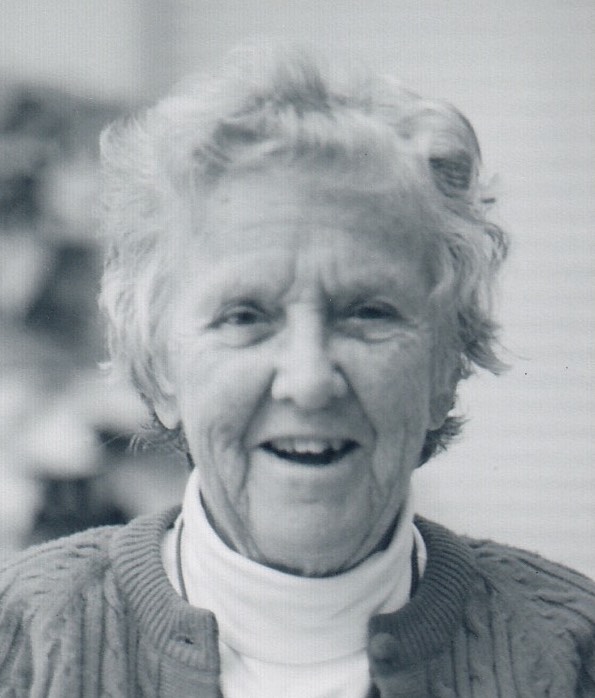
Gertrude Trumbull Burr

Gertrude Trumbull Burr died peacefully at home in her sleep, on Friday, February 12th, age 97, after a life well-lived.  No matter how busy, her home was always open, and she found time for all.  She and her husband Carleton Burr (dec. 2003) lived their lives surrounded by a very large cast of devoted family and friends.

            Gertrude was born and raised in Weston, MA, the daughter of Walter Henry Trumbull and Mary Winsor Trumbull. She attended Meadowbrook School, and in a harbinger of things to come, was the quarterback of the boys’ football team. She graduated from Winsor School in Boston, and then Vassar College, majoring in Math and Engineering Physics.

            After graduation in 1944, in the wartime accelerated academic program, she worked at M.I.T. in the aerospace effort, focused on calculating rocket trajectories. She was the only woman amongst 600 other mathematicians, engineers, and physicists.

            In 1949, she married Carleton and moved to Mattapoisett, MA. Building community and strengthening family were their lifelong passions.  She was an inspiration to her four children and a multitude of family members and friends, all the while being instrumental in developing the family business, Burr Brothers Boats. The business was a fitting continuation of her lifelong love of “messing about in boats”, which she had done since childhood sailing her Herreshoff 12, “Rosebud”.

            With her indefatigable energy and can-do attitude she helped steer the business into novel endeavors, such as becoming one of the first boatyards in the country to develop a computer system tracking all accounting and operations.  Her leadership in the industry also led her to become, in the 1970s, the first female Board Member of the American Boat Builders and Repairers Association (ABBRA), a national trade organization.

            For her mentally disabled daughter, Gertrude co-founded a non-profit community home, which became LifeStream, Inc. Today Lifestream is an organization with a staff of over 500, and it has served thousands of developmentally disabled people and others facing personal challenges.  

Gertrude’s civic involvements were too many to list. She loved working with people and was especially good at using her skills to help organizations in which she believed. Amongst these were The Garden Club of Buzzards Bay, The Unitarian Church of New Bedford, LifeStream, and The Rotch-Jones Duff House and Garden Museum.

            Over the years, Gertrude was also a member of numerous Clubs, which made for an active sporting and social life. She helped run various USTA tennis tournaments and managed to collect a closet full of trophies herself. Playing well into her 80s, she left opponents impressed not only with her play but also with her sportsmanship. She would win with such grace that she left everyone smiling. She was a very elegant skier, refusing to permanently come down off the mountains until nearly ninety years old. Her enthusiasm for hopping on board to go sailing continued into her 90s, while her rowing prowess lasted nearly to the end.

            Somewhere, she and Carleton are together sailing and serving aces.

            She is predeceased by her daughter Eleanor, husband Carleton, sisters Hope Moore and Eleanor Lowell, and brother Philip Trumbull. She is survived by her brother Walter H. Trumbull, her children and their spouses: Toby Burr (Barbara D. Burr), Cornelia Burr-Tarrant (Thomas A. Tarrant), and Walter Trumbull Burr. Also survived by four grandchildren: Tucker Burr (Luiza Casimiro Smith Burr), Alaska Burr Elia (Paul Elia), Thomas Tarrant IV, Elizabeth Tarrant; and two great-grandchildren, Thayer Gertrude Elia and Olympia Lorraine Elia; and scores of nieces, nephews, and their children and grandchildren, all of whom she kept track of with great joy.

            A celebration of life is planned when warm weather arrives and COVID has abated. Donations in lieu of flowers can be made to the Rotch-Jones-Duff House & Garden Museum (www.rjdmuseum.org; 396 County St., New Bedford, MA 02740) or the Mattapoisett Community Sailing Program (www.mattsail.org; PO Box 947, Mattapoisett, MA 02739). For online guestbook, visit www.saundersdwyer.com.