Journeying Through Time at Hampton Court and Other Gems of London

            Note: This is the first part of a series exploring Europe’s diverse landscapes and gardens, from formal designs to wild, natural beauty. The goal is to share my love for both cultivated and untouched nature.

            Travel, even today, is still fundamentally about exploration and discovery. When you travel for an extended period, it’s a delight for both the mind and the soul. I tend to capture these experiences mentally, as well as through my camera, and by taking detailed notes whenever I venture beyond my home. Whether it’s a visit to Walden Pond or a distant, far-flung destination, my approach is to stay open and let my senses absorb everything around me.

            Reflecting on my experiences from a month ago feels like a journey through time, especially when I think about the trees and gardens that have stood for centuries. It’s fascinating to realize how the landscapes I explored this summer are as unique as the people who created them – ranging from the Tudor monarch Henry VIII to the surrealist painter Salvador Dalí. The beauty of these gardens lies in their magical quality, born from imagination and vision.

            My adventure started in England and ended in southern Spain, with France and the Costa Brava in northern Spain in between. The purpose of the journey was my daughter’s wedding in the south of France, and around that the itinerary was shaped. We touched down in late June to London’s welcoming weather. A full-blown English summer is rare, but our three-day stint exceeded all expectations: dry, sunny, 80-ish temperatures; summer as good as it gets anywhere! After an extensive walk through Hyde and Kensington Parks, the heat moved us to remove our footwear and paddle in the Princess of Wales Memorial Fountain while children did the same. Hey, when in Rome (er London)!

            As always, part of my personal agenda would be looking at gardens and hoping to learn something new. As in my past travels here, my overwhelming realization was that England is one big, well-tended garden! In the height of summer this was peak floral season with explosions of growth of classic flowers that define English gardens: delphinium, roses, hardy geraniums, foxglove, poppies, hollyhock, and sundry tropicals. The flush of leaf growth on the trees that canopy meadows, roads and London’s lovely parks showed the mastery of planning such plantings.

            The London plane tree, impervious to pollution and known for its flaky, camouflage bark, caught my eye as it framed views of such architectural wonders as the Houses of Parliament and Westminster Abbey are as ubiquitous as red telephone booths and double-decker buses here. Walking the banks of the Thames in Richmond, I marveled at the age of the trees, imagining how it might have looked as Henry VIII sailed past on his barge headed home to Hampton Court. Talk about aging gracefully (the trees, not the king!).

            After touring Hampton Court Palace absorbing its storied past, we wandered its vast grounds. Just a few acres of its 60 acres are dedicated to assorted gardens. I’d had a glimpse of the grounds from inside and was utterly amazed at the green architecture that met me in the sunny outdoors: ancient trees sculpted to perfection. “How do they do it?” I wondered.

            I paused at the sight of the yew trees that fanned out in avenues in the great fountain garden. These ancient yews grew to their present height (between 33 and 66 feet) when Lancelot “Capability” Brown, known for his naturalistic landscaping, allowed them to grow more freely in the 18th century – resulting in gigantic topiaries.

            Formerly part of the monarch’s hunting park, this area is what you think of when you imagine palace gardens: rows upon rows of perennial borders flanking the outer walls of the castle, like foundation plantings on a grand scale. This area became more colorful with the introduction of seasonal and flamboyant bedding displays under Queen Victoria when the gardens were opened to the public in 1838.

            Over time and under different monarchs, the gardens have undergone alterations as with the transformation of the Pond Gardens. These sunken compartments of Henry’s ponds were stocked with fish for the palace kitchens but by 1690 the ponds had been drained. Queen Mary II thought it an ideal site to house the collection of ‘exotic’ plants she brought with her from the Netherlands… today these gardens are famed for their dazzling array of spring and summer flowers.

            Looking at the map given to me on the tour, I noted how the various compartments of garden space served the palace. From the Privy Garden with its hornbeam bower and cut parterres of pyramid yews and round-headed holly trees interspersed with summer annuals to the exotic Orangery Garden to the Rose Garden (with statues of Flora, Adonis, and Abundance within a fragrant cloud of scented roses) to the Wilderness Maze not to mention the Long Water and Tennis Courts, there seemed to be a garden for every sort of purpose. The Home Park, once part of Henry’s hunting ground, has today become a Site of Special Scientific Interest: its acid grassland and ancient oak and lime trees providing habitat for a variety of rare insects and other wildlife including a 300-strong herd of fallow deer derived from the king’s original stock.

            I would be remiss not to mention the Great Vine, located in the lower Orangerie in a sheltering glasshouse, planted by “Capability” Brown in 1768. After 250 years, the vine is still going strong, producing an average of 500 pounds of fine dessert grapes each year. The Great Vine came as a cutting from the Black Hamburg Vine in Essex, which no longer survives.

            As with all travel, we were momentarily transported to another time and space, but only temporarily. New adventures beckoned as we boarded the Eurostar to Paris, the train sweeping past vast, rolling landscapes that revealed the agricultural heart of Northern France. I couldn’t help but feel as though I was collecting a gallery of images: rich fields, quaint villages, and open skies – to fuel my imagination long after the journey had ended.

The Seaside Gardener

By Laura McLean

John Nicolaci Memorial Float Fly

The Bristol County Radio Control Club, Inc., will hold its annual John Nicolaci Memorial Float Fly on Saturday, August 16. The event will run from 10:00 am to 3:00 pm. It will be held at Mary’s Pond in Rochester, Massachusetts. Parking opposite 507 Mary’s Pond Road.

            This is a non-competitive AMA sanctioned event. All AMA members are welcome to fly. $10.00 landing fee. There is no fee for spectators. Electric and glow-powered planes only. No gas-powered planes. Come see scale models of World War II aircraft, light aircraft float planes like Piper Cubs, and a variety of sport models.

The Best of Broadway

On Friday, August 15, the Marion Concert Band continues its Friday evening concert series with a program of music from the Broadway stage. The program, which includes a vocalist and highlights from some of Broadway’s most memorable shows, is as follows:

The Showman – H. Akers

Lohengrin (Introduction to Act III) – R. Wagner

Broadway Show-Stoppers Overture – arr. W. Barker

Man of La Mancha – M. Leigh

Moon River – H. Mancini

            Jocelyn Paulo, vocalist

Make Our Garden Grow (from Candide) – L. Bernstein

Opening Night on Broadway – arr. M. Brown

Sondheim. – arr. S. Bulla

They Can’t Take That Away from Me – G. Gershwin

            Jocelyn Paulo, vocalist

Selections from My Fair Lady – F. Loewe

Them Basses – G. H. Huffine

            Jocelyn Paulo is a jazz vocalist from Berkley, Massachusetts. She is currently studying music at UMass Dartmouth, where she will be entering her junior year in the fall. A graduate of Bishop Stang High School, she is making her first appearance with the Marion Concert Band this season.

            The concert, under the direction of guest conductor Philip Sanborn, will begin at 7:00 at the Robert Broomhead Bandstand, Island Wharf Park off Front Street in Marion. All concerts are free and open to the public. “Like” us on Facebook at “Marion Town Band” for up-to-date announcements and rain cancellation notices.

Paul Martin McCabe

Paul Martin McCabe, age 82, of Mattapoisett passed away on August 6, 2025. He was the beloved husband of Gail McCabe for 59 years. Paul was a loving father to his three children and seven grandchildren; Sean McCabe and his wife Judith, their children, Jack, Colin and Bridget of Dartmouth; Ericka and her son, Alexander of Mattapoisett; Kristian and his wife, Michelle and their children, Madeline, Edith and Ryan of Norwell. Paul was also the proud family member of four late brothers – Frank, Steve, Phil, and John; and one sister Martha of Manchester, VT.

Born in Boston on December 5, 1942, he was the son of the late John F. McCabe and Frances M. McCabe. Paul graduated from English High in 1961, where he captained the football team and he was eventually inducted into the Athletic Hall of Fame. He went on to Holy Cross College after earning a full football scholarship where he received a BS in Social Studies in 1965. He later earned a master’s degree in counseling and guidance in 1971. His career started as a history teacher and football/track coach. From there his focus was as a guidance counselor and he retired as the Guidance Director at Fairhaven High School. He loved and respected his students and that was fully reciprocated.

Paul was an avid reader, especially nonfiction history. He also enjoyed sailing for many years, and he especially enjoyed his golf games with family and friends.

There was always a card game he never passed up with the brothers. He and Gail loved their winters in Ft. Myers Beach for over 20 years, inviting anyone who could join them. He traveled to Ireland with family to golf and with Gail to tour.

His main focus was family and attended all sporting events and recitals of his children, grandchildren, nieces and nephews alike. Paul’s warmth and kindness touched everyone he met, and the sound of his laughter will echo in our hearts forever, a cherished reminder of the joy he brought to his family and friends. Fair winds and following seas always.

His Funeral Mass will be held Thursday, August 21, 2025 at 11am at St. Anthony’s Church, Mattapoisett. Visiting hours will be Thursday, August 21st from 9:30-10:30am, prior to the Mass, in the Saunders-Dwyer Mattapoisett Home for Funerals, 50 County Rd., Mattapoisett. For directions and guestbook, visit www.saundersdwyer.com.

Manatee Sighting in Mattapoisett

            At 5:40 am on the warm morning of July 29, a group of friends were out running on the Mattapoisett Rail Trail.

            As Erin Carr of Mattapoisett explained, she and her friends, David Gerber, Stephanie Poyant Moran, Jonathan Barratt, Nicole Reedy and Allie Straus, were out on an ordinary run until they began crossing the bridge over Eel Pond, when they were stopped by a man walking his dog along the path. The man, Lou, told the running friends of an “unusual mass” he observed not far from shore.

            “From a distance, it appeared to be a large rock. But as he got closer, he realized that it was some sort of animal that was caught on the beach during low tide,” says Carr. The six friends, the man, and the dog all approached the shoreline together to ascertain what was out there.

            “As we got closer, we discovered it was a Manatee! We weren’t quite sure what to do. We would have liked to have helped it to deeper water, but we weren’t sure why it was beached in the first place,” Carr said.

            Wanting to help but not wanting to disturb or jeopardize the status of the creature, the group called the Harbormaster and Mattapoisett Police for help. She added that sharp oyster shells made it difficult to get close to the Manatee, which itself seemed to have been cut up by the sharp shells. The group waited with the Manatee until the officers arrived. Upon arrival, the officers stated nothing should be done until wildlife experts arrived and could strategize the best path forward. The six friends ran back to their cars quickly, promising to turn right back.

            About half-an-hour later, Carr says, “everyone was gone – including the Manatee!” Poof! The friends weren’t sure what happened. It seemed the whole ordeal had just disappeared without a trace. Upon calling dispatch, they were informed once the tide rose a bit, the Manatee was able to swim back out into the harbor unassisted. There were no signs the Manatee was seriously harmed from its stint on land.

            Carr added, “Stephanie called her husband who operates a local land trust and has connections with local wildlife rehabilitation organizations. He reached out to a contact that he had been in touch with on a different occasion to report another sea animal that washed ashore in Westport. Turns out, they had been tracking the Manatee!”

            Many local experts and organizations have been aware over Manatee presence in the area. Generally, this seems to be a worrying sign for the mammals. Per Rhode Island PBS, “A Manatee was recently spotted off the coast of Massachusetts for the first time in almost a decade, and scientists want to monitor its condition to see if a rescue is necessary before it succumbs to the cold water or lack of food.”

            Following the sighting in Mattapoisett, the Manatee has yet to be seen again. Manatees typically don’t go farther than the warmer waters of the Caribbean Sea and coast of Florida, leaving experts confused and concerned as to why exactly this “sea cow” is so far north.

The Bike Path Manatee Rescue

By Sam Bishop

The Search for Revolutionary War Soldiers

The August meeting at the Rochester Historical Society Museum will be hosted by both the Society and the Historical Commission on August 20 at 7:00 pm at the Historical Society Museum at 355 County Road, Rochester.

            Cemeteries, Genealogy and the Revolutionary War will be the topic of the evening in the context of beginning a project to find the graves and histories of Rochester’s veterans of the Revolutionary War. We hope to include the information gathered in the 250 anniversary celebrations with the hope of officially recognizing cemeteries with those veterans’ graves.

            Wednesday night will provide information on all the aspects of this search, and the program is opened to any and all who are interested. We are looking forward to a good turnout.

Rochester Grange Fair

The Rochester Grange Agricultural Fair, is almost here. The fair will be held on Saturday, August 16 from 1:00 pm to 7:00 pm. There will be baked goods for sale and raffles. Our Ham & Bean Supper will be at 6:00 pm. Tickets for adults $10.00 and children under 10 $5.00 and may be purchased at the door. There will be an auction of produce, flowers and bake goods from the fair and the raffle drawings beginning about 7:15 pm.

            For those wishing to enter the fair, we will be accepting entries on Friday, August 15 from 2:00 pm to 4:30 pm (a time change from the book) and again at night from 6:30 pm to 8:00 pm (also a change). Judging will start as soon as all entries are in place. Having the entry form in the book or a list on a sheet of paper filled out ahead will help greatly. Remember, anyone can enter from any town and age. If a child is old enough to pull weeds, they are old enough to enter the fair. The Youth categories are up to the age of 16 as of January 2025.

            We hope to see many of you there. For information call 508-295-8908 or email sash48@comcast.net.

Supplies Ware Thin

            This week in Revolutionary War History, let’s discuss what was going on 250 years ago in and around the colonial Province of Massachusetts Bay. The best way to figure out what was going on was to read Washington’s papers and General Orders of the time period, as there was daily correspondence and orders put out to his officers and troops. Last week, Washington, still focused on reorganization, was interrupted by a detachment of British ships leaving Boston and heading south. He sent warnings to Connecticut and Rhode Island to prepare for assault.

            On July 30, 1775, Washington’s General Orders appoint William Tudor of Massachusetts as Judge Advocate of the Continental Army. In another charge for discipline, he commands regiment drummers and fifers to attend to their Major at usual hours. Weighing on his mind, however, is not appointments but rather, his raid ordered the night prior. Washington was woken up today to alarms. A detachment of scouts came under fire, though were able to retreat after freeing two prisoners from British fortifications. He did not record much of this day as he was busy planning for the action ahead and awaiting a potential counterattack.

            Major General Philip Schuyler (father of Schuyler sisters and Hamilton’s father in-law) reports to Washington from Fort Ticonderoga, which was captured in May. The ongoing push into Canada is ill-fated, with Schuyler saying, “I am extremely anxious to hear from your part of the world, reports prevail that a body of troops have left Boston and are gone to Canada. If so I fear we shall not be able to penetrate Into Canada.” So, that detachment mentioned last week wasn’t going south, but instead is going north the resupply and reenforce the Canadian front.

            Finally, the raid! Little Brewster Island, then just called “Lighthouse Island,” sits at the mouth of the harbor coming into Boston. Minor raids on the island had happened before, but on July 31, 300 men under Major Benjamin Tupper of Sharon, Massachusetts. The lighthouse was destroyed with two Yankees killed and 43 British killed or captured.

            Washington would write, “The great advantage the enemy has of transporting troops by being masters of the sea will enable them to harass us by diversions of this kind; & should we be tempted to pursue them upon every alarm, The Army must either be so weaken’d as to expose it to destruction or a great part of the coast be still left unprotected.” Little victories, including the destruction of an already damaged lighthouse into Boston Harbor, was a large victory against British logistics. Washington would personally thank Major Tupper and his men. Prisoners captured were to be marched to Worcester.

            As was an issue for the entire war, Washington and the army needed supplies. On August 1, Elbridge Gerry of the Massachusetts Committee of Supplies informed the Commander that of 200,000 small arms cartridges requested, only 36,000 are available. He also states there are only 36 barrels of powder “this side of Maryland.” Though he states they are expecting shipments from the West Indies. Interestingly, though much of the Caribbean islands were loyal to Britain, they had many economic ties to the American colonies. Of course, the French and Dutch islands were heavily relied on for arms and ammunition. The following day, August 2, General John Sullivan writes Washington from Winter Hill northwest of Boston, saying he is low on powder and “scarcely any balls” of ammo.

            On August 3, Washington discusses looting, a timeless tradition of war. Basically, whatever troops pillage from the enemy in wartime must be brought back to headquarters and auctioned off, saying, “an auction will be held in the front of the encampment for the sale thereof – and the money arising therefrom, is to be equally divided between the officers and men, that took it.”

            Talks are now exclusively on supplies. Not enough powder, not enough ammunition, and not enough clothes for the troops. In his General Orders on August 4, Washington reminds his troops “with indignation and shame,” to stop firing guns in the camp and wasting ammunition. The severity of this shortage is a major subject of stress, with him adding, “Any person offending in this particular, will be considered in no other light, than as a common enemy, and the guards will have orders to fire upon them as such.” A daring plan is in the works, as Washington writes to Nicholas Cooke in Providence detailing the potential of a heist: the powder magazine on Bermuda.

            At this point, the Tri-Town (then, just the Town of Rochester), is also within the range of Washington’s orders. Young men would be able to leave town and in about a day’s time, be able to join up at headquarters in Cambridge. The orders to preserve ammunition would also hold in Rochester, as would the collection and purchase of food by use of the army up north.

This Week in Revolutionary History…

By Sam Bishop

Timeless Tunes, Tales and Tributes

Who wrote “White Christmas”, one of the most popular holiday songs on Earth? Many people think it was Bing Crosby. It was not.

            Who wrote “God Bless America,” a beloved patriotic song? Many people think it was Kate Smith. It was not.

            The answer to both – and to thousands of America’s most memorable tunes – is a poor immigrant from Siberia, named Irving Berlin.

            This September, Marion audiences are invited to discover the genius behind the American songbook in a dazzling live performance:

            Timeless Tunes, Tales and Tributes shows are September 5 and 6 at 7:30 pm and September 7 at 4:00 pm at the Congregational Community Center, 144 Front Street, Marion

            Directed by Paul Sardinha, this lively, joy-filled revue features singers, musicians, and local narrators, with the first public performance on the church’s newly restored Truman Terrell grand piano.

            The evening blends legendary melodies, behind-the-scenes stories, and spirited sing-alongs into a tribute to one of the most influential composers in American history.

            Berlin couldn’t read music and composed primarily on the black keys of a special transposing piano – yet he wrote more than 3,000 songs, including scores for 30 Broadway shows and 17 Hollywood films.

            Berlin’s restless imagination gifted us with songs like “There’s No Business Like Show Business,” “Cheek to Cheek,” “Puttin’ on the Ritz,” “Easter Parade,” and “Anything You Can Do (I Can Do Better).” Composer Jerome Kern said, “Irving Berlin has no place in American music – he is American music.”

            Tickets are $35 and available online or at the Marion General Store, the church office, Penny Pinchers, or by emailing office@marionfirstchurch.org. The venue is equipped with a stairlift.

            This night of celebration will give all of us something more to celebrate.

            Proceeds from this event will support the ongoing restoration of our historic E. Howard clockworks and bell – installed just after the Civil War. The community has already rallied behind the cause, and this special concert brings everyone one step closer to hearing those hourly chimes ring out once more. Don’t miss your chance to enjoy the timeless music you love – live, local, and lifted by the spirit of community. For more information, call 508-748‑1053 or visit marionfirstchurch.org.

From the Files of the Rochester Historical Society

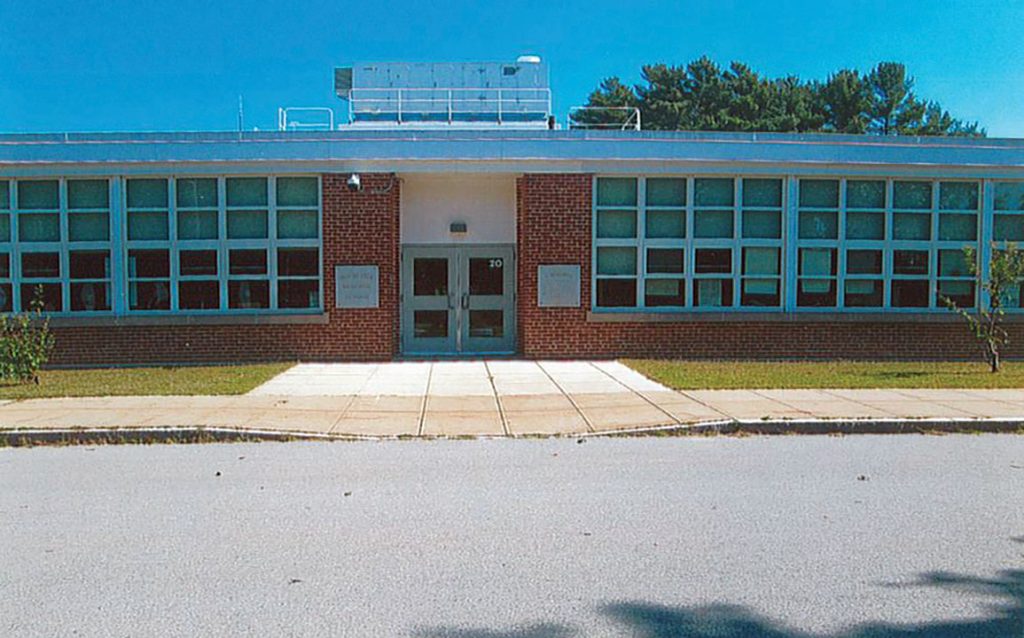
Looking through some newspaper articles assembled in a notebook by Betty Beaulieu, I came across a 1951 Standard Times article about Rochester and its controversy over building a new school. Previously, I had mentioned that it took about 30 years for discussions on building a new school to actually result in the Rochester Memorial School, pictured here. This article actually sets out the pros and cons as told to reporter Norman M. Bryden.

            According to his article, Rochester’s quiet ways were roiled by a vote taken at a special town meeting that authorized $250,000.00 for the building of a new school. As soon as news of the vote reached townspeople (many who had not bothered to vote), there were cries by many, including one town official, that the town would be bankrupted and people would move out rather than pay higher taxes.

            At this time, Rochester was known as a town that was run debt-free and usually had a surplus in its treasury. While this was admirable in many ways, it also meant that little money was spent on improving or modernizing public facilities. Many of those opposed to the new school saw no need for the building as school enrollments had not increased enough to warrant it, with only 29 more students in 1950 than in 1901.

            Other concerns were the town with only a valuation of $1,365,502.00 (in 1950) could not afford the $250,000.00, voted and that only 120 people had voted for it which was only 20% of registered voters. Of course, they failed to mention that out of 624 eligible voters in town, 474 chose not to attend or vote at the well-publicized special town meeting. There were also somewhat silly complaints that those who voted for the school only did so because they had children and that it was just about “keeping up with the Joneses.”

            On the flip side, those in favor of a new building, noted that Rochester had one of the lowest valuations around and the building committee in 1949 determined that in the first year only, there would be an increase in the tax rate of $7.10 if the school project went forward. It was also pointed out that most people worked out of town and had much better wages than earlier residents, so the tax increase would not drive them away.

            Probably the biggest reason put forward for a new school was that no one school in town could house all the students. That meant that grades 1-5 were in East Rochester at the Pierceville School and grades 6-8 at the Waterman School. Both schools were “ancient” and still had outdoor toilets. The Waterman School by then had been cobbled together with two other buildings which meant three furnaces needing to be fueled in the winter. Putting all students together in one building would, it was believed, provide a better, more cohesive educational environment.

            In the end, a lot was selected across from Sherman Cemetery, bids were accepted and the new school with all students under the same roof was built. The town didn’t go bankrupt, the tax hike did not drive people out of town, rather population increased and eventually, all the bitterness and acrimony died down.

By Connie Eshbach